Digital Voice Recorder Buying Guide 2026: Storage, Battery & Format Explained
Why 64GB is plenty for almost everyone, and the one battery-type question that actually matters more than the spec sheet.
By Mubboo Editorial Team · Updated Jul 1, 2026 · 7 min read
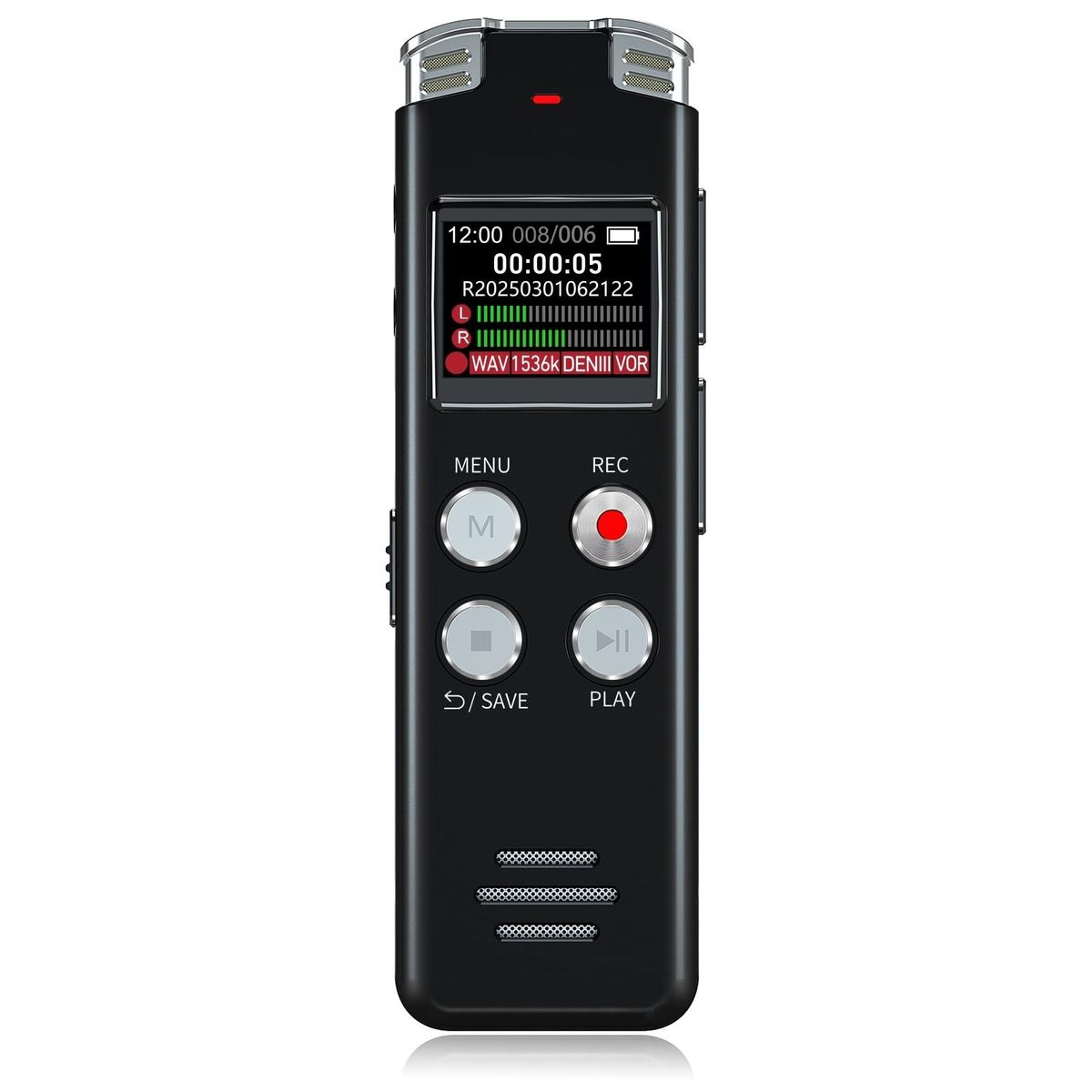
At a Glance
- Price range
- $23 – $63
- Data
- 82,000+ verified reviews analyzed across 6 finalists
- Best for
- Lecture and meeting notesInterviews and fieldworkDaily dictation
- Skip if
- You need broadcast-grade audio production — a dedicated audio recorder or mic setup is the better tool
Types Explained
Standard Capacity Recorders (16-64GB)
Recorders in the 16GB-64GB range, enough for hundreds of hours of voice-quality audio.
- Lower price point
- Enough storage for most lecture and meeting use cases
- Compact, pocket-friendly size
- Needs more frequent file transfers for heavy daily use
- Lower-capacity models can fill up on multi-day trips without a computer nearby
Best for: Students, meeting notes, and everyday dictation
Example: EVISTR 64GB Digital Voice Recorder
High-Capacity Recorders (128GB+)
Recorders built around 128GB or larger storage, aimed at users who record for long stretches without transferring files.
- Weeks of continuous recording without offloading files
- Fewer interruptions for storage management
- Higher price for the extra capacity
- Overkill if you transfer files daily anyway
Best for: Long interviews, extended fieldwork, or infrequent file transfers
Example: Aiworth 136GB Digital Voice Recorder
Rechargeable, Lower-Capacity Recorders
Smaller-capacity units built around a built-in rechargeable battery rather than swappable AAA cells.
- No disposable batteries to buy
- Often the smallest, lightest option in a lineup
- Battery degrades over years of charge cycles, unlike swappable AAA power
- Lower storage ceiling than 64GB+ models
Best for: Light, occasional use where upfront cost matters more than years of battery longevity
Example: Sunlan 16GB Rechargeable Voice Recorder
What Actually Matters
| Factor | Importance | Best brand |
|---|---|---|
Storage capacity vs. recording length needed 64GB holds hundreds of hours of voice-quality (low-bitrate) recording — plenty for most students and professionals More gigabytes only matters if you go weeks between file transfers — most buyers over-buy capacity they'll never fill. | Must-have | EVISTR and Aomago both ship with 64GB as standard |
Battery type (rechargeable built-in vs. swappable AAA) Swappable AAA batteries let you keep recording on a long trip without a charger; built-in rechargeable batteries are lighter but need a cable Neither is objectively better — it depends on whether you'll have charger access during use. | Nice-to-have | — |
File format compatibility (MP3 vs. proprietary) MP3 output means files open anywhere without conversion software A recorder that only saves in a proprietary format adds an extra conversion step before you can share or transcribe a file. | Nice-to-have | — |
Physical button layout for one-handed use A large, single record button matters more in practice than a spec sheet suggests — fumbling with tiny buttons mid-meeting is a common review complaint. | Nice-to-have | — |
'Professional-grade' or 'studio-quality' recorder claims These recorders use small internal microphones built for speech capture, not studio-grade audio — treat 'studio-quality' claims skeptically at this price point. | Marketing BS | — |
Extreme headline capacity claims (e.g. hundreds of recording hours) Headline hour counts usually assume the lowest possible recording quality setting — check the actual bitrate before trusting the number. | Marketing BS | — |
Budget Tiers & Top Picks
What to buy at each price point — and exactly where spending more stops paying off.
Entry-Level
$23 – $27Sunlan 16GB Rechargeable Voice Recorder

Stop paying more: At this price, you're paying for basic recording only — don't expect large storage or rugged build quality.
When to upgrade: Recording daily or need bigger storage? Step up to the mid tier.
Everyday Mid-Range
$28 – $44EVISTR 64GB Digital Voice Recorder

Stop paying more: EVISTR's review volume here reflects the most-purchased option in this range — a safe default for daily recording needs.
When to upgrade: Recording marathon sessions without a computer nearby? Move to the high-capacity tier.
High-Capacity
$44 and upAiworth 136GB Digital Voice Recorder

Stop paying more: 136GB at this price is the strongest capacity-per-dollar in this category — pricier options don't meaningfully add more usable capacity.
When to upgrade: There isn't a meaningful step up from here for personal use — professional broadcast recorders start in a different price class entirely.
Common Mistakes to Avoid
Buying more storage capacity than you'll ever fill
64GB alone holds hundreds of hours of voice-quality recording — most buyers who choose 128GB+ options never come close to filling them before their next file transfer.
Cost of getting it wrong: Paying a premium for unused storage
Trusting 'professional' or 'studio-quality' labels on a budget recorder
These are small internal microphones designed for capturing speech clearly, not studio-grade audio equipment — the label is marketing language, not a certification.
Cost of getting it wrong: Expecting audio quality the hardware isn't built to deliver
Ignoring battery type for your actual use case
A built-in rechargeable battery is lighter, but if you're recording all day away from an outlet, a model with swappable AAA batteries can be the more practical choice.
Cost of getting it wrong: A dead recorder mid-session with no way to swap in fresh power
Skipping file format compatibility
A recorder that only saves in a proprietary format adds an extra conversion step before the file can be shared, transcribed, or played on another device.
Cost of getting it wrong: Extra software and time spent converting files after every recording
Find Your Match
How much do you record before transferring files to a computer?
Frequently Asked Questions
How much should I spend on a digital voice recorder?
Basic 16-64GB recorders run $23-$36. High-capacity 128GB+ models run $44-$63. Most buyers who transfer files regularly don't need to spend above the lower range.
What should I avoid when buying a digital voice recorder?
Avoid buying more storage capacity than you'll use, and be skeptical of 'professional' or 'studio-quality' labels — these are small speech-focused microphones, not studio equipment.
Do I need 128GB of storage for voice recording?
Only if you go weeks between file transfers. 64GB alone holds hundreds of hours of voice-quality audio, which covers most students and professionals.
Rechargeable battery or swappable AAA batteries — which is better?
Neither is universally better. Rechargeable built-in batteries are lighter; swappable AAA batteries let you keep recording during a long trip without a charger.
What file format should a voice recorder save in?
MP3 is the safest choice — it plays and transcribes on virtually any device without needing conversion software.
Can these recorders capture studio-quality audio?
No. They use small internal microphones built to capture clear speech, not studio-grade equipment — treat any 'studio-quality' marketing claim with skepticism at this price point.
How we wrote this guide
Synthesized from 6 finalists and 82,000+ verified Amazon reviews across storage tiers and battery types. Prices update weekly from Amazon.
About this guide
Mubboo Editorial Team. Picks based on comparison of storage capacity, battery type, and verified user reviews. Prices update weekly from Amazon.