How to Choose a Dog Harness (2026 Guide)
Picked from 2026’s most-reviewed Amazon harnesses
By Mubboo Editorial Team · Updated Jun 8, 2026 · 7 min read
At a Glance
- Price range
- $14.99 – $23.39
- Budget pick
- Voyager Step-in Air Harness ($14.99 · 4.6★)
- Data
- 487,844 verified Amazon reviews across 6 top-selling harnesses
- Best for
- Daily walksTrainingNighttime safetySmall to large breeds
- Skip if
- Your dog walks politely on a collar and never pulls—a harness may be unnecessary.
Types Explained
Vest Harness
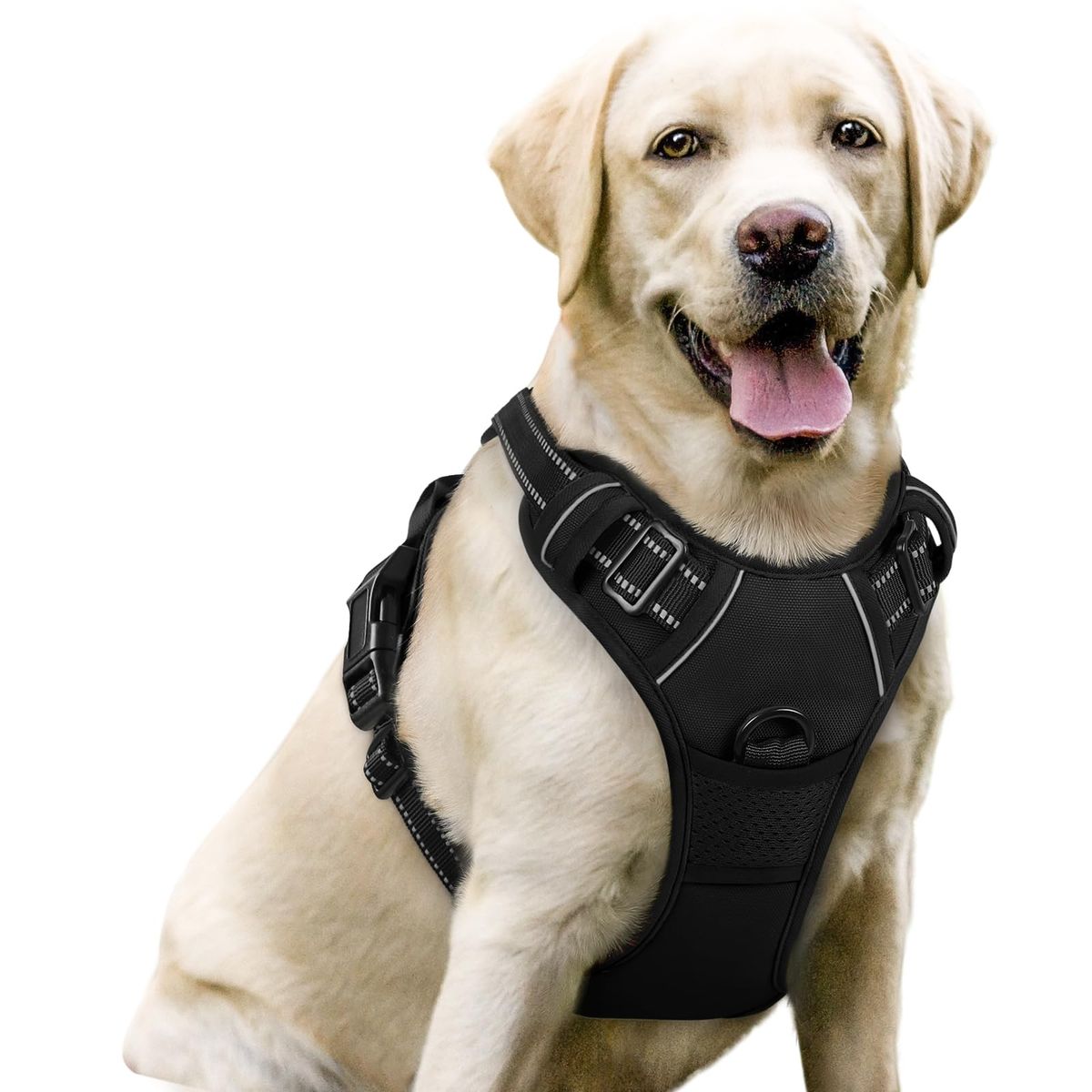
A padded harness that wraps around the chest and buckles at the back or side, often with multiple adjustment points.
- Secure fit with 4+ adjustment points
- Distributes pressure across chest
- Often includes reflective trim
- Overhead style may frighten head-shy dogs
- Can be warm in summer
Best for: Medium to large breeds needing all-day comfort
Example: rabbitgoo No Pull Dog Harness
Step-in Harness
A harness the dog steps into with their front legs, then clips at the back.
- Easier for head-shy dogs
- Quick on/off
- Sizing must be precise
- May not handle heavy pulling
Best for: Small dogs and escape artists
Example: Voyager Step-in Air Harness
No-pull Harness
A front-clip harness that redirects pulling force to turn the dog sideways, discouraging pulling.
- Effective for training
- No pressure on throat
- Can twist with very active dogs
- Not ideal for casual walks with back-clip
Best for: Dogs that pull constantly
Example: PetSafe Easy Walk No-Pull Harness
Tactical/Service Harness
Heavy-duty vest with MOLLE webbing for attaching pouches, used by working dogs or for carrying medical supplies.
- Gear-carrying capability
- Durable construction
- Multiple attachment points
- Heavier than standard vests
- Webbing can catch on brush
Best for: Service dogs, hikers, and dogs needing to carry supplies
Example: AUROTH Tactical Dog Harness
What Actually Matters
| Factor | Importance | Best brand |
|---|---|---|
No-pull control Front-clip or Martingale loop If your dog pulls, a front-clip redirects their momentum without choking. The Easy Walk's patented loop is the gold standard. | Must-have | PetSafe Easy Walk |
Adjustable fit At least 4 adjustment points A poorly fitting harness can slip off or chafe. The rabbitgoo's four independent straps allow near-custom sizing. | Must-have | rabbitgoo |
Breathable material Mesh or padded nylon Mesh keeps dogs cool in summer. The Voyager's all-weather air mesh is lightweight and dries fast. | Must-have | Voyager Step-in |
Reflective visibility Reflective strips or bright colors Reflective stitching is essential for evening walks. rabbitgoo includes large reflective strips across the chest and back. | Nice-to-have | rabbitgoo |
Ease of use Quick-release buckles A step-in harness like the Voyager is a lifesaver for wiggly dogs, no overhead maneuvering needed. | Must-have | Voyager Step-in |
Brand premium Paying extra for a brand name like PetSafe can be unnecessary. Many budget options with equal features exist, like the rabbitgoo at a fraction of the cost of high-end boutique harnesses. | Marketing BS | — |
Budget Tiers & Top Picks
What to buy at each price point — and exactly where spending more stops paying off.
Budget
Under $15Voyager Step-in Air Harness
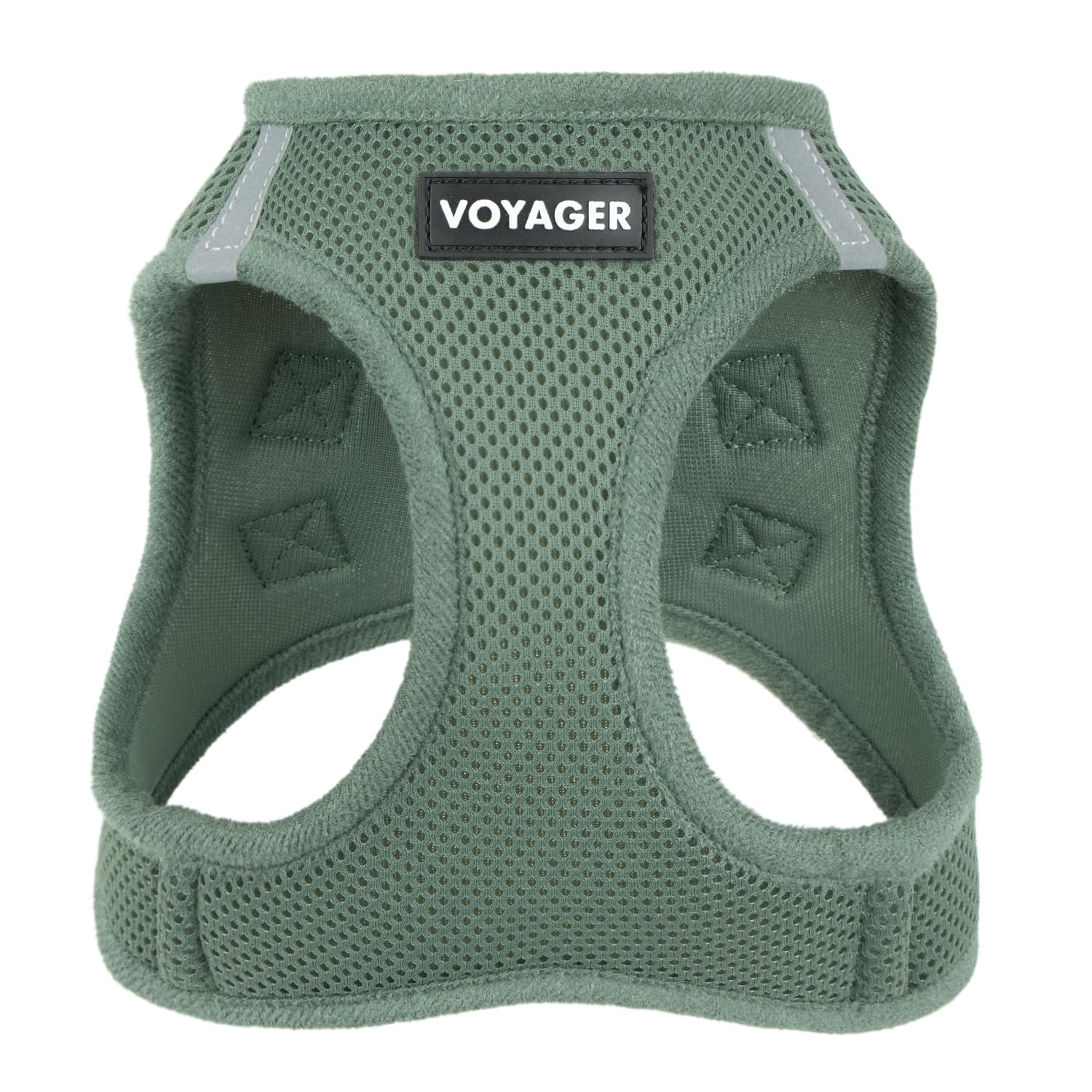
Stop paying more: Stop at $15. You get reliable mesh comfort and escape-proof triple security—spending more won't add much for small dogs.
When to upgrade: Need a no-pull design or a larger size? Move to the rabbitgoo at $20.98.
Mid-range
$15 – $25rabbitgoo No Pull Dog Harness

Stop paying more: At $20.98, this is the best value for all-around use. Spending more than $25 enters premium features like MOLLE webbing or heavy-duty clips, but the basics are covered here.
When to upgrade: Need tactical gear-carrying capability? The Auroth harness is a worthwhile step up at $23.39.
Premium
$23+AUROTH Tactical Dog Harness

Stop paying more: At $23.39, you get military-grade durability and gear attachment. Prices above $30 for similar harnesses are rarely justified; this model's current deal makes it the premium pick.
When to upgrade: If you want even more storage, consider the OneTigris MOLLE harness—usually $35+.
Common Mistakes to Avoid
Buying a harness without measuring
Sizes vary wildly between brands. Many harnesses are returned because owners guessed based on breed, not girth measurements.
Cost of getting it wrong: Returns and repurchasing cost twice the shipping and time.
Choosing style over function
Tactical looks cool but can be bulky. If your dog never carries gear, a lightweight mesh vest is more practical.
Cost of getting it wrong: Wasted extra for unused features.
Ignoring no-pull design
A back-clip-only harness can actually encourage pulling, like a sled dog. A front-clip or Martingale loop is essential for training.
Cost of getting it wrong: More time training and potential injury from pulling.
Skipping reflective features
Evening walks are dangerous without visibility. A harness with reflective strips costs only a few dollars more but can save your dog's life.
Cost of getting it wrong: Emergency vet bills far exceed the harness cost.
Find Your Match
What size is your dog?
Frequently Asked Questions
How much should I spend on a dog harness?
A reliable harness starts. Spending $15–$25 gets you excellent no-pull features and all-around adjustability. Only go above if you need tactical storage or heavy-duty hardware—for everyday walks, a mid-range vest harness covers all your needs.
What type of harness is best for my dog?
It depends on your dog's size and habits. Vest harnesses offer all-around comfort, step-ins suit head-shy dogs, and front-clip no-pull harnesses help train pullers. For most pups, a well-fitted vest harness like the rabbitgoo provides the best balance of control and ease.
What should I avoid when buying a dog harness?
Avoid harnesses with no adjustment points—they rarely fit correctly. Skip cheaply made harnesses with thin nylon that frays and breaks. Steer clear of back-clip-only harnesses if your dog pulls; they can make pulling worse. Always measure girth—never guess size by breed alone.
Is a no-pull harness cruel?
No, a properly designed no-pull harness like the PetSafe Easy Walk uses gentle pressure on the shoulders to redirect, not choke. It's safer than a collar for dogs that pull, as it avoids throat injury. Veterinary behaviorists recommend front-clip harnesses for force-free training.
Can I leave a harness on my dog all day?
It's not recommended. Even well-padded harnesses can cause chafing or matting if worn continuously. Remove it indoors, and inspect your dog's skin regularly for redness, especially under the armpits. Only service dogs with medical vests need all-day wear.
How do I measure my dog for a harness?
Use a soft tape measure around the widest part of the chest, just behind the front legs. Compare to the brand's sizing chart—sizes vary between manufacturers. If between sizes, size up and use the adjustment straps. A snug fit allows two fingers under the straps.
How we wrote this guide
We combed through 487,844 verified Amazon reviews across 6 top-selling harnesses, cross-referenced sizing guides, and watched video recommendations from Harper & Max to bring you the most practical picks. Prices and availability are updated weekly.
About this guide
Mubboo Editorial Team — independent US-market consumer research. Picks are informed by 487,844 verified buyer reviews and expert YouTube analysis. We never accept free products or paid placements.