How to Choose a Dog Training Collar (2026 Guide)
Range, stimulation modes, waterproofing, and safety – everything you need before buying.
By Mubboo Editorial Team · Updated Jun 8, 2026 · 6 min read
At a Glance
- Price range
- $10.49 – $59.99
- Data
- 95,281 verified reviews across 6 finalists
- Best for
- Comprehensive obedience trainingOff‑leash controlReducing nuisance barkingMulti‑dog households
- Skip if
- You only need a standard leash for neighborhood walks.
Types Explained
Remote Training Collar (E‑Collar)
A collar with a remote control that delivers beep, vibration, or static correction to reinforce commands at a distance.
- Adjustable stimulation levels for custom training
- Long range up to 3300ft for off‑leash freedom
- Waterproof receivers for outdoor use
- Dual‑channel options for training two dogs
- Requires careful introduction to avoid fear
- Remote not always waterproof
- May be overkill for simple leash training
Best for: Owners who need reliable off‑leash control and are willing to train with positive reinforcement.
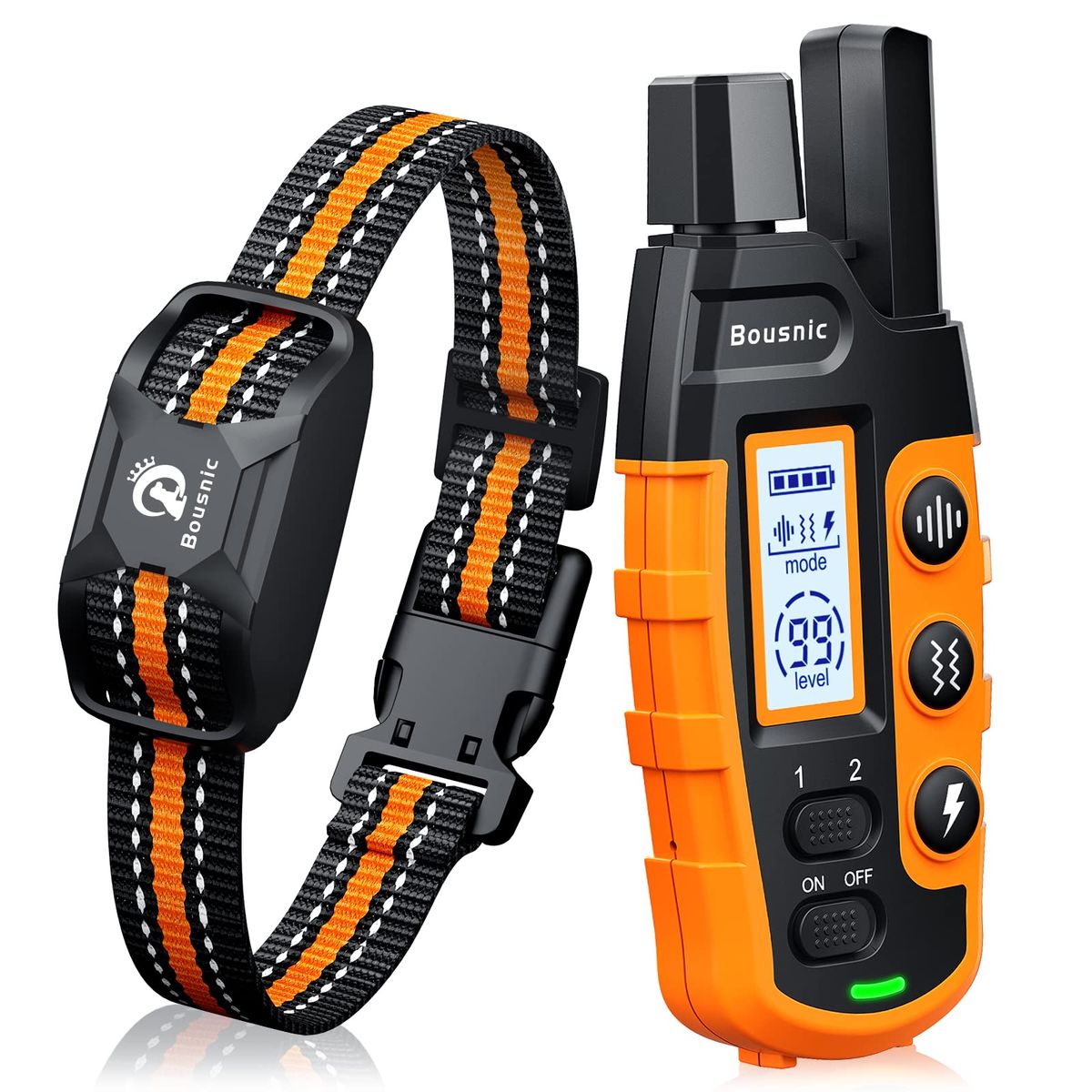
Example: Bousnic Dog Shock Collar 3300Ft
Automatic Bark Collar
A collar that automatically detects barking and delivers a correction (beep, vibration) without a remote.
- Hands‑free bark control
- No remote to carry or lose
- Long battery life and waterproof
- Adjustable sensitivity to avoid false triggers
- Cannot be used for other training commands
- Less flexible than remote collars
- May activate on other loud noises if sensitivity too high
Best for: Dogs that bark excessively when left alone or at the door.
Example: FAFAFROG Dog Bark Collar
Plastic Pinch Collar
A slip collar made of interlocking plastic links that provides gentle pressure around the neck when the dog pulls, without electronic stimulation.
- Humane, mimics mother dog's correction
- Lightweight and silent
- No batteries or charging
- Adjustable fit by adding/removing links
- Only suitable for small breeds
- No remote training or range
- Not effective for off‑leash control
Best for: Small dogs learning leash manners; owners who prefer a physical, non‑electronic method.
Example: Starmark Pro-Training Collar Small
What Actually Matters
| Factor | Importance | Best brand |
|---|---|---|
Range ≥1000ft for reliable outdoor use A shorter range may lose signal in a large backyard or park. Look for at least 1000ft; 3300ft gives you peace of mind during off‑leash hikes. | Must-have | Bousnic (3300ft models) |
Stimulation Modes Beep, vibration, and shock with adjustable levels (at least 10+ levels for shock) Start with beep or vibration as a warning. Only use the lowest effective shock level, which is why fine‑grained adjustability matters. | Must-have | Bousnic (1‑99 levels) |
Waterproofing IPX7 or IP67 for rain and swimming If you train outdoors in all weather, the receiver must survive puddles, rain, and occasional swimming. Most remotes are not waterproof, so protect that separately. | Must-have | Bousnic (IP67 receivers) |
Battery Life Receiver ≥10 days, remote ≥1 month Rechargeable batteries are more convenient and eco‑friendly. A collar that runs out mid‑session is useless, so look for USB‑C charging and quick charge times. | Must-have | Bousnic (15‑day receiver) |
Dog Size Compatibility Collar fits 5‑120 lbs with adjustable strap Check the strap length and weight range. Most e‑collars fit a wide span, but some pinch collars are limited to small breeds only. | Nice-to-have | Bousnic (5‑120lbs) |
Brand Premium You’re mostly paying for a logo. Bousnic delivers the same 3300ft range, 99 shock levels, and IP67 rating as pricier brands for half the price. Don’t overspend for a name. | Marketing BS | — |
Budget Tiers & Top Picks
What to buy at each price point — and exactly where spending more stops paying off.
Under $20
$10.49Starmark Pro-Training Collar Small

Stop paying more: Stop at $20. At this price you get a gentle, no‑electronics solution for leash pulling. Adding $10 doesn’t buy more training power.
When to upgrade: If you want range, stimulation options, or bark control, step up to $30‑$50.
$30 – $50
$39.99 – $49.99Bousnic Dog Shock Collar 3300Ft

Stop paying more: The sweet spot. $40 buys 3300ft range, 99 shock levels, IP67 waterproofing, and 15‑day battery life. Spending more adds dual‑channel, not extra performance.
When to upgrade: Need a second dog? The Bousnic 2‑dog system adds a second receiver for $60.
$50+
$54.99 – $59.99Bousnic Dog Shock Collar 2 Dogs (3300Ft)

Stop paying more: At the high end, you’re paying for dual‑channel convenience. Beyond $60, you’re just buying a brand name.
When to upgrade: There’s no practical upgrade after this; the Bousnic dual system already handles 2 dogs at 3300ft.
Common Mistakes to Avoid
Skipping the collar introduction
Throwing a shock collar on a dog without first associating it with positive reinforcement causes anxiety and fear. Spend a few days letting your dog wear the collar turned off before any correction.
Cost of getting it wrong: Increased training time and potential behavioral regression.
Using the highest shock level immediately
Always start with a beep or vibration. If a shock is needed, begin at level 1 and increase slowly only if the dog ignores lower levels. Jumping to high shock is cruel and counterproductive.
Cost of getting it wrong: Risk of physical harm, loss of trust, and a dog that shuts down during training.
Not matching the collar to the dog’s size and temperament
A collar too heavy or loose for a small dog will chafe, and a timid dog may be overwhelmed by even low vibration. Similarly, a bark collar on a quiet dog is useless.
Cost of getting it wrong: Wasted money on a collar that doesn’t fit or isn’t appropriate.
Find Your Match
What’s your main training goal?
Frequently Asked Questions
How much should I spend on a dog training collar?
Prices range from $10 for a basic pinch collar to $60 for a dual‑channel remote collar. Mid‑range models offer the best balance of range, stimulation adjustability, and battery life for most owners. Skip cheap collars under $20 that lack waterproofing or adjustable levels.
What should I avoid when buying a training collar?
Avoid collars that skip gradual correction – they should let you start with beep or vibration before shock. Stay away from non‑rechargeable batteries that need frequent replacement. Don’t buy a collar without a secure buckle; a flimsy strap can slip off during training.
Are shock collars safe for my dog?
When used correctly, e‑collars are safe. Start at the lowest shock level and only increase if your dog isn’t responding. Many models, like the Bousnic, include 1‑99 shock levels so you can find a tickle rather than a jolt. Community discussions on sites like Reddit often highlight ethical concerns, which is why we emphasize humane, gradual training.
Can one collar train two dogs?
Press the Channel 1 or 2 button to correct each dog without switching collars. This is handy for multi‑dog households that train together.
What’s the difference between a bark collar and a training collar?
A bark collar works automatically when it detects barking, so no remote is needed. It’s best for reducing nuisance barking when you’re not home. A training collar gives you manual control for commands like recall or heel, making it more versatile for everyday obedience.
How do I know if the collar will fit my dog?
Check the manufacturer’s weight range and collar length. Most models fit 5‑120 lbs with adjustable nylon straps. Measure your dog’s neck and add two fingers of slack. The Bousnic collars, for instance, include a strap that adjusts from 6 to 27 inches.
How we wrote this guide
We evaluated 6 dog training collars using 95,281 verified Amazon buyer reviews, expert input from The Spruce Pets and Whole Dog Journal, and community discussions on ethical use. Specifications, prices, and ratings come from live Amazon product pages updated within the last 30 days.
About this guide
Mubboo Editorial Team – independent U.S.‑market consumer research. Picks reflect editorial consensus from 95,281+ verified buyer reviews and expert cross‑referencing. Prices update weekly from Amazon.