How to Choose an E-Bike (2026 Guide)
Understand motor power, battery range, and safety features before you spend a dime.
By Mubboo Editorial Team · Updated Jun 8, 2026 · 8 min read
At a Glance
- Price range
- $199 – $660
- Budget pick
- Jasion EB5 Electric Bike ($199 · 4.1★)
- Data
- 4,129 verified reviews across 4 popular e-bikes
- Best for
- Daily commutesLeisure weekend ridesApartment dwellers who need folding
- Skip if
- You only need to travel under 3 miles round-trip on flat ground — a regular bike will do
Types Explained
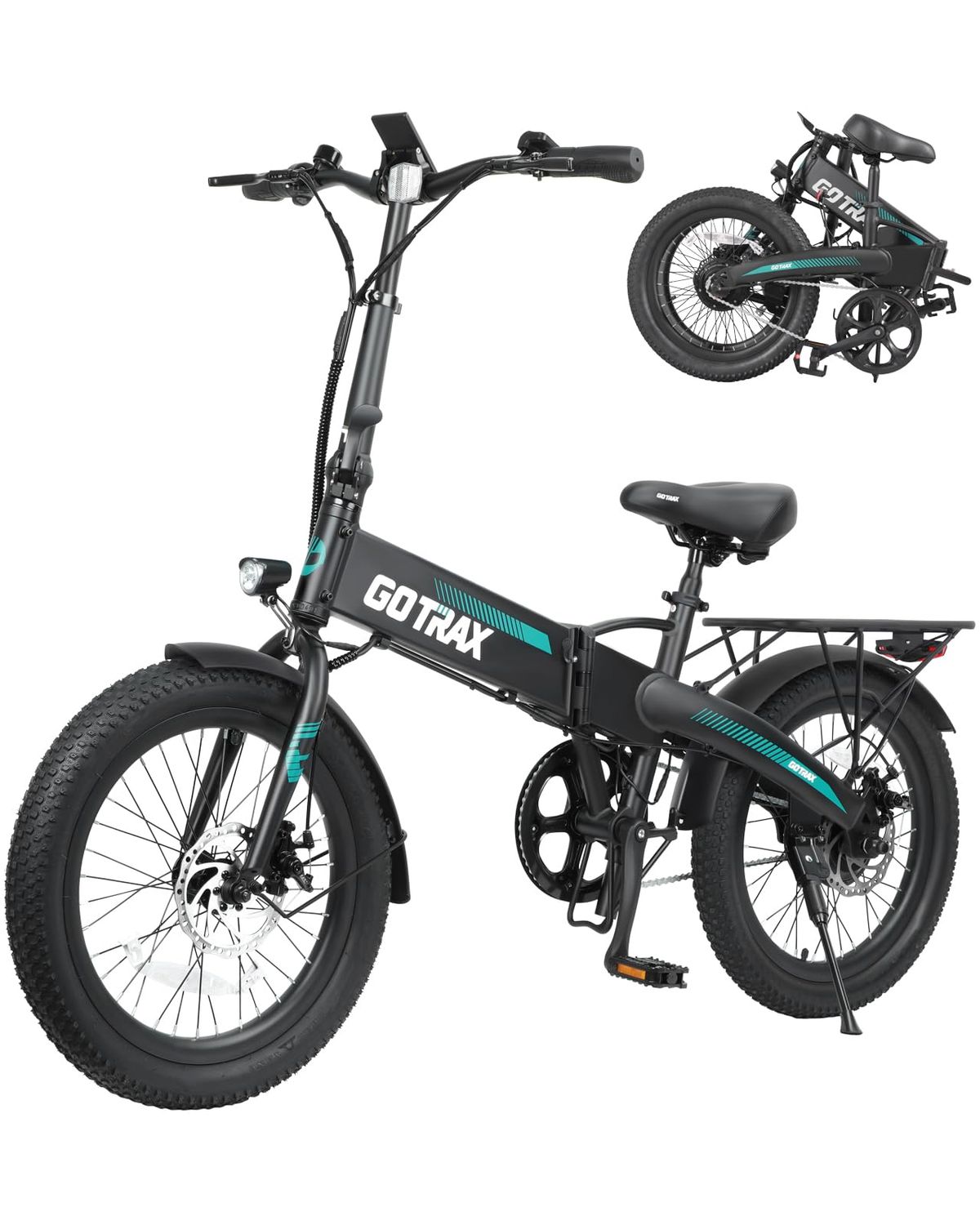
Folding E-Bikes
Compact e-bikes with hinges allowing the frame to fold for easy storage and transport.
- Saves space in apartments or car trunks
- Typically lighter than full-size models
- Easy to bring on public transit
- Smaller wheels may ride rougher over bumps
- Less stable at high speeds
- Often limited suspension
Best for: Urban commuters with limited storage
Example: Gotrax R1
Commuter E-Bikes
Full-size e-bikes designed for daily rides with comfortable geometry, integrated lights, and often fenders and racks.
- Larger wheels provide a smoother ride on rough pavement
- More stable at speed
- Often include racks and fenders
- Heavier and bulkier
- Harder to store in small spaces
- May require more maintenance
Best for: Daily riders who need comfort and reliability
Example: Heybike Cityscape 2.0
Budget E-Bikes
Affordable e-bikes, often with less powerful motors and basic components, suited for casual riding.
- Low upfront cost
- Surprising range for the price
- Good for occasional use
- Cheaper components may wear out faster
- Often heavier
- May lack safety certifications
Best for: First-time e-bike buyers on a tight budget
Example: Jasion EB5
What Actually Matters
| Factor | Importance | Best brand |
|---|---|---|
Motor Wattage ≥ 350W for hills; 250W fine for flat ground <strong>Motor wattage dictates hill-climbing and acceleration.</strong> A 250W motor struggles on steep inclines, while 500W breezes up. Peak wattage claims are inflated; look at continuous rating. | Must-have | Heybike (500W continuous) |
Battery Range ≥ 20 miles per charge for daily commuting <strong>Range is the number-one buyer priority.</strong> Real-world range is often half the advertised maximum when using throttle. Look for 40+ miles if you can't charge at work. | Must-have | Heybike Cityscape 2.0 (up to 50 miles) |
UL Certification Look for the UL logo on battery and charger <strong>UL certification proves the battery meets fire safety standards.</strong> Skip any e-bike without it — non-UL batteries are a known fire risk in apartments. | Must-have | Heybike (UL certified) |
Suspension & Comfort Front suspension or suspension seatpost for rough roads <strong>Front suspension smooths out potholes.</strong> Not essential for smooth bike paths, but a must on cracked city streets. The Gotrax R1 skips suspension to save weight — fine for flat smooth commutes. | Nice-to-have | Heybike |
App Connectivity <strong>Smartphone apps on e-bikes rarely add value.</strong> Basic LCD displays already show speed and battery. Paying extra for Bluetooth connection and ride tracking seldom improves the experience. | Marketing BS | — |
Budget Tiers & Top Picks
What to buy at each price point — and exactly where spending more stops paying off.
Under $300
$199Jasion EB5 Electric Bike
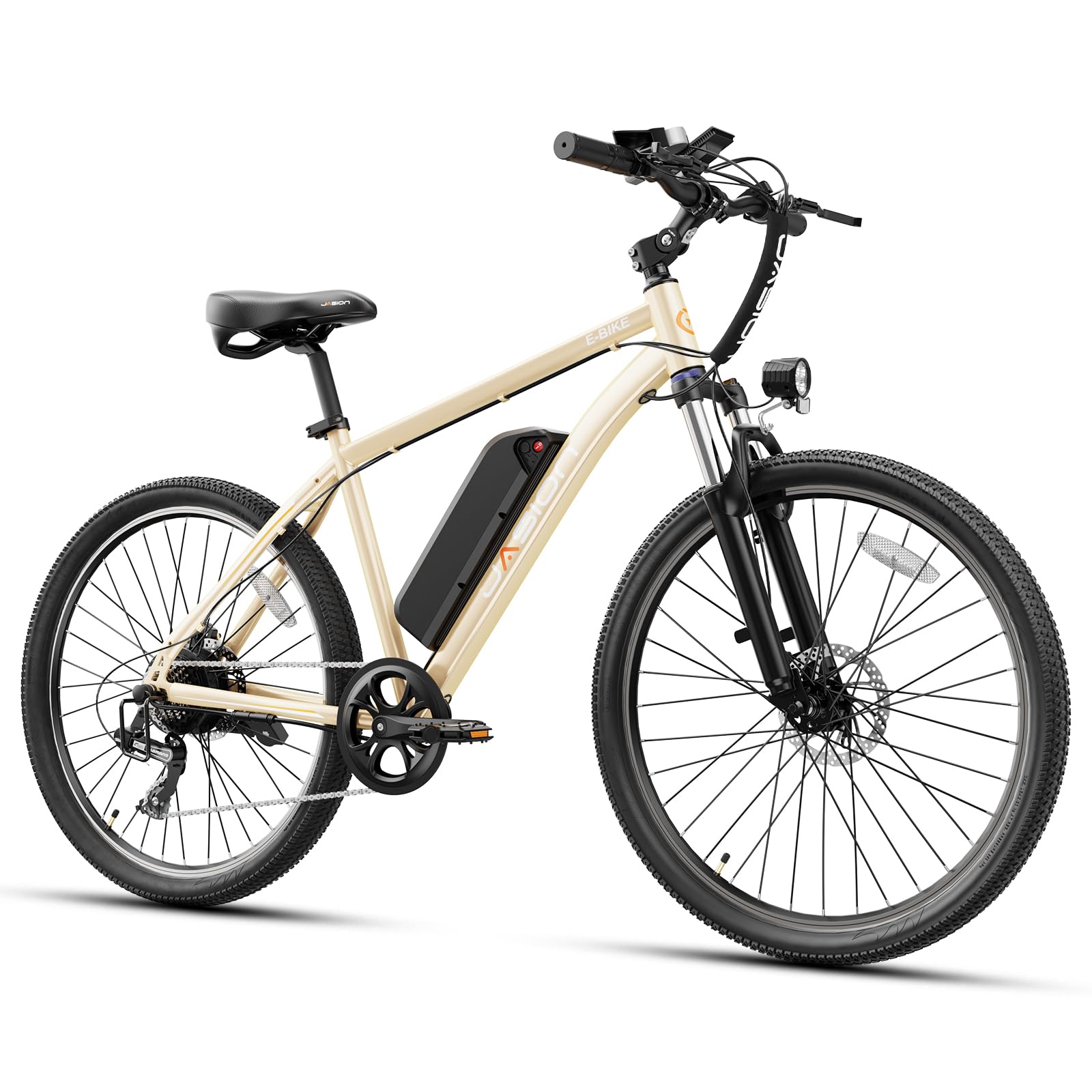
Stop paying more: <strong>Stop at $300.</strong> Spending more gets you better components and safety certifications.
When to upgrade: Ready for a better battery and more power? Step up to $500-$650.
Mid-Range ($500 - $650)
$619Heybike Cityscape 2.0 Electric Bike
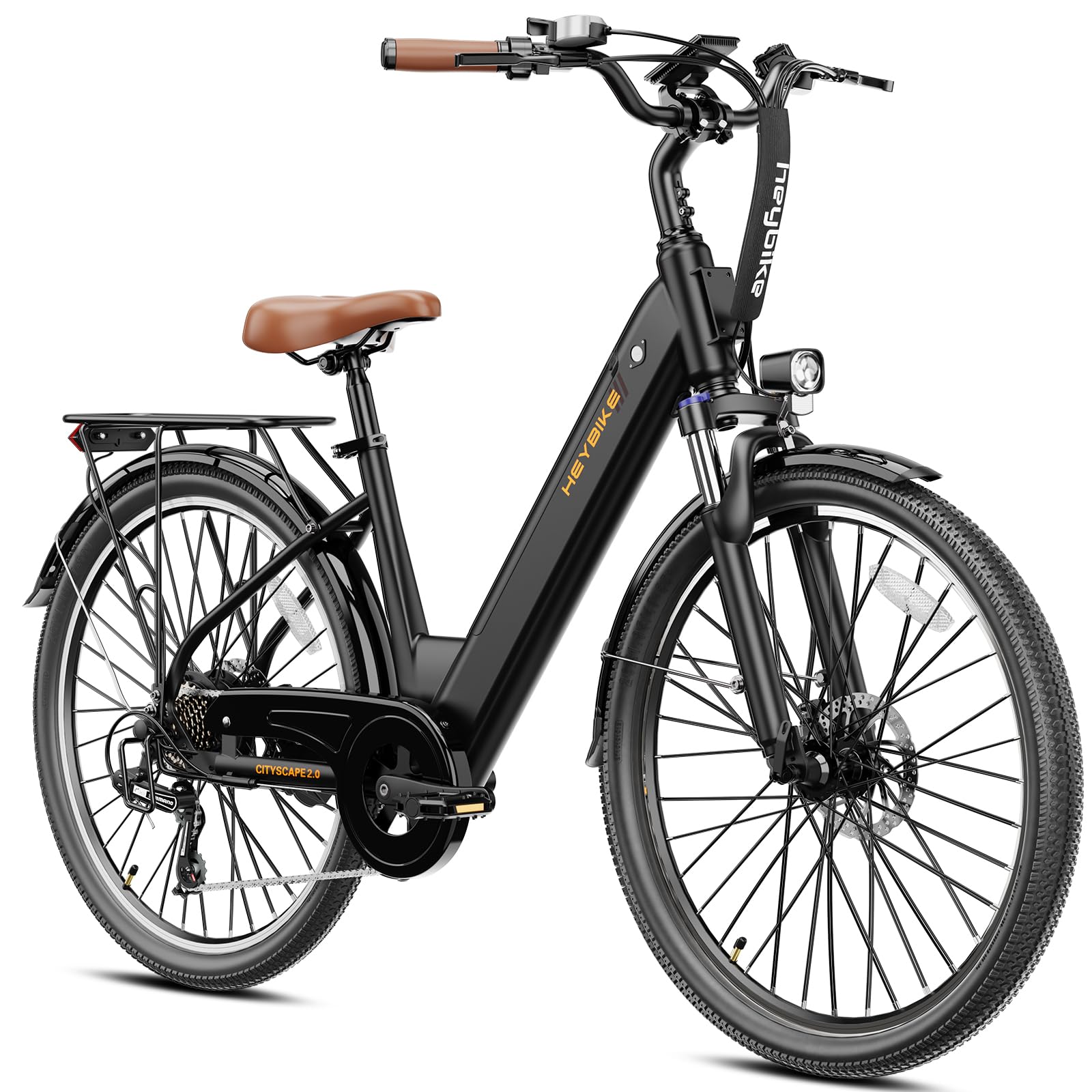
Stop paying more: <strong>Stop at $650.</strong> This tier gives you UL certification, 50-mile range, and comfortable suspension.
When to upgrade: Want even more power and waterproofing? The premium tier at $660 adds a 500W motor and IPX6 battery.
Premium ($650+)
$659.99Gotrax R1 Folding Electric Bike

Stop paying more: <strong>Above $800, diminishing returns set in unless you need a cargo bike.</strong>
When to upgrade: Consider this model if portability is your top priority; otherwise, the mid-range offers better value.
Common Mistakes to Avoid
Skipping UL Certification
<strong>A non-UL battery poses a fire risk.</strong> Always look for the UL mark — it's the minimum safety standard. Some budget bikes cut corners here.
Cost of getting it wrong: Potential fire hazard or insurance claim denial if the battery fails.
Underestimating Motor Power for Hills
<strong>A 250W motor can't handle steep inclines.</strong> You'll end up walking the bike uphill, defeating the purpose. Check your route's elevation before buying.
Cost of getting it wrong: A wasted on a bike that can't tackle your daily commute.
Ignoring Battery Removability
<strong>If you live in an apartment without garage charging, a non-removable battery is a hassle.</strong> You'll need to drag the whole bike to the nearest outlet.
Cost of getting it wrong: Inconvenience and reduced usage — the bike becomes a clothes rack.
Find Your Match
How hilly is your typical route?
Frequently Asked Questions
How much should I spend on an e-bike?
A good e-bike for daily commuting starts. Under $300 you'll find basic models suitable for flat, occasional rides. The sweet spot is $500-$650, where you get UL certification, a removable battery, and enough range for most commutes.
What should I avoid when buying an e-bike?
Avoid e-bikes without UL certification—their batteries can be a fire hazard. And don't buy a non-removable battery if you can't charge the bike near a ground-floor outlet.
How long do e-bike batteries last?
E-bike batteries typically last 3–5 years or 500–800 charge cycles. Actual lifespan depends on usage, storage (keep between 50–80°F), and charging habits. Budget batteries degrade faster; investing in a UL-certified pack often buys longevity.
Can I ride an e-bike in the rain?
Most e-bikes withstand light rain, but only those with an IPX5 or higher waterproof rating are safe for heavy downpours. The Heybike Cityscape 2.0 with its IPX6 battery can handle Pacific Northwest drizzle without worry. Always dry your bike after wet rides.
Do I need a license or registration for an e-bike?
In the US, e-bikes are generally classified as bicycles and don't need a license. However, laws vary by state. Class 1 and 2 e-bikes (up to 20 MPH) are allowed on most bike paths; Class 3 (28 MPH) may be restricted. Always check local regulations.
How fast can an e-bike go?
Most e-bikes have a top speed of 20 MPH in throttle mode or 28 MPH in pedal assist. The 20 MPH limit is common for budget models, like the Gotrax R1. Faster speeds drain the battery quicker, so consider your priority—range or velocity.
Is it worth buying a cheap e-bike?
Cheap e-bikes under $300 can work for flat, short rides, but skimp on safety (no UL) and durability. The Jasion EB5 surprised us with 40-mile range but long-term reliability is a gamble. For daily use, spend a bit more for peace of mind.
How we wrote this guide
We analyzed 4,129 verified Amazon reviews across 4 popular e-bikes. Our research draws from buyer feedback, manufacturer specs, and independent video tests from ElectricBikeReview.com and Bicycling, plus community insights from r/EngweEbike. Data refreshes weekly from Amazon.
About this guide
Mubboo Editorial Team — independent US-market consumer research. Our picks reflect analysis of thousands of verified buyer reviews and expert comparisons. Prices update weekly from Amazon.