How to Choose an Exercise Ball (2026 Guide)
Picked from 174,360+ verified Amazon reviews — find the right ball for yoga, Pilates, or your home gym.
By Mubboo Editorial Team · Updated Jun 8, 2026 · 7 min read
At a Glance
- Price range
- $9.99–$31.49
- Data
- 174,360+ verified reviews across 6 top models
- Best for
- Yoga & PilatesActive sittingHome gym workoutsPregnancyCore training
- Skip if
- You need a stable, non-moving chair for office work — an exercise ball engages muscles and may cause fatigue during long sitting periods.
Types Explained
Standard Exercise Ball
A classic PVC ball available in multiple diameters, ideal for balance, stretching, and core exercises.
- Widely affordable
- Many size options
- Lightweight and portable
- May lack anti-burst layer
- Can be slippery without texture
Best for: General fitness, yoga, Pilates, basic office sitting
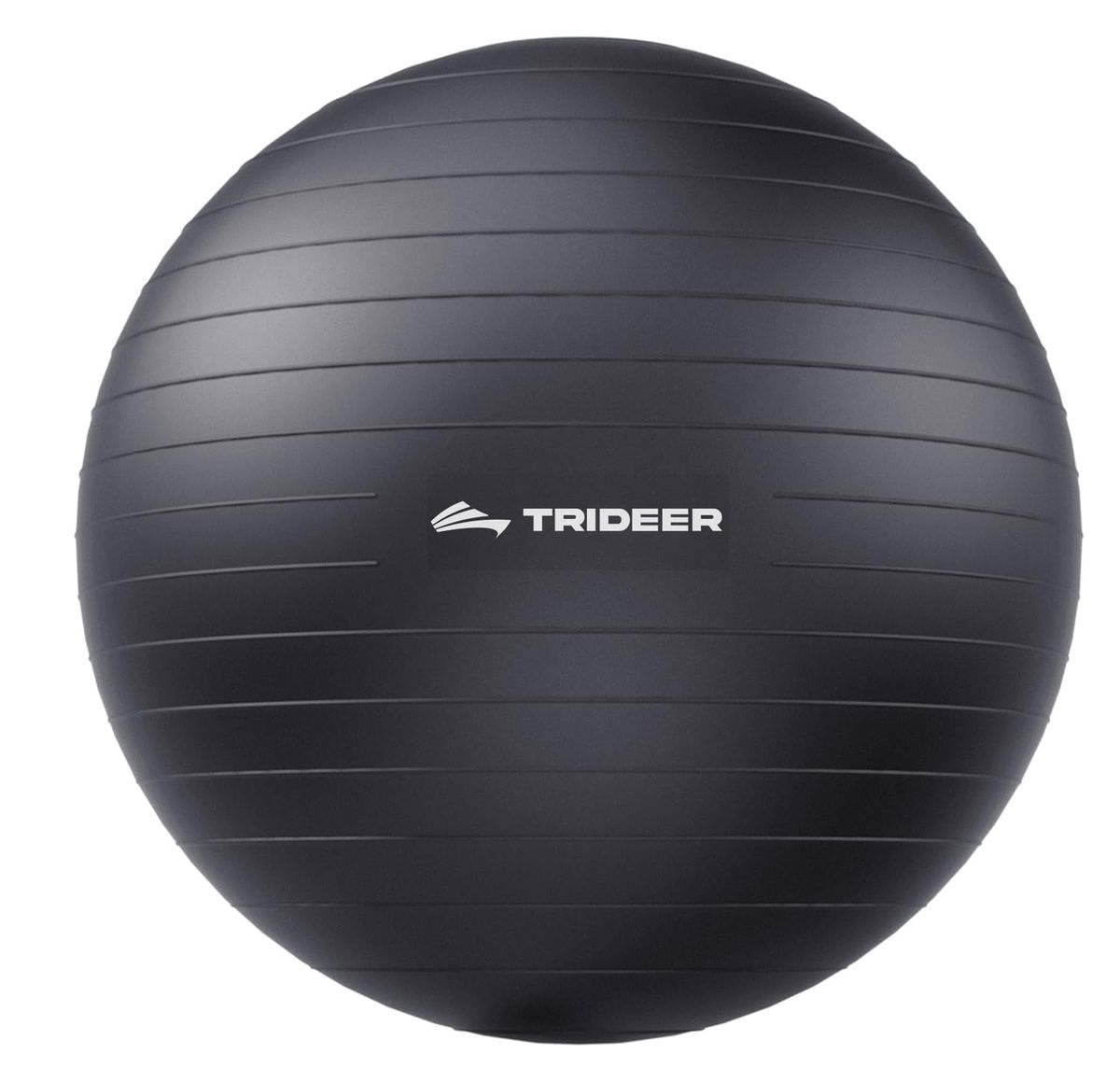
Example: Trideer 65cm (330 lb capacity)
Anti-Burst Exercise Ball
Reinforced with a wire frame or composite layers that deflate slowly if punctured, providing extra safety.
- Deflates slowly (no sudden bursting)
- Higher weight capacity (often 330–2,000 lbs)
- Durable for daily use
- Slightly heavier
- Sometimes more expensive
Best for: Heavy use, home gyms, users over 200 lbs
Example: URBNFit 65cm (wire frame)
Medicine Ball
A weighted, non-inflatable ball used for strength training, throwing exercises, and power moves.
- Builds explosive power
- Durable rubber construction
- Textured grip for throwing
- Not for balance or seating
- Limited to strength workouts
Best for: Wall balls, weighted squats, core power exercises
Example: Amazon Basics Medicine Ball 10 lb,
What Actually Matters
| Factor | Importance | Best brand |
|---|---|---|
Size (diameter) 45cm for under 5'; 55cm for 5'0"–5'5"; 65cm for 5'6"–6'0" A wrong size causes poor posture and ineffective workouts. Use the height chart to match. | Must-have | Trideer (5 size options from 45cm to 85cm) |
Anti-burst safety Ball must deflate slowly if punctured Standard balls can pop loudly and abruptly, risking falls. Anti-burst is non-negotiable if you use weights or have kids. | Must-have | URBNFit (patented wire frame), Fitvids (2,000 lb composite) |
Surface grip Frosted texture or ribbed anti-slip surface A slippery ball is unstable and dangerous for dynamic exercises like planks or push-ups. | Must-have | Trideer (frosted anti-slip stripes) |
Weight capacity ≥330 lbs for most adults Even if you weigh 150 lbs, a higher capacity means better durability and less deformation over time. | Must-have | Fitvids (2,000 lb capacity) |
Included pump type Foot pump preferred for ease A hand pump works but requires effort; a foot pump inflates quickly with less fatigue. | Nice-to-have | Fitvids (foot pump included) |
Extended warranty upsells Standard warranties on exercise balls are sufficient. Paying extra for long coverage on a product isn't worth it. | Marketing BS | — |
Budget Tiers & Top Picks
What to buy at each price point — and exactly where spending more stops paying off.
Under $12
$9.99–$11.99Fitvids Anti-Burst Exercise Ball 55cm (Blue)

Stop paying more: Stop at $12. Spending more buys negligible improvement for basic fitness; this ball already holds 2,000 lbs and is anti-burst.
When to upgrade: If you're over 5'5" or want the grippiest surface, step up to the Trideer 65cm for $17.
$12–$18
$14.99–$16.98Trideer Exercise Ball 65cm (Black)

Stop paying more: No need to spend over $18 on a standard exercise ball. This model delivers the best grip, safety, and size range for the price.
When to upgrade: For strength training, consider the Amazon Basics Medicine Ball at $31.
Over $18 (Specialty)
$31.49Amazon Basics Weighted Medicine Ball 10 lb

Stop paying more: Spending more than $35 on a medicine ball offers little extra for home use; this one is durable and grippy.
When to upgrade: If balance and stretching are your goals, drop back to the Trideer 65cm for $17.
Common Mistakes to Avoid
Buying the wrong size
A ball too small forces you to hunch; too large makes it hard to balance. Use height guidelines: 45cm for under 5', 55cm for 5'0"–5'5", 65cm for 5'6"–6', 75cm for over 6'.
Cost of getting it wrong: Wasted on an unusable ball.
Ignoring material quality
Cheap PVC can be slippery and may contain BPA or phthalates. Look for non-toxic, phthalate-free materials.
Cost of getting it wrong: Risk of injury or need to replace with a safer ball, costing twice.
Skipping the pump
Some balls don't include a pump, forcing a separate purchase. Verify what's included and prefer foot pumps for easier inflation.
Cost of getting it wrong: Extra $5–$10 and a frustrating delay.
Overlooking weight capacity
If you weigh over 200 lbs, ensure the ball supports at least 330 lbs. Low capacity balls can burst under dynamic load.
Cost of getting it wrong: Injury and replacement cost.
Find Your Match
What's your primary use?
Frequently Asked Questions
Which size exercise ball should I get based on my height?
Choose a diameter that puts your thighs parallel to the floor when seated: 17.7 inches for under 5'0", 21.7 inches for 5'0"–5'5", 25.6 inches for 5'6"–6'0", and 29.5 inches for over 6'0". If you sit too low, your knees will be higher than hips; too high and it feels unstable. The Trideer comes in 5 sizes from 17.7 inches to 33.5 inches, covering all ranges.
Are anti-burst exercise balls safer?
Yes. Anti-burst models deflate slowly if punctured, preventing dangerous sudden falling. Balls like the URBNFit use a wire frame, while Fitvids and Trideer use thick composite to meet safety standards. Standard balls can pop loudly and abruptly, so for dynamic workouts or with kids, anti-burst is highly recommended.
Can I use an exercise ball as an office chair?
Yes, many users replace their office chair with an exercise ball to engage core muscles and improve posture. However, prolonged sitting on a ball can cause fatigue; start with 20–30 minute intervals and alternate with a regular chair. The Trideer 25.6 inches is popular for active sitting thanks to its anti-slip surface.
What's the difference between an exercise ball and a medicine ball?
An exercise ball is large, inflatable, and used for balance, stretching, and bodyweight exercises. A medicine ball is smaller, weighted, and often rubber, meant for strength moves like wall throws and weighted squats. Our guide covers both; choose the exercise ball for yoga or sitting, and the medicine ball for explosive training.
How do I inflate an exercise ball?
Most balls come with a pump (hand or foot). Inflate the ball to about 80% fullness, then let it sit overnight to allow the material to stretch before fully inflating to the target diameter. Avoid over-inflation—measure the height against a wall to ensure correct size. A foot pump (like those included with Fitvids balls) makes inflation faster and easier.
How much should I spend on an exercise ball?
For basic home use, $10–$15 gets you a safe, anti-burst ball with 2,000 lb capacity (e.g., Fitvids 21.7 inches). Spending $16–$18 buys better grip and more size options (Trideer 25.6 inches). Over $30 gets you a quality medicine ball. Avoid spending more than on a standard exercise ball—diminishing returns hit after that.
How we wrote this guide
We analyzed 174,360+ verified Amazon reviews across 6 top-rated exercise balls, cross-referenced with expert evaluations from Wirecutter and community insights from r/homegym. Our picks favor balls with high safety standards (anti-burst or slow deflation), excellent grip, and generous weight capacity. Prices are updated weekly from Amazon.
About this guide
Mubboo Editorial Team. Picks reflect data from 174,360+ verified buyer reviews and expert sources. Prices update weekly from Amazon.