How to Choose a Fire Extinguisher (2026 Guide)
Find the right extinguisher for your kitchen, garage, or vehicle.
By Mubboo Editorial Team · Updated Jun 8, 2026 · 7 min read
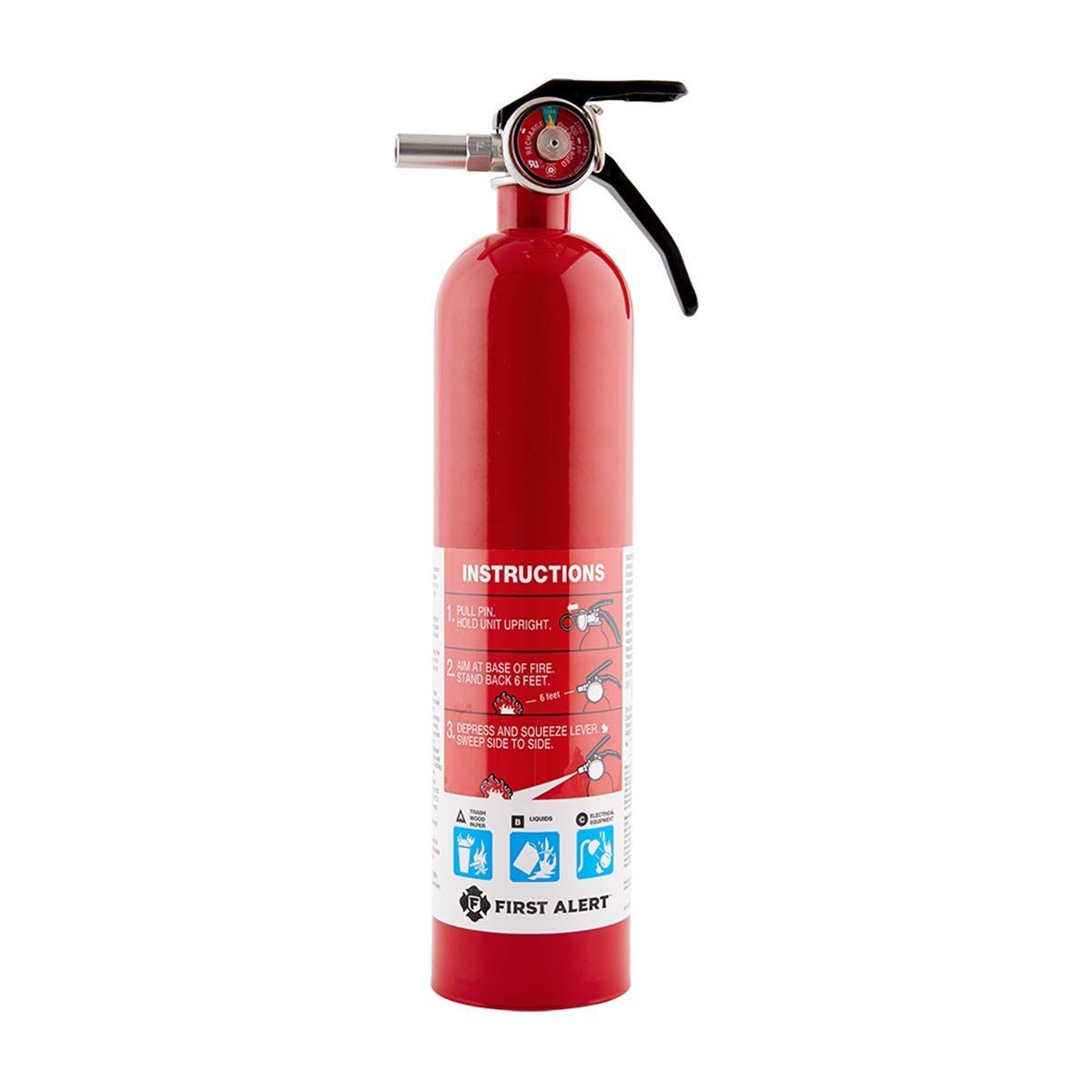
At a Glance
- Price range
- From under $15 to $40
- Budget pick
- Kidde FA110G ($23.82 · 4.8★)
- Data
- Analyzed over 129,000 verified reviews across 6 finalists.
- Best for
- Kitchen firesHome safetyGarage and workshopBoats and RVs
- Skip if
- You only need a small kitchen spray—a compact aerosol may be enough.
Types Explained
Traditional Dry Chemical Extinguisher
Pressurized canisters containing a dry chemical powder (typically monoammonium phosphate) that smothers flames on contact.
- Effective on Class A (wood), B (liquid), and C (electrical) fires
- Widely available and affordable
- Long discharge time (10-20 seconds for home models)
- Leaves a messy powder residue
- Requires regular maintenance (shaking, gauge checks)
- Disposable models must be replaced after 12 years
Best for: Whole-home protection where multiple fire types may occur
Example: Kidde FA110G
Fire Blanket
A woven fiberglass sheet designed to smother small fires by cutting off oxygen, typically used on grease or liquid fires.
- No mess or cleanup
- Never expires; always ready
- Lightweight and easy to deploy
- Only works on small, contained fires
- Not effective on electrical or deep-seated fires
- Must be in close proximity to flames
Best for: Kitchens and campers who want a no-fuss backup for grease fires
Example: Prepared Hero 2-Pack
Aerosol Spray Extinguisher
Compact, can-based sprays that release a biodegradable, non-toxic agent to smother small fires.
- Very easy to use—point and spray
- Lightweight and portable
- Safe on grease, electrical, and household fires
- Shorter discharge time (around 32 seconds per can)
- Not rechargeable
- Small can size limits coverage
Best for: Quick-response supplemental protection in kitchens, cars, and dorms
Example: First Alert EZ Fire Spray
What Actually Matters
| Factor | Importance | Best brand |
|---|---|---|
UL Rating (Classes A, B, C) At least 1-A:10-B:C This covers wood, paper, liquids, and electrical fires. For most homes, a 1-A:10-B:C rating exceeds the minimum need; 2-A is only necessary for larger homes with heavy fire loads. | Must-have | First Alert HOME1 |
Rechargeable vs. Disposable Rechargeable models save money over time but require professional servicing after use. Disposable units are cheaper upfront but must be thrown away after 12 years. | Nice-to-have | First Alert HOME1 (rechargeable) |
Weight and Handling Under 5 lbs Heavier extinguishers may be dropped during a panic. Look for easy-grip handles and a clear pressure gauge that even an untrained user can read. | Must-have | Kidde FA110G (3.9 lbs) |
Mounting Bracket Includes quick-release wall bracket A sturdy, easy-to-release bracket ensures the extinguisher is accessible in an emergency. Avoid plastic straps that can crack or loosen over time. | Nice-to-have | All reviewed models include brackets |
Warranty Length At least 6 years A longer warranty signals manufacturer confidence. Always check the expiration date—even rechargeable units degrade internally after a decade of pressure. | Nice-to-have | First Alert HOME1 (10-year) |
Smart Home Integration Wi‑Fi-connected extinguishers with app alerts are rare and add cost without meaningful safety improvement. A basic UL‑rated unit is sufficient for home use. | Marketing BS | — |
Budget Tiers & Top Picks
What to buy at each price point — and exactly where spending more stops paying off.
Under $25
$15 – $25Kidde FA110G

Stop paying more: Stop at $25. Spending more gets you a rechargeable extinguisher or longer warranty, but this unit meets minimum UL requirements for most households.
When to upgrade: Need marine-grade durability or a rechargeable model? Step up to $27–$40.
$25 – $35
$25 – $35First Alert HOME1

Stop paying more: Up to $35, you get high-quality rechargeable extinguishers with long warranties. Beyond that, you're paying for specialty blankets or multi-packs.
When to upgrade: If you need a fire blanket for the kitchen, add a $12–$40 blanket separately.
Over $35
$35+Prepared Hero 2‑Pack Fire Blanket

Stop paying more: Over $40, you're paying for multiple blankets or specialty auto extinguishers. A $40 blanket is top of the line; there's no need to spend more on a home blanket.
When to upgrade: Consider a traditional extinguisher alongside for comprehensive protection.
Common Mistakes to Avoid
Buying only one extinguisher for the kitchen and ignoring other areas.
Kitchen is the highest risk, but statistics show that fires start in garages, bedrooms, and living areas too. Keep a 2‑A:10‑B:C in the kitchen and a smaller 1‑A:10‑B:C on each floor.
Cost of getting it wrong: Replacing a whole home after a fire k+.
Not checking the pressure gauge monthly.
A flat gauge means the extinguisher may not work. Check monthly and shake dry chemical units to prevent powder settling. Set a calendar reminder on your phone.
Cost of getting it wrong: A extinguisher is cheaper than a failed discharge during a fire.
Relying solely on a fire blanket for all fires.
Fire blankets smother small grease fires but cannot handle electrical or deep‑seated fires. Always pair with a traditional extinguisher that has a Class C rating.
Cost of getting it wrong: A blanket is not a substitute for a extinguisher; using it wrong can cause injury.
Not training family members on the PASS technique.
In a panic, people forget the basics. Pull the pin, Aim at the base, Squeeze the handle, Sweep side to side. Practice with a training extinguisher or watch a video.
Cost of getting it wrong: Wasting precious seconds can let a small fire grow into an inferno.
Find Your Match
What type of fires are you most concerned about?
Frequently Asked Questions
What type of fire extinguisher do I need for my kitchen?
A UL-rated 1-A:10-B:C multipurpose dry chemical extinguisher is the standard kitchen choice. It handles grease, wood, and electrical fires. If you want a no-mess option for small grease flare-ups only, a fire blanket or a biodegradable spray like the First Alert EZ Fire Spray can supplement, but keep a traditional extinguisher nearby for larger or electrical fires.
Is a fire blanket as effective as a fire extinguisher?
A fire blanket smothers small grease or liquid fires without residue, but it cannot replace a fire extinguisher. Blankets need close proximity to flames and do not work on electrical or deep-seated fires. Both tools complement each other—keep a blanket in the kitchen and a traditional extinguisher on each floor.
How much should I spend on a home fire extinguisher?
Budget $25–$40 for a reliable UL-rated extinguisher. Fire blankets start for a 2-pack and never expire, making them an affordable add-on.
What should I avoid when buying a fire extinguisher?
Avoid unrated or expired extinguishers, as they may not perform when needed. Steer clear of heavy commercial units over 5 pounds—they’re hard to handle in a panic. Don’t rely solely on aerosol sprays for whole-home coverage; they discharge quickly and lack the volume of a traditional extinguisher. Always check for a UL or ETL certification label.
Do fire extinguishers expire?
Yes. Disposable extinguishers should be replaced every 12 years, while rechargeable ones can be serviced and refilled indefinitely. Check the pressure gauge monthly—if the needle is not in the green zone, replace or recharge it. Write the purchase date on the label so you don’t lose track.
Can I use a fire extinguisher on an electrical fire?
Only if it has a Class C rating, which means it contains a non-conductive agent. Most household multipurpose extinguishers (1-A:10-B:C) are safe for electrical fires. Never use a water-based or Class A–only extinguisher on live electricity. Stand back 8 feet and aim at the base of the flames.
Where should I mount a fire extinguisher in my home?
Mount one in the kitchen, near the exit door but away from the stove, so you can grab it without reaching over flames. Put another in the garage or workshop, and one on each floor near a bedroom. Vehicles and boats should have a compact, marine-rated extinguisher secured with a quick-release bracket.
How we wrote this guide
Our editorial team analyzed 6 finalists and over 129,000 verified buyer reviews, cross-referenced with specifications from UL, NFPA, and the U.S. Coast Guard. We also examined tests by Wirecutter and product teardowns on YouTube, prioritizing rating, ease of use, and long-term value. Prices are updated weekly from Amazon.
About this guide
Mubboo Editorial Team. Picks based on analysis of 129,000+ Amazon reviews, manufacturer specifications, and independent safety testing. Prices update weekly from Amazon. We aim for picks that keep your family safe without overpaying.