How to Choose a Fish Tank Filter (2026 Guide)
Expert advice to find the right filter type, size, and maintenance for a crystal-clear aquarium
By Mubboo Editorial Team · Updated Jun 8, 2026 · 6 min read
At a Glance
- Price range
- $6 – $37
- Data
- 121,224+ verified reviews across 6 filter models and replacement cartridges
- Best for
- Small freshwater tanks under 10 gallonsBetta fish and shrimp habitatsCommunity tanks up to 75 gallonsAquarists who prioritize quiet operation
- Skip if
- You’re running a saltwater reef tank — those need specialized protein skimmers.
Types Explained
Internal Filters
Submerged units that combine water pump and filtration inside the tank, mounted with clips.
- No wall space needed behind the tank
- Ultra‑quiet; ideal for bedrooms
- Aerates water while filtering
- Flow rate limited for larger tanks
- May need frequent media changes
Best for: Tanks 5–40 gallons, especially those placed flush against a wall.
Example: Tetra Whisper Internal 5‑10 (B0002DHYF4)
Hang‑On‑Back (HOB) Filters
External filters that hang on the rim, pulling water through intake tubes and returning it via a waterfall.
- Easy access for cartridge changes
- High flow and multi‑stage filtration
- Often include biological media like Bio‑Wheels
- Require clearance behind the tank
- Some models can be noisy
Best for: Medium to large tanks (20–75 gallons) where you want powerful, low‑maintenance filtration.
Example: Marineland Penguin 350 (B0009IMDQM)
Replacement Cartridges
Disposable packs containing carbon and polyester mesh, designed for specific filter brands.
- Color‑coded for easy size matching
- Bulk packs lower per‑change cost
- Ready‑to‑use, no rinsing required
- Ongoing expense every month
- Proprietary lock‑in with brand ecosystem
Best for: Existing Tetra Whisper or Marineland filter owners who want no‑fuss maintenance.
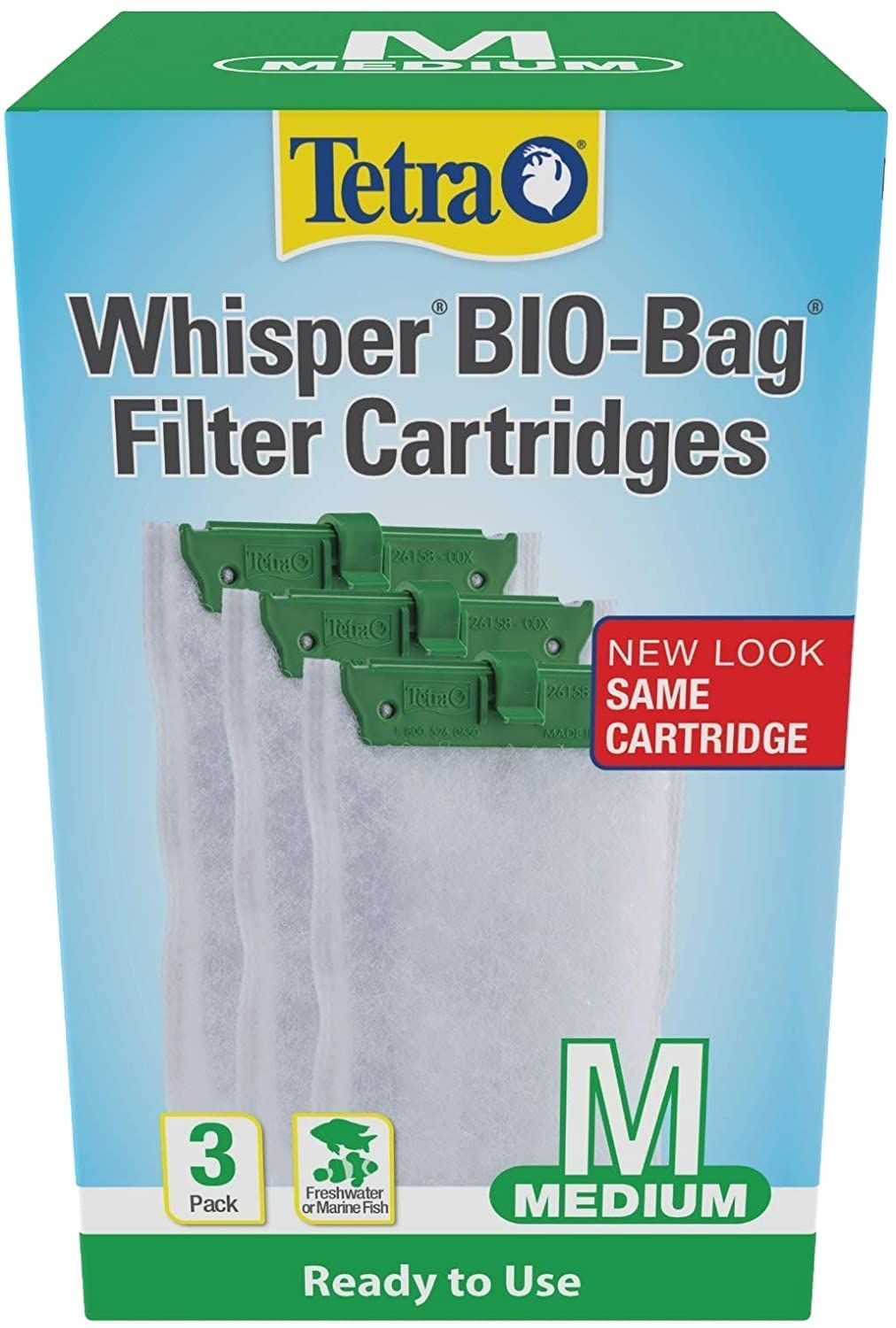
Example: Tetra Bio‑Bag Large 12‑count (B001DCZUO0)
What Actually Matters
| Factor | Importance | Best brand |
|---|---|---|
Flow Rate (GPH) vs. Tank Size ≥5x tank volume per hour; 10x for heavy bioloads Undersized flow leads to ammonia spikes. Always go larger if in doubt. | Must-have | Tetra Whisper IQ (130 GPH) for 20‑gallon tanks |
Noise Level <40 dB for bedroom tanks Internal filters are inherently quieter than HOBs but move less water. | Must-have | Tetra Whisper IQ with sound shield (<40 dB) |
Cartridge Availability & Cost Monthly cost under $2 when bought in bulk Avoid filters that only accept a single, price‑gouging proprietary media — you’ll regret it. | Nice-to-have | Tetra Bio‑Bag 12‑packs (~per cartridge) |
Self‑Priming Startup No manual filling required Eliminates the hassle of pouring water into the filter during installation or after a power outage. | Nice-to-have | Tetra Whisper IQ (submerged motor, self‑priming) |
Biological Filtration Boost Dedicated bio‑media like Bio‑Wheels or ceramic rings Especially critical for tanks with goldfish, cichlids, or high stocking density. | Must-have | Marineland Penguin now with rotating Bio‑Wheel |
Extended Warranty Plans A filter already comes with a 2‑year manufacturer warranty. Paying extra protection money rarely pays off. | Marketing BS | — |
Budget Tiers & Top Picks
What to buy at each price point — and exactly where spending more stops paying off.
Under $20
$15 – $20Tetra Whisper Internal Power Filter 5 to 10 Gallons
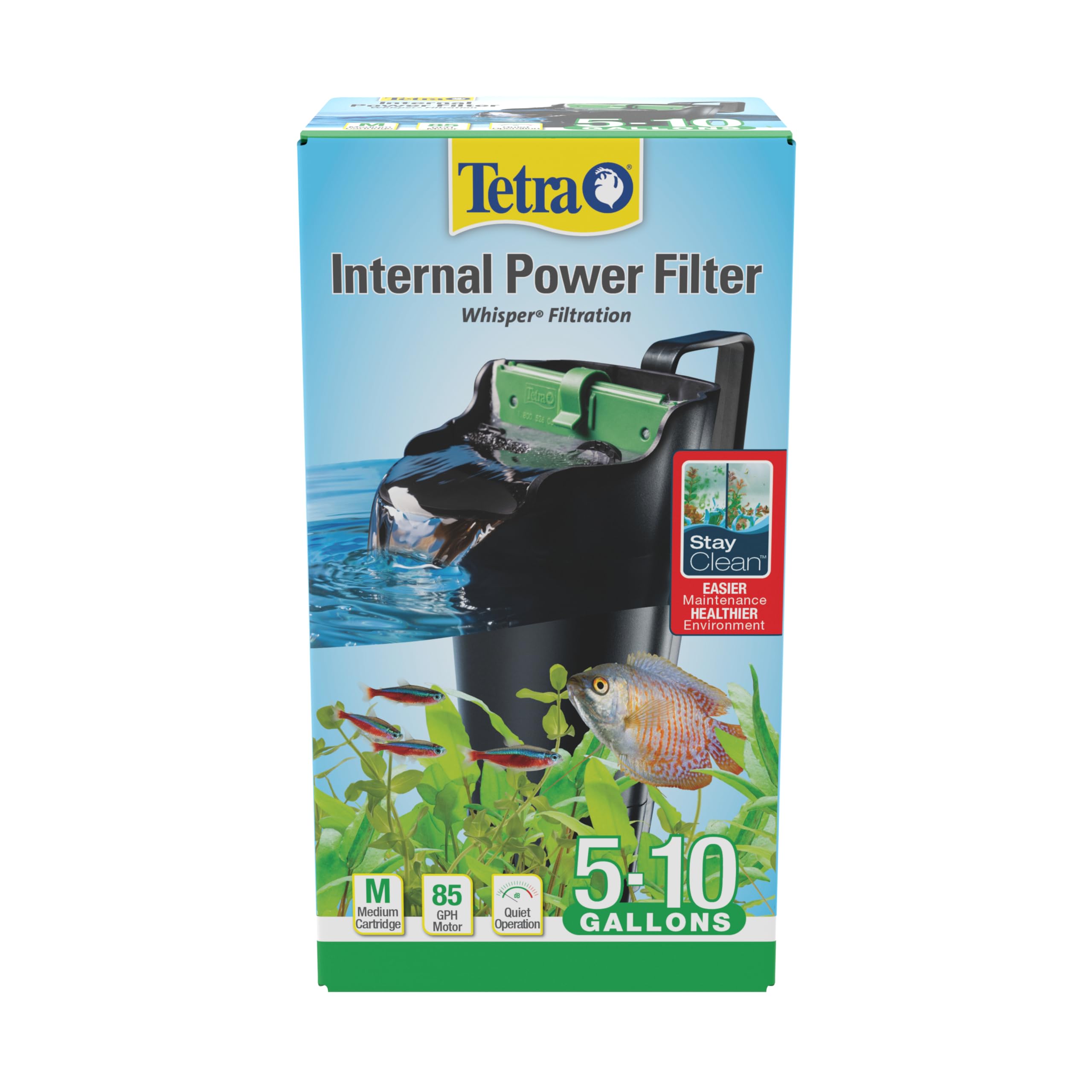
Stop paying more: Stop at $20 — spending more won’t get a better in‑tank filter for nano setups.
When to upgrade: Need a filter for a 20‑gallon tank or want even quieter operation? Step up to the IQ series.
$20 – $30
$23 – $30Tetra Whisper IQ Power Filter 20 Gallons

Stop paying more: At $23, you get self‑priming and a sound shield — the sweet spot for most 20‑gallon tanks.
When to upgrade: Moving to a 40+ gallon system? The Marineland Penguin 350 adds a Bio‑Wheel for extra biological power.
Premium ($30 – $40)
$30 – $37Marineland Penguin Bio‑Wheel Power Filter 350 GPH

Stop paying more: Above $40 you enter canister territory; this Penguin handles most freshwater tanks without the complexity.
When to upgrade: For reef or freshwater planted tanks that need customizable media, a canister filter may be worth the leap.
Common Mistakes to Avoid
Buying a filter rated for exact tank size
A 10‑gallon tank with a 10‑gallon rated filter can’t handle heavy feeding or a full stocking list. Oversize by at least 25%.
Cost of getting it wrong: Replacing sick fish and re‑cycling the tank costs $30–$50.
Ignoring cartridge compatibility
Choosing a filter from a lesser‑known brand that only sells expensive proprietary cartridges (often each) hurts in the long run.
Cost of getting it wrong: Up to $60 extra per year vs. buying Tetra Bio‑Bag bulk packs.
Forgetting to prime the filter
Running an HOB dry burns out the motor in seconds. Self‑priming models prevent this, but manual ones need a cup of water poured in first.
Cost of getting it wrong: A dead motor means buying a whole new filter — $20‑$40 wasted.
Overlooking noise in a bedroom tank
A standard HOB can hum at 50‑60 dB, loud enough to disrupt sleep. Internal or IQ‑series filters are nearly silent.
Cost of getting it wrong: Returning a filter you can’t stand costs time and return shipping.
Find Your Match
What's your tank size?
Frequently Asked Questions
How much should I spend on a fish tank filter?
Spend $15–$25 for a reliable internal or HOB filter for tanks under 40 gallons. The Tetra Whisper IQ 20 hits the sweet spot: quiet, self‑priming, and uses affordable cartridges. Above you’re mostly paying for higher flow rates suitable for 75+ gallon tanks. Avoid sub‑$10 no‑name filters that fail within months and lack replacement media.
What type of filter is best for a beginner?
A hang‑on‑back (HOB) filter like the Tetra Whisper IQ 20 is the easiest to maintain — you just slide out the old cartridge and drop in a new one monthly. Internal filters are also simple but require reaching into the tank. Both types are widely available in US pet stores like Petco and PetSmart, so replacement parts are never an issue.
How often should I change the filter cartridge?
Most manufacturers, including Tetra, recommend monthly changes. In a lightly stocked tank, you can stretch to 6 weeks. Using a bulk pack like the Tetra Bio‑Bag 12‑count keeps the per‑change. Never rinse a carbon cartridge and reuse it — the carbon loses its adsorptive power after about 4 weeks.
Are expensive filters worth it?
Only if you need high flow or advanced biological filtration. The Marineland Penguin 350 adds a rotating Bio‑Wheel that boosts beneficial bacteria, making it worth the premium for heavily stocked community tanks. For a simple betta tank, a internal filter does the job without overspending.
How do I know which replacement cartridges fit my filter?
Tetra uses a color‑coded system: Medium (blue) for 5–10 gallon filters, Large (green) for 20–40 gallon models. Check the label on your current cartridge or the filter model number. Marineland Penguin uses Rite‑Size cartridges, which are also widely available on Amazon and Chewy.
What’s the quietest aquarium filter?
The Tetra Whisper IQ 20, with a built‑in sound shield, runs under 40 dB — about as loud as a quiet library. For absolute silence, an internal filter like the Tetra Whisper Internal 5‑10 is slightly quieter because it’s submerged, but it moves less water. Both are ideal for bedroom tanks.
Can I use a filter rated for a bigger tank?
Yes, and it’s often a good idea. A 30‑gallon filter on a 20‑gallon tank gives you extra turnover and a buffer against ammonia spikes. Just make sure the outflow doesn’t create too strong a current for slow‑swimming fish like bettas. You can diffuse the flow with a spray bar or redirect it against the glass.
How we wrote this guide
Our team analyzed 121,224+ verified Amazon buyer reviews across 6 top filter models and replacement cartridges, watched independent YouTube reviews from channels like Aquarium Store Depot, and scoured community forums such as r/bettafish to identify the real‑world strengths and weaknesses of each product. We cross‑referenced flow rates, noise specs, and cartridge costs to give you a practical, not sales‑driven, recommendation.
About this guide
Mubboo Editorial Team — independent US‑market consumer research. Picks reflect editorial consensus from verified buyer feedback, video reviews, and community insights. Prices update weekly from Amazon.