How to Choose a Fishing Rod (2026 Guide)
Match power, length, and action to your target fish and fishing style—without overpaying.
By Mubboo Editorial Team · Updated Jun 8, 2026 · 8 min read
At a Glance
- Price range
- $18–$140
- Data
- 21,712+ verified reviews across 6 popular combos
- Best for
- Beginners wanting a complete kitAnglers needing portability for travelSaltwater surf fishingBudget-conscious buyers
- Skip if
- You're a seasoned angler who already owns a quality reel—you might want to buy a rod separately.
Types Explained
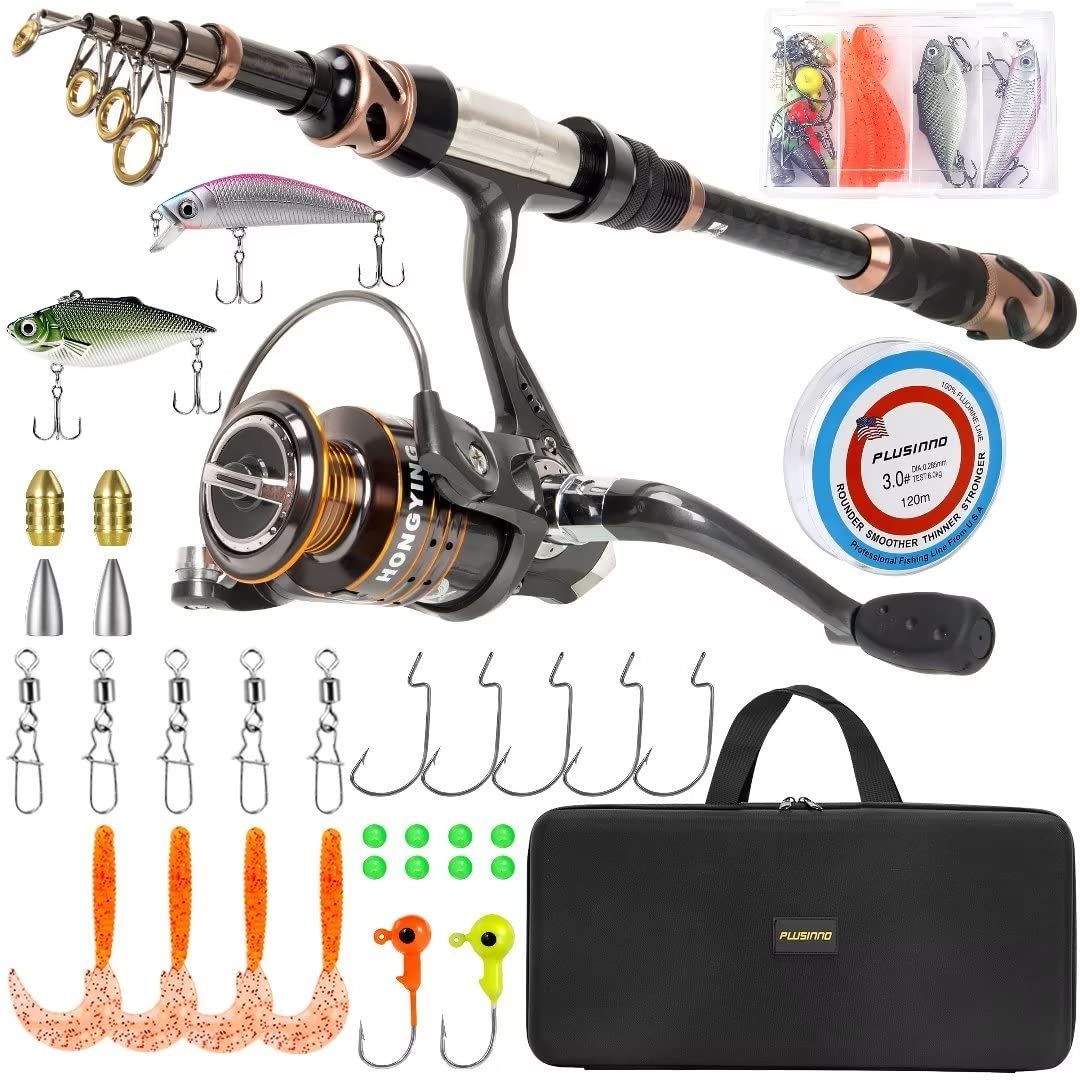
Telescopic Travel Combos
Collapsible rods that extend to full length; often paired with a spinning reel and come in a carrying case. Perfect for hiking, camping, or keeping in a car trunk.
- Collapses to 16–20 inches for easy storage
- Usually includes reel, line, and basic tackle
- Medium power handles most freshwater species
- Guide alignment can be tricky; misalignment causes tangles
- Less sensitive than one-piece rods
- Drag capacity often limited to 11 lbs
Best for: Beginners, travelers, and anyone who wants a grab-and-go kit.
Example: PLUSINNO Full Kit with Carrier Case
Compact Dock/Pond Combos
Short, one-piece rods under 4 feet with a small spinning reel. Designed for close-quarters fishing from docks, banks, or small boats.
- Extremely portable, fits in a tackle bag
- Often pre-spooled with light line
- Durable fiberglass/graphite composite blanks
- Casting distance limited to about 20 yards
- Not suitable for large fish due to light power
- Fewer guides may cause line friction
Best for: Kids, dock fishing, and pond hopping for panfish.
Example: Ugly Stik Dock Runner Combo
Heavy Freshwater Combos
Longer rods (7–8 feet) with heavy power and large spinning reels (size 4000–5000). Built to handle big catfish, salmon, and steelhead in rivers and lakes.
- High line capacity (15–30 lb) for long runs
- Stout backbone to turn powerful fish
- Fighting butt and contoured grips for leverage
- Heavier weight causes arm fatigue on long days
- Overkill for panfish or bass fishing
- Often only a 1-year warranty
Best for: Catfish, salmon, and other freshwater giants.
Example: KastKing Centron 8' Heavy Combo
Surf/Saltwater Combos
Lengthy rods (8–9 feet) with medium-heavy to heavy power, corrosion-resistant guides, and sealed reels. Designed to cast heavy lures and baits into ocean surf.
- Long length and heavy lure rating for long casts
- Saltwater-ready components prevent rust
- Smooth, high-capacity drag for powerful runs
- Heavier and bulkier than freshwater gear
- Higher price point, starting for a basic rod
- Not ideal for small freshwater species
Best for: Anglers targeting striped bass, bluefish, and surfperch from the shore.
Example: Penn Pursuit V 9' Combo
What Actually Matters
| Factor | Importance | Best brand |
|---|---|---|
Rod Power & Action Match power to fish size: light for panfish, medium for bass, heavy for catfish/salmon. Action refers to where the rod bends—fast action for quick hooksets, moderate for crankbaits. YouTube reviewer Fishing with Nat emphasizes that rod power is more critical than brand or material; a heavy rod with the wrong bait will tire you out without hooking more fish. | Must-have | KastKing (heavy) and PLUSINNO (medium) |
Line & Lure Weight Capacity Choose a line rating that exceeds the weight of your targeted fish. Lure weight should match what you plan to cast—too heavy and the rod overloads, too light and you lose casting distance. For saltwater, look for a lure rating of at least 1–4 oz, as recommended by Champ Picks in their surf rod review. | Must-have | Penn (heavy lures) and Berkley (mid-range) |
Reel Drag Quality A smooth, multi-disc drag system with at least 10 lbs of max drag prevents line breakage during sudden runs. Ball bearings (7+1 or more) ensure consistent pressure. Amazon buyers frequently praise the smoothness of sealed drags on saltwater reels; a sticky drag is the #1 complaint on cheap combos. | Must-have | Penn (HT-100 drag washers) |
Length & Portability 6–7 feet for all-purpose freshwater, 8+ feet for surf casting. Telescopic rods collapse to 16 inches but sacrifice some sensitivity. Telescopic rods are a top choice for travelers, but videos from TacticalBassin note that a one-piece rod always transmits bites better—if you have room, skip the collapsible. | Nice-to-have | PLUSINNO (telescopic) |
Durability & Warranty Fiberglass blanks are tougher than graphite; graphite/carbon blends offer a balance. Look for at least a 1-year warranty; 7 years indicates manufacturer confidence. Ugly Stik’s Dock Runner combo is famed for surviving kids and drops—perfect for teaching young anglers. | Nice-to-have | Ugly Stik (7-year warranty) |
Exotic Carbon Fiber Grades Terms like “IM6” or “30-ton carbon” sound high-tech, but for most anglers, the difference is undetectable. A reliable fiberglass-composite rod works as well for a fraction of the cost. | Marketing BS | — |
High Guide Counts More guides don’t automatically improve casting. Quality ceramic inserts matter more than quantity. The Berkley Big Game’s 6 guides, for example, handle 4 oz lures just fine. | Marketing BS | — |
Budget Tiers & Top Picks
What to buy at each price point — and exactly where spending more stops paying off.
Under $50
$18–$50Ugly Stik Dock Runner Spinning Combo

Stop paying more: Spending more than $50 in this tier yields diminishing returns; the Ugly Stik’s durability and 7-year warranty outperform pricier compact rods. Use any extra budget for better line or lures.
When to upgrade: If you’re catching larger bass or plan to fish open water, step up to a 6–7 footer in the mid tier.
Mid-Range ($50–$100)
$50–$100KastKing Centron 8' Heavy Combo

Stop paying more: The Centron’s heavy backbone and powerful drag are hard to beat at this price, especially with an active Amazon coupon that often lowers the cost further. Stop here unless you’re hitting the surf.
When to upgrade: For serious saltwater angling, the premium tier offers corrosion-proof components and greater casting range.
Premium ($100+)
$100–$140Penn Pursuit V 9' Spinning Combo
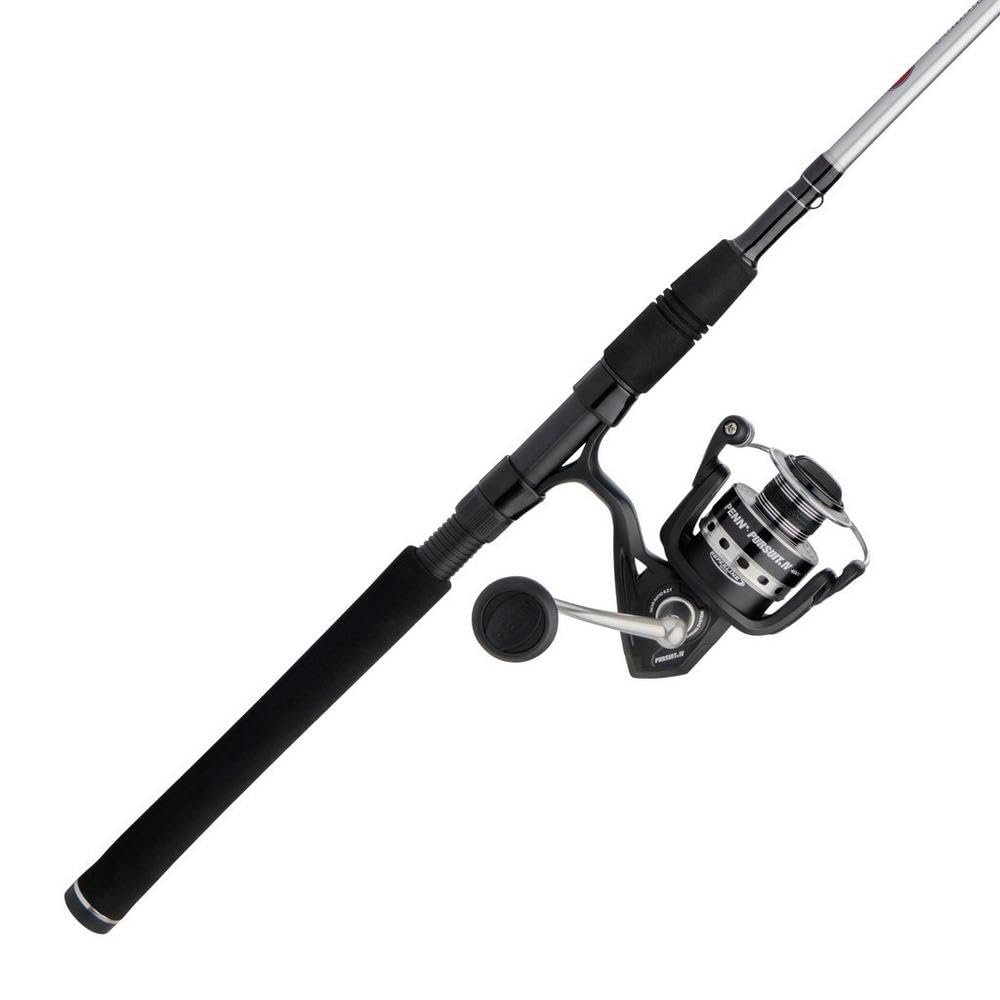
Stop paying more: The Pursuit V’s HT-100 drag and sealed bearings justify the investment if you fish in salt spray. Spending more than $140 buys marginal improvements for average anglers.
When to upgrade: You’re already at the top; pair it with a quality braided line and a sand spike for the best experience.
Common Mistakes to Avoid
Buying too heavy a rod for small fish
A heavy-power rod makes catching panfish feel like reeling in a log and reduces sensitivity to light bites. It also fatigues your arm quickly.
Cost of getting it wrong: Wasted $40–$80 on the wrong rod, plus missed fish due to poor bite detection.
Not aligning telescopic rod guides
Telescopic rods require the guides to be rotated into a straight line; misalignment causes line friction, tangles, and breaks. Buyers report snapping sections when forcing misaligned segments.
Cost of getting it wrong: Lost lures, tangled line, and possible rod replacement ($30–$50).
Ignoring drag quality when buying cheap combos
Low-end reels often have sticky or inconsistent drags. A sudden run from a good fish can snap the line instantly.
Cost of getting it wrong: Lost catch and a reel that needs upgrading sooner, adding + to the initial cost.
Choosing rod action without matching the presentation
Fast action rods are great for single-hook baits but can tear treble hooks out of a fish’s mouth. Moderate action works better for crankbaits and live bait.
Cost of getting it wrong: Hooking problems lead to missed fish and frustration; a second rod might be needed (+).
Find Your Match
Where do you primarily fish?
Frequently Asked Questions
How much should I spend on a fishing rod?
For a reliable beginner setup, $30–$50 buys a decent combo like the PLUSINNO or Ugly Stik. Mid-range $50–$100 gets you stronger drags and better materials for bigger fish. Over $100 is for serious saltwater or tournament anglers. Always factor in line, lures, and tackle.
What’s the best fishing rod for beginners?
A 6–7 foot medium-power spinning rod with a smooth reel is the most forgiving. Telescopic kits like the PLUSINNO Full Kit include everything you need and collapse for travel. Start with 8–10 lb monofilament line and a few basic lures.
Spinning vs baitcasting: which is better?
Spinning rods are easier for beginners: less backlash, lighter lures, and simpler to cast. Baitcasting setups allow more precision and handle heavier lines but have a steeper learning curve. For most US freshwater fishing, a spinning combo is the practical choice.
Do I need a saltwater-specific rod?
Yes, if you fish in the ocean regularly. Saltwater corrodes standard components. Look for rods with stainless steel guides (titanium oxide coated), sealed reels, and anodized aluminum reel seats. The Penn Pursuit V and Berkley Big Game are built for salt. Rinse gear with fresh water after each trip.
How do I care for a telescopic rod?
Always extend and retract gently, twisting slightly to seat sections. Never force it or snap it into place. Align guides before tightening. Clean sand and grit from joints to prevent wear. Store collapsed when not in use to prevent warping. Avoid leaving in hot car trunks.
What’s the difference between rod power and action?
Power is the rod’s lifting strength (light to extra-heavy). Action is where it bends—fast action bends near the tip for quick hooksets, moderate bends deeper for shock absorption. Choose power based on target fish size; choose action based on your technique and bait type.
How we wrote this guide
Our guide synthesizes 21,712+ verified Amazon buyer reviews across 6 best-selling combos, along with video insights from Fishing with Nat, TacticalBassin, and Champ Picks. We focused on real-world performance: what anglers praise and complain about after months of use, plus key rod specs like power, drag, and durability. We cross-referenced manufacturer claims against buyer reports and independent video tests to separate marketing hype from what actually helps you catch fish.
About this guide
Mubboo Editorial Team — independent US-market consumer research. Picks reflect editorial consensus from verified buyer reviews and independent video analysis.