How to Choose a French Press (2026 Guide)
Find the perfect French press for your morning ritual
By Mubboo Editorial Team · Updated Jun 9, 2026 · 7 min read
At a Glance
- Price range
- $19.99 – $58.33
- Data
- 178,799 verified reviews across 6 finalists
- Best for
- Daily home useCampingOffice coffee
- Skip if
- You prefer single-serve, fast brewing — consider an AeroPress
Types Explained
Glass French Press
Carafe made of heat-resistant borosilicate glass, with a plastic or metal frame.
- Classic design lets you watch the brew
- Usually more affordable
- Does not retain odors
- Glass can break if dropped
- No insulation, coffee cools faster
- Some plastic components may feel cheap
Best for: Home use with careful handling, those who prefer tradition
Example: Bodum Chambord (34 oz)
Stainless Steel French Press
Durable 304 stainless steel carafe, often dishwasher safe and unbreakable.
- Nearly indestructible, great for travel
- Dishwasher safe, easy cleanup
- Retains heat better than glass
- Heavier than glass
- Typically more expensive
- Can't see brew progress
Best for: Camping, RV, households with kids, anyone tired of broken glass
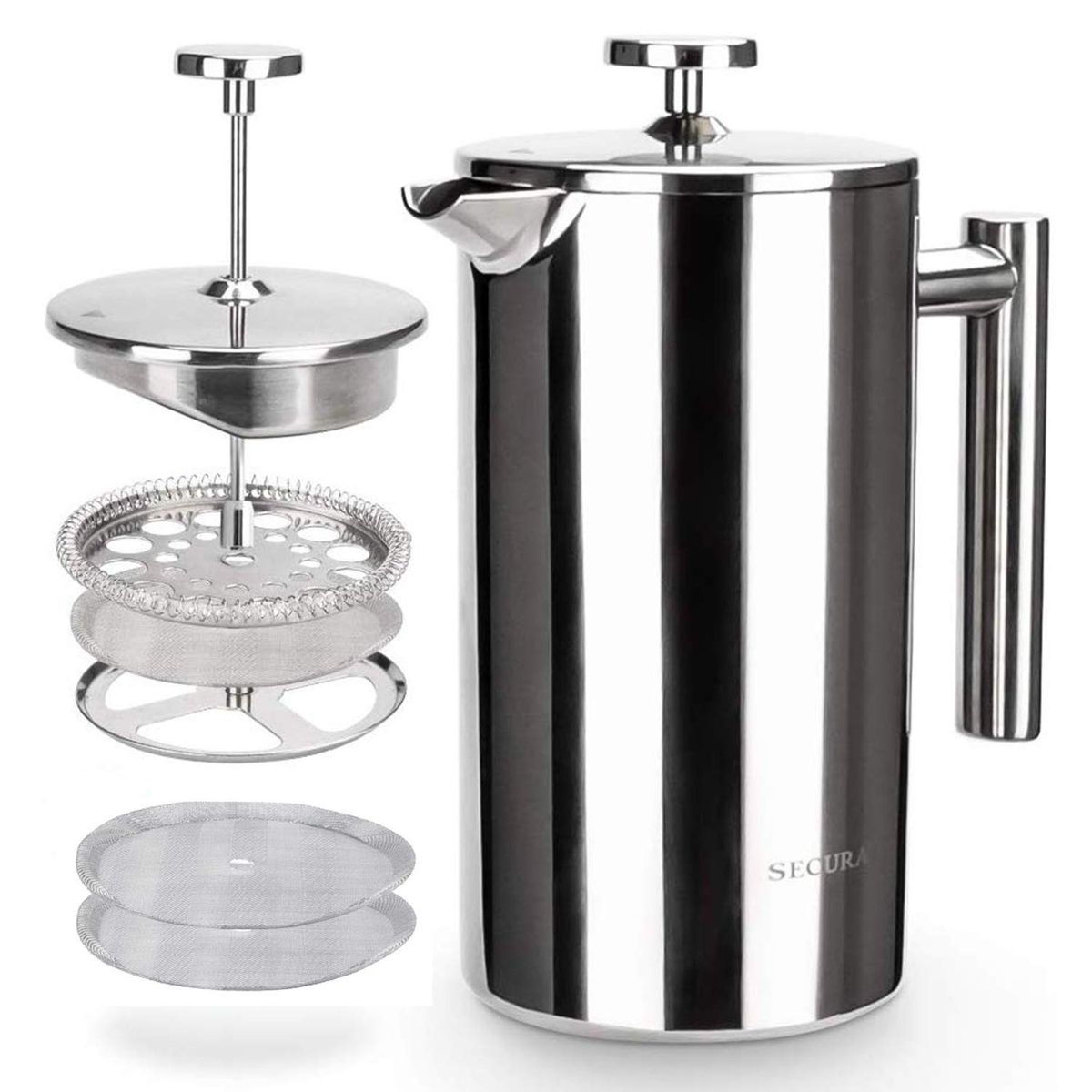
Example: Secura 34 oz Stainless Steel French Press
Insulated Double-Wall French Press
Stainless steel with a vacuum layer to keep coffee hot for longer.
- Keeps coffee hot for extended periods
- Same durability as stainless steel
- No condensation on exterior
- Bulkier and heavier
- Most expensive option
- Pre-heating may be needed for best results
Best for: Slow sippers, offices, morning routines where you drink over an hour
Example: MuellerLiving Double-Walled 34 oz
What Actually Matters
| Factor | Importance | Best brand |
|---|---|---|
Material Durability Stainless steel or borosilicate glass Glass can break; stainless is virtually indestructible. | Must-have | Secura (304 stainless steel) |
Filtration Quality Multi-level mesh filter (3+ layers) for grit-free brew A single mesh may let fine grounds through; look for double or triple screens. | Must-have | MuellerLiving (4-level) |
Capacity 34 oz (8-cup) is standard for 2–4 people; 10 oz for solo Too small and you'll be brewing twice; too large may be bulky. | Must-have | Bodum (34 oz models) |
Insulation Double-wall vacuum if you need to keep coffee hot >30 min Single-wall cools faster; pre-heat helps but not the same. | Nice-to-have | MuellerLiving |
Ease of Cleaning Dishwasher-safe carafe and simple plunger disassembly Avoid designs with hard-to-reach crevices where coffee oils build up. | Must-have | Secura (fully dishwasher safe) |
Brand Premium Paying extra for a famous name doesn't improve coffee; many top-rated presses are from lesser-known brands. | Marketing BS | — |
Budget Tiers & Top Picks
What to buy at each price point — and exactly where spending more stops paying off.
Budget
Under $25Bodum Brazil French Press Coffee Maker, 34oz

Stop paying more: Stop at $25. Spending more won't get you a better brew in this tier; basic glass presses work fine if you're careful.
When to upgrade: Ready for metal? Step up to a stainless steel press for durability and heat retention.
Mid-Range
$25 – $45Cafe Du Chateau French Press Coffee Maker, 34oz
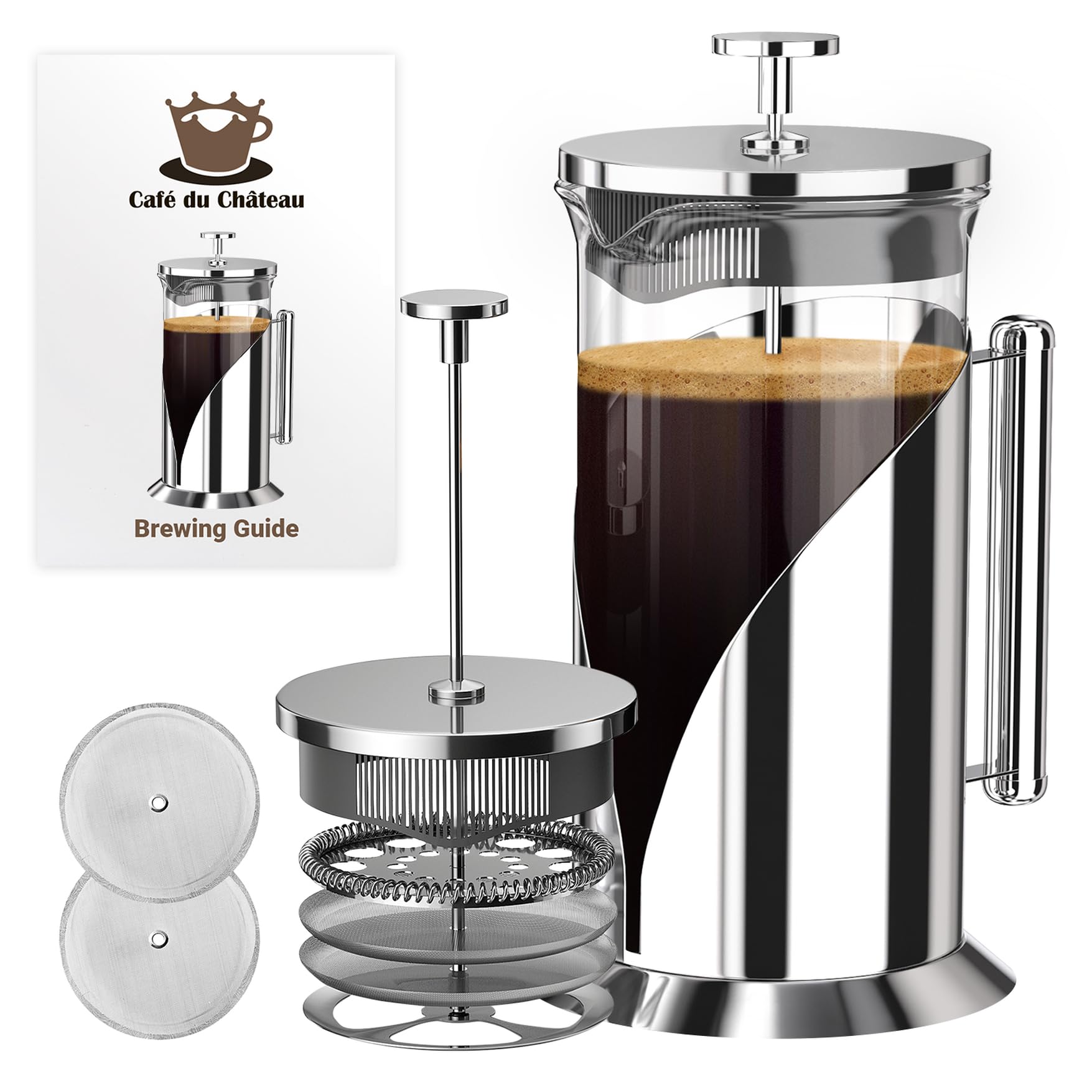
Stop paying more: At $38, you're paying for a lightweight design and lifetime coverage. Above $40, you step into insulated territory.
When to upgrade: Want coffee that stays hot for an hour? Insulated models start around $50.
Premium
$45+Secura French Press Coffee Maker, 34oz
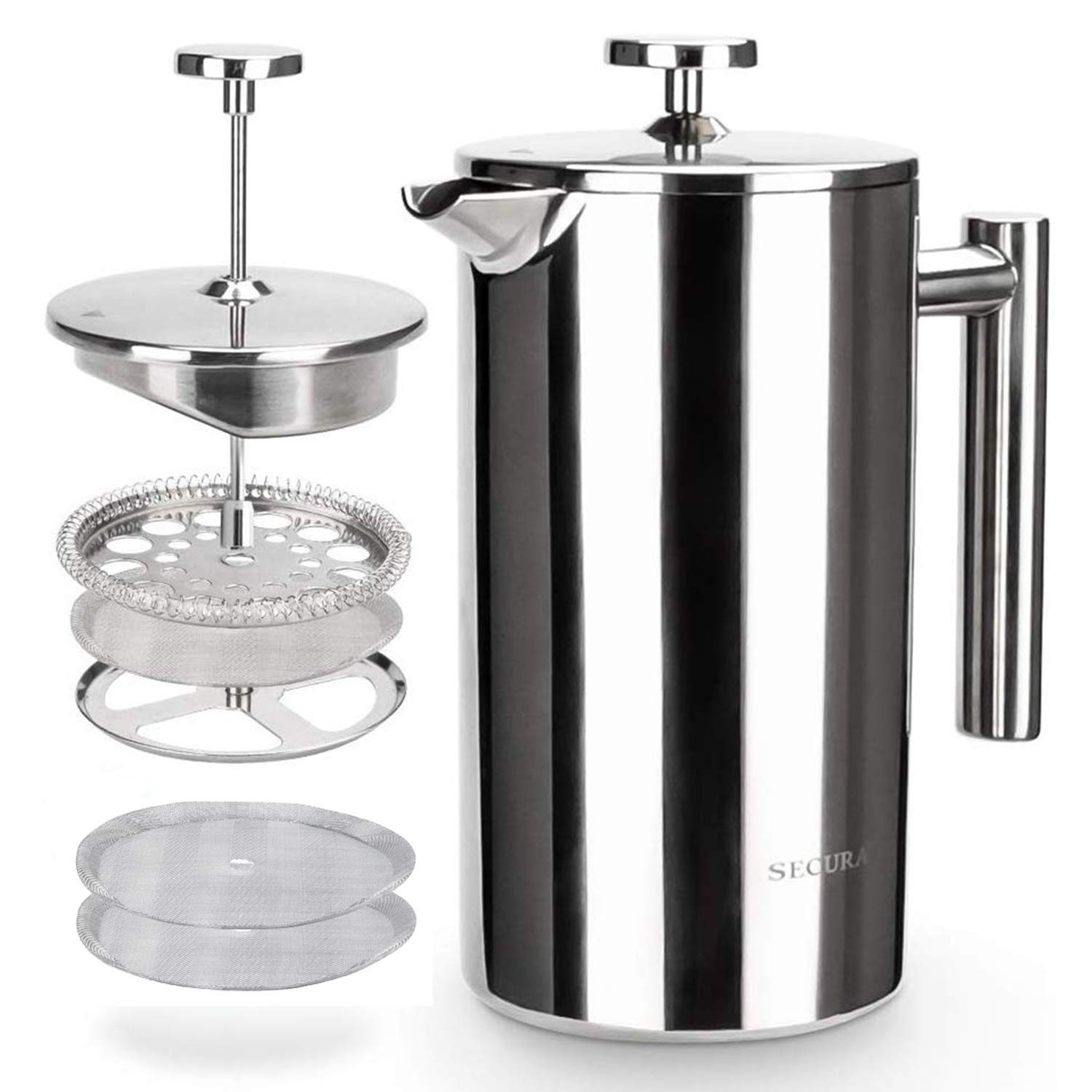
Stop paying more: At this price, you get top-notch steel construction and superb filtration. Spending more adds insulation but may not be necessary for quick coffee.
When to upgrade: If you often reheat coffee, consider an insulated model like MuellerLiving for long-term heat.
Common Mistakes to Avoid
Buying a glass press for camping
Glass carafes shatter on uneven ground. For camping, a stainless steel press like Secura or Mueller is essential.
Cost of getting it wrong: Replacement cost: $20–$40 for a new glass, plus potential injury.
Choosing too small a capacity
A 12 oz press seems ideal for one cup, but a 34 oz (8-cup) press actually yields about 2–3 mugs. Many users regret undersizing.
Cost of getting it wrong: Having to buy a second, larger press — effectively double the cost.
Ignoring filtration layers
Single-screen filters let fine grounds through, resulting in a gritty cup. Look for at least 3 layers of mesh.
Cost of getting it wrong: Wasted coffee due to unpleasant texture, and you may buy a replacement filter or a new press.
Not preheating the press
Pouring hot water into a cold carafe drops brewing temperature, under-extracting coffee. Warm the press first.
Cost of getting it wrong: Wasted coffee that tastes weak, leading to adding more grounds and higher cost per cup.
Find Your Match
What's your primary use?
Frequently Asked Questions
What is a French press and how does it work?
A French press, or cafetière, steeps coarse coffee grounds in hot water for about 4 minutes. A metal mesh plunger then presses the grounds to the bottom, separating the brewed coffee from the grinds. It produces a rich, full-bodied cup because the coffee oils remain in the brew, rather than being absorbed by a paper filter.
How do I choose the right size French press?
A 34-ounce (8-cup) press is standard and delivers about 4 small mugs or 2–3 American cups of coffee. For solo drinkers or small kitchens, a 10–12 ounce press saves space. Remember that the ground coffee and water displace volume, so the actual yield is less than the carafe's capacity.
Glass vs. stainless steel French press — which is better?
<strong>Glass presses</strong> let you watch the brew and are typically more affordable, but they can break. <strong>Stainless steel presses</strong> are nearly indestructible, retain heat better, and are often dishwasher safe. They cost more and are heavier. For camping or clumsy kitchens, stainless is the safer bet.
How do you clean a French press?
Most carafes are dishwasher safe, making cleanup easy. The plunger and filter assembly should be disassembled and rinsed after each use to prevent stale coffee oils from building up. A quick scrub with a brush keeps the mesh clear, ensuring a grit-free brew every time.
How much should I spend on a French press?
A quality French press can cost as little as. Spending more gets you better materials, improved filtration, and insulation. Stainless steel models start and double-wall insulated presses run and up. The sweet spot for most users is $30–$45, where you get durability and performance without overpaying.
Can I use a French press for tea?
Yes, a French press works excellently for loose-leaf tea or cold brew. The same immersion brewing and pressing method applies. Just be sure to clean it thoroughly between uses to avoid flavor transfer. Some users keep a separate press dedicated to tea.
What type of coffee grind is best for French press?
<strong>Coarse grind</strong>, similar to sea salt, is ideal. Fine grinds can slip through the metal filter, creating sludge, and may over-extract, causing bitterness. If you grind at home, aim for a consistent coarse texture; pre-ground “French press” coffee is widely available and perfectly suitable.
How we wrote this guide
We researched six top French press models and analyzed over 178,000 verified Amazon buyer reviews to identify what matters most. Our picks reflect product specifications, buyer feedback on durability and ease of use, and insights from video reviews by coffee experts on YouTube channels like Smart Home and Tech Reveals.
About this guide
Mubboo Editorial Team — independent US-market consumer research. Picks reflect editorial consensus from product specifications and over 178,000 verified buyer reviews.