How to Choose Golf Clubs (2026 Guide)
Beginners skip the gimmicks and get the right set from day one
By Mubboo Editorial Team · Updated Jun 9, 2026 · 8 min read
At a Glance
- Price range
- $160 – $700
- Data
- 27,818 verified reviews across 6 finalists
- Best for
- Beginner to intermediate golfersTaller players wanting a tailored fitJuniors ages 9‑12Upgrading a single driver
- Skip if
- You’re an advanced golfer seeking tour-level performance — consider individual forged irons.
Types Explained
Complete Sets
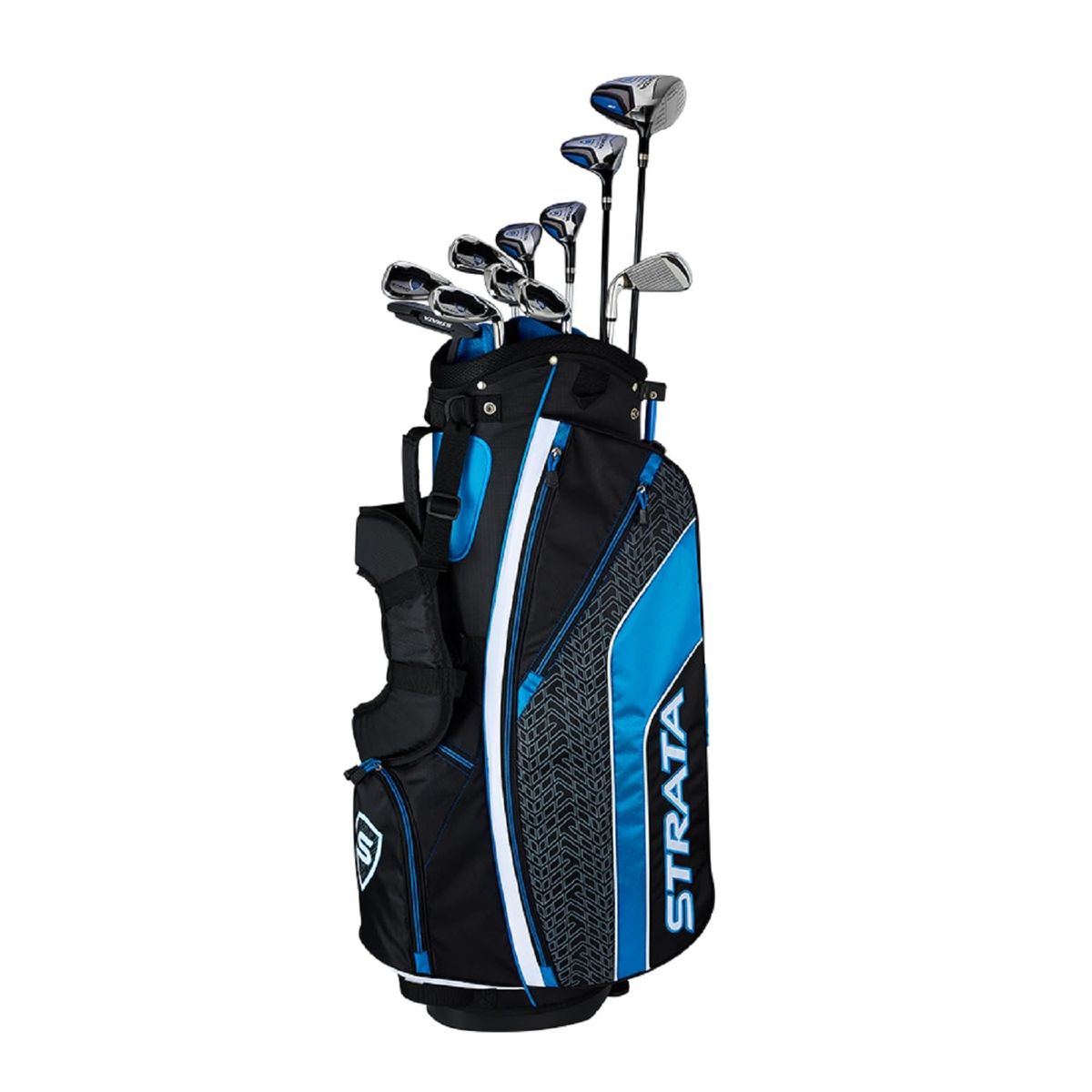
A ready-to-play package with driver, woods, hybrids, irons, wedges, putter, and a bag. Designed for forgiveness and ease of use.
- Everything in one box
- Clubs engineered to work together
- Often more cost-effective than buying individually
- Less customizable for advanced players
- Budget sets may have lower-quality shafts
Best for: New and casual golfers who want a hassle-free start
Example: Callaway Strata Ultimate 16‑Piece (from $700)
Junior Sets
Sized down for younger players (typically 3‑12 years). Feature lighter weights, higher lofts, and flexible graphite shafts.
- Correct length and weight for kid swing speeds
- Builds confidence with easy‑launch designs
- Affordable way to introduce the game
- Outgrown quickly
- Limited club count, often no sand wedge
Best for: Young golfers learning the game
Example: Precise X7 Junior Set
Individual Drivers
A standalone driver optimized for distance and forgiveness, often with adjustable hosels and advanced face technology.
- Maximum forgiveness on off‑center hits
- Adjustable loft and weighting
- Lighter weight for increased clubhead speed
- Only one club — not a full set
- High‑end models can be expensive
Best for: Golfers who already own a set and want a modern driver
Example: TaylorMade SIM2 Max Driver
What Actually Matters
| Factor | Importance | Best brand |
|---|---|---|
Shaft Flex Regular for most amateurs; Stiff for swing speeds >100 mph; Women’s/Senior for slower swings A flex too stiff causes low, short shots; too soft leads to high, erratic ball flight. | Must-have | Callaway and TaylorMade offer a wide flex range across their sets |
Club Composition At least driver, one hybrid, 6‑9 irons, pitching wedge, sand wedge, and putter A full set with modern hybrids replaces hard‑to‑hit long irons and boosts confidence. | Must-have | Callaway Strata Ultimate includes a balanced 16‑piece mix |
Forgiveness Perimeter weighting and cavity‑back design; look for MOI >5000g‑cm² Off‑center hits will still happen; forgiveness saves strokes and builds consistency. | Must-have | Wilson and Callaway are known for generous sweet spots |
Shaft Material Graphite for lighter weight and distance; steel for precision and control Graphite reduces fatigue and boosts swing speed for most beginners. | Nice-to-have | Graphite shafts in ladies’ and junior sets; steel in men’s standard sets |
Driver Loft 10‑10.5° for most players; 12° for slower swing speeds Higher loft helps launch the ball and reduces side spin — forgiving for new players. | Nice-to-have | Callaway and TaylorMade offer multiple loft options |
Custom Fitting for Beginners Until you have a repeatable swing, a custom fitting rarely returns value. Avoid spending + on fitted shafts as a newbie. | Marketing BS | — |
Budget Tiers & Top Picks
What to buy at each price point — and exactly where spending more stops paying off.
Budget ($150 – $200)
$150 – $200Precise X7 Junior Complete Kids Golf Clubs Set

Stop paying more: Junior sets above $200 offer few tangible gains; the X7 covers all the basics.
When to upgrade: For teen players, step up to adult small grips and graphite shafts in a complete set.
Mid‑Range ($400 – $600)
$400 – $600WILSON Golf Profile Platinum Package Set (Tall Carry)

Stop paying more: For average‑height golfers, spending $500‑$600 unlocks more versatile club mixes.
When to upgrade: Premium sets (like the Callaway Strata Ultimate) add hybrids, a lob wedge, and a 2‑year warranty.
Premium ($600+)
$600+Callaway Strata Ultimate 16‑Piece Complete Set

Stop paying more: Diminishing returns beyond $700; you’re into premium materials and adjustability that casual golfers won’t exploit.
When to upgrade: If you start shooting in the 80s, consider adding a fitted driver or wedges later.
Common Mistakes to Avoid
Buying the wrong hand orientation
Most boxed sets are right‑hand only. Left‑handed golfers often face limited choices; buying before you check leads to a useless set.
Cost of getting it wrong: Return postage and restocking fees — $30‑$50 wasted.
Ignoring shaft flex
Shaft flex that’s too stiff robs distance and feels boardy; too soft creates wild dispersion. Matching flex to your swing speed is critical.
Cost of getting it wrong: Poor contact causes 10‑15 yards lost per club; you may need to buy replacement shafts (+).
Paying for unnecessary custom fitting
Aggressive fitters push + shaft upgrades and full‑bag sessions to beginners. Until your swing is repeatable, the benefit is minimal.
Cost of getting it wrong: Spending an extra $400‑$800 for fitted shafts that may not suit you down the road.
Underestimating club length
Standard‑length clubs cause tall players to hunch, leading to back pain and inconsistent strikes. Very short players struggle to control the clubhead.
Cost of getting it wrong: Chronic discomfort and expensive lengths adjustments later.
Choosing form over function
Glossy marketing can mask heavy, poorly‑engineered heads. A sleek look won’t fix off‑center hits.
Cost of getting it wrong: Buying a set that looks good but fails to perform may require a + replacement within a year.
Find Your Match
What’s your skill level?
Frequently Asked Questions
How much should I spend on a beginner golf set?
Expect to spend $400–$700 for a quality complete set. Sets under $300 are often juniors or lack a hybrid and sand wedge. Over $700, you’re paying for premium materials and adjustability a beginner does not yet need.
Should I buy a complete set or individual clubs?
A complete set is the easiest and most cost‑effective way to start. The clubs are matched for forgiveness and gapping. Individual clubs make sense if you already have a bag and need a specific upgrade, like a modern driver or a set of wedges.
What’s the most important club for a beginner?
A forgiving driver with at least 10° of loft and a large sweet spot. Off‑the‑tee accuracy sets up the whole hole. Next comes a hybrid, which is easier to hit than a long iron and can be used from the fairway or rough.
How do I know which shaft flex I need?
Regular flex fits most male amateurs with a driver swing speed of 85‑95 mph. If you swing faster than 100 mph, go with Stiff. Women, seniors, and juniors typically need a softer flex. When in doubt, a demo or trial is the safest bet.
Are expensive golf clubs worth it for a beginner?
Not until you have a repeatable swing. A set from a trusted brand like Callaway delivers 90 % of the forgiveness and feel of a set. Spend your budget on the full set, not on a single premium driver.
What should I avoid when buying golf clubs?
Skip sets that are the wrong hand orientation, the wrong shaft flex, or too short/long for your height. Also beware of aggressive custom fitting up‑sells — Club Champion‑style fitting can add + for shafts that a beginner won’t benefit from.
How often should I upgrade my clubs?
For casual golfers, every 5‑7 years is plenty. Irons don’t wear out quickly, and the forgiveness jump from one generation to the next is small. Drivers iterate faster; if you play regularly, a new driver every 3‑4 years can pick up distance and accuracy.
How we wrote this guide
We analyzed 27,818 verified Amazon reviews across six top‑selling golf club sets and drivers. We scanned community discussions on r/golf and r/BuyItForLife for real‑world feedback, and checked expert guides such as Wirecutter’s golf gift coverage. We also watched video reviews from channels like H.I.T Golf to understand the latest iron technologies.
About this guide
Mubboo Editorial Team. Our picks are based on verified buyer reviews, community sentiment, and manufacturer specifications. Prices update weekly from Amazon.