How to Choose Jumper Cables (2026 Guide)
Picked from 2026's most-reviewed models, our guide cuts through the gauge, length, and clamp confusion so you buy right the first time.
By Mubboo Editorial Team · Updated Jun 9, 2026 · 8 min read
At a Glance
- Price range
- $25 – $100
- Data
- 73,702 verified reviews across 6 finalists
- Best for
- Sedans and small SUVsEveryday emergency preparednessFirst-time cable buyers
- Skip if
- You prefer a portable jump starter to get going solo, without another car.
Types Explained
Standard Jumper Cables
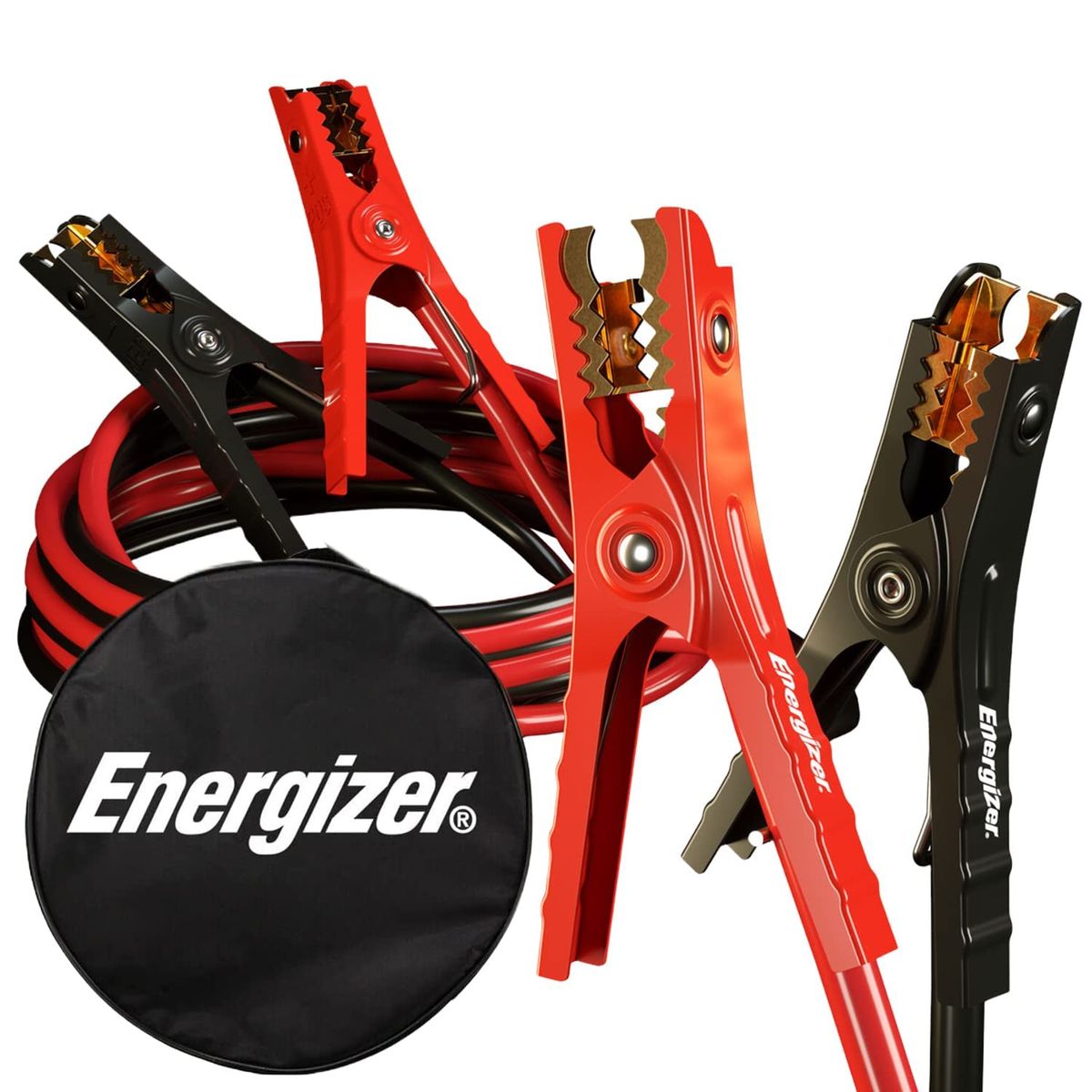
Typically 6-gauge, 16-foot cables suitable for most passenger cars and crossovers. They balance performance and portability.
- Lightweight and easy to store
- Adequate for small to medium engines
- Most affordable under $30
- May struggle with large V8 or diesel engines
- 16 feet can be short for awkward parking
Best for: Sedans, hatchbacks, and small SUVs
Example: Energizer 6-Gauge 16-Feet
Heavy-Duty Jumper Cables
4-gauge or thicker, often 20 feet long, designed for trucks, SUVs, and frequent use. Built with thicker copper-clad aluminum and stronger clamps.
- Handles high-current starts for large engines
- Longer reach for awkward battery positions
- Often UL-listed for safety
- Heavier and bulkier to store
- Slightly more expensive
Best for: Pickup trucks, vans, and large SUVs
Example: TOPDC 4-Gauge 20-Feet
Portable Jump Starters
Self-contained lithium battery packs that can jump start a car without another vehicle. Usually include USB ports and emergency lights.
- No second car required
- Doubles as a power bank for devices
- Compact and easy to keep in a glovebox
- More expensive ($100 range)
- Must be recharged every few months
Best for: Solo drivers and those who want multi-function backup
Example: AUXITO 6000A Jump Starter
What Actually Matters
| Factor | Importance | Best brand |
|---|---|---|
Gauge (Wire Thickness) At least 6-gauge for most cars; 4-gauge for trucks Lower gauge numbers mean thicker wire that carries more current. Using a 10-gauge cable on a large engine can cause slow, weak starts. | Must-have | Energizer |
Cable Length 16 feet minimum; 20 feet preferred for larger vehicles Longer cables give you flexibility when car batteries are far apart, but they add weight and bulk. 16 feet is the sweet spot for most. | Must-have | TOPDC |
Clamp Quality Fully insulated, strong spring, UL-listed Flaky alligator clips bend, slip off, and can cause sparks. Look for UL-listed, rubber-coated jaws that bite firmly onto battery terminals. | Must-have | CARTMAN |
Material & Flexibility CCA cable that stays flexible at -40°C Copper-clad aluminum (CCA) is standard. Avoid pure aluminum cables; they're brittle and lose conductivity. Good CCA stays pliable even in frigid winters. | Must-have | Energizer |
Carrying Case Hard case or durable zippered bag A case keeps cables tangle-free and protects insulation from trunk damage. The Goodyear's PVC hard case is a standout at this price. | Nice-to-have | Goodyear |
Gold-Plated Connectors Gold plating adds no meaningful conductivity advantage for jumper cables — it's a cosmetic upsell. The heavy current needed for a jump start relies on gauge and clamp contact, not plating. | Marketing BS | — |
Budget Tiers & Top Picks
What to buy at each price point — and exactly where spending more stops paying off.
Standard Duty
$25 – $30Energizer 6-Gauge 16-Feet Jumper Cables

Stop paying more: Stop at $30 for everyday cars. Spending more on a thicker gauge won't give you a noticeable benefit if your engine is under 3.5L.
When to upgrade: If you need 4-gauge power and 20-foot reach, step up to the $28-$30 range for cables like the Cartman or TOPDC.
Heavy-Duty
$30 – $90Energizer 1-Gauge 30-Feet Jumper Cables

Stop paying more: At $90 you get a permanent install kit and enough power for an 8L gas or 6L diesel engine. Beyond this, you're stepping into professional recovery gear.
When to upgrade: If you often jump start alone, consider a portable jump starter like the AUXITO for the same price range.
Portable Jump Starter
$90 – $100AUXITO 6000A Jump Starter
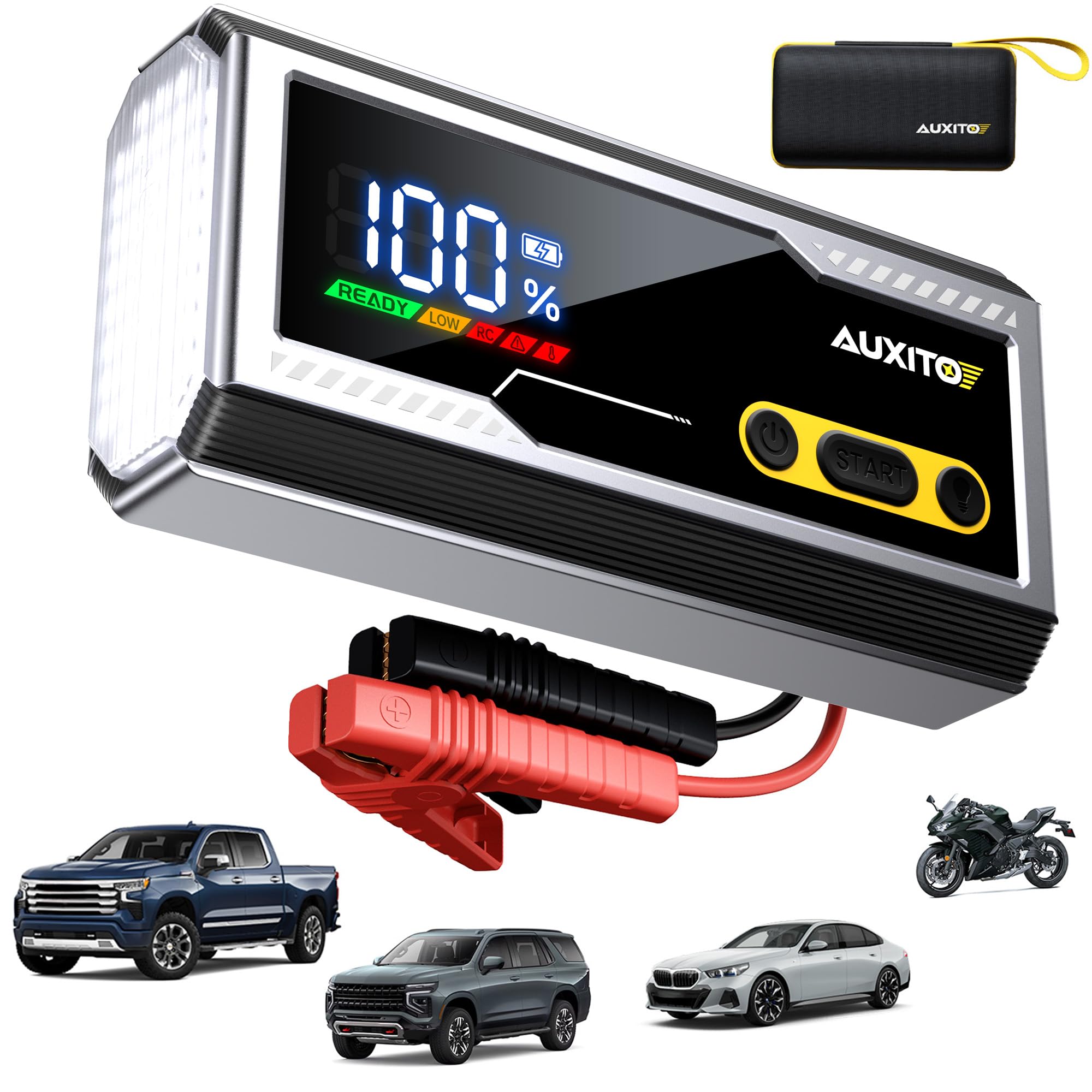
Stop paying more: For $100 you get a self-contained solution that also charges phones and includes a flashlight. No need to spend more unless you require extreme diesel power.
When to upgrade: If you still need traditional cables for a fleet, the Energizer 1-gauge is the heavy-hitter.
Common Mistakes to Avoid
Buying too-thin 10-gauge cables
Thin 10-gauge cables look tempting but they can't deliver enough current for most car batteries. CCA voltage drop can prevent a start entirely.
Cost of getting it wrong: Wasted time and possibly a tow truck call — $50–$100.
Not measuring the battery distance
A 12-foot cable may not reach from one vehicle to another if they're parked nose-to-nose or the batteries are on opposite sides. Always check before buying.
Cost of getting it wrong: Buying a second set of longer cables adds $25–$30 to your total.
Choosing cheap, uninsulated clamps
Exposed metal alligator clips can touch car body parts and short out. They also rust quickly. Invest in fully insulated, UL-listed clamps.
Cost of getting it wrong: A short circuit risks damaging your car's electronics, costing hundreds in repairs.
Find Your Match
What do you drive?
Frequently Asked Questions
What gauge jumper cables do I need?
For most cars and SUVs, 6-gauge cables provide enough current to start a dead battery. If you drive a truck, large SUV, or diesel engine, step up to 4-gauge or even 1-gauge for the extra power. A thicker cable (lower gauge number) reduces voltage drop and heat buildup, making starts faster and safer.
How long should my jumper cables be?
A 16-foot set works for most vehicles, allowing you to connect from one car to another with a little slack. If you drive a larger vehicle or need to jump from behind (as with a tow truck), 20 feet is ideal. Extra length adds weight and bulk, so stick with 16 feet unless you need the reach.
Is a portable jump starter better than traditional cables?
A jump starter is the better choice if you often park solo or don't want to rely on a second vehicle. It's compact, charges USB devices, and works without another car, but it costs more and needs recharging every few months. Cables are cheaper, never run out of battery, and are perfect for a two-car household.
What are the best jumper cables for cold weather?
Look for cables rated to at least -104°F (or -40°F) and made from copper-clad aluminum (CCA) that stays flexible in freezing temperatures. The insulation should be thick PVC that won't crack. Models like the Energizer 6-gauge and Cartman 4-gauge both perform reliably in extreme cold.
How do I know if my clamps are safe?
Safe clamps have fully insulated handles, strong springs, and alligator teeth that grip battery terminals securely. Look for UL-listed clamps, which have passed independent safety testing. Cartman's patented rubber-covered clamps are a standout for preventing accidental shorts. Avoid flimsy, uninsulated clips.
How much should I spend on jumper cables?
You can get excellent, highly rated cables for under $30. Spending $25–$30 gets you 6-gauge or 4-gauge cables with reliable clamps and a carrying case. Over $50 is only necessary for heavy-duty 1-gauge cables or portable jump starters. There's no need to overspend for everyday use.
How we wrote this guide
Synthesized from 6 finalists and 73,702+ verified Amazon reviews. Prices update weekly from Amazon. We cross-referenced gauge, length, clamp quality, and cold-weather performance to build this guide.
About this guide
Mubboo Editorial Team — independent US-market consumer research. Picks reflect editorial consensus from over 73,000 verified buyer reviews and manufacturer specifications.