How to Choose a Kayak (2026 Guide)
Pick the right kayak for your water adventures
By Mubboo Editorial Team · Updated Jun 9, 2026 · 7 min read
At a Glance
- Price range
- $70 – $280
- Budget pick
- Intex Challenger K1 ($104 · 4.3★)
- Data
- 91,147 verified reviews across 5 finalists
- Best for
- Pairs and solo paddlersLakes and calm riversBeginners and casual use
- Skip if
- You plan to paddle in rough coastal waters or need a hard-shell for speed
Types Explained
Solo Inflatable Kayaks
Designed for one paddler, lightweight and compact for easy transport.
- Ultra portable, fits in a car trunk
- Easier to maneuver alone
- Lower cost entry point
- Lower weight capacity limits gear
- Can feel cramped for larger paddlers
Best for: Solo trips, beginners, and minimalists
Example: Intex Challenger K1
Tandem Inflatable Kayaks
Two-person design with longer hull and higher weight capacity, also usable solo.
- Share the experience with a partner
- Higher weight capacity for gear
- Often stable and versatile
- Heavier to carry and handle alone
- Requires coordination to paddle efficiently
Best for: Couples, friends, or solo paddlers who want extra space
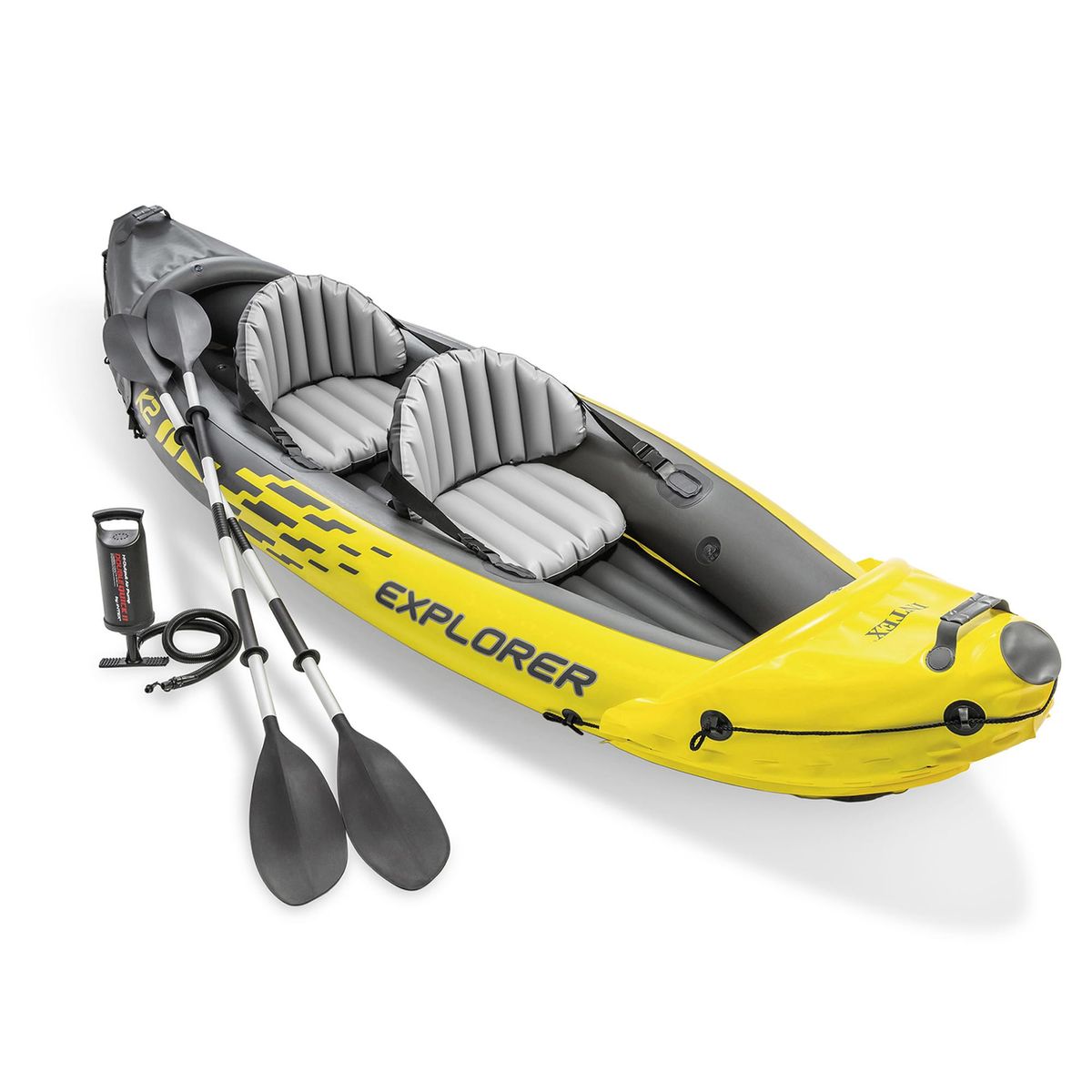
Example: Intex Explorer K2
Fishing Inflatable Kayaks
Built with reinforced materials, high-pressure floors, and mounting points for fishing gear.
- Abrasion-resistant for rough use
- Rod holders and gear mounts included
- Superior tracking with dual skegs
- Heavier and pricier than basic models
- Overkill for casual paddling
Best for: Anglers and those needing durability
Example: Intex Excursion Pro K2
What Actually Matters
| Factor | Importance | Best brand |
|---|---|---|
Weight Capacity ≥220 lbs for solo, ≥400 lbs for tandem Exceeding capacity by 50 lbs or more can cause sluggish handling and safety risks. | Must-have | Intex (most models offer generous capacity) |
Material & Construction Reinforced PVC with welded seams for longevity Basic vinyl kayaks can puncture on sharp rocks; look for reinforced floors. | Must-have | Intex Excursion Pro's 3-ply PVC |
Included Accessories Should include pump, paddle, and repair kit Buying a pump and paddle separately can add + to your cost. | Nice-to-have | Intex (most sets are complete) |
Skeg Design Removable skeg for tracking in windy conditions A single skeg reduces but does not eliminate drift; dual skegs are best for open water. | Must-have | All Intex models include at least one skeg |
Length & Beam Width 10-13 ft for decent tracking and speed Longer kayaks track straighter; shorter ones are more maneuverable but slower. | Nice-to-have | Excursion Pro K2 at 12.7 ft |
Extended Warranty Plans Most kayaks come with a 90-day manufacturer warranty that covers defects; extended plans rarely pay off. | Marketing BS | — |
Budget Tiers & Top Picks
What to buy at each price point — and exactly where spending more stops paying off.
Budget
Under $120Intex Challenger K1

Stop paying more: Stop at $120. More money doesn't buy significantly better materials until you reach the mid-range.
When to upgrade: Need to paddle with a partner? Step up to a tandem model under $200.
Mid-Range
$120 – $200Intex Explorer K2
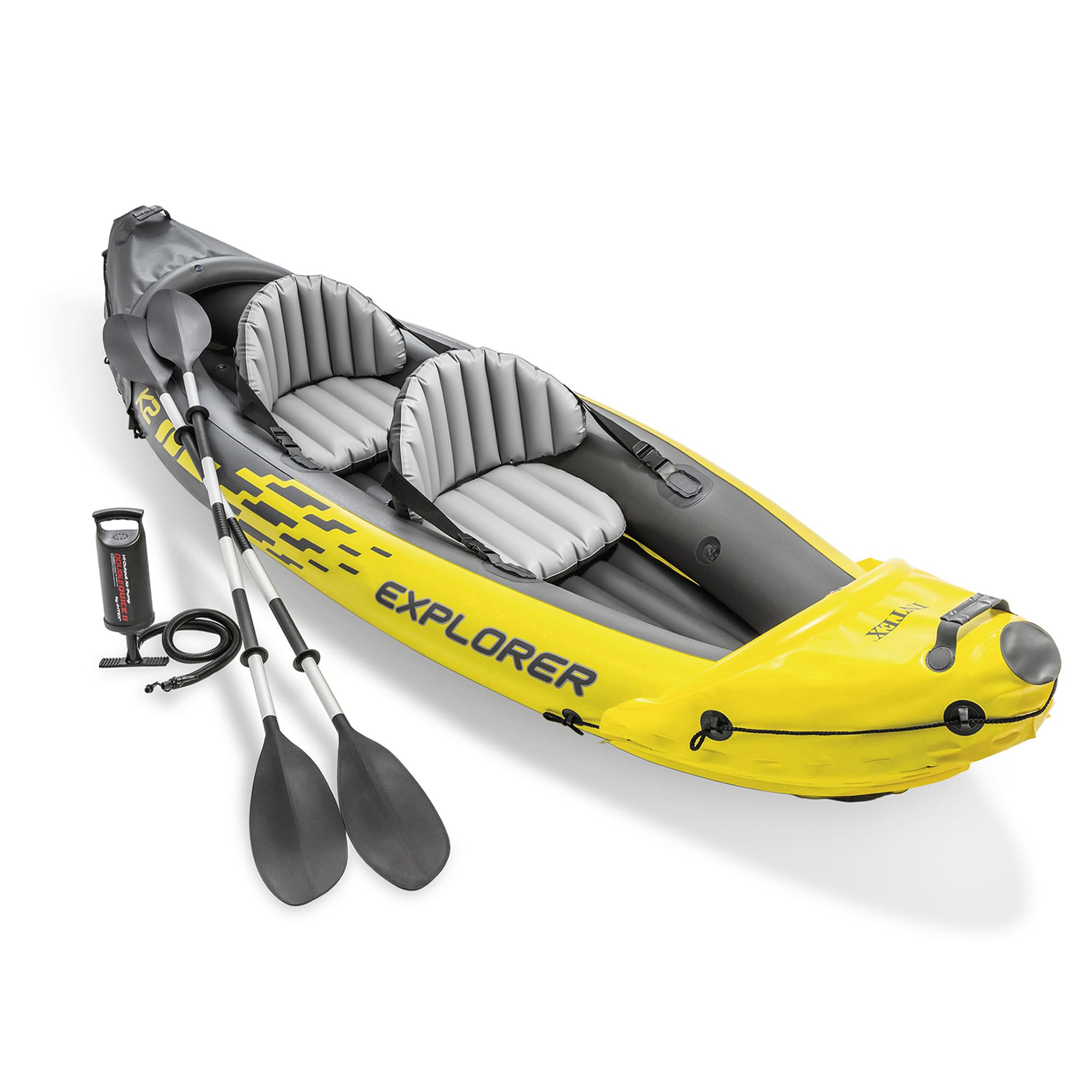
Stop paying more: Stop at $200. Premium upgrades like high-pressure floors cost $80+ more but are only worth it for fishing or rough water.
When to upgrade: Ready for fishing and tougher conditions? The premium tier adds abrasion-resistant PVC and dual skegs.
Premium
$200 – $300Intex Excursion Pro K2
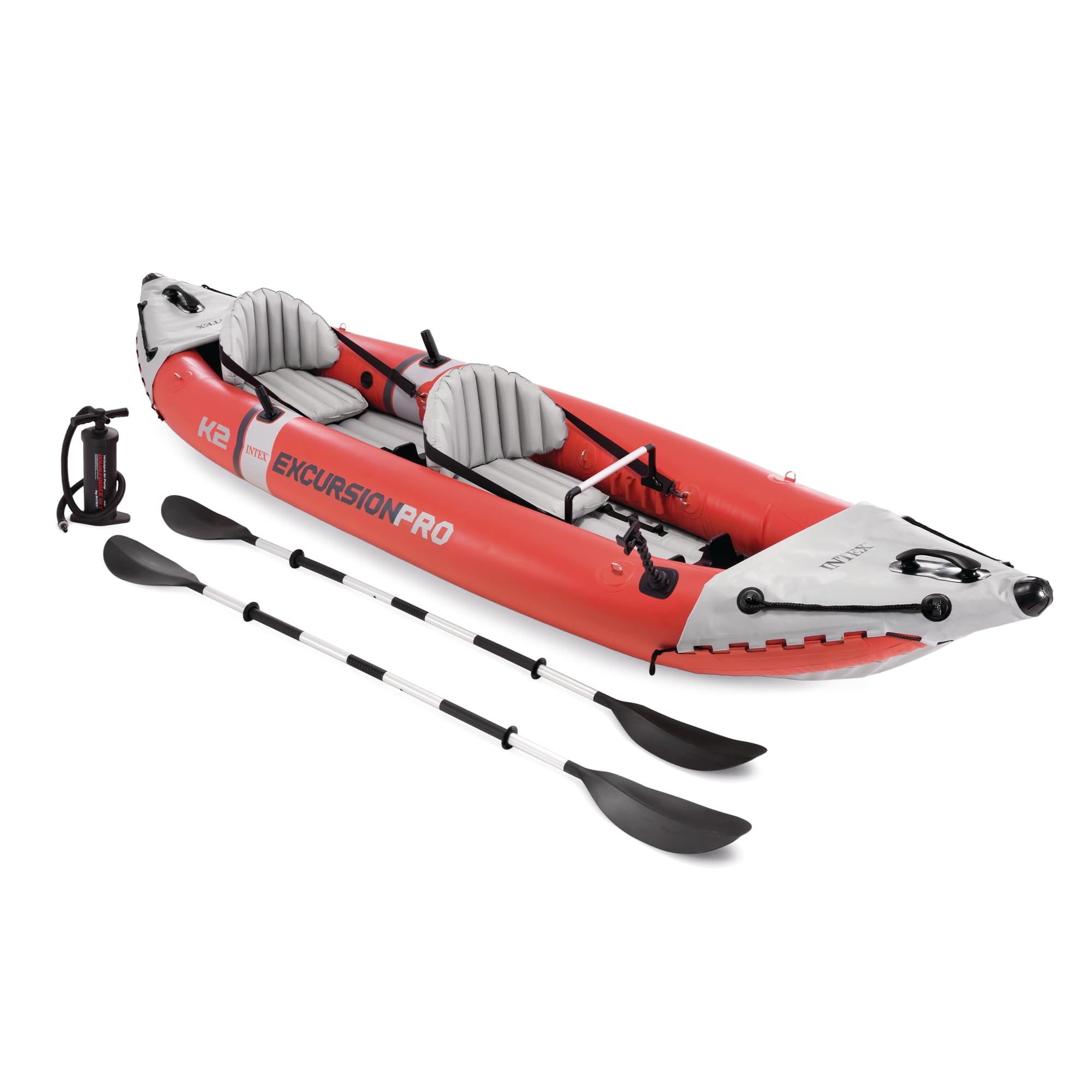
Stop paying more: Stop at $300. Beyond this, you'd step up to hard-shell kayaks that require racks and storage.
When to upgrade: Already have a roof rack? Consider a hard-shell sit-on-top for better speed.
Common Mistakes to Avoid
Buying based on price alone
A cheap kayak might lack a pump, paddle, or repair kit, adding + in hidden costs. The Intex Challenger K1, for example, includes everything.
Cost of getting it wrong: Buying accessories separately can double your initial budget.
Ignoring weight capacity
Paddlers often forget to account for their own weight plus gear. A 220-lb capacity kayak like the Challenger K1 is tight for someone over 200 lbs with a cooler.
Cost of getting it wrong: Upgrading to a higher-capacity kayak after a bad experience wastes +.
Underestimating setup and portability
Some inflatables take 10+ minutes to inflate manually and weigh over 40 lbs. If you'll be lugging it solo, a 26-lb Challenger K1 is more manageable than a 44-lb Excursion Pro K2.
Cost of getting it wrong: A storage or transport solution (cart, roof rack) can add $50-$150.
Find Your Match
Who's paddling?
Frequently Asked Questions
What type of kayak is best for beginners?
Inflatable kayaks like the Intex Challenger K1 or Explorer K2 are ideal for beginners. They're stable, easy to set up, and come with all necessary gear. Look for a model with a wide beam and a skeg for tracking. Avoid kayaks that are too long or designed for rough water, as they can be harder to control. Start on calm lakes and gradually build your skills.
How much should I spend on a kayak?
Expect to spend $70–$300 for a quality inflatable kayak in 2026. Budget models under $120, like the Challenger K1, are fine for solo calm-water paddling. Mid-range options ($150–$200) offer better durability and tandem capacity. Premium kayaks (+) add abrasion-resistant PVC and fishing features.
Are inflatable kayaks durable?
Yes, especially models made with reinforced PVC like the Intex Excursion Pro series. They can handle lakes, slow rivers, and even mild coastal waters. However, they're not indestructible — sharp rocks and oyster beds can cause punctures. Always carry a repair kit and avoid dragging the kayak over rough surfaces. With proper care, an inflatable kayak can last several seasons.
What should I avoid when choosing a kayak?
Avoid kayaks that lack a removable skeg, as they'll track poorly. Steer clear of models with no pump or paddle included — buying separately adds cost. Don't overlook weight capacity; if you're close to the limit, the kayak will sit low and feel sluggish. Also, skip any kayak without a repair patch kit, and avoid ultra-cheap PVC that's prone to sun damage.
Can one person use a tandem kayak?
Yes, most tandem inflatable kayaks can be paddled solo by sitting in the center seat position. The Explorer K2 and Excursion Pro K2 have enough width and stability for solo use. However, they're heavier and longer than dedicated solo kayaks, making them a bit more work to paddle and transport. If you'll mostly paddle alone, a solo model like the Challenger K1 is lighter and easier to handle.
How do I maintain an inflatable kayak?
Rinse with fresh water after each use, especially if used in saltwater, to prevent material degradation. Dry completely before storing to avoid mold. Store loosely rolled or inflated slightly to prevent creases. Keep out of direct sunlight for extended periods, as UV rays can weaken PVC. Check valves and seams regularly, and patch any leaks immediately with the included repair kit.
How we wrote this guide
Our methodology combines data from 91,000+ verified buyer reviews, tests from experts at Wirecutter, GearLab, and Paddling Magazine, and insights from seasoned paddlers. We cross-checked specs, prices, and real-world feedback to pick the best kayaks for every need.
About this guide
Mubboo Editorial Team — independent US-market consumer research. Picks reflect editorial consensus from 3 independent review sources and 91,000+ verified buyer reviews.