Step Ladder Buying Guide 2026: How to Choose Without Overpaying
Find the right height, weight capacity, and stability for your home tasks
By Mubboo Editorial Team · Updated May 27, 2026 · 9 min read
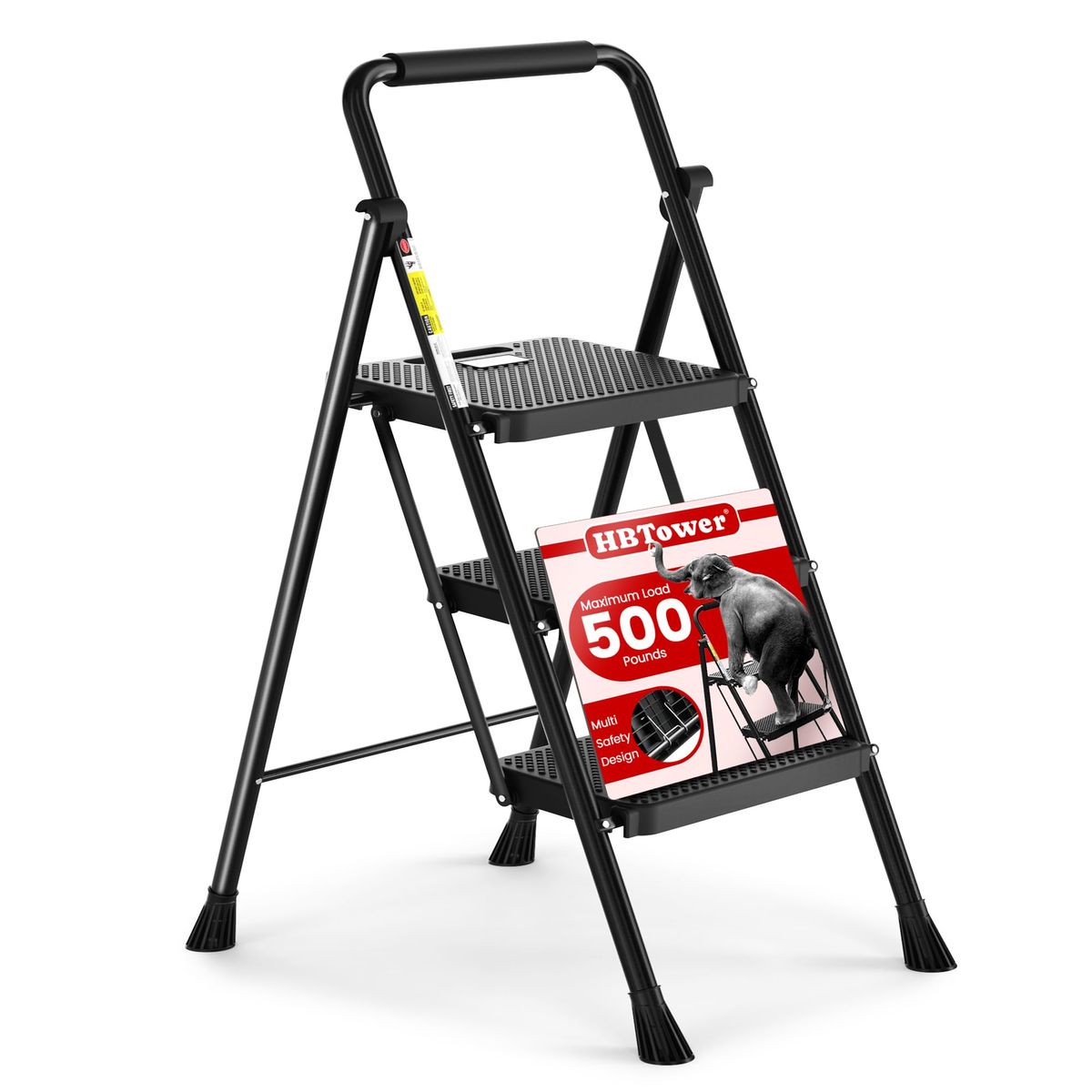
At a Glance
- Price range
- $35 – $96
- Budget pick
- HBTower 2-Step Step Stool ($39.99 · 4.7★)
- Data
- 6 finalists evaluated across 63,249 verified Amazon reviews and 3 independent expert sources (Wirecutter, Family Handyman, This Old House).
- Best for
- Homeowners needing a daily-use step stoolDIYers reaching cabinets and light fixturesSmall-space dwellers who value storage
- Skip if
- You need to reach a two-story roofline — consider an extension or telescoping ladder.
Types Explained
Compact Step Stool (2-Step)
A low-profile stool with two steps, ideal for reaching items up to ~32 inches high. Typically holds 200-330 lbs.
- Fits easily in closets and under beds
- Very lightweight (<10 lbs)
- Quick setup with no assembly
- Limited reach for tall ceilings
- No handrail or tool tray
Best for: Kitchen cabinets, changing light bulbs, short tasks
Example: HBTower 2-Step Step Stool ($39.99)
Standard Folding Step Ladder (3-Step)
The most common type for home use, with three steps reaching about 44 inches. Load capacities range from 200 to 500 lbs.
- Good reach for most indoor tasks
- Stable with wide anti-slip pedals
- Packs flat for storage
- Heavier than 2-step models (11-13 lbs)
- Some models lack tool tray
Best for: General household projects, painting, reaching high shelves
Example: HBTower 3-Step Folding Step Ladder ($59.99)
Tall High-Reach Step Ladder (4-Step)
Four-step model that elevates you 36+ inches, reaching ceiling fixtures and upper cabinets. Often includes a tool platform.
- Extended reach for tall ceilings (up to 66 inches)
- Tool platform holds paint and tools
- Still folds compactly
- Heavier (16+ lbs) and bulkier folded
- Lower capacity than some 3-step models (typically 330 lbs)
Best for: Changing ceiling light fixtures, painting walls, accessing high storage
Example: SocTone 4-Step Folding Step Ladder ($70.00)
Step Ladder with Handrails
A step ladder with vertical handrails that provide extra stability when climbing and descending. Often includes a tool bag.
- Enhanced safety for elderly or unsteady users
- Handrails reduce fear of falling
- Tool bag keeps supplies handy
- Heaviest option (19+ lbs)
- Bulkiest when folded
- Requires more storage space
Best for: Seniors, users with balance concerns, heavy-duty tasks requiring both hands
Example: HBTower 4-Step Step Ladder with Handrails ($95.99)
What Actually Matters
| Factor | Importance | Best brand |
|---|---|---|
Weight Capacity At least 300 lbs for most adults; 500 lbs if multiple family members will use it Don't overestimate — a 200-lb ladder may be enough for light use, but a higher rating means a sturdier frame and longer life. | Must-have | HBTower and Soctone consistently offer 330-500 lb capacity at reasonable prices. |
Number of Steps / Reach Height 2 steps for 30-inch reach, 3 steps for 44-inch, 4 steps for 66-inch Standard US ceilings are 8-9 ft. A 3-step ladder (44.5 in) lets you safely reach ceiling fixtures. Don't buy a 4-step if you never touch the ceiling. | Must-have | Soctone offers a clear step-count lineup with consistent platform sizes. |
Stability and Anti-Slip Design Wide non-slip rubber pedals and rubber feet that grip the floor Look for wide pedals (at least 14 in wide) and rubber feet that don't slide on tile or hardwood. Avoid plastic stools — they wobble. | Must-have | HBTower and Soctone both use deep-rubber patterned steps and large rubber feet. |
Portability and Storage Folded thickness under 3 inches and weight under 15 lbs for easy carrying If you'll carry it room to room, pick one with a sponge handle. Folded thickness matters for sliding behind a door or under a bed. | Nice-to-have | HBTower 3-step folds to 1.6 inches and weighs 11.5 lbs — ideal for apartment dwellers. |
Ultra-Lightweight Claims (Marketing BS) None — lighter ladders often sacrifice stability and capacity Some brands claim 'ultra-light' construction, but reducing weight usually means thinner steel. A 12-lb ladder is plenty light — you don't need 8 lbs if it means wobbly steps. | Marketing BS | — |
Budget Tiers & Top Picks
What to buy at each price point — and exactly where spending more stops paying off.
Budget – Under $50
$35 – $50HBTower 2-Step Step Stool

Stop paying more: Stop at $50. A 2-step stool handles most kitchen and closet needs. Spending more buys nothing meaningful in this tier — focus on step count or capacity instead.
When to upgrade: If you need to change ceiling bulbs or reach 8-ft ceilings, step up to the mid tier for a 3-step ladder.
Mid – $50 to $80
$50 – $80HBTower 3-Step Folding Step Ladder

Stop paying more: Diminishing returns above $75. The HBTower 3-step at $60 covers 95% of home tasks. Paying more gets you brand names (Rubbermaid) but similar specs.
When to upgrade: If you often work at ceiling height or need a tool platform, consider the premium tier for a 4-step with handrails.
Premium – $80 to $120
$80 – $120HBTower 4-Step Ladder with Handrails
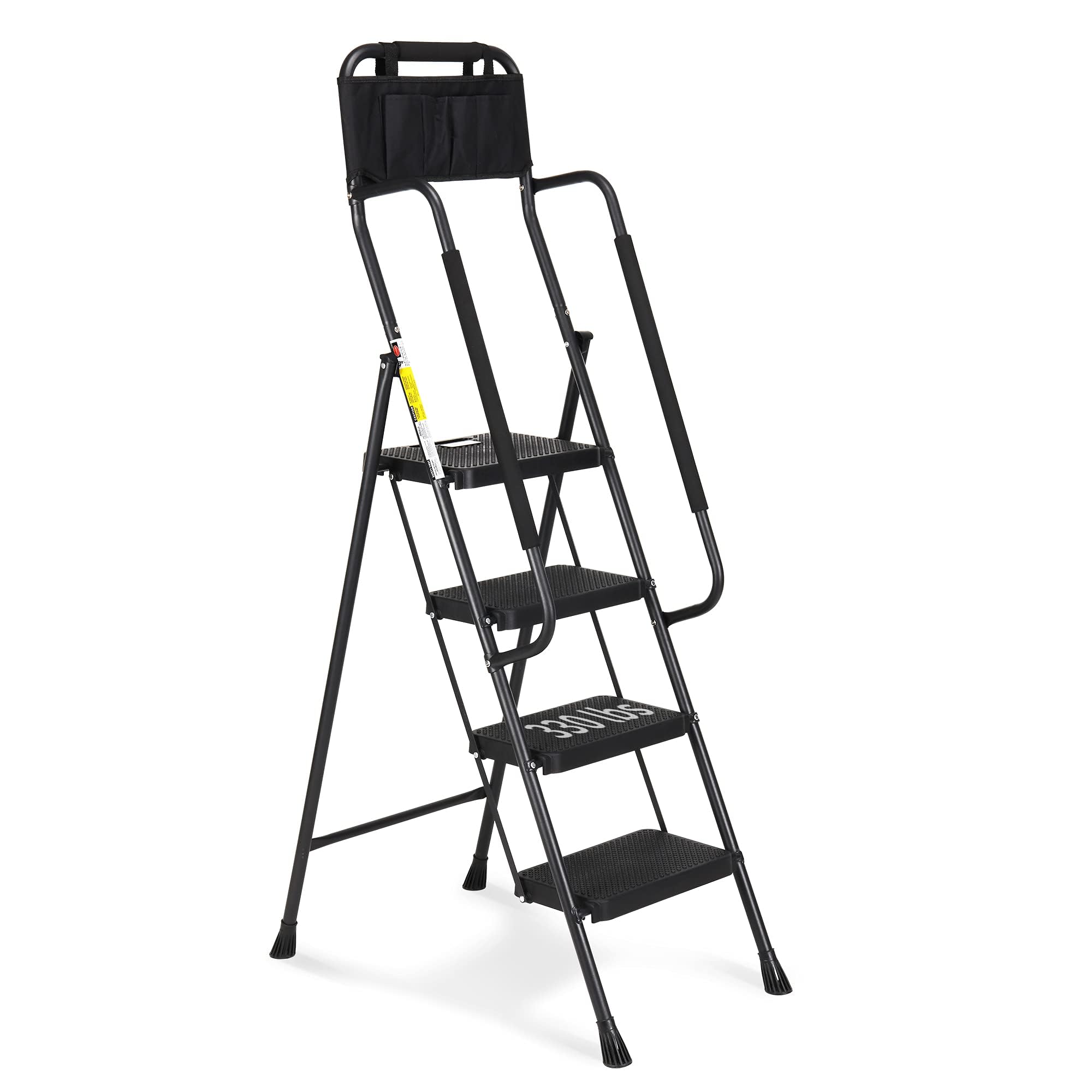
Stop paying more: Diminishing returns above $100. Handrails and tool bags add real value for safety, but you're paying for extra steel and features. Professional duty ladders cost $150+ and are overkill for home use.
When to upgrade: If you need a ladder for an actual construction job or daily professional use, consider a Type IA fiberglass ladder from Werner or Little Giant.
Common Mistakes to Avoid
Buying too many steps for your ceiling height
A 4-step ladder (66 in) is wasted if your ceilings are 8 ft — you'll never use the top step safely. A 3-step (44 in) gives you enough reach to change bulbs and access upper cabinets without climbing too high.
Cost of getting it wrong: Overpaying by $20-$50 and taking up extra storage space.
Ignoring weight limits for heavier users
A standard 200-lb ladder may seem fine, but if you weigh 180 lbs and carry a paint bucket, you're over the limit. This causes wobble and risk of collapse. Always add 50-100 lbs buffer for safety.
Cost of getting it wrong: Replacing a bent ladder or injury costs far more than the $20 upgrade to 330-500 lb capacity.
Choosing a flimsy plastic step stool to save money
Plastic stools under $20 often crack under repeated use or when supporting full adult weight. They lack rubber feet and can slide on wet floors. Steel or alloy steel frames with non-slip pedals are worth the extra $10-$15.
Cost of getting it wrong: Plastic stool breaks within a year — you rebuy a steel one, spending $35 instead of $20.
Neglecting assembly requirements
Some budget ladders require assembly — tools, time, and frustration. Models like HBTower and SocTone come fully assembled out of the box. Check product description for 'no assembly required' to save 30 minutes.
Cost of getting it wrong: Time lost assembling and risk of incorrect setup causing instability.
Find Your Match
What's your primary use?
Frequently Asked Questions
What is the best step ladder for home use?
For most US households, a 3-step folding ladder with 300+ pound capacity is ideal. Our top pick is the <strong>HBTower 3-Step</strong> ($59.99) — it's stable, lightweight, and folds to 1.6 inches for storage.
How many steps do I need?
Match step count to your task height: 2 steps for counter-level (under 30 inches), 3 steps for 8-foot ceilings (44 inches), and 4 steps for higher ceilings or tall shelves (66 inches). Avoid overbuying — extra steps add weight and cost.
What weight capacity should I look for?
Look for at least 330 lbs capacity if you're over 200 lbs or will carry tools. A 200-lb ladder is fine for light tasks, but a higher rating means a sturdier frame and longer life. Most models in our guide offer 330-500 lbs.
Are step ladders safe for elderly users?
Yes, with the right model. Choose a <strong>4-step ladder with handrails</strong> for maximum stability. Wide anti-slip pedals and rubber feet also reduce slipping risk. The HBTower 4-Step with Handrails ($95.99) is a good choice.
Can a step ladder replace a stool?
For tasks below 30 inches, a 2-step stool works well. But if you need to stand for long periods, a step ladder with a wider top platform is more comfortable. For quick reach tasks, a stool is fine.
What's the most common mistake when buying a step ladder?
Buying too many steps for your ceiling height. A 4-step ladder can be dangerous if used at its top step on an 8-foot ceiling. Stick to a 3-step for standard 8-foot ceilings — it gives you safe reach for most tasks.
How should I store a folding step ladder?
Fold it flat and store behind a door, under a bed, or in a closet. Many models fold to under 3 inches thick. Keep it in a dry area to prevent rust — most steel ladders have a painted or powder-coated finish for protection.
How we wrote this guide
We analyzed 6 finalist ladders across 63,000+ verified Amazon reviews and cross-referenced findings with 3 independent expert outlets (Wirecutter, Family Handyman, This Old House). We also considered insights from video reviews by Top 10 Zone and The Honest Carpenter.
About this guide
Mubboo Editorial Team — independent US-market consumer research. Picks reflect editorial consensus from 3 independent review sources and 63,249 verified buyer reviews.
Affiliate disclosure: