How to Choose the Right Markers (2026 Guide)
From classroom must-haves to art studio essentials, our research-backed guide helps you pick the perfect markers for any project.
By Mubboo Editorial Team · Updated Jun 9, 2026 · 8 min read
At a Glance
- Price range
- $5 – $30
- Data
- Over 265,000 verified reviews analyzed across 6 finalists
- Best for
- Classroom projectsHome office note-takingAdult coloring booksDIY crafting
- Skip if
- You only need a single permanent marker for occasional labeling
Types Explained
Felt Tip Pens
Markers with a porous felt tip that provides smooth, expressive writing, often using water-based ink that won’t bleed through most paper.
- Smooth writing
- No bleed-through
- Vibrant colors
- Not waterproof
- Limited to porous surfaces
Best for: Note-taking, journaling, adult coloring
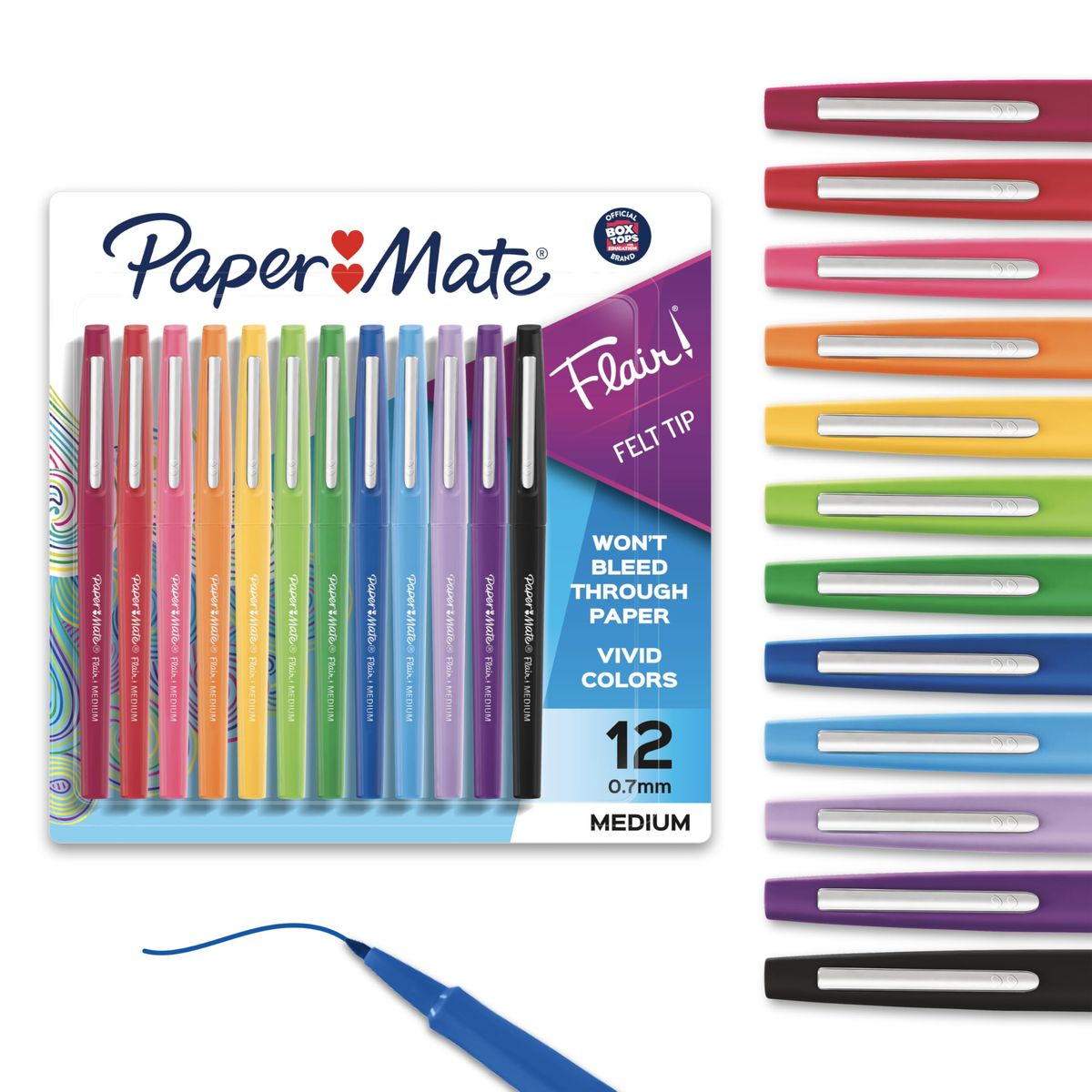
Example: Paper Mate Flair (~)
Permanent Markers
Quick-drying, waterproof ink that adheres to most surfaces including plastic, metal, and wood. Often oil- or alcohol-based.
- Multi-surface
- Long-lasting
- Fade-resistant
- Not washable
- Strong odor
- May bleed through thin paper
Best for: Labeling, crafts, signage
Example: Sharpie Permanent Markers (~)
Washable Markers
Water-based ink specially formulated to wash off skin and most fabrics with ease; designed for children’s use.
- Non-toxic
- Easy cleanup
- Bright colors
- Not permanent
- Can dry out if uncapped
Best for: Kids' coloring, school projects
Example: Crayola Super Tips 100ct (~)
Paint Markers
Opaque, waterproof paint-based ink that works on almost any surface, including glass, fabric, and wood; provides solid coverage.
- Versatile surfaces
- Waterproof
- Opaque coverage
- Higher price per marker
- Requires shaking/priming
- Not washable once dry
Best for: Art, DIY, mixed media
Example: Posca Acrylic Markers (~)
What Actually Matters
| Factor | Importance | Best brand |
|---|---|---|
Tip Type 0.7mm felt tip for writing, broad tip for coloring, fine tip for detail Medium tips cover most needs; broad tips are easier for small hands while fine tips excel at labeling. | Must-have | Paper Mate for writing, Crayola for broad washable, Sharpie for permanent fine |
Ink Type Water-based washable for kids; permanent for labeling Washable inks save cleanup but sacrifice permanence. Permanent inks resist fading but won’t wash out. | Must-have | Crayola for washable, Sharpie for permanent |
Color Variety ≥24 colors for creative projects A 100-color set provides endless possibilities, but 12–24 colors suffice for most users. | Nice-to-have | Crayola Super Tips 100ct |
Washability Ultra-clean washable formula for kids For children under 8, washable markers are a lifesaver; for adults, permanence might matter more. | Must-have | Crayola Ultra Clean |
Surface Compatibility Multi-surface permanent ink for labeling plastic/metal/glass If you need to write on plastic or glass, choose permanent or paint markers. | Must-have | Sharpie or Posca |
Brand Premium Paying 30–50% more for a logo rarely improves ink quality. Store brands often perform identically. | Marketing BS | — |
Budget Tiers & Top Picks
What to buy at each price point — and exactly where spending more stops paying off.
Under $10
$5 – $10Paper Mate Flair Felt Tip Pens, Medium Point 0.7mm, 12 Count

Stop paying more: At under $10, you get high-quality writing pens; spending more gets you into paint markers or larger color sets.
When to upgrade: Need more colors or a washable option? Step up to the $10–$20 range.
$10 – $20
$10 – $20Crayola Super Tips Marker Set (100ct)

Stop paying more: At around $15, you get 100 washable markers with fine tips; spending more jumps to artist-grade paint markers.
When to upgrade: Want to try paint markers? The premium tier has a 15-color Posca set at $30.
Over $20
$25 – $30Posca Paint Art Markers, Set of 15 5M Medium Acrylic Markers

Stop paying more: Most users won’t need to spend beyond $30 for markers; this set covers art, decoration, and permanent labeling on 50+ surfaces.
When to upgrade: No need to go higher unless you’re a professional artist investing in high-end alcohol markers.
Common Mistakes to Avoid
Buying permanent markers for kids’ coloring
Permanent ink doesn’t wash off skin or clothes, causing frustration and stains.
Cost of getting it wrong: Replacing stained clothes or paying for professional cleaning.
Overlooking tip size
A broad tip is hard for detailed writing; a fine tip can feel scratchy for coloring.
Cost of getting it wrong: Buying a second set with the correct tip adds $10–$20.
Assuming all markers are washable
Many permanent and paint markers are not washable and can ruin fabrics.
Cost of getting it wrong: Ruined furniture or clothing.
Buying too few colors
A 12-color set limits creative expression; light colors like yellow may be too faint.
Cost of getting it wrong: Upgrading to a larger set after realizing limitations costs another $15–$30.
Find Your Match
What will you mostly use the markers for?
Frequently Asked Questions
How do I choose the right marker type?
Start with your primary use. For everyday writing, choose a felt-tip pen like Paper Mate Flair. For labeling plastic or metal, go with a permanent marker such as a Sharpie. For kids, always pick washable markers like Crayola Ultra Clean to avoid stains. For arts and crafts on various surfaces, paint markers offer the widest versatility.
What are washable markers and when should I use them?
Washable markers use water-based ink that easily comes out of skin and most fabrics. They are ideal for children under 10 and classroom settings. Crayola Ultra Clean and Super Tips sets are excellent options. These markers let kids create freely without the fear of permanent messes on clothes or furniture.
Are permanent markers safe for skin?
No, permanent markers are not designed for skin. While some are AP certified, they can contain solvents that may irritate skin. Use skin-safe markers or pens specifically labeled for body art. Never let young children use permanent markers unsupervised.
How many colors do I really need?
For general writing, 12 colors are enough. For coloring books or art projects, 24–50 colors provide more variety. If you’re a serious artist or need many shades, a 100-color set like Crayola Super Tips offers excellent value. Bulk sets often cost only a few cents more per marker.
What’s the difference between water-based and alcohol-based markers?
Water-based markers (like Crayola, Paper Mate Flair) are less smelly, washable, and won’t bleed through paper, but they’re not waterproof. Alcohol-based markers (like Copic, Ohuhu) blend smoothly and are permanent, but they have a strong odor and bleed through thin paper. This guide focuses on water-based and paint markers.
How should I store markers to keep them fresh?
Store markers horizontally to prevent ink from pooling at one end. Keep caps tightly sealed. For water-based markers, store in a cool, dry place away from direct sunlight. For paint markers, store tip-down to keep the paint ready for use. Avoid extreme temperatures which can dry out the ink.
How we wrote this guide
We analyzed over 265,000 verified Amazon reviews across 6 top-selling marker sets, compared product specifications, and watched hours of independent video reviews to identify what really matters when buying markers. The findings are distilled into this guide to help you choose the right markers for your specific needs.
About this guide
Mubboo Editorial Team — independent US-market consumer research. Picks are based on analysis of thousands of verified buyer reviews and product specifications.