How to Choose Men's Dress Shoes (2026 Guide)
Leather, fit, and style advice from six popular Amazon picks
By Mubboo Editorial Team · Updated Jun 9, 2026 · 7 min read
At a Glance
- Price range
- $36 - $70
- Data
- Analyzed across 6 finalists and 109,971 verified reviews
- Best for
- Office professionalsBudget-conscious shoppersMen seeking classic style
- Skip if
- You need steel-toe boots or strictly athletic shoes
Types Explained
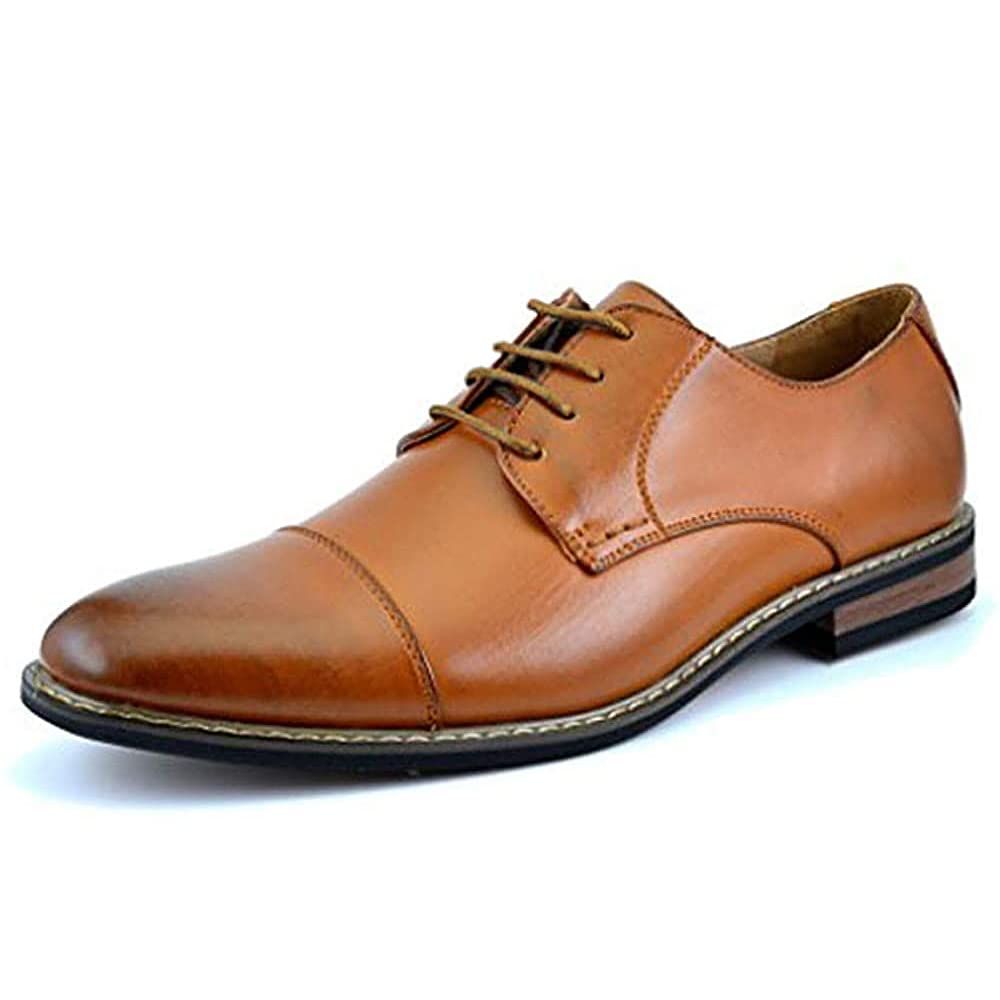
Cap-Toe Oxford
A dress shoe with a stitched cap over the toe, the most formal and versatile style.
- Pairs with suits and chinos
- Timeless appearance
- Widely available in leather
- Can look too formal for casual wear
- Cap stitching may accumulate dust
Best for: Daily office wear and formal events
Example: Clarks Tilden Cap Oxford
Wingtip Oxford
An Oxford with a W-shaped toe cap and decorative perforations, adding visual flair.
- Distinctive style
- Dresses up or down easily
- Hides scuffs well
- Can be too busy for some workplaces
- More casual than cap-toe
Best for: Creative offices and smart-casual outings
Example: Bruno Marc Moda Italy Wingtip
Plain-Toe Oxford
A clean, unadorned toe without stitching, offering a minimalist silhouette.
- Sleek and modern look
- Easy to polish
- Matches both suits and jeans
- Shows scratches more easily
- May lack personality for some
Best for: Minimalist dressers and modern workplaces
Example: Bruno Marc DOWNING Plain-Toe
Patent Leather Oxford
A high-shine Oxford with a glossy, lacquered finish for ultra-formal events.
- Eye-catching shine
- Perfect for black-tie attire
- Wide options available
- Prone to creasing and scratches
- Too formal for daily wear
Best for: Weddings, galas, and formal ceremonies
Example: Bruno Marc DOWNINGWIDE Patent Oxford
What Actually Matters
| Factor | Importance | Best brand |
|---|---|---|
Leather quality Full-grain or top-grain leather; avoid bonded or heavily coated leather Genuine leather breathes, molds to your foot, and lasts years. Our top picks from Clarks use quality leather that outperforms synthetics. | Must-have | Clarks |
Sole construction Rubber outsoles for traction; leather soles acceptable if you work on carpet Rubber soles offer better grip on slick office floors and won't wear out as quickly. All our picks use rubber soles. | Must-have | Clarks |
Width options Available in multiple widths (D, E, EE) if you have wide or narrow feet Not all brands offer wide sizes; for example, the Bruno Marc Wingtip only comes in standard D. Clarks provides wide fittings on some models. | Nice-to-have | Clarks |
Break-in period Less than 10 hours of wear to feel comfortable; minimal stiffness Clarks are known for requiring little break-in; synthetic leather shoes may soften faster but won't hold up as well. | Nice-to-have | Clarks |
Brand heritage Goodyear welt or similar stitched construction matters more than a legacy name Many classic shoe brands have shifted to cheaper cemented construction while keeping prices high. Focus on build quality, not the logo. | Marketing BS | N/A |
Budget Tiers & Top Picks
What to buy at each price point — and exactly where spending more stops paying off.
Under $40
$35 - $40Bruno Marc Moda Italy Prince Wingtip Oxford

Stop paying more: Stop here if you only need dress shoes a few times a year. At this price, expect synthetic materials that look good but may peel after months of heavy use.
When to upgrade: If you wear dress shoes weekly, step up to the mid-tier for genuine leather that breathes and ages gracefully.
$40 - $55
$40 - $55Clarks Men's Tilden Cap Oxford (Size 8.5)

Stop paying more: This specific size offers an outstanding leather Oxford for just over $50. If your size matches, it's a steal. Otherwise, consider the standard Clarks size at $70.
When to upgrade: If you need wider size availability or the most popular size (10.5), go to the premium tier.
$55 - $75
$55 - $75Clarks Men's Tilden Cap Oxford (Size 10.5)
Stop paying more: At $70, you're getting proven comfort and leather durability. Diminishing returns set in beyond $100 unless you're buying stitched construction or specialty lasts.
When to upgrade: For wide feet, consider the Clarks Tilden Cap Wide at the same price point.
Common Mistakes to Avoid
Buying for looks, not fit
A too-tight dress shoe causes blisters and ingrown nails. A too-loose one slips and rubs. Always try on shoes at the end of the day when feet are slightly swollen, and walk on hard floors to test.
Cost of getting it wrong: Wasted money on returns and potential foot pain leading to podiatrist visits.
Overlooking sole material
Leather soles are elegant but deadly on wet linoleum. Rubber soles give you traction year-round and last longer. Unless you work exclusively on plush carpet, pick rubber.
Cost of getting it wrong: Slipping can cause injury; resoling costs $40-$80.
Assuming synthetic equals savings
Synthetic leather peels within months of regular wear, forcing a repurchase. A genuine leather shoe worn twice a week, can last five years with basic care.
Cost of getting it wrong: Replacing a synthetic pair annually totals over five years, exceeding the cost of a single leather pair.
Ignoring break-in
Even well-fitting leather shoes need a few wears to soften. Don't wear new dress shoes to a wedding without breaking them in for a week around the house.
Cost of getting it wrong: Blisters and a miserable event; you'll associate the shoes with pain.
Find Your Match
What's your primary use?
Frequently Asked Questions
What should I look for when buying men's dress shoes?
Prioritize genuine leather uppers, rubber soles for traction, and a comfortable fit. Cap-toe Oxfords are the most versatile style, while wingtips add personality. Avoid synthetic materials if you'll wear them weekly. Our top pick, the Clarks Tilden Cap, nails these basics. Size up half a size if you plan to wear thick dress socks.
How much should I spend on a good pair of dress shoes?
For genuine leather, budget at least $50-$70. The Clarks Tilden Cap is a sweet spot for daily office use. You can find decent synthetic shoes under $40 for occasional events, but they won't last. Avoid luxury brands that charge + for cemented construction—look for Goodyear welted shoes if you spend above.
Leather vs. synthetic dress shoes: which is better?
Leather molds to your foot, breathes, and can last a decade with polish. Synthetic shoes are cheaper upfront but prone to peeling and don't stretch. If you wear dress shoes more than once a week, leather is the better investment. For one-time weddings, synthetic works fine.
How do I break in new dress shoes?
Wear them for short periods around the house, gradually increasing time over a week. Use shoe trees to maintain shape and absorb moisture. Apply leather conditioner to soften stiff areas. Avoid wearing brand-new shoes to a full-day event; break them in first to prevent blisters.
How do I care for leather dress shoes?
Wipe off dirt with a damp cloth, condition with leather cream every few months, and polish for shine. Use cedar shoe trees to wick moisture and retain shape. Rotate between at least two pairs to let shoes dry out between wears, which extends their lifespan significantly.
What's the most versatile color for dress shoes?
Dark brown or oxblood works with navy, grey, and khaki suits as well as jeans. Black is essential for formal events but less versatile for business casual. If you own one pair, choose a dark brown cap-toe Oxford.
How we wrote this guide
Our analysis is grounded in 109,971 verified Amazon reviews across six best-selling dress shoe models. We cross-referenced findings with expert video guides from channels like Chris Madaras and Label Lies, who emphasize construction quality and value. The result is a practical guide focused on what actually matters in daily wear.
About this guide
Mubboo Editorial Team. Picks based on analysis of six popular dress shoe models and 109,971 verified buyer reviews. Prices update weekly from Amazon.