How to Choose Microfiber Cloths (2026 Guide)
Picks for every surface and budget, backed by 500K+ reviews
By Mubboo Editorial Team · Updated Jun 9, 2026 · 8 min read
At a Glance
- Price range
- $9 – $17
- Data
- Over 500,000 verified buyer reviews analyzed across top-selling microfiber cloths.
- Best for
- Everyday kitchen cleaningStreak-free glass and mirrorsDusting and polishingQuick spill cleanup
- Skip if
- You only use paper towels occasionally—microfiber requires washing and reuse to pay off.
Types Explained
General All-Purpose
The workhorse microfiber cloth with a balanced blend of polyester and polyamide for everyday tasks.
- Versatile across surfaces
- Absorbent and lint-free
- Durable for hundreds of washes
- Not optimized for delicate lenses
- Color may show stains
Best for: Kitchen counters, sinks, bathrooms, general dusting
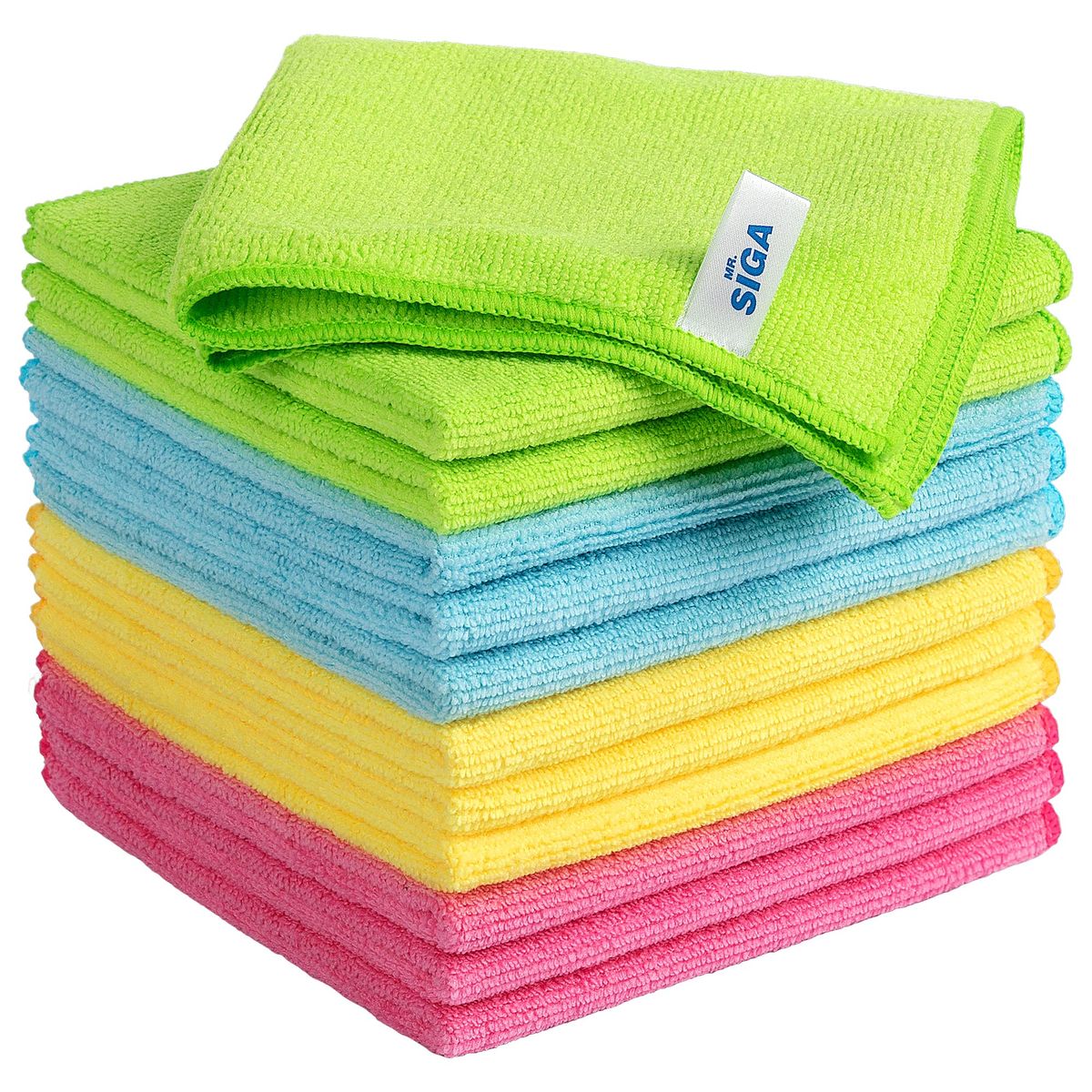
Example: MR.SIGA 12-Pack (Blue)
Color-Coded Multipack
Multiple colors in one pack to assign to different rooms or tasks, preventing cross-contamination.
- Hygienic separation for kitchen vs bathroom
- Larger 16" size for big spills
- Great for car detailing
- Colors may fade over time
- Slightly less plush than specialized cloths
Best for: Kitchen vs bathroom vs auto assignments
Example: Amazon Basics 24-Pack (Blue/White/Yellow)
Delicate Surface & Lens
Ultra-fine, individually packaged cloths designed to clean glasses, camera lenses, and screens without scratching.
- Extremely soft, zero scratches
- Individually packed to stay dust-free
- Removes fingerprints without solvents
- Too small for household cleaning
- Hand wash only, no detergents
Best for: Eyeglasses, camera lenses, OLED/LCD screens
Example: MagicFiber 6-Pack
What Actually Matters
| Factor | Importance | Best brand |
|---|---|---|
Absorbency ≥5x its weight Cloths that can’t soak spills instantly leave smears and require more passes. | Must-have | MR.SIGA |
Lint-Free & Streak-Free Zero lint on glass Paper towels and rags leave fibers; microfiber must deliver a crystal-clear finish. | Must-have | Amazon Basics |
Durability & Washability Withstands 100+ machine washes Quality stitching keeps cloths intact after repeated washing; cheap cloths fray quickly. | Nice-to-have | MR.SIGA |
Softness/Non-Abrasive No scratches on painted or coated surfaces A gritty or stiff cloth can dull automotive paint or scratch delicate finishes. | Must-have | MR.SIGA |
High GSM Rating For everyday household tasks, the difference between 200 and 350 GSM is negligible. Focus on a lint-free guarantee and washability instead. | Marketing BS | — |
Budget Tiers & Top Picks
What to buy at each price point — and exactly where spending more stops paying off.
Under $10 Budget Starters
$8 – $10HOMEXCEL Grey Microfiber Cleaning Cloth, 12 Pack

Stop paying more: At under $0.75 per cloth, these are fine for casual use. Upgrading to $1 per cloth buys noticeable durability.
When to upgrade: If you find yourself replacing cloths within a few months, step up to the MR.SIGA 12-pack for long-term reliability.
$10 – $14 Best Value & All-Purpose
$10 – $14MR.SIGA Microfiber Cleaning Cloth, 12-Pack, 12.6" x 12.6"

Stop paying more: At $1.17 per cloth, you get reinforced edges and 100,000+ verified 5-star reviews. This is the sweet spot for quality vs. cost.
When to upgrade: If you want stain-hiding color for messy kitchens, the grey MR.SIGA variant at $16.99 does the same job with a stealthier look.
$15+ Premium & Specialized
$15 – $17MR.SIGA Microfiber Cleaning Cloth, All-Purpose, Pack of 12, Grey

Stop paying more: Paying over $1.40 per cloth mainly gets you a color that disguises grime. It’s a nice upgrade but not essential for most.
When to upgrade: For truly luxurious softness on automotive paint, consider a dedicated plush detailing towel from a brand like The Rag Company.
Common Mistakes to Avoid
Using paper towels instead of microfiber
Paper towels leave lint, scratch surfaces, and generate waste. Microfiber is reusable and traps particles.
Cost of getting it wrong: Extra cost on paper towels plus poor results.
Buying cloths that are too small
A 12" cloth is ideal for counters; 6" cloths are for lenses only. Mini cloths make big jobs tedious.
Cost of getting it wrong: Frustration leading to repurchase or double effort.
Washing microfiber with fabric softener
Fabric softener clogs microfibers, reducing absorbency. Use mild detergent and no softener.
Cost of getting it wrong: Cloths lose effectiveness, requiring more chemical cleaners.
Find Your Match
What’s your main cleaning focus?
Frequently Asked Questions
What should I look for in a good microfiber cloth?
Look for a blend of polyester and polyamide, with at least 15% polyamide for softness and absorbency. A tight weave prevents lint, and reinforced edges ensure durability through hundreds of washes. The MR.SIGA 12-pack exemplifies these qualities, while ultra-cheap cloths often skimp on edge stitching and thickness.
How much should I spend on microfiber cloths?
Spend $0.50 to $1.50 per cloth. Bulk 24-packs like Amazon Basics bring the cost down to each, while premium 12-packs like MR.SIGA per cloth. Under $0.50, expect thinner fabric that frays sooner. Over $1.50, you’re usually paying for brand marketing, not better performance.
What size microfiber cloth do I need?
12" x 12" is the sweet spot for most countertops, sinks, and dusting. For larger surfaces like car exteriors or big glass panes, 16" x 12" covers more area per swipe. 6" x 7" cloths are specialized for eyeglasses, camera lenses, and small screens—too tiny for general cleaning.
How do I wash microfiber cloths?
Wash them in warm water with a mild, fragrance-free detergent. Skip fabric softener and bleach, as both clog the fibers and reduce absorbency. Tumble dry low or air dry. Wash similar colors together on the first few cycles, as some lint may shed initially. With proper care, quality cloths last years.
Are there any certifications I should look for?
Microfiber cloths don't typically carry UL or Energy Star certifications, but some are Oeko-Tex certified for chemical safety. For basic cleaning, focus on the lint-free claim and buyer reviews rather than labels. The absence of a certification isn't a red flag—real-world performance matters more.
When should I replace my microfiber cloths?
Replace them when they stop absorbing water or start leaving lint. A quality cloth like MR.SIGA can endure 100+ washes before losing effectiveness. If edges fray or the texture feels rough, it’s time to retire it. Budget cloths may need replacing after 30–40 washes.
Can I use microfiber cloths on electronics screens?
Absolutely, but only with a designated, ultra-fine cloth like MagicFiber. Don’t use general-purpose cloths on LCD or OLED screens—they may be too coarse. Never spray cleaner directly on a screen; apply it to the cloth first. For glasses and camera lenses, a fresh, dry cloth works best.
How we wrote this guide
Our guide draws on over 500,000 verified Amazon buyer reviews for top-selling microfiber cloths, plus insights from category experts like The Rag Company and The Best Picks. We cross-referenced absorbency, lint-free performance, and washability claims with real-world buyer feedback to surface the most dependable options at each price point.
About this guide
Mubboo Editorial Team. Research based on aggregated Amazon data, buyer reviews, and video reviews. Prices updated weekly.