How to Choose a Microwave (2026 Guide)
Picked from 6 of the most-reviewed countertop models — find the right size and features for your kitchen.
By Mubboo Editorial Team · Updated Jun 9, 2026 · 7 min read
At a Glance
- Price range
- $81 – $149
- Data
- Analyzed 148,671 verified reviews across 6 finalists
- Best for
- Reheating leftoversCooking frozen mealsDefrosting meatSmall to medium families
- Skip if
- You only need to boil water — a kettle is enough
Types Explained
Basic Compact Microwave
Entry-level 0.7 cu ft models with 700W output, simple one-touch presets, no advanced sensors.
- Lowest price point under $85
- Child safety lock for families
- Smaller 10" turntable may not fit dinner plates
- 700W can be slow for defrosting
Best for: Dorm rooms, offices, single users on a budget
Example: BLACK+DECKER EM720CB7
Compact Microwave with Mute/ECO
Similar 0.7 cu ft 700W size but adds a mute function and ECO mode to reduce standby power.
- Silent operation ideal for late-night use
- ECO mode cuts standby power by 50%
- Still limited turntable size
- No sensor cooking
Best for: Small apartments and night owls who want quiet reheating
Example: COMFEE' EM720CPL-PMB
Mid-Size Standard Microwave
1.0-1.2 cu ft with 900-1000W, larger turntables (12.5"), fast cooking, multiple power levels, basic presets.
- Fits standard dinner plates and medium casseroles
- 1000W power reheats and defrosts quickly
- No mute function or sensor cooking in basic models
- Larger footprint needs more counter space
Best for: Families and frequent cookers wanting everyday speed
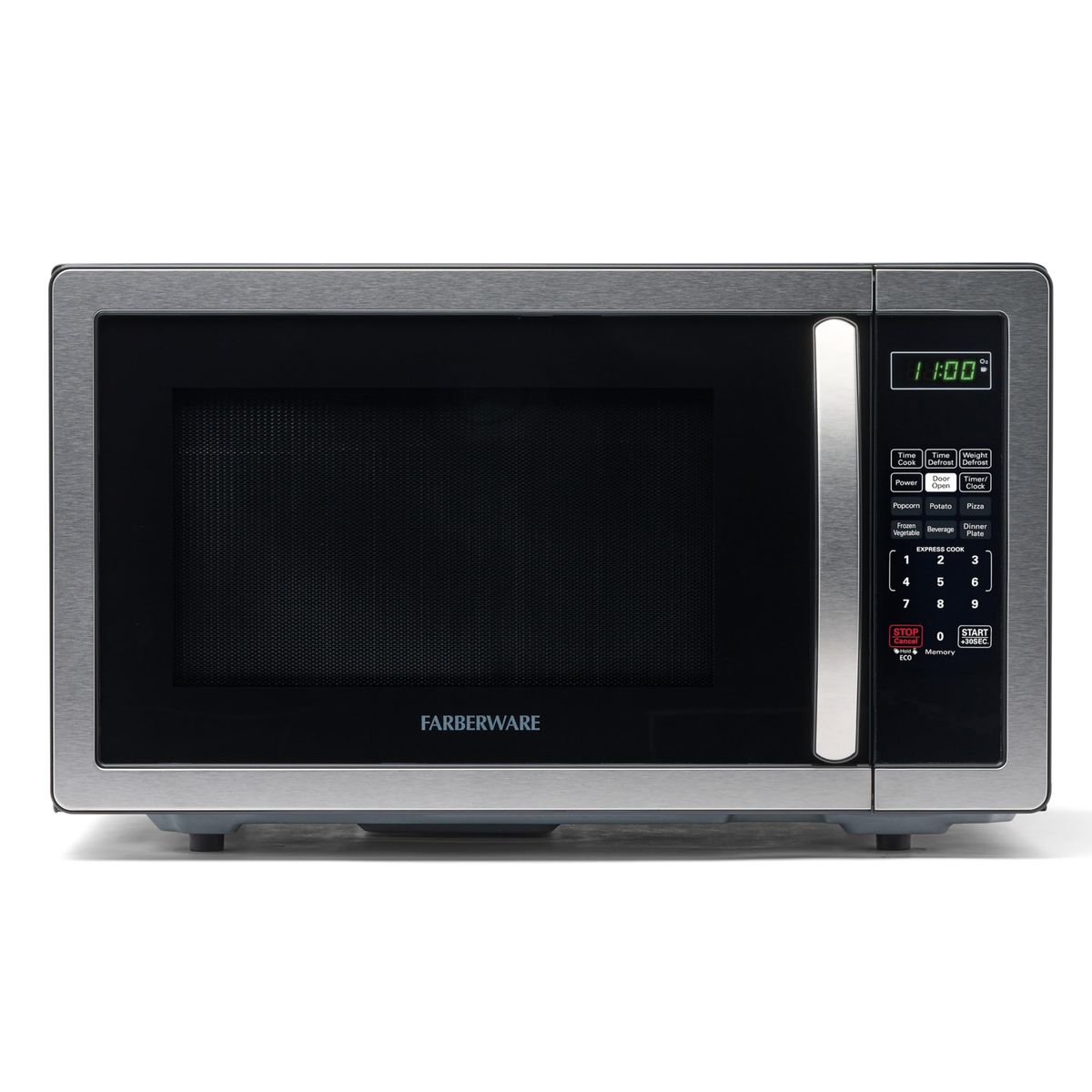
Example: Farberware FMO11AHTBKB
Sensor Microwave
Adds a humidity sensor that automatically adjusts cooking time and power for perfect results.
- Eliminates guesswork for uneven reheating
- Mute function and ECO mode included
- Premium price tag (around $130-$150)
- Heavier and bulkier than basic microws
Best for: Cooks who reheat varied foods and want hands‑off precision
Example: TOSHIBA EM131A5C-BS
What Actually Matters
| Factor | Importance | Best brand |
|---|---|---|
Wattage ≥900W for fast cooking Below 800W means longer cook times and less even heating; 1000W is the sweet spot for most homes. | Must-have | Farberware (1000W), TOSHIBA (1000W) |
Capacity & Turntable Size at least 0.9 cu ft with a 10.6" turntable A 10-inch turntable can't spin an 11-inch dinner plate; measure your largest dish before buying. | Must-have | TOSHIBA (12.4" turntable) |
Sensor Cooking Humidity sensor for auto-adjust Worth the -30 upgrade if you reheat foods with mixed moisture levels — it prevents rubbery or cold spots. | Nice-to-have | TOSHIBA |
Mute Function Silences all beeps — a must for open-plan kitchens or bedrooms; look for a dedicated Sound On/Off button. | Nice-to-have | COMFEE' and TOSHIBA |
Convection or Grill Feature If you rarely bake or roast, a separate toaster oven costs less and uses less energy. Save your money. | Marketing BS | — |
Budget Tiers & Top Picks
What to buy at each price point — and exactly where spending more stops paying off.
Budget (Under $100)
$65 – $100COMFEE' 0.7 Cu. Ft. 700W Microwave with Mute & ECO Mode

Stop paying more: Upgrading past $100 gets you significantly more power (1000W vs 700W) and a larger interior that fits family-size dishes.
When to upgrade: Need a faster cook time? Move to the mid‑range for 1000W and a 12.5" turntable.
Mid-Range ($100 – $130)
$100 – $130Farberware 1.1 Cu. Ft. 1000W Countertop Microwave
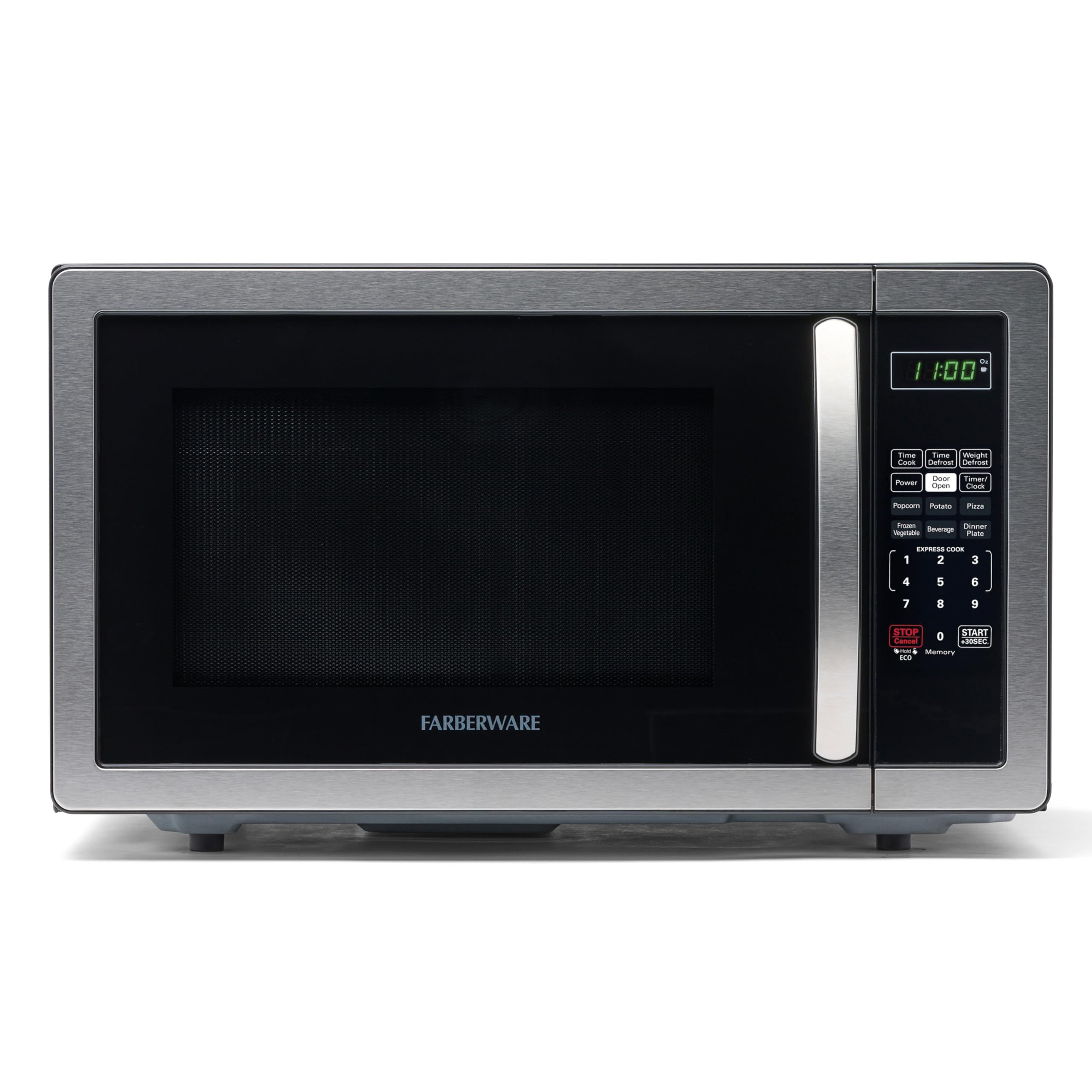
Stop paying more: Spending beyond $130 primarily adds sensor cooking or a brand premium — not capacity.
When to upgrade: If you want push‑button perfect results, step up to a sensor‑equipped TOSHIBA.
Premium ($130+)
$130 – $150TOSHIBA EM131A5C-BS 1.2 Cu. Ft. 1000W Sensor Microwave

Stop paying more: Diminishing returns above $150 — countertop microwaves rarely justify a higher price tag.
Common Mistakes to Avoid
Buying a microwave too small for your dinner plates
A 0.7 cu ft model with a 10-inch turntable cannot fit a standard 11-inch dinner plate. Measure your largest dish first.
Cost of getting it wrong: Wasted $80–$90 on a model you’ll soon replace.
Ignoring sensor cooking if you reheat varied foods
Manual presets often leave cold centers or overheated edges. A humidity sensor adjusts in real time.
Cost of getting it wrong: Ruined meals and frustration — sensor models start.
Paying extra for a well‑known brand without more power
A 700W microwave from a premium label heats no faster than a generic 700W. Features and wattage matter more.
Cost of getting it wrong: Overspending by $20–$30 for the same performance.
Find Your Match
What will you mostly use the microwave for?
Frequently Asked Questions
How much should I spend on a countertop microwave?
A reliable microwave starts for compact models and tops out near for large sensor models. Spending more than usually adds convection or other rarely used features. Our top pick offers the best balance of power, size, and essential presets for most households.
What’s the difference between sensor cooking and manual presets?
Manual presets use fixed times that often over‑ or undercook because they can’t detect moisture. A humidity sensor measures steam released and adjusts time and power automatically—perfect for uneven foods like casseroles. If you reheat mixed leftovers often, sensor cooking is worth the $20–$30 upgrade.
Do I really need a mute function?
Not essential, but it silences all button beeps and end‑of‑cycle alerts. Critical if your microwave is in an open‑plan kitchen or near a bedroom. Models like the COMFEE’ and TOSHIBA include a dedicated Sound On/Off button; most others do not.
What should I avoid when buying a microwave?
Don’t buy a tiny 0.7 cu ft microwave if you own 11‑inch dinner plates—they won’t fit. Skip models without a child lock if you have kids. And avoid paying extra for features like convection or inverter technology if you mainly reheat.
Is a compact microwave (0.7 cu ft) big enough for a family?
Usually no. The 10‑inch turntable can’t fit a standard dinner plate, and the small cavity limits batch cooking. Compact models shine as secondary units in dorms or offices. For a family, look for at least 0.9 cu ft with a 10.6‑inch turntable.
How we wrote this guide
Synthesized from 148,671 verified Amazon reviews across 6 finalists, cross‑referenced against expert recommendations from America’s Test Kitchen, Wirecutter, and RTINGS. We focused on wattage, capacity, sensor cooking, and real‑world usability—no marketing fluff. Prices update weekly from Amazon.
About this guide
Mubboo Editorial Team. Independent US‑market consumer research. Picks reflect editorial consensus from 4 independent review sources and over 148,000 verified buyer reviews. Prices update weekly from Amazon.