How to Choose a Miter Saw (2026 Guide)
Picked from 2026’s most-reviewed models on Amazon
By Mubboo Editorial Team · Updated Jun 9, 2026 · 8 min read
At a Glance
- Price range
- $22 – $449
- Data
- 36,056 verified reviews across 6 finalists
- Best for
- Serious DIYers building decks and furnitureTrim carpenters installing crown moldingHomeowners tackling baseboards and framing
- Skip if
- You only need to make one or two cuts a year — a handsaw may suffice
Types Explained
Standard (Non-Sliding)
Fixed arm with blade that chops down; blade can tilt for bevels but head doesn’t slide.
- Compact footprint
- Lighter and easier to move
- Lower cost
- Limited crosscut capacity (typically 2x8 at 90°)
- Can’t handle wide boards like 2x12
Best for: Trim work and basic framing on narrow stock
Example: DEWALT DWS715
Sliding Compound
Rails let the motor/blade assembly slide forward and backward, increasing cut width significantly.
- Cuts up to 2x14 or wider at 90°
- Double‑bevel models handle compound miters for crown molding
- Tall fences support large workpieces
- Heavier and bulkier
- Higher price point
Best for: Framing, decking, furniture, and crown molding
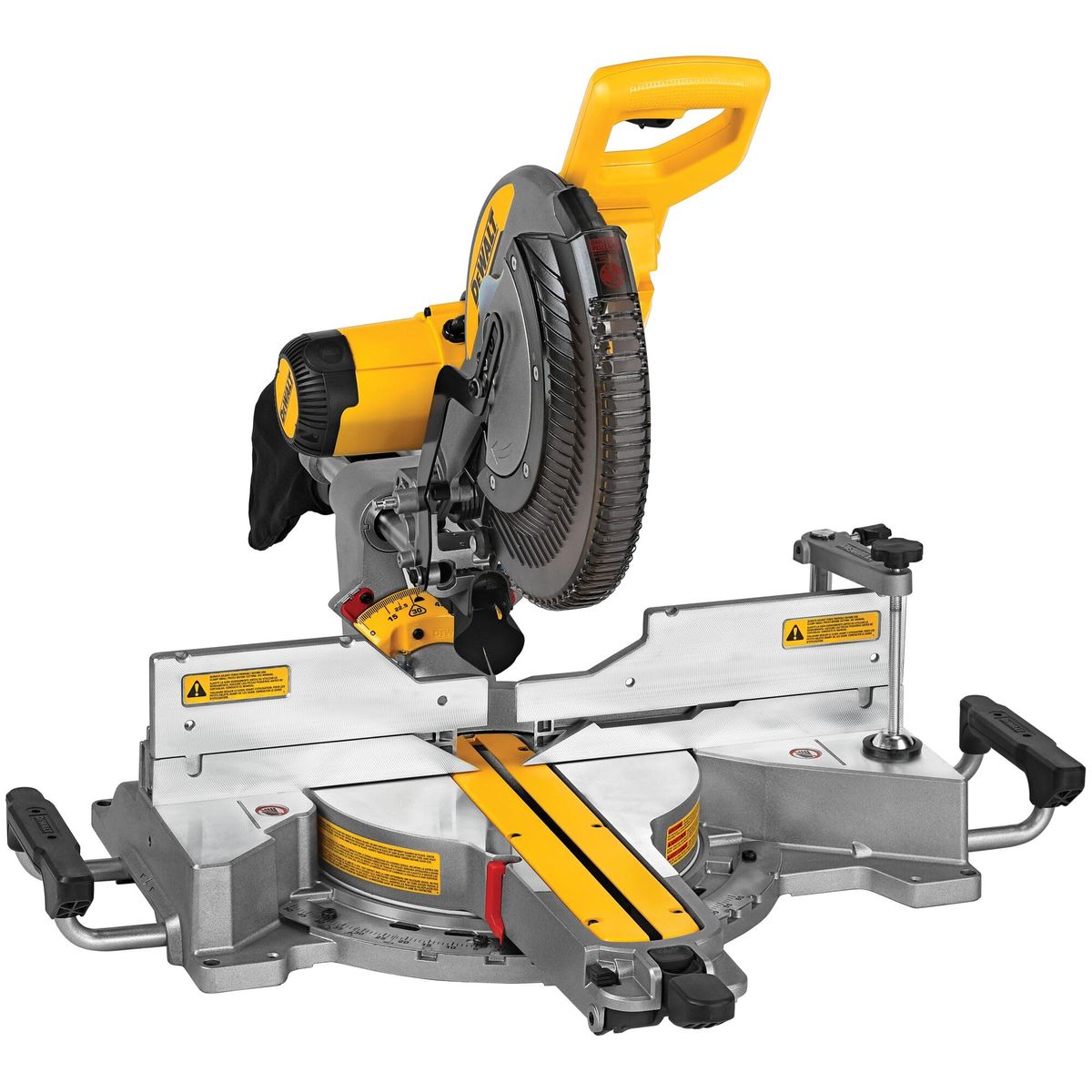
Example: DEWALT DWS779
Cordless
Battery‑powered saws, typically with smaller blades, designed for portability.
- Use anywhere — no outlet needed
- Lightweight for jobsite transport
- Adequate for trim and small boards
- Limited to 7‑1/4″ or similar blade size
- Battery and charger sold separately
- Shorter runtime on heavy tasks
Best for: Job sites, remote locations, and users already on a battery platform
Example: DEWALT DCS361B
Manual Miter Box
A plastic or metal guide box with a handsaw; angles are preset or adjustable.
- Extremely low cost
- No power or noise
- Good for hobbies and one‑off small cuts
- Very slow and labor‑intensive
- Limited to softwoods and thin stock
- No dust collection
Best for: Occasional small trim or hobby projects
Example: GreatNeck BSB14
What Actually Matters
| Factor | Importance | Best brand |
|---|---|---|
Blade size 10″ or 12″ A 12″ saw crosscuts 2x14; a 10″ saw usually stops at 2x10. Choose 12″ unless you know you’ll never cut wide boards. | Must-have | 12″ covers most jobs; 10″ saves space but limits capacity |
Motor power 15 amps / ≥3,800 RPM Underpowered saws (10–12 amps, <3,500 RPM) bog down in hardwoods and thick stock. Look for 15 amps. | Must-have | DEWALT’s 15A motors consistently deliver rated power |
Sliding feature Sliding needed for >2x8 cuts If you’ll ever cut boards wider than 6–8 inches, a sliding saw is mandatory. Non‑sliding saws limit you to small material. | Must-have | DEWALT’s dual‑rail design is precise and durable |
Bevel type Double‑bevel for crown molding Single‑bevel saws tilt only one way; double‑bevel tilt both left and right without flipping the piece. Worth the extra –150 for crown molding. | Must-have | Double‑bevel models (like DWS779) save you from flipping the workpiece |
Dust collection Over 50% capture efficiency Miter saws generate huge dust clouds. A saw with a dust bag or port is an investment in your lungs and cleanup time. | Nice-to-have | DEWALT DWS779 captures 75% |
Built‑in laser guide Aftermarket laser guides like the Oshlun LG-M01 do the same job on any saw. Don’t pay extra for a factory one — spend that money on a better blade. | Marketing BS | — |
Budget Tiers & Top Picks
What to buy at each price point — and exactly where spending more stops paying off.
Under $300
$200 – $300DEWALT DWS715 12-inch Single‑Bevel Compound Miter Saw
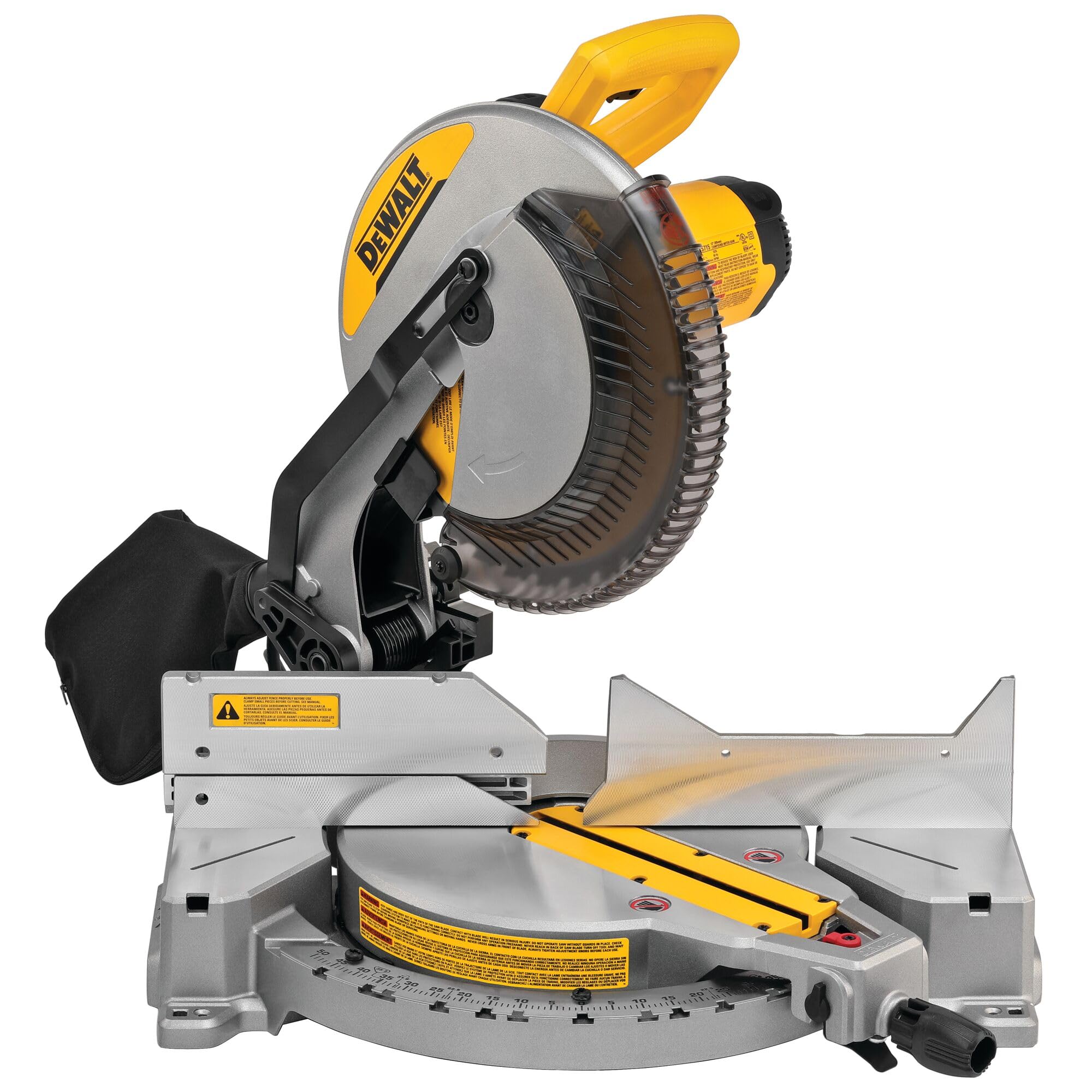
Stop paying more: At $300, you’ve hit the ceiling for non‑sliding performance. Spending more gets you sliding capacity or cordless freedom, not steeper cuts.
When to upgrade: Need wider crosscuts or double‑bevel versatility? Step up to the sliding DEWALT DWS779.
$300 – $400 (Cordless Freedom)
$300 – $400DEWALT DCS361B 7‑1/4‑inch Cordless Miter Saw
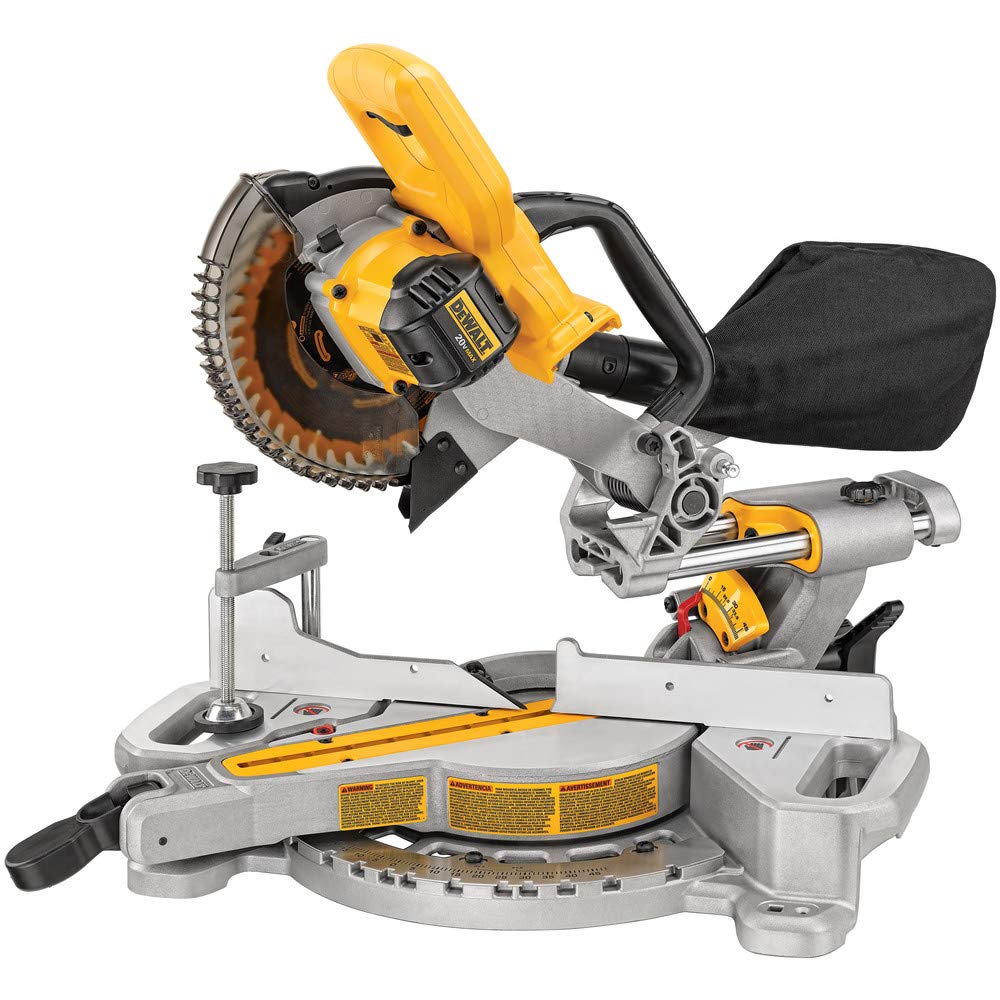
Stop paying more: Above $350, you’re paying for cordless convenience. For pure power and capacity, a corded sliding saw offers more.
When to upgrade: If you don’t need the portability, the DEWALT DWS779 delivers 12‑inch sliding performance for just $100 more.
$400 – $500 (Pro‑Grade Sliding)
$400 – $500DEWALT DWS779 12‑inch Double‑Bevel Sliding Compound Miter Saw
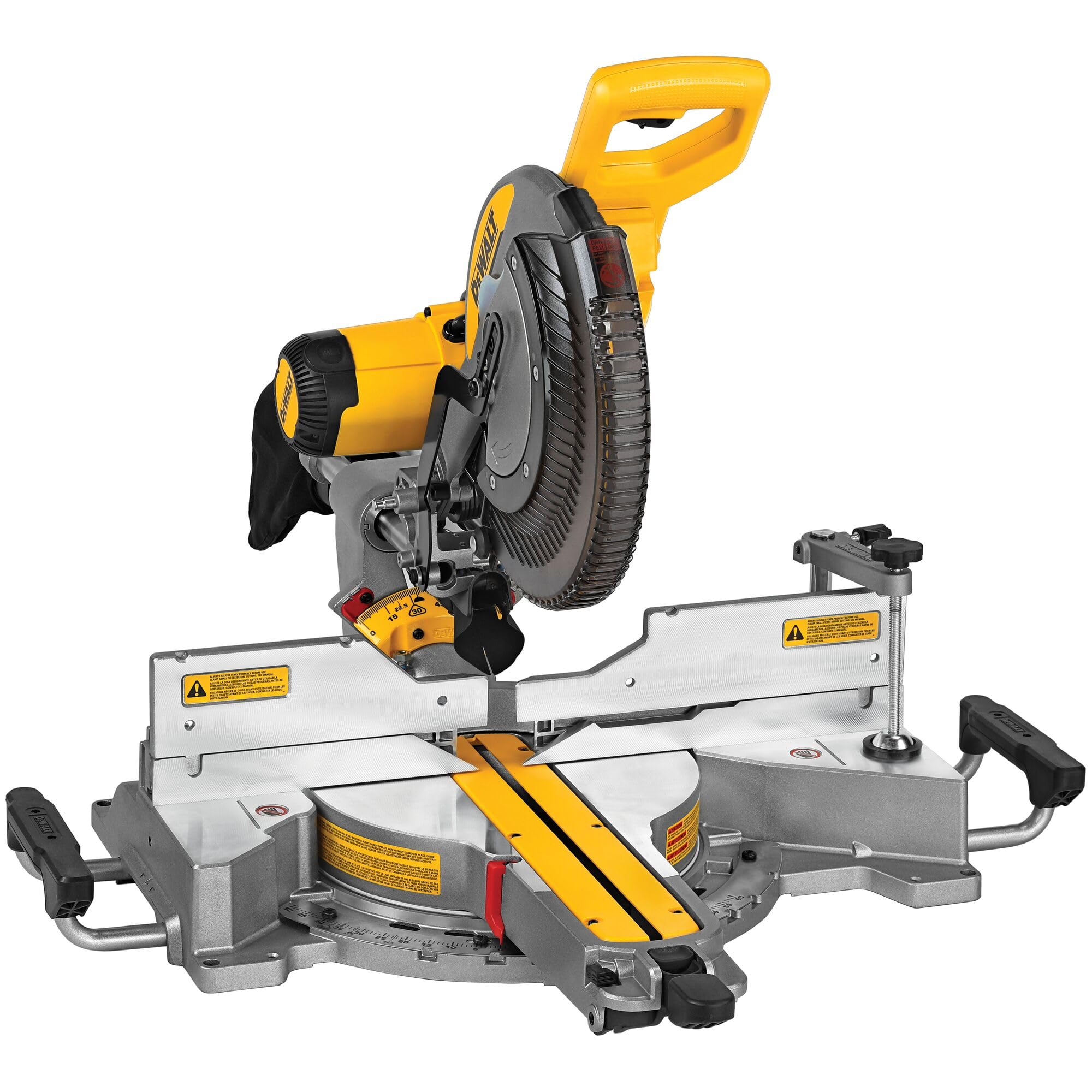
Stop paying more: At $449, this saw handles virtually any cut. Diminishing returns start here — you’d only spend more for a heavy‑duty cabinet saw.
When to upgrade: Already own this? Invest in a rolling stand for better workflow and dust extraction.
Common Mistakes to Avoid
Buying a non‑sliding saw for wide boards
A non‑sliding 12‑inch saw typically crosscuts only 2x8. If you plan to cut 2x12 or wider, you’ll need a sliding saw.
Cost of getting it wrong: Realizing this after purchase means either returning the saw or buying a second one — wasted +.
Ignoring dust collection
Miter saws produce fine dust that spreads quickly. Without a dust bag or port, your workspace becomes a health hazard and a cleanup nightmare.
Cost of getting it wrong: Retrofitting dust collection later costs at least in hoses and adapters, plus lost time.
Assuming the saw is square out of the box
Many saws ship with slight misalignments. A few minutes with a combination square and the calibration screws can prevent angled cuts.
Cost of getting it wrong: Misaligned cuts ruin expensive lumber — a single oak board +.
Find Your Match
What’s your biggest priority?
Frequently Asked Questions
What size miter saw do I need for baseboards?
A 10‑inch or 12‑inch saw handles most baseboards. For standard 3‑1/4‑inch base, even a 7‑1/4‑inch saw works. If you’ll also cut crown molding, a 12‑inch sliding saw gives you room to nest tall moldings without flipping the board.
Do I really need a sliding miter saw?
If you’ll ever cut boards wider than 6–8 inches — like 2x10 for decking or wide shelving — yes. A non‑sliding 12‑inch saw stops at about 2x8. Sliding saws let you crosscut up to 2x14 and make bevel cuts on wide stock.
How much should I spend on a miter saw?
For sliding capacity and double‑bevel, plan on $400–$500. Avoid saws under $150 — they often have weak motors and flimsy fences.
What’s the difference between single and double bevel?
Single‑bevel saws tilt only one direction (usually left). For opposing compound cuts, you must flip the workpiece, which can introduce errors. Double‑bevel saws tilt both ways, saving time and improving consistency on crown molding and complex angles.
Can I cut metal with a miter saw?
Yes, but only with a blade made for ferrous or non‑ferrous metal. Standard wood blades will grab and throw the metal. Use a slow feed rate and clamp the workpiece. Check the saw’s RPM rating against the blade’s max RPM.
How do I stop dust from flying everywhere?
Look for a saw with a dust‑collection bag or port. For any saw, connect a shop vacuum to the port; a zero‑clearance throat plate also helps by reducing the gap around the blade.
How we wrote this guide
Synthesized from 36,056 verified Amazon reviews across 6 finalists. Prices update weekly from Amazon. We cross‑referenced specs, buyer experiences, and real‑world feedback to identify the most important factors, common mistakes, and best picks for different budgets and needs.
About this guide
Mubboo Editorial Team. Picks based on verified buyer reviews and manufacturer specifications. Prices update weekly from Amazon.