How to Choose a Paddleboard (2026 Guide)
Find the right board for your weight, skill level, and budget in under 5 minutes
By Mubboo Editorial Team · Updated Jun 9, 2026 · 6 min read
At a Glance
- Price range
- $180 – $200
- Data
- 34,891 verified reviews analyzed across 6 top-selling boards
- Best for
- Adult beginners and familiesCasual paddling on lakes and calm riversThose who want a complete kit with good warranty
- Skip if
- You need a board for whitewater or advanced surfing
Types Explained
All-Around Inflatable SUP
Versatile boards 10'–10'6" long, 33" wide, designed for general paddling on flatwater and light chop. They balance stability, tracking, and portability.
- Stable enough for beginners and yoga
- Good tracking with removable fins
- Carries adults up to 350 lbs with gear
- Not as fast as longer touring boards
- Slower to inflate than smaller boards
Best for: Paddlers of all skill levels, especially families and casual users
Example: Roc 10'6" Inflatable SUP (B09XN2Q438)
Lightweight/Portable SUP
Boards that weigh under 18 lbs, often using lighter materials without sacrificing strength. Ideal for hiking to remote lakes or frequent travel.
- Easy to carry long distances
- Quick inflation and deflation
- Stores in a compact backpack
- May have slightly lower rigidity at same thickness
- Often more expensive than standard weight boards
Best for: Hikers, travelers, and solo paddlers who prioritize portability
Example: Roc 10'6" Inflatable SUP (B09XN2Q438, 17.6 lbs)
High-Capacity / Fishing SUP
Boards with reinforced construction and extra D-rings, supporting 400+ lbs. Perfect for tandem paddling, hauling fishing gear, or carrying a child and dog.
- Supports two adults or heavy gear
- Multiple D-rings for seats, coolers, rod holders
- Often inflate to higher PSI for extra rigidity
- Heavier and bulkier to carry
- Higher price than basic all-around models
Best for: Anglers, heavy riders, couples, and families with lots of gear
Example: Niphean 10'6" iSUP (B0DMT133P2, 450 lb capacity)
Yoga & Cruising SUP
Longer boards (10'6"–11') with ample deck pad space and stable, flat shape, designed for yoga, fitness, and long-distance touring.
- Extra length improves glide and tracking
- Wide, stable platform for yoga poses
- Often have triple fins for better maneuverability
- Longer boards can be harder to turn quickly
- Heavier than shorter boards of same material
Best for: Yoga enthusiasts, fitness paddlers, and long-distance cruisers
Example: FBSPORT 11' Premium SUP (B08DHX1HYF)
Beginner SUP
Boards with a narrower width (32"–33") and lower weight capacity, often lighter and easier to handle for first-timers. Typically priced under $200.
- Light and easy to carry
- Quick to inflate with included pump
- Stable enough for learning
- Lower weight capacity limits gear and passengers
- May feel less stable in choppy water than wider boards
Best for: Absolute beginners, kids, and light paddlers
Example: SereneLife 10'6" Beginner SUP (B07CX991PJ)
What Actually Matters
| Factor | Importance | Best brand |
|---|---|---|
Board Width ≥33 inches for all-around stability; 32" acceptable for lighter paddlers Wider boards provide a more stable platform, crucial for beginners and anyone carrying extra gear. Narrower boards improve speed but sacrifice stability. | Must-have | Roc (33" on all models) |
Weight Capacity At least 300 lbs for most adults; 350 lbs for heavier paddlers or gear Always add your body weight plus 25% for gear, water, and a child. Exceeding capacity causes the board to sit low and paddle inefficiently. | Must-have | Niphean (450 lbs) |
Warranty Length At least 2 years; 3 years is excellent A 1-year warranty is a red flag for an inflatable product that sees harsh UV and physical stress. Three years is the gold standard. | Must-have | Roc, FunWater, Niphean (all offer 3 years) |
Board Weight (Portability) Under 20 lbs for easy carrying; under 18 lbs for hiking A lighter board makes a real difference when you're walking from the car to the water. But a few extra pounds often buys you more capacity and rigidity. | Nice-to-have | Roc (17.6 lbs on 10'6" model) |
Included Accessories Pump, paddle, leash, and backpack are non-negotiable; extra fins and traction pad are pluses Most iSUPs come as a kit. Check that the paddle is adjustable and the pump is dual-action. A separate electric pump is a popular upgrade (buyers recommend one). | Nice-to-have | Roc (complete package with high quality accessories) |
Maximum PSI (Air Pressure) 15 PSI is sufficient for most paddlers; 20 PSI adds rigidity for heavy loads Manufacturers love to tout 20 PSI, but in practice, 15 PSI creates a rigid enough platform for riders under 250 lbs. The extra air volume adds little benefit and requires more pumping. | Marketing BS | — |
Budget Tiers & Top Picks
What to buy at each price point — and exactly where spending more stops paying off.
Budget Pick (Under $180)
$180Niphean 10'6" Inflatable Stand Up Paddle Board
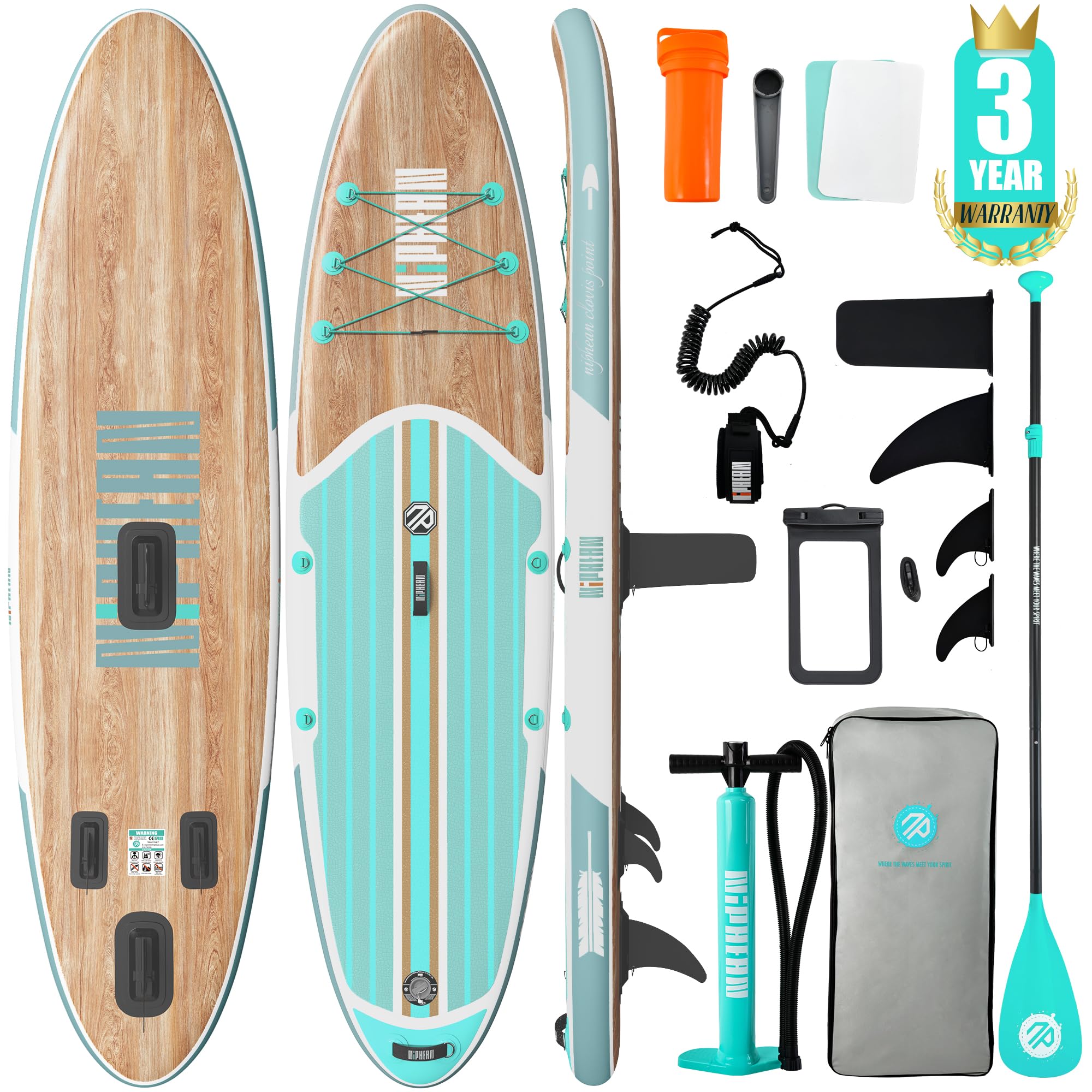
Stop paying more: Stop at $180. The Niphean offers a class-leading 450 lb capacity and 11 D-rings for accessories, outperforming boards costing $20 more.
When to upgrade: Need a slightly wider platform and better overall polish? Step up to the FunWater at $200.
Best Value (Under $200)
$200FunWater 10'6" Inflatable Stand Up Paddle Board
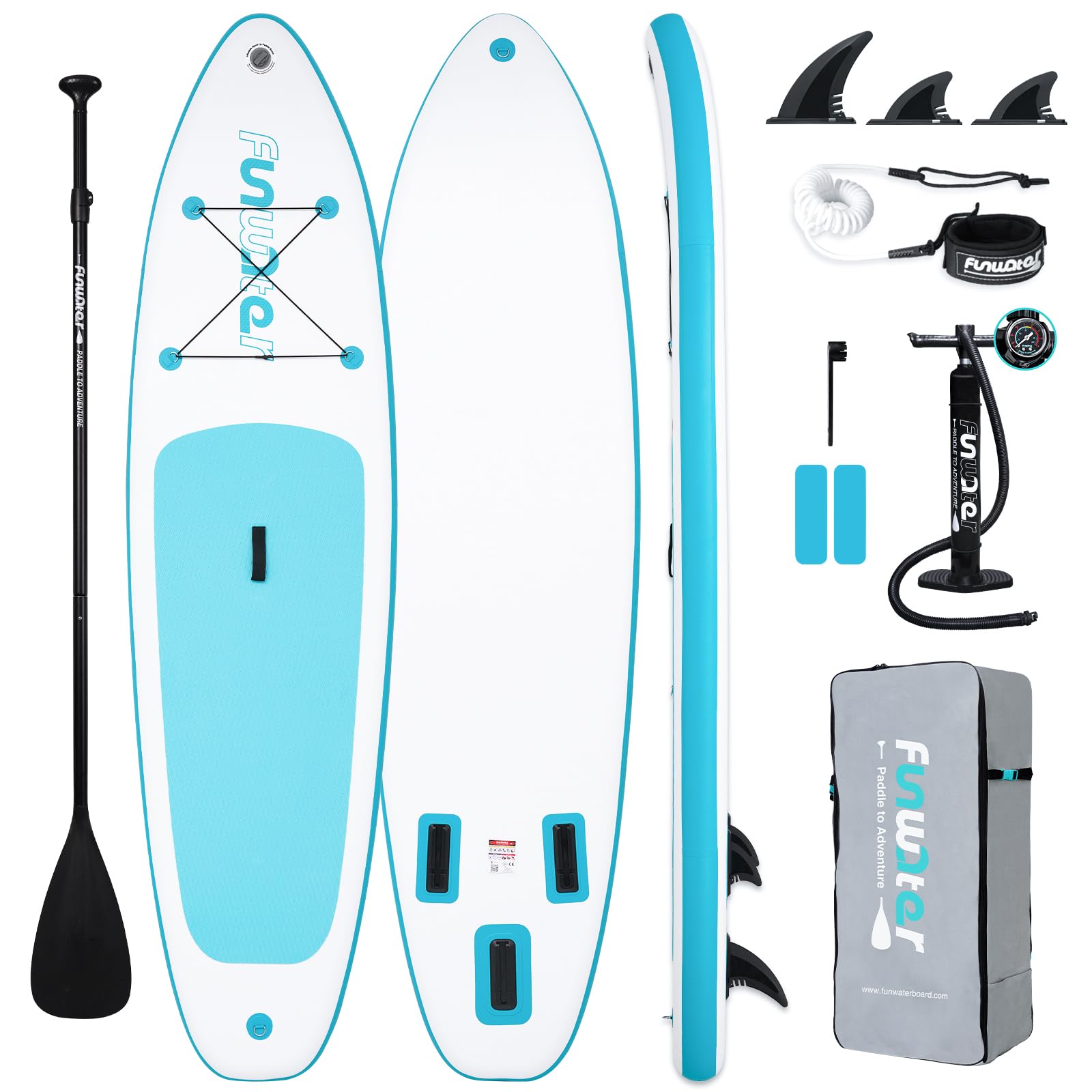
Stop paying more: At $200, this is the most popular board on Amazon for a reason: solid construction, 3 removable fins, and a 3-year warranty. It's the sweet spot.
When to upgrade: For the highest ratings and a famous name, the Roc 10' is only a couple of dollars more.
Premium Pick (Top-Rated)
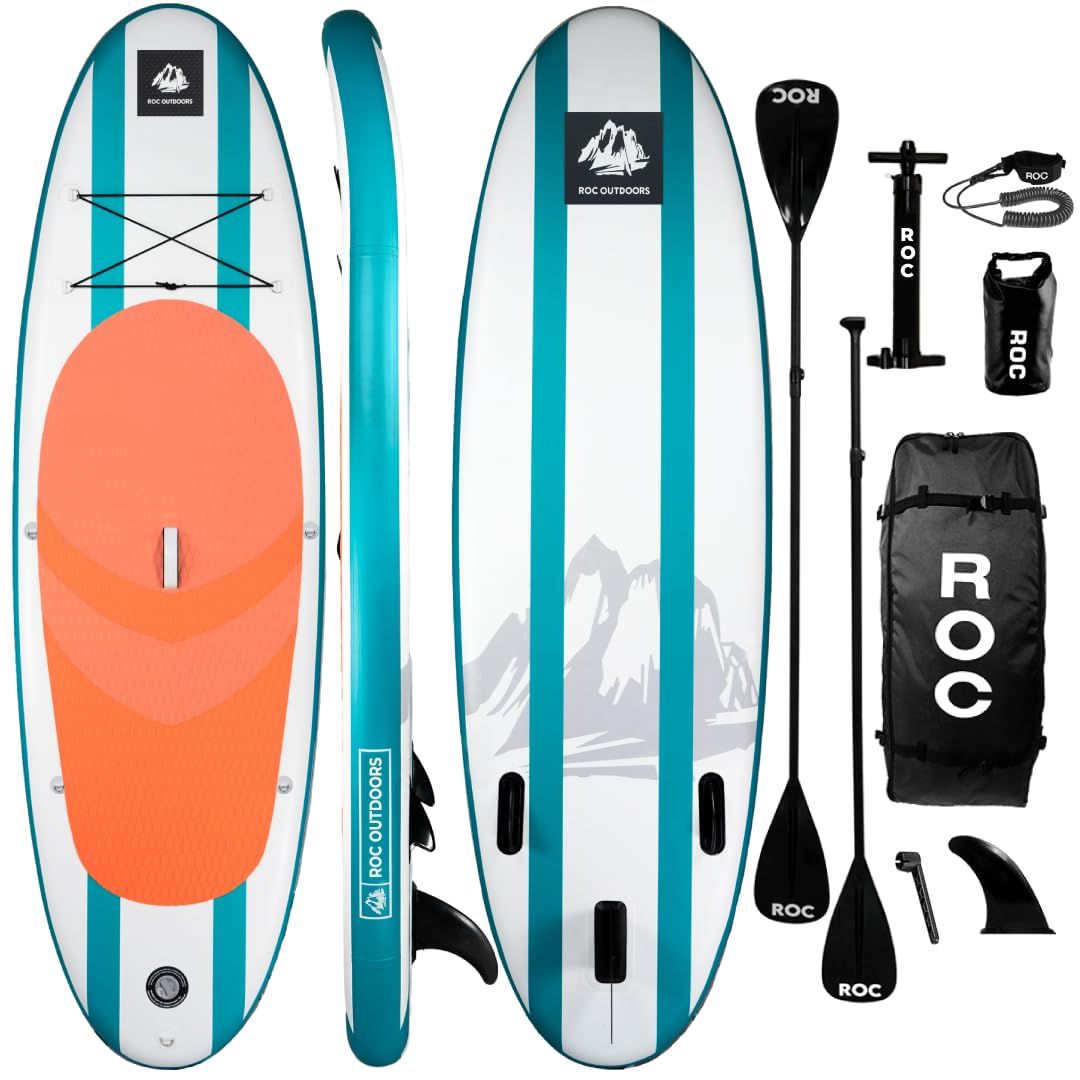
$200Roc 10' Inflatable Stand Up Paddle Board
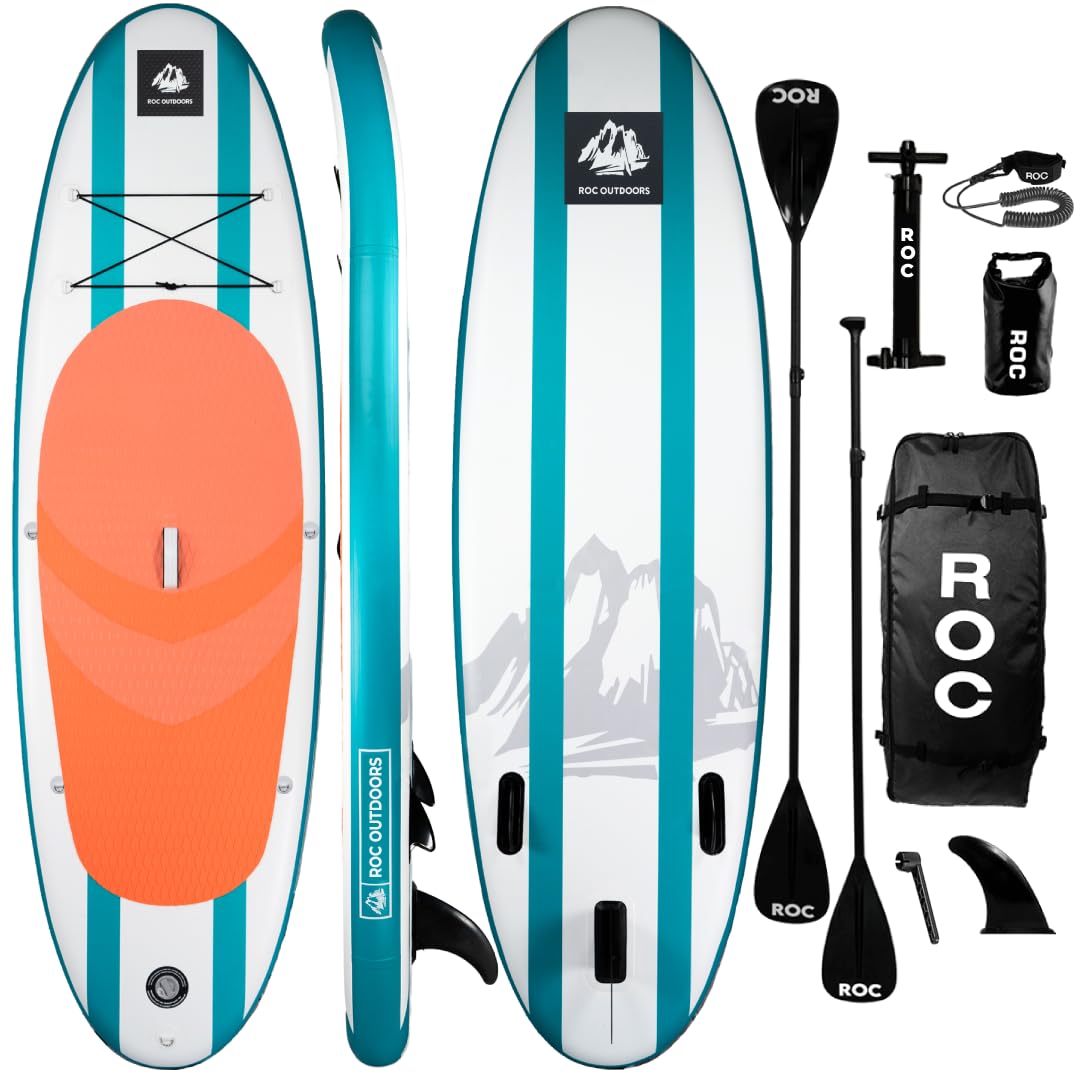
Stop paying more: At $200, the Roc earns its premium status with a 4.8-star average and 9,900+ reviews. The military-grade PVC and 3-year warranty justify the price.
When to upgrade: If you need a higher weight capacity or more D-rings, the Niphean at $180 actually offers more.
Common Mistakes to Avoid
Buying too small a board
A board under 10' or narrower than 32" will feel tippy and struggle to carry adult-sized gear. Always check the weight capacity and add a safety margin.
Cost of getting it wrong: A bargain board might force you to upgrade within a year, wasting money.
Ignoring the warranty
Many budget boards offer only a 1-year warranty. Inflatable boards face UV and puncture risks; a 3-year warranty from Roc, FunWater, or Niphean saves repair costs down the line.
Cost of getting it wrong: A sudden leak after 18 months on a 1-year warranty board means a replacement.
Skipping the electric pump
Amazon reviewers repeatedly say manual inflation takes 500+ pumps and leaves you winded. An electric pump costs $30–$60 and gets you on the water faster.
Cost of getting it wrong: Paying for an electric pump later is a hidden cost; buy one with the board.
Overlooking the paddle
A cheap aluminum paddle can be heavy and less efficient. While all our picks include one, consider upgrading to a fiberglass or carbon paddle for longer tours.
Cost of getting it wrong: A paddle upgrade dramatically improves the experience, but a poor one can cause fatigue.
Find Your Match
What's your primary use?
Frequently Asked Questions
How much should I spend on a paddleboard?
A quality inflatable paddleboard costs between $180 and $200. Avoid boards under $150—they often skimp on warranty and materials. Spending more than rarely adds meaningful upgrades unless you need a specific specialty board. All our recommendations fall in the $180–$200 range and deliver excellent value.
What should I avoid when buying a paddleboard?
Skip boards narrower than 32" for beginners, and never buy one with a weight capacity less than your body weight plus 50 lbs. A short 1-year warranty is a red flag; look for at least 2 years. Also, avoid kits that don't include a dual-action pump—manual inflation alone is a dealbreaker for many.
What size paddleboard do I need?
For most adults, a 10' to 10'6" board that is 33" wide works well. If you weigh over 250 lbs or plan to carry a child or lots of gear, choose a board with a 350+ lb capacity. Lighter paddlers can go with a 32" board, but 33" offers better stability for all.
Is an electric pump worth it?
Absolutely. Amazon reviewers consistently mention that manual pumping to 15 PSI takes hundreds of strokes. An electric pump saves time and energy, especially if you paddle often. It’s a $30–$60 investment that makes the whole experience more enjoyable.
Can I bring my dog on a paddleboard?
Yes, many dogs love SUP. Choose a board with a high weight capacity (350+ lbs) and a wide, grippy deck. The Niphean board, with its 450 lb capacity and 11 D-rings for leashing, is ideal for canine companions.
What's the difference between inflatable and hard paddleboards?
Inflatable boards are more portable, durable against bumps, and store easily. Hard boards (epoxy) offer better speed and glide but are heavier, more fragile, and harder to transport. For most recreational paddlers, an iSUP is the smarter choice.
How long do inflatable paddleboards last?
With proper care—rinsing after saltwater use, storing out of direct sun, and not over-inflating—a good iSUP can last 5+ years. Warranties of 3 years from brands like Roc and FunWater reflect that confidence. Punctures are repairable with a simple patch kit.
How we wrote this guide
We evaluated 6 of the most popular inflatable paddleboards on Amazon. Analysis focused on stability, weight capacity, portability, and long-term durability. Key insights came from 34,891 verified buyer reviews and manufacturer specifications. We also cross-referenced first-hand data on warranty terms and real-world performance. Every board we recommend comes with a complete accessory kit and supports a range of paddler sizes.
About this guide
Mubboo Editorial Team. Independent consumer research for the US market. Picks are based on verified buyer reviews and product specifications. Prices update weekly from Amazon.