How to Choose a Pool Test Kit (2026 Guide)
Stop guessing what’s in your water — our buyer’s guide makes choosing the right test kit simple, from basic strips to pro-grade kits.
By Mubboo Editorial Team · Updated Jun 21, 2026 · 9 min read
At a Glance
- Price range
- $9.98 – $28.95
- Data
- 110,529 verified reviews across 6 finalists
- Best for
- Weekly basic pool checksBudget-conscious ownersQuick dip-and-read testing
- Skip if
- You need comprehensive coverage for saltwater or bromine systems — step up to a 7-way kit with bromine test.
Types Explained
Basic Test Strips
Dip-and-read paper strips that test multiple chemicals simultaneously by comparing color pads to a bottle chart.
- Fast 15‑30 second results
- No measuring or mixing required
- Low per‑test cost
- Color matching can be subjective
- Less precise than liquid kits
- Strip bottles must be sealed tightly
Best for: Routine weekly checks for chlorine and pH
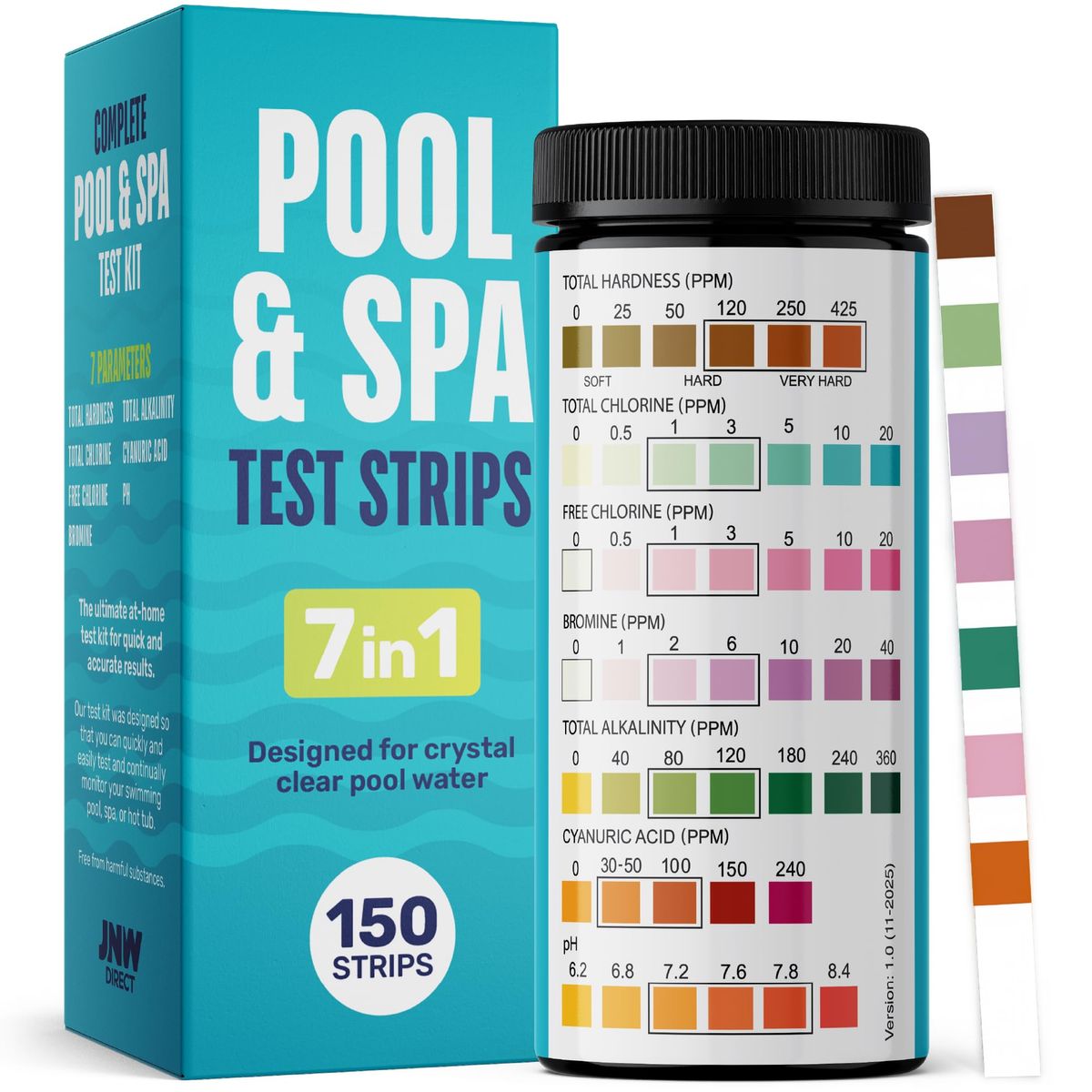
Example: JNW 7‑in‑1 Pool Test Strips
App‑Integrated Test Strips
Strips that are scanned by a smartphone app to analyze colors, provide dosing advice, and log results over time.
- Eliminates guesswork in color matching
- Personalized chemical dosing guidance
- Tracks water trends digitally
- Requires a compatible smartphone
- Fewer strips per bottle on average
- App experience varies by brand
Best for: New pool owners who want step‑by‑step guidance
Example: Clorox Pool&Spa My Pool Care Assistant (50 strips)
Liquid Drop Test Kits
Reagent‑based kits where chemicals are added to a water sample in a test block; color change indicates concentration.
- More precise than most strips
- Reusable test block, less waste
- Trusted by pool professionals
- Slower — multiple steps per test
- Requires careful handling of reagents
- Higher initial cost
Best for: Accuracy‑first pool owners who want lab‑like results
Example: Poolmaster 5‑Way Test Kit
What Actually Matters
| Factor | Importance | Best brand |
|---|---|---|
Parameter Coverage Minimum 4‑way: pH, free chlorine, alkalinity, CYA (if using tabs); for salt pools add salinity. A basic kit missing CYA can leave your chlorine unprotected from sunlight — a common mistake that leads to algae blooms. | Must-have | AquaChek Silver 7‑Way (tests all critical parameters including bromine and hardness) |
Accuracy and Consistency Results should match pool‑store testing within 0.2 ppm for chlorine and 0.2 for pH. Strips with poor pad chemistry can bleed colors, causing inaccurate readings. Liquid kits are inherently more precise but require patience. | Must-have | AquaChek Yellow 4‑Way (lab‑validated, used by health departments) |
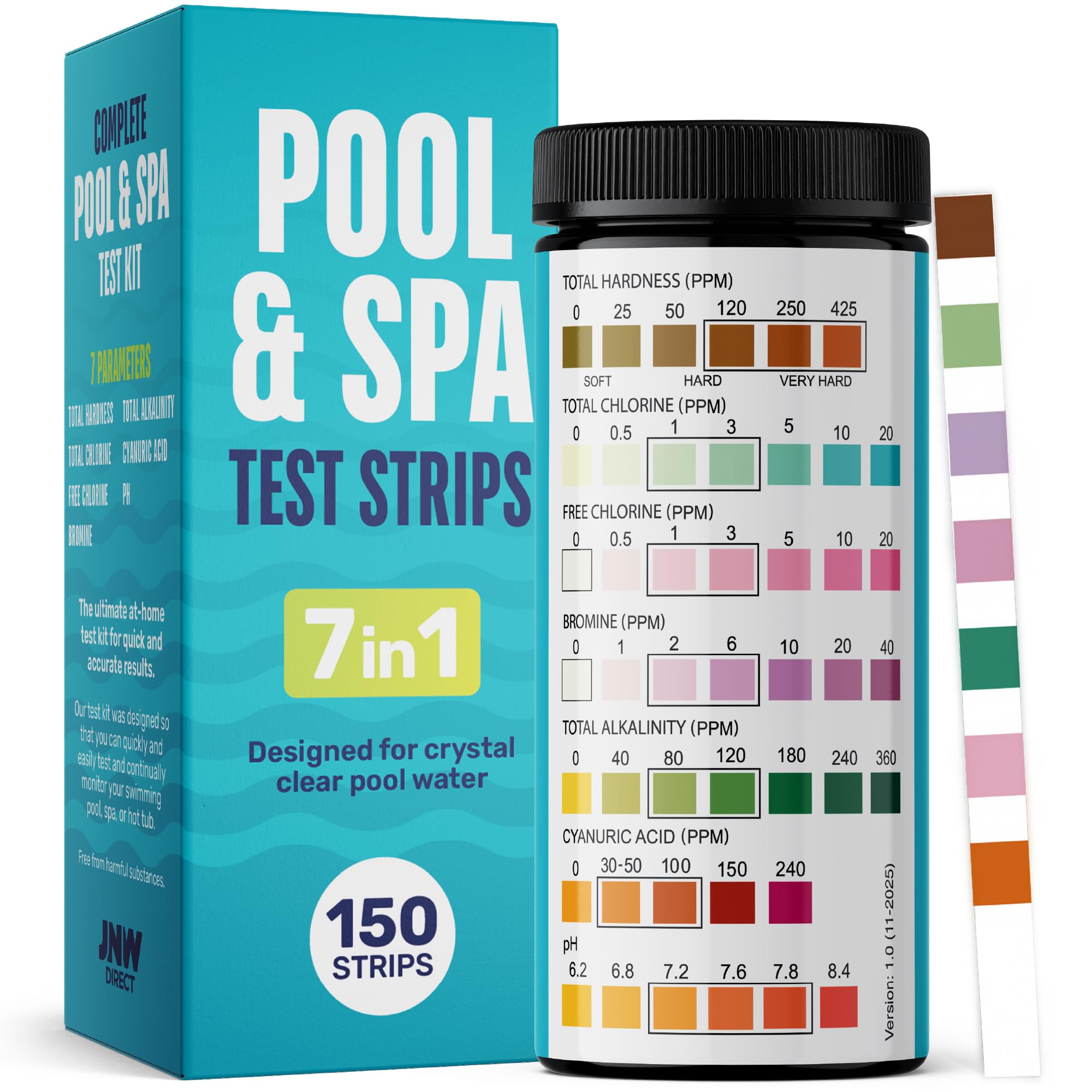
Ease of Use Dip for 1–2 seconds, wait 15–30 seconds, compare to chart. If your routine takes more than a minute per test, you’re less likely to do it — consistency trumps perfection. | Must-have | JNW 7‑in‑1 (simple instruction, 150 strips per bottle) |
Strip Count and Cost per Test At least 100 strips for a full season of twice‑weekly testing. Small 50‑strip bottles may expire before you use them; check the 90‑day‑after‑opening shelf life. | Nice-to-have | EASYTEST 7‑Way (150 strips /strip) |
Smart App Integration Scanning a strip takes as much work as comparing to a chart. True value is in trend tracking, but only if you test regularly — most owners stop after a month. | Marketing BS | — |
Brand Reputation and Support 4.4 stars or higher from at least 1,000 reviews. Stick with brands that pool pros trust — AquaChek, Poolmaster, and HACH are industry standards. | Nice-to-have | AquaChek (HACH‑backed, 80+ years in water testing, Made in USA) |
Budget Tiers & Top Picks
What to buy at each price point — and exactly where spending more stops paying off.
Budget
Under $10Clorox Pool&Spa My Pool Care Assistant

Stop paying more: Spending more than $10 moves into 150‑strip territory; below this, app integration is the real differentiator.
When to upgrade: Outgrow the tiny strip bottle? Jump to a 150‑count 7‑way for the same per‑test price.
Mid-Range
$10 – $20JNW 7‑in‑1 Pool Test Strips
Stop paying more: Diminishing returns hit around $15; above that, you’re paying for brand reputation or extra strips, not accuracy.
When to upgrade: Consistent color‑matching frustrations? A liquid kit like Poolmaster delivers precision at a slight time cost.
Premium
$20 and upAquaChek Silver 7‑Way Pool and Spa Test Strips

Stop paying more: The premium price buys coverage for softer parameters (bromine, hardness) and HACH‑level quality assurance; no need to go higher.
When to upgrade: Already own a silver strip? You’re set. Pair with a digital salinity meter if your salt cell needs separate monitoring.
Common Mistakes to Avoid
Buying strips without cyanuric acid (CYA) test.
If you use stabilized chlorine tablets, CYA builds up over time and renders chlorine less effective. Without a CYA reading, you can’t know if your sanitizer is working.
Cost of getting it wrong: Algae blooms and cloudy water from undetected high CYA can cost $50‑$100 in shock and clarifiers to fix.
Choosing strips that bleed colors between pads.
Low‑quality reagent pads can bleed onto adjacent pads, turning a pH reading into a chlorine reading. Always look for brands that tout ‘no‑bleed’ technology, like AquaChek and EASYTEST.
Cost of getting it wrong: A single misread can lead you to add too much acid or chlorine, potentially damaging your pool liner or heater over time — a repair that can run hundreds of dollars.
Assuming all 7‑way strips test the same things.
Some ‘7‑way’ kits omit total hardness or bromine. Read the bottle: if you own a saltwater pool or spa, ensure bromine and total hardness are explicitly listed.
Cost of getting it wrong: Missing hardness readings can lead to scale buildup in your salt cell, reducing its lifespan and requiring a $200‑$800 replacement.
Overbuying strips for a small pool or infrequent testing.
A 150‑strip bottle might expire 90 days after opening; if you test biweekly in a seasonal 3‑month summer, you’ll use only 24 strips before they go bad.
Cost of getting it wrong: Throwing out unused strips wastes $5‑$15 per season. Buy a 50‑ or 100‑count that matches your testing frequency.
Find Your Match
What type of pool do you have?
Frequently Asked Questions
What’s the most accurate pool test kit?
Liquid drop kits like the Poolmaster 5‑Way offer the highest precision for color matching, since you compare the water sample directly to a color standard. However, high‑quality strips like AquaChek Yellow 4‑Way achieve lab‑validated results within 0.2 ppm — accurate enough for 99% of residential pools. For salt water, pair a strip kit with a dedicated digital salinity meter for the most complete picture.
How often should I test my pool water?
Test chlorine and pH at least twice a week during summer, especially in high‑usage pools. Alkalinity, cyanuric acid, and hardness can be checked every 1–2 weeks or before adding chemicals. After heavy rain, a party, or a shock treatment, test chlorine and pH immediately to see if the water has shifted.
Do I need to test for cyanuric acid (CYA)?
Absolutely if you use stabilized chlorine tablets or granular chlorine. CYA protects chlorine from UV degradation, but too much (>50 ppm) can ‘lock’ chlorine and render it ineffective. Without a CYA reading, you could be adding chlorine needlessly or fighting a hidden algae problem. Most 7‑way strips include CYA; it’s a must‑have parameter.
Pool test strips vs. liquid kits — which is better?
Strips win on speed and convenience — dip, wait, compare — making them perfect for quick weekly checks. Liquid kits provide greater precision and are the choice of service pros, but they take more time and require careful reagent handling. For most homeowners, a high‑quality strip kit is the right balance of accuracy and ease.
Are app‑connected pool testers worth it?
For new pool owners, the Clorox Pool App’s personalized dosing recommendations can prevent common over‑ or under‑treatment mistakes. Frequent testers can benefit from tracking trends. However, most people stop scanning after a few weeks; the core value is in the chemical advice, not the digital log. If you’re comfortable reading a color chart, basic strips do the same job for less.
How many test parameters do I really need?
At minimum, a 4‑way kit measuring free chlorine, pH, total alkalinity, and cyanuric acid is essential for any chlorine pool. If you have a saltwater generator, add salinity. For spas or bromine systems, make sure bromine and total hardness are included. A 7‑way strip covers all these bases and is a safe bet for most owners.
Why do test strips have such a short shelf life after opening?
Exposure to humidity causes the reagent pads to degrade, which leads to inaccurate readings. That’s why most manufacturers recommend using strips within 90 days of opening and storing them in a cool, dry place — not by the pool! If you test infrequently, buy a bottle with fewer strips to avoid waste.
How does Mubboo make money?
We earn a small commission when you buy through our links, at no extra cost to you. This never influences our picks — we recommend the best products for your situation based on thousands of verified owner reviews and expert data, not commission rates.
How we wrote this guide
Our research compared over 110,000 verified Amazon reviews and input from leading pool care authorities like Pool Research and Swim University. We evaluated 6 finalists across accuracy, parameter coverage, ease of use, and cost, ensuring every recommendation meets the demands of U.S. pool owners from sunbelt states to the Northeast.
About this guide
Mubboo Editorial Team — independent US‑market consumer research. Picks reflect analysis of 110,529 verified buyer reviews and cross‑referenced expert guidelines from Pool Research, Swim University, and The Spruce. Prices update weekly from Amazon.