Power Strip Buying Guide 2026: Joule Rating, Outlet Spacing & USB Charging Explained
Why outlet count matters less than the joule number, and the indicator light that tells you when protection has run out.
By Mubboo Editorial Team · Updated Jul 1, 2026 · 7 min read
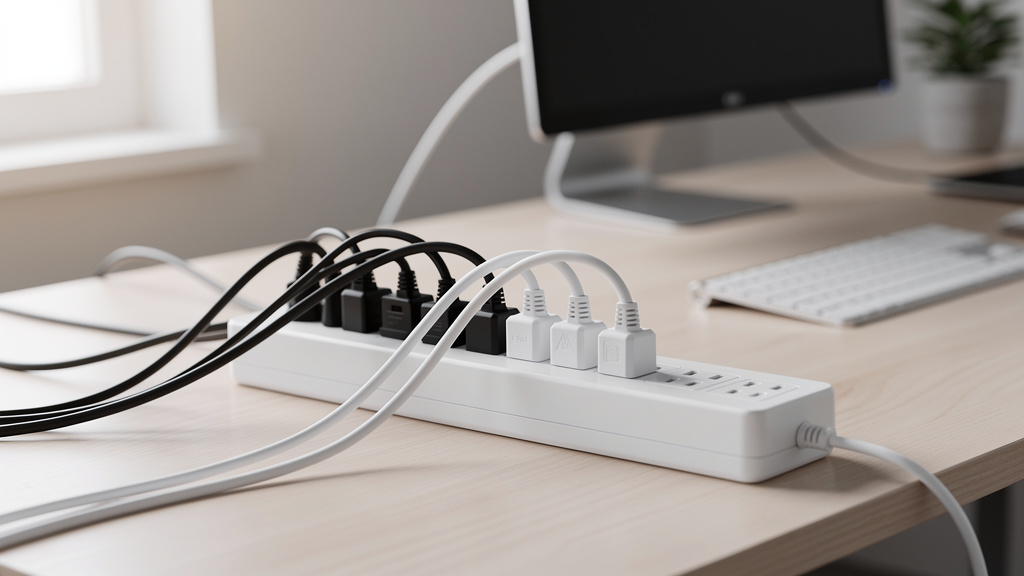
At a Glance
- Price range
- $11 – $22
- Budget pick
- QINLIANF 5 Outlet Extender ($10.99 · 4.7★)
- Data
- 416,000+ verified reviews analyzed across 6 finalists
- Best for
- Home office desk setupsProtecting a computer, TV, or home theater systemEveryday device charging
- Skip if
- You need whole-house surge protection — that's installed at the breaker panel, not a plug-in strip
Types Explained
Compact Outlet Extenders (5-6 Outlets)
Smaller strips that expand one wall outlet into several, sized for everyday desks or entertainment centers.
- Lower price point
- Compact enough for tight spaces
- Fewer outlets for larger setups
- Usually lower joule ratings than larger strips
Best for: Everyday desks, entertainment centers, or dorm rooms
Example: QINLIANF 5 Outlet Extender
USB-Integrated Power Strips
Strips that combine standard outlets with built-in USB-A and USB-C charging ports.
- Fewer separate wall adapters needed
- USB-C ports generally charge devices faster than USB-A
- USB ports add cost over a basic outlet-only strip
- USB charging speed varies by port and device
Best for: Anyone charging phones or tablets alongside standard electronics
Example: HANYCONY Surge Protector Power Strip
High-Capacity, High-Joule Surge Protectors (12+ Outlets)
Larger strips with more outlets and a higher joule rating, built for protecting several expensive electronics at once.
- Highest surge protection ratings in the category
- Enough outlets for a full desk, gaming, or home theater setup
- Bulkier than compact strips
- Higher price than basic outlet extenders
Best for: Gaming PCs, home theater systems, or full desk setups with several devices
Example: ALESTOR Surge Protector (12 Outlets)
What Actually Matters
| Factor | Importance | Best brand |
|---|---|---|
Surge protection rating (joules) Look for at least 1,000+ joules for computers, TVs, or other electronics; strips under 1,000J are better suited for lamps and low-value devices Independent testing consistently flags joule rating as the single most important surge-protection spec — higher is meaningfully better for expensive electronics. | Must-have | Alestor leads this list at 2,700 joules |
Auto-shutoff or indicator light when protection is depleted A protected-indicator light confirms the surge protection is still active — without one, you can't tell when a strip has absorbed its last surge and become a plain extension cord Independent reviewers specifically praise strips that clearly signal when protection is exhausted — it's a meaningful safety feature, not just a nice-to-have. | Must-have | GE's models include a protected indicator light confirming active surge protection |
Outlet spacing for bulky adapters Wide-spaced or angled outlets prevent large power bricks from blocking neighboring outlets Verified buyer feedback consistently calls out outlet spacing as a major real-world usability factor, not just a spec sheet detail. | Must-have | QINLIANF's 3-sided design spaces outlets to reduce blocking from oversized adapters |
USB-C vs. USB-A charging ports USB-C ports generally charge modern phones and tablets faster than USB-A — useful if you want to skip separate wall adapters. | Nice-to-have | — |
'Military-grade' or 'industrial-grade' surge protection claims There's no regulated consumer standard behind these phrases — an ETL or UL safety certification is a more concrete signal than the marketing language. | Marketing BS | — |
Extreme outlet-count claims without matching joule rating More outlets don't protect better — a 12-outlet strip with a low joule rating still only offers basic protection. Check the joule number, not just the outlet count. | Marketing BS | — |
Budget Tiers & Top Picks
What to buy at each price point — and exactly where spending more stops paying off.
Compact Everyday
$11 – $14QINLIANF 5 Outlet Extender

Stop paying more: This tier's review volume makes it the safe everyday default — paying more mostly buys higher joule ratings, not better basic function.
When to upgrade: Protecting a computer, TV, or home theater setup? Step up to a higher-joule tier.
Trusted Name-Brand Surge Protector
$13 – $16GE Surge Protector Power Strip (6 Ft Cord)
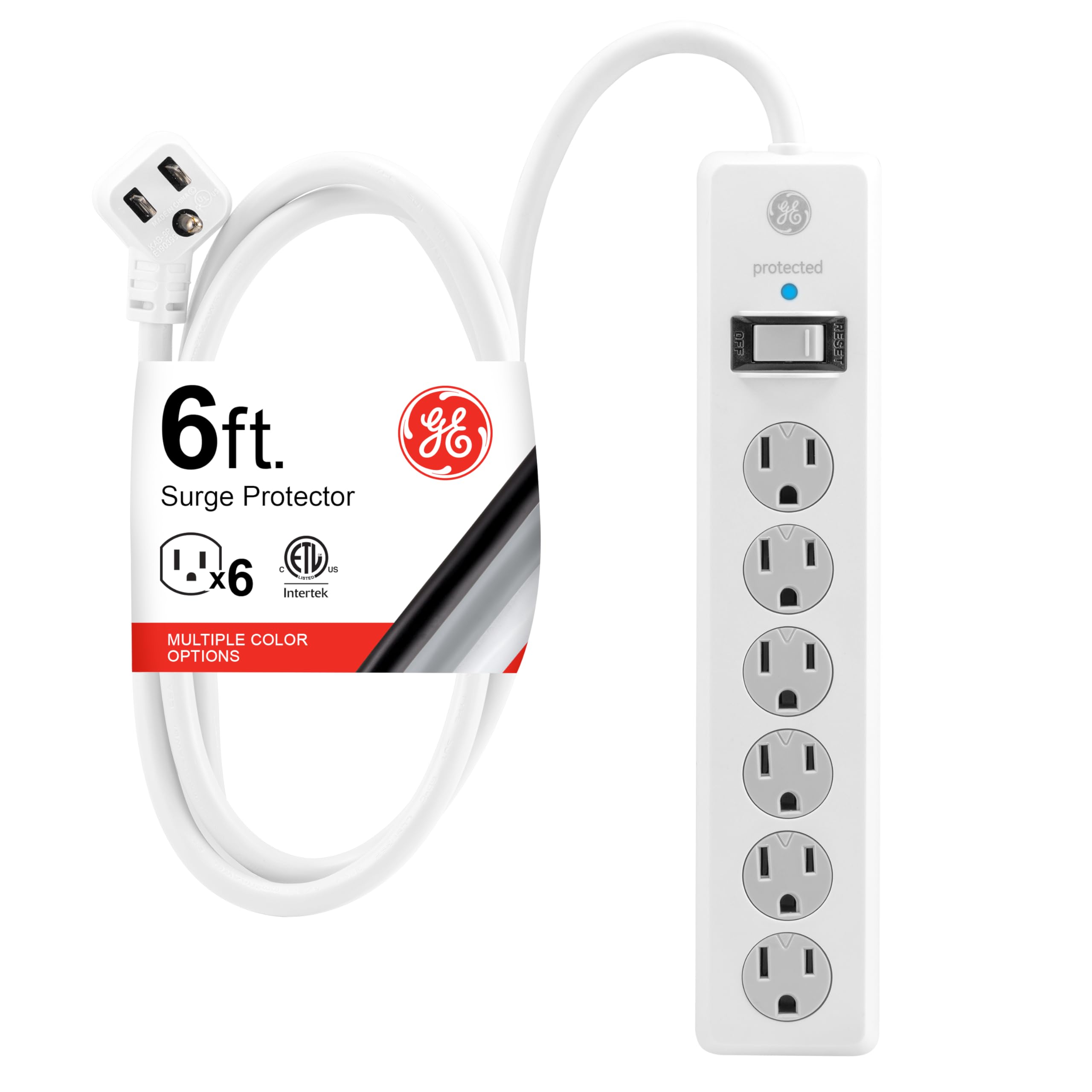
Stop paying more: GE's protected-indicator light and lifetime warranty are the ceiling most buyers need at this tier — a 10ft-cord version of the same design is available if you need more reach.
When to upgrade: Need to protect multiple high-value electronics? Move to the high-joule tier.
High-Joule / High-Capacity
$20 and upALESTOR Surge Protector (12 Outlets)

Stop paying more: Alestor's joule rating and three-layer surge circuit (TVS, MOV, and gas discharge tube) are the ceiling for consumer surge protection — going pricier moves into dedicated audiophile or studio-grade units.
When to upgrade: There isn't a meaningful step up from here for typical home or office use — beyond this is specialized studio or whole-house surge equipment.
Common Mistakes to Avoid
Using a low-joule strip to protect expensive electronics
A strip rated under 1,000 joules is fine for lamps or basic devices, but independent testing consistently recommends 1,000+ joules for computers, TVs, or home theater gear.
Cost of getting it wrong: Inadequate protection for the electronics that actually need it most
Assuming more outlets means better protection
Outlet count and joule rating are separate specs — a 12-outlet strip with a low joule rating still only offers basic surge protection. Check the joule number, not just how many things it plugs in.
Cost of getting it wrong: A false sense of security from a high outlet count alone
Ignoring outlet spacing until bulky adapters won't fit
Verified buyer feedback consistently calls out outlet spacing as a major real-world factor — a strip with tightly packed outlets can leave several sockets unusable once a couple of large power bricks are plugged in.
Cost of getting it wrong: Effectively losing outlets you paid for to blocked spacing
Never checking for a protected-indicator light
A surge protector's protection wears out after absorbing enough spikes, but without an indicator light, there's no way to know when it's become a plain extension cord.
Cost of getting it wrong: Believing electronics are protected when the surge protection has actually been used up
Find Your Match
What are you plugging in?
Frequently Asked Questions
How much should I spend on a power strip or surge protector?
Compact 5-6 outlet strips run $11-$16. High-capacity 8-12 outlet models with USB charging run $12-$22. Higher prices generally buy a higher joule rating, not just more outlets.
What should I avoid when buying a power strip?
Avoid low-joule strips under 1,000 joules for computers or TVs, and don't assume a high outlet count means better protection — check the joule rating separately.
What is a good joule rating for a surge protector?
Independent testing generally recommends at least 1,000 joules for computers and TVs, with 2,000+ joules better suited for expensive gaming or home theater setups.
Why does my power strip have an indicator light?
It confirms the surge protection is still active. Surge protection wears out after absorbing enough spikes — without an indicator light, there's no way to know when a strip has become a plain extension cord.
Does outlet spacing actually matter on a power strip?
Yes — verified buyer feedback consistently flags tightly-packed outlets as a real usability problem once a couple of bulky power adapters are plugged in.
Are USB ports on a power strip actually useful?
Yes, especially USB-C ports, which generally charge phones and tablets faster than USB-A — buyers consistently cite them as reducing the number of separate wall adapters needed.
How we wrote this guide
Synthesized from 6 finalists and 416,000+ verified Amazon reviews across joule ratings and outlet configurations. Prices update weekly from Amazon.
About this guide
Mubboo Editorial Team. Picks based on comparison of joule rating, outlet spacing, and verified user reviews. Prices update weekly from Amazon.