How to Choose a Pull-Up Bar: The Simple Guide for Any Home Gym
From $30 doorway bars to $150 power towers — pick the right one for your space and goals
By Mubboo Editorial Team · Updated Jun 21, 2026 · 8 min read
At a Glance
- Price range
- $29 – $150
- Data
- 95,770+ verified Amazon reviews analyzed across 6 finalists, plus input from Wirecutter, r/homegym, and fitness experts.
- Best for
- Apartment dwellersBeginners starting bodyweight trainingHome gyms with limited space
- Skip if
- You need a permanent ceiling mount or have no suitable doorways
Types Explained
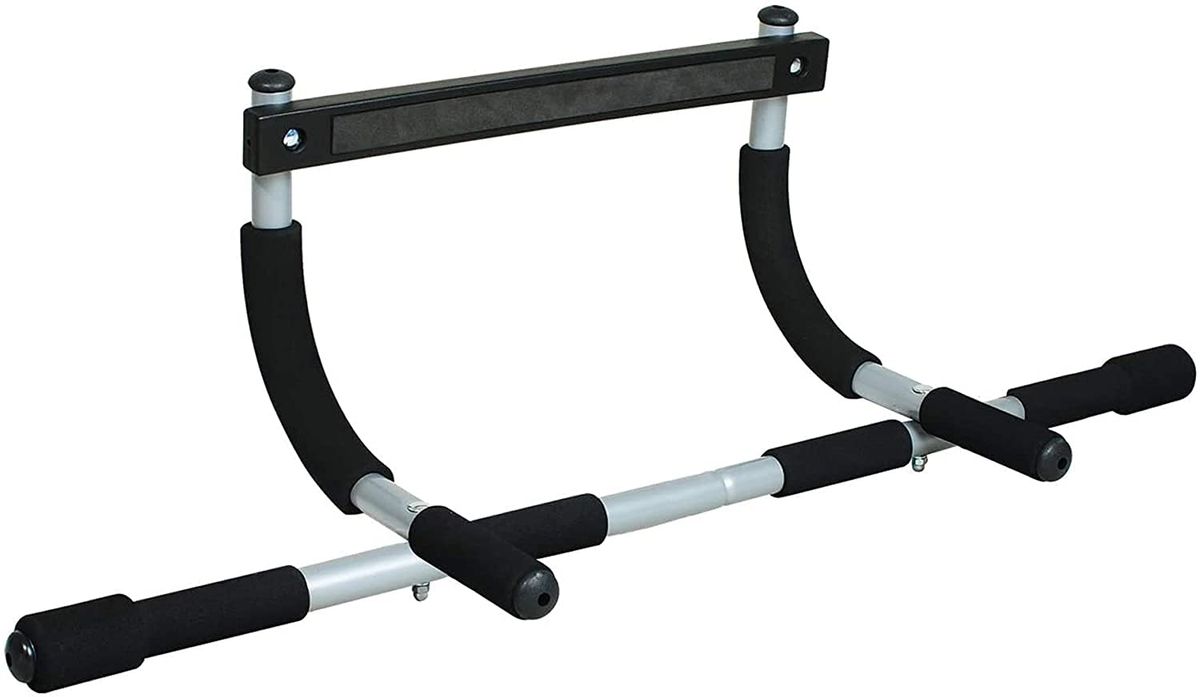
Standard Doorway Bar
A horizontal bar that uses leverage to secure between doorframe sides, often with multiple grip positions. No screws or permanent installation required.
- Installs in seconds, leaves no marks
- Portable and easy to store
- Costs under $40
- Limited to pull-ups and chin-ups only
- Must fit 24–32 inch doorways
Best for: Budget-conscious users who want a no-fuss pull-up station at home.
Example: Iron Gym Total Upper Body Workout Bar
Multi-Grip Doorway Bar
A doorway bar with 8–12 grip positions, including wide, neutral, and hammer grips, plus optional wall mount brackets for permanent use.
- Maximizes muscle engagement with varied angles
- Often includes lifetime warranty
- Fits wider doorways up to 36 inches
- Heavier and bulkier than basic bars
- Vinyl grips can get slippery when sweaty
Best for: Exercisers who want variety and long-term durability in a doorway setup.
Example: ProsourceFit Multi-Grip Pull-Up Bar
Power Tower / Free-Standing Station
A standalone frame that does not need a doorway. Includes a pull-up bar, dip handles, and often push-up bars and backrests.
- No doorway required — place anywhere
- Enables dips, leg raises, and push-ups
- Adjustable height for different users
- Requires 6–10 sq ft of floor space
- Higher cost (+)
- Assembly can take 30+ minutes
Best for: Serious home gym owners who want full upper-body training without a door.
Example: Sportsroyals Power Tower 10-in-1
What Actually Matters
| Factor | Importance | Best brand |
|---|---|---|
Weight Capacity 300 lbs minimum for most users A bar that flexes under load is dangerous. Wirecutter’s testing emphasizes that stability and lack of shaking are the top priority — a 300-lb capacity is the floor for safety. | Must-have | Ally Peaks (440 lb), Iron Gym (300 lb) |
Doorway Compatibility Measure width (24–32 inches typical) and trim depth Before buying, check your door frame width, trim thickness, and whether you have enough depth. Many returns come from skipping this step. | Must-have | ProsourceFit (fits up to 36 inches, 6-inch trim depth) |
Grip Variety and Comfort At least 3 positions (neutral, wide, narrow) is ideal More grips let you target biceps, back, and shoulders differently. Foam or rubber grips with good texture prevent slipping, even when sweaty. | Nice-to-have | ProsourceFit (12 grips) |
Stability and Safety Non-slip pads, secure locking mechanism, no wobble A bar that shifts during a set can lead to injury. Look for rubber or silicone pads at contact points and a positive lock to prevent accidental disengagement. | Must-have | Ally Peaks (double silicone pads, lock nuts) |
Ease of Installation Tool-free setup in under 5 minutes Most doorway bars install in seconds, but some multi-grip models require partial disassembly. A bar you can take down easily means you can move it between rooms. | Nice-to-have | Iron Gym (no screws, simple lever design) |
Material and Durability Steel frame with corrosion-resistant coating Cheap plastic parts can crack under repeated stress. A powder-coated steel bar resists rust and lasts years, even in humid environments like garages. | Nice-to-have | Ally Peaks (1.7mm steel, powder coated) |
Brand Name vs. Real Performance Don’t pay a premium just for a logo Many brands charge 20–30% more for ‘fitness lifestyle’ marketing. r/homegym veterans consistently point out that a no-name bar with thick steel and good reviews often outperforms the flashy brands. | Marketing BS | — |
Budget Tiers & Top Picks
What to buy at each price point — and exactly where spending more stops paying off.
Under $50
$29 – $50Ally Peaks Heavy Duty Pull Up Bar

Stop paying more: Paying above $50 in this category gets you negligible weight-capacity improvements. The Ally Peaks already handles 440 lbs and uses silicone protectors.
When to upgrade: Upgrade to a power tower if you want to add dips, leg raises, and push-ups to your routine.
$50 – $120
$50 – $120RELIFE Power Tower

Stop paying more: This is the sweet spot for a freestanding station. You get dip handles, push-up bars, and 9 height settings without breaking $120.
When to upgrade: If you’re willing to spend $150+ and want a backrest plus extra exercise options, the Sportsroyals tower steps up.
$120 and Above
$120 – $150+Sportsroyals Power Tower 10-in-1

Stop paying more: Beyond $150, you’re paying for commercial-grade branding. The Sportsroyals offers pull-ups, dips, inverted rows, leg raises, and push-ups in one station — enough for 90% of home users.
When to upgrade: You’ve reached the top of consumer-grade home equipment; only commercial trainers surpass this.
Common Mistakes to Avoid
Not measuring the doorway first
Many bars require a clear 24-inch width, and some need up to 6 inches of trim depth. A bar that doesn’t fit means wasted time and return shipping.
Cost of getting it wrong: Return shipping ($5–$10) plus the frustration of a delayed setup.
Ignoring weight capacity if you’re heavier
A standard 250-lb bar can bend under a 220-lb user, especially during kipping motions. The Ally Peaks (440 lb) or Iron Gym (300 lb) provide a safety margin.
Cost of getting it wrong: A collapsed rack can result in injury and a damaged door frame — far more expensive than the upgrade.
Buying a doorway bar without checking for studs or adequate wall reinforcement
Some door frames have thin trim that can crack under leverage. If your trim is less than 0.5 inches thick, consider a wall-mounted bar or power tower.
Cost of getting it wrong: Cracked door frame repair can run or more, potentially costing more than the bar itself.
Settling for a basic bar when you really want full-body exercises
Many users buy a simple pull-up bar, then weeks later realize they need dips and leg raises. Upgrading to a power tower from the start would have avoided the additional cost.
Cost of getting it wrong: An extra + spent on a subsequent tower when a tower would have sufficed from day one.
Find Your Match
What's your budget?
Frequently Asked Questions
What’s the best pull-up bar for beginners?
The Iron Gym Total Upper Body Workout Bar is the best starting point. It installs without tools, supports 300 lbs, and provides three grip positions. It’s the most-reviewed bar on Amazon (25,000+ ratings) and costs under $35.
How much weight can a pull-up bar hold?
Most doorway bars hold 300 lbs, while heavy-duty models like the Ally Peaks support 440 lbs. Power towers typically range from 360 to 400 lbs. Always check the manufacturer’s maximum weight rating and add a safety margin — especially if you plan to do weighted pull-ups.
Do doorway pull-up bars damage door frames?
They can, but models with silicone pads (like Ally Peaks) or thick foam guards (like Iron Gym) significantly reduce the risk. Make sure your door trim is thick enough (at least 0.5 inches) and that the bar is installed correctly with even pressure.
How do I install a pull-up bar?
Most doorway bars simply hook over one side of the frame and use leverage to stay in place — no screws needed. Slide the bar onto the doorframe, adjust the width, and tug downward to lock. Always test with a light bodyweight pull before fully committing.
Can I use a pull-up bar if I’m overweight?
Yes, but choose a bar rated well above your current weight. The Ally Peaks (440 lb) is ideal for heavier users. Avoid bars with plastic components and always ensure your doorframe is load-bearing. Start with assisted pull-ups using a chair or resistance bands.
What’s the difference between a pull-up bar and a power tower?
A pull-up bar mounts in a doorway and offers only pull-ups and chin-ups. A power tower is a freestanding station that adds dip handles, push-up bars, and often leg raise stations — enabling a full upper-body workout without a door. Power towers need 6–10 sq ft of floor space.
How does Mubboo pick the products in this guide?
We aggregate verified Amazon reviews, expert testing reports from Wirecutter and Consumer Reports, and community insights from r/homegym. Each recommendation is based on real buyer ratings, safety standards, and long-term value — never on commission potential.
How we wrote this guide
We analyzed over 95,000 verified Amazon reviews across 6 finalists and cross-referenced guidance from Wirecutter, r/homegym, and fitness experts. Doorway compatibility, weight capacity, and long-term durability were the key criteria. Prices were last checked in June 2026.
About this guide
Mubboo Editorial Team — independent US consumer research. Picks reflect analysis of 95,770+ verified buyer reviews and three expert sources.