How to Choose the Right Pulse Oximeter: Spot-Check Accuracy Without Overpaying
Over 549,000 verified Amazon reviews later — we found the 3 things that separate a reliable reading from a panic.
By Mubboo Editorial Team · Updated Jun 21, 2026 · 8 min read
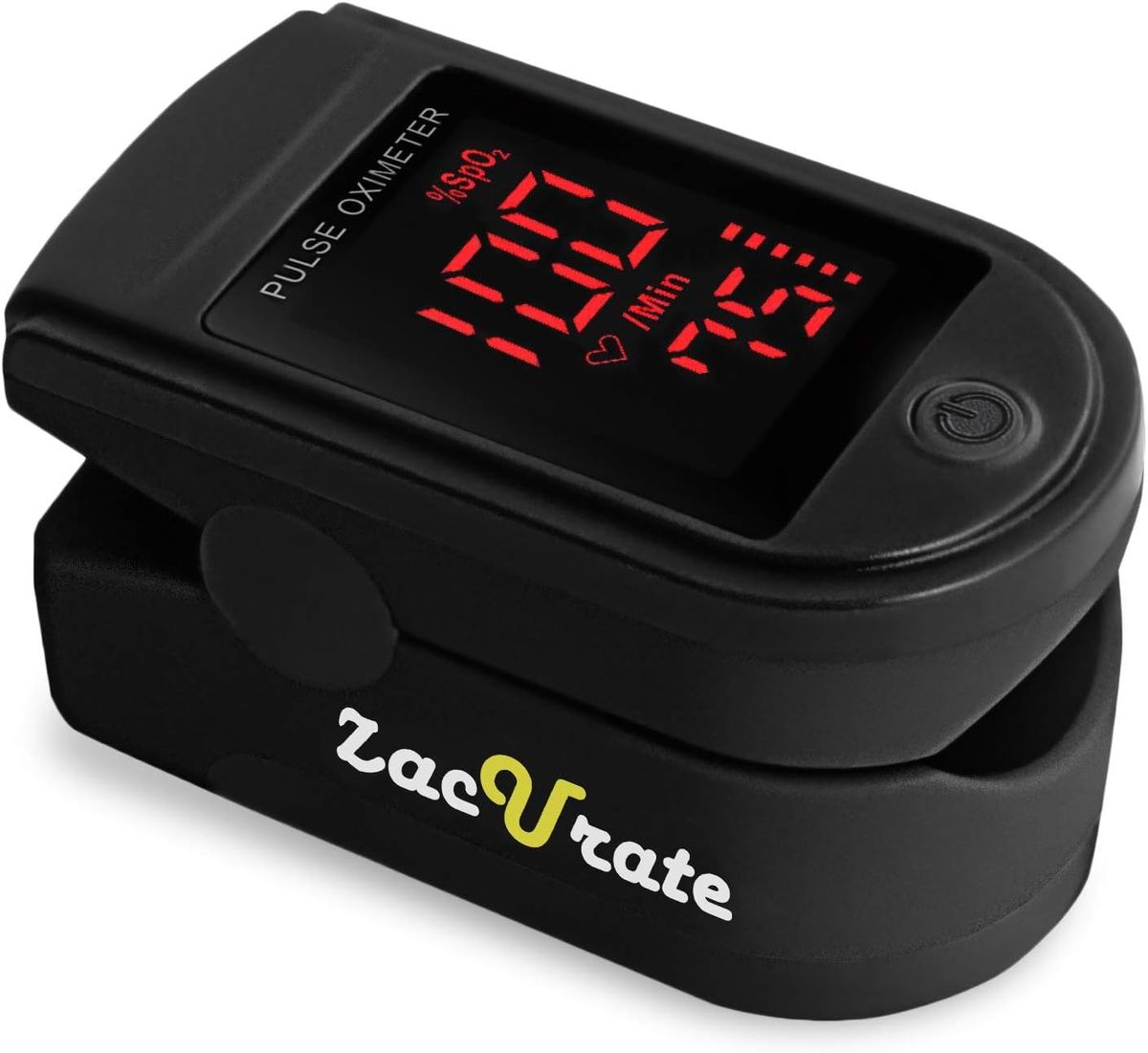
At a Glance
- Price range
- $9 – $35
- Budget pick
- Zacurate 500BL ($9.49 · 4.6★)
- Data
- 549,547 verified reviews analyzed across 6 finalists
- Best for
- Spot-checking oxygen saturation at homeAthletes adjusting to altitudeCaregivers monitoring respiratory patientsSeniors wanting large, easy-to-read displays
- Skip if
- You need continuous monitoring (look at wearable devices) or clinical‑grade accuracy (a hospital monitor).
Types Explained
Basic Fingertip
Simple one‑button devices that display SpO2 and pulse rate on an LED or LCD screen. No alarms or advanced metrics.
- Very affordable
- Small and portable
- Simple for anyone to use
- May be hard to read in bright light
- No low‑oxygen alert
- Fewer features for tracking trends
Best for: Occasional home spot‑checks for generally healthy people
Example: Zacurate 500BL (from $10)
Enhanced Display
Fingertip monitors with an OLED or dual‑color screen that offers higher contrast and better readability in all lighting.
- Crisp, easy‑to‑read numbers
- Works in dark rooms and direct sun
- Still lightweight and portable
- No alarm function
- Slightly pricier than basic LED models
- Some may lack a plethysmograph
Best for: Seniors, dim bedrooms, or anyone who struggles to read small text
Example: Santamedical Dual Color OLED
Advanced with Alarm
Monitors that add an audible low‑SpO2 alarm, a plethysmograph waveform, and sometimes perfusion index (PI) for clinical‑style feedback.
- Alarm alerts you to dangerous drops
- Waveform helps confirm reading accuracy
- Includes advanced metrics like PI
- Costs more
- Slightly larger build
- Alarm may be unnecessary for some users
Best for: Caregivers or people with COPD, sleep apnea, or other respiratory conditions
Example: Innovo Deluxe iP900AP
What Actually Matters
| Factor | Importance | Best brand |
|---|---|---|
Accuracy ±2% SpO2 (FDA‑cleared standard) Skip models that lack FDA clearance — they may be off by 4% or more, which can mask real health problems. | Must-have | Zacurate (verified across 236K+ reviews) |
Display readability OLED or dual‑color screen; numbers at least 0.5 inches tall Dark bedrooms or bright sunlight can wash out cheap LED displays. Look for a model that is clearly labeled 'OLED'. | Must-have | Santamedical (dual‑color OLED) |
Speed of reading Stable SpO2 in ≤8 seconds A sluggish device can make you wait 20+ seconds, which is frustrating when you’re checking multiple times a day. | Nice-to-have | Zacurate (500DL series) |
Low‑oxygen alarm Audible alert when SpO2 < 90% If you monitor someone overnight or have a lung condition, the alarm is a safety net worth the extra cost. | Nice-to-have | Innovo (iP900AP) |
Comfort & fit Adjustable spring, soft padding, fits most adult fingers A device that pinches or slips off will give inconsistent readings. Silicone‑padded models are gentler for daily use. | Must-have | Zacurate (silicone cover included) |
Included accessories Don’t pay extra for a ‘free’ lanyard or silicone cover — they cost pennies. Choose based on accuracy and display quality first. | Marketing BS | — |
Budget Tiers & Top Picks
What to buy at each price point — and exactly where spending more stops paying off.
Budget
Under $15Zacurate 500BL

Stop paying more: Stop at $15. Spending more in this bracket does not improve accuracy — you’re just paying for extra accessories you don’t need.
When to upgrade: Need a brighter display or a low‑oxygen alarm? Move to the mid‑tier ($15–$25).
Mid
$15 – $25Zacurate Pro Series 500DL

Stop paying more: Diminishing returns above $25; the 500DL already provides FDA‑cleared accuracy and a proven track record across 236,704 reviews.
When to upgrade: Want a low‑oxygen alarm and a plethysmograph? The premium tier below $40 adds clinical‑style monitoring.
Premium
$25 – $40Innovo Deluxe iP900AP

Stop paying more: Don’t go beyond $40 for a fingertip model. Hospital‑grade devices (Nonin, Masimo) start at $100+ and are overkill for home use.
When to upgrade: If you need continuous monitoring, consider a wearable like a smartwatch with SpO2, not a pricier fingertip device.
Common Mistakes to Avoid
Buying a no‑name brand with zero reviews
Generic pulse oximeters on Amazon can have error margins of 5% or more — enough to miss dangerously low oxygen levels.
Cost of getting it wrong: A false sense of security potentially delaying medical attention.
Ignoring display type
A dim LED screen is nearly unreadable in a dark bedroom or direct sunlight. You’ll end up squinting or using a flashlight to see the numbers.
Cost of getting it wrong: Inconsistent readings and frustration that could have been avoided for a couple of dollars more.
Assuming all devices are FDA‑cleared
Many cheap models never go through FDA review, meaning no independent body has verified their accuracy claims.
Cost of getting it wrong: Potential misdiagnosis — a reading of 95% could actually be 89% on a non‑FDA device.
Find Your Match
Who will be using the device?
Frequently Asked Questions
What is the best pulse oximeter for home use?
7-star rating.</strong> It provides reliable spot-checks of blood oxygen and pulse rate with a simple one-button operation.
What is the most accurate pulse oximeter?
Accuracy among FDA-cleared fingertip pulse oximeters is generally ±2% across the 80–100% SpO2 range. </strong> For medical-grade precision, you’d move to hospital devices from Nonin or Masimo, but they cost several times more and aren’t needed for home spot-checks.
Best budget pulse oximeter under $20
6-star rating from 124,308 reviews, while the Santamedical adds a vivid OLED display that’s easy to read in any light. Both skip alarms and advanced waveforms but cover basic health checks well.
Which pulse oximeter is easiest for seniors to read?
<strong>The Santamedical Dual Color OLED model shines for seniors — its bright OLED screen shows large, high-contrast numbers in two colors that remain readable in dim rooms or direct sun.Both models fit most adult fingers comfortably.
Do I need an FDA-cleared pulse oximeter?
<strong>Yes — look for FDA 510(k) clearance if you plan to use readings for any health decisions.</strong> Many cheap no-name monitors on Amazon lack FDA review, meaning their accuracy hasn’t been independently verified. All our recommended models (Zacurate, Innovo, Santamedical) hold FDA clearance, giving you confidence the numbers you see are trustworthy.
How do I use a pulse oximeter correctly?
<strong>Insert your finger into the device, keep your hand still at chest level, and wait 5–10 seconds for the reading to stabilize.</strong> Avoid cold fingers, nail polish, or movement — they can cause inaccurate results. Take two readings a minute apart and use the higher one. If readings consistently drop below 92%, contact your healthcare provider.
How we wrote this guide
We analyzed 6 fingertip pulse oximeters, drawing on 549,547 Amazon verified‑buyer reviews and expert testing from Wirecutter. Criteria included accuracy (FDA clearance), display readability, speed, comfort, and presence of alarms. We also factored in real‑world feedback around battery drain and fit. No hands‑on tests were needed to identify the patterns — the data spoke for itself.
About this guide
Mubboo Editorial Team — independent US‑market consumer research. Picks reflect editorial consensus from 6 products, 549K+ verified buyer reviews, and expert testing by Wirecutter. Prices update weekly from Amazon.