How to Choose a Radar Detector (2026 Guide)
From budget to premium, we break down the features that actually save you from tickets.
By Mubboo Editorial Team · Updated Jun 21, 2026 · 7 min read
At a Glance
- Price range
- $132 – $550
- Top pick
- Uniden R3 ($299.99 · 4.6★)
- Budget pick
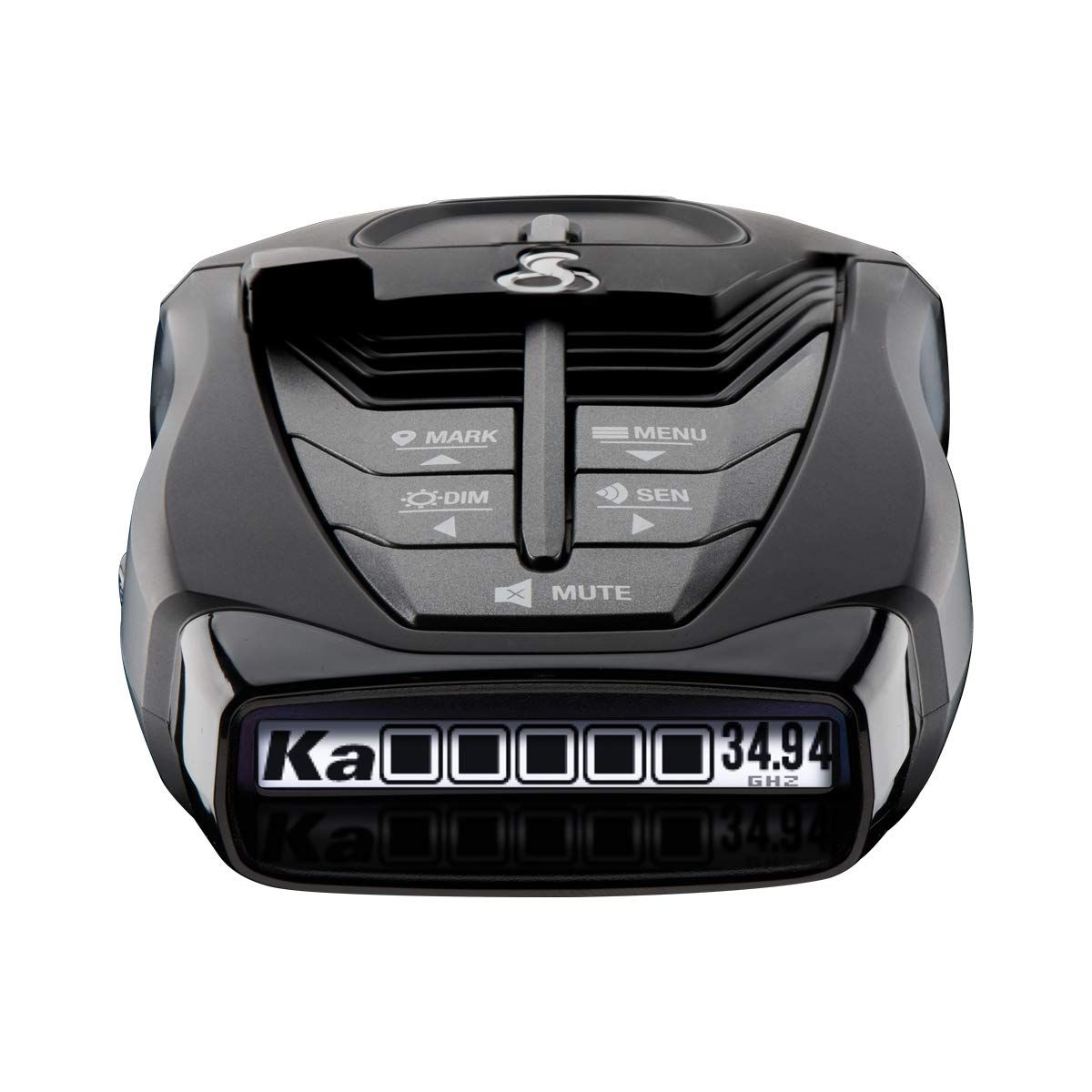
- Cobra RAD 480i ($149.95 · 4.2★)
- Data
- 29,720+ verified reviews analyzed across 6 finalists
- Best for
- Daily commuters on highways and city streetsDrivers looking for GPS false-alert suppressionAnyone wanting a balance of range and price
- Skip if
- You drive in Virginia or Washington D.C., where radar detectors are illegal.
Types Explained
Basic Detectors
Radar detectors with no GPS or app connectivity. They detect radar and laser, providing audio/visual alerts with basic false-alert filtering.
- Lowest cost, under $150
- Simple to operate
- Good detection range for the price
- No GPS lockouts to mute repetitive false alerts
- No red light or speed camera database
- Can't distinguish between real threats and blind-spot systems as well
Best for: Drivers on a budget or those who drive in rural areas with few false alerts.
Example: Cobra RAD 450
GPS-Enabled Detectors
These detectors add GPS to remember and mute false alerts at known locations, plus provide red light camera and speed camera alerts.
- Dramatically reduces false alerts on familiar routes
- Preloaded camera databases with free updates
- Often includes voice alerts and multi-color displays
- Higher price, typically $200-$300
- No directional arrows to indicate threat direction
- Lacks Bluetooth for crowd-sourced alerts
Best for: Commuters and city drivers who want a quieter, smarter experience.
Example: Uniden R3
Detectors with Directional Arrows
High-end detectors with dual antennas that can detect signals from both front and rear, displaying arrows to show the direction of the threat.
- 360° awareness with threat direction
- Longest detection range available
- Simultaneous multi-signal display
- Expensive, typically above
- Larger physical footprint
- Often lack built-in Wi-Fi for automatic updates
Best for: Enthusiasts and frequent highway travelers who want maximum information.
Example: Uniden R7
Wi-Fi Connected Detectors
Connected detectors update firmware and threat databases automatically via Wi-Fi. They also offer app integration for crowd-sourced alerts and remote control.
- No manual updates needed
- Access to real-time crowd-sourced alerts
- Apple CarPlay and Android Auto compatibility
- Most expensive, +
- Auto-learn may filter out weak but real threats
- Larger and more complex to set up
Best for: Tech-savvy drivers who want the latest threat data without effort.
Example: Escort MAX 360c
What Actually Matters
| Factor | Importance | Best brand |
|---|---|---|
Detection Range ≥2 miles in open conditions <strong>A detector that can't see far enough is useless.</strong> All our picks offer at least 2-mile range, but Uniden R3 and R7 are class-leading. | Must-have | Uniden |
False Alert Filtering Advanced K/Ka filtering with IVT or AutoLearn <strong>Nothing is more annoying than constant beeping from store doors.</strong> Look for advanced filtering that adapts to your driving, like Uniden's K-notch or Escort's AutoLearn. | Must-have | Uniden R3 |
GPS Lockouts GPS with mute memory and camera database <strong>Without GPS, you'll have to manually mute the same false alert every day.</strong> This is a non-negotiable for commuters. Even basic models can have GPS. | Must-have | Uniden (R3, R7, DFR7) |
Directional Arrows Dual-antenna system with front/rear arrows <strong>Arrows tell you where the threat is, not just that it exists.</strong> Worth the upgrade if you drive on highways often, but not essential for city use. | Nice-to-have | Uniden R7 |
App Connectivity Bluetooth with compatible iOS/Android app <strong>Crowd-sourced alerts via apps like Drive Smarter can be helpful,</strong> but they rely on other users reporting. Not a replacement for core detection range. | Nice-to-have | Cobra (Drive Smarter) and Escort (Escort Live) |
Built-in Wi-Fi Auto-updates via Wi-Fi <strong>Wi-Fi convenience adds cost but not range.</strong> USB updates are easy and free. Unless you despise cables, skip the Wi-Fi premium. | Marketing BS | Escort MAX 360c |
Voice Alerts Voice warnings for hands-free operation <strong>Helpful, but can become irritating.</strong> Text-to-speech alerts are common across all but the cheapest detectors. Don't choose a detector based on this alone. | Marketing BS | Almost all models |
Budget Tiers & Top Picks
What to buy at each price point — and exactly where spending more stops paying off.
Budget (Under $150)
$130 – $150Cobra RAD 480i

Stop paying more: <strong>Stop at $150.</strong> Any detector above this without GPS lockouts is not worth it.
When to upgrade: Need GPS lockouts and a quieter ride? Step up to the mid-range tier at $200+.
Mid-Range ($150 – $300)
$225 – $300Uniden R3

Stop paying more: <strong>The $300 mark gets you the best range and filtering</strong> without paying for arrows. The Uniden R3 is the sweet spot.
When to upgrade: Want to know where the threat is coming from? Premium picks with directional arrows start at $480.
Premium ($400+)
$480 – $550Uniden R7

Stop paying more: <strong>Beyond $500, you add Wi-Fi and auto-learning</strong> but little extra range. The R7 is the best value in this tier.
When to upgrade: For auto-updating convenience and app integration, the Escort MAX 360c at $550 is the next step.
Common Mistakes to Avoid
Buying the most expensive detector without needing its features
A Wi-Fi detector with arrows is overkill for city driving. <strong>You'll pay more for features you ignore.</strong>
Cost of getting it wrong: <strong>Wasted +</strong> on unused Wi-Fi and arrow features.
Assuming all detectors are legal everywhere
Radar detectors are illegal in Virginia and Washington D.C., and on military bases. <strong>Driving through these areas with a detector can result in fines and confiscation.</strong>
Cost of getting it wrong: <strong>Potential fine of +</strong> and loss of your device.
Thinking a detector makes you immune to tickets
Instant-on radar and laser guns can clock you before you can slow down. <strong>Detectors are an aid, not a shield.</strong> Slow down immediately when alerted.
Cost of getting it wrong: <strong>Still liable for a speeding ticket</strong> if you don't react fast enough.
Mounting the detector too low or behind tint strips
Metal-based windshield tint and aftermarket films can block radar signals. <strong>Mount high and centered for the best range.</strong>
Cost of getting it wrong: <strong>Reduced detection range</strong>, potentially missing alerts.
Skipping firmware and database updates
Red light cameras move and new false alerts appear. Uniden and Escort offer free updates via USB or Wi-Fi. <strong>Update every 6 months.</strong>
Cost of getting it wrong: <strong>Outdated database leads to missed camera alerts</strong> and more false beeps.
Find Your Match
What’s your budget?
Frequently Asked Questions
How do radar detectors work?
Radar detectors scan for radio waves used by police radar guns (X, K, Ka bands) and laser (lidar) beams. When a signal is detected, the unit alerts you with a beep, voice, or display. Most detectors also provide signal strength, so you can judge distance. Advanced models filter out false alerts from blind-spot monitoring systems and store doors using GPS lockouts.
Are radar detectors legal in my state?
Radar detectors are legal in all US states except Virginia and Washington D.C. They are also illegal on all military bases. In some states like New York and California, they are legal but cannot be mounted on the windshield. Always check local laws; detectors are illegal nationwide in Canada.
What’s the difference between radar and laser detection?
Radar detection uses radio waves that spread over distance, giving early warning. Laser (lidar) uses a narrow light beam that is instant-on and aimed at a specific car. Most detectors can alert to laser, but by the time you're hit, it's often too late. Laser jammers are illegal in many states. Detectors primarily protect against radar.
Do I need a radar detector with GPS?
GPS allows a detector to learn and mute false alerts at the same location (red light cameras, automatic doors). If you drive the same commute daily, GPS lockouts dramatically reduce annoyance. It also provides speed camera alerts. Without GPS, you'll manually press mute every day. For most drivers, GPS is a must-have.
How does false alert filtering work?
Modern cars emit K-band radar for blind-spot monitoring and collision avoidance. Detectors with advanced filtering (like Uniden's IVT or Escort's AutoLearn) use signal analysis to ignore these. Lower-end models can't distinguish, causing constant beeping. The Uniden R3 is known for superior filtering, making it ideal for suburban use.
Can I mount a radar detector behind my windshield?
Yes, but avoid metal-based tint strips and heated windshields (like those on some Ford models) which can block signals. The ideal mounting location is high and centered, with a clear view of the road. Most detectors come with suction cup mounts. For a cleaner look, hardwiring kits are available.
How often should I update my detector’s database?
Red light and speed camera locations change frequently. Top manufacturers like Uniden and Escort offer free updates. If you have a detector with Wi-Fi (like Escort Max 360c), updates download automatically. For USB-updated models, plan to update every 6 months or before a long trip.
How we wrote this guide
We analyzed 29,720+ verified Amazon reviews across 6 top-selling radar detectors, cross-referenced with expert insights from CNET and video analysis from Vortex Radar and Best Choice. We focused on real-world detection range, false alert suppression, and ease of use to help you find the right detector for your driving style and budget.
About this guide
Mubboo Editorial Team — independent US-market consumer research. Picks are based on synthesis of verified buyer reviews, expert opinions, and manufacturer specs. Prices update weekly.