Reading Glasses Buying Guide 2026: Diopter Strength, Durability & Blue Light Explained
Why the hinge, not the lens, is where budget reading glasses actually fail — and how to find your correct strength without a guess.
By Mubboo Editorial Team · Updated Jul 1, 2026 · 7 min read

At a Glance
- Price range
- $10 – $20
- Budget pick
- LOUOL READERS (3 Pack) ($9.99 · 4.5★)
- Data
- 40,000+ verified reviews analyzed across 6 finalists
- Best for
- Age-related near-vision changesExtended computer or phone screen timeKeeping spare pairs around the house
- Skip if
- Your vision differs between eyes or involves astigmatism — get a real eye exam and prescription instead
Types Explained
Value Multi-Packs (5-6 Pairs)
Packs of several identical or color-varied pairs sold together, minimizing cost per pair.
- Lowest cost per pair
- Easy to stash a pair in multiple rooms, bags, or the car
- Frames are built to a price and treated as semi-disposable
- Limited style variety within a single pack
Best for: Anyone who wants readers in several locations without paying full price for each
Example: Boost Eyewear Reading Glasses
Metal-Frame Readers
Readers built with a metal frame instead of all-plastic construction, generally for better hinge durability.
- Holds up better to daily hinge stress than plastic
- Often a more classic, less 'disposable' look
- Costs more than plastic multi-packs
- Usually sold in smaller pack sizes
Best for: Buyers who've broken plastic-hinge readers and want more durability
Example: Lcbestbro Reading Glasses for Men
Fashion / Style-Focused Readers
Readers designed around a specific frame shape or color story rather than pure value-pack pricing.
- More deliberate style than a generic value pack
- Still budget-priced compared to eyewear retailers
- Usually sold individually or in smaller packs, raising cost per pair
- Same hinge durability tradeoffs as any budget frame
Best for: Buyers who want a specific look, not just the cheapest functional pair
Example: LOUOL READERS
What Actually Matters
| Factor | Importance | Best brand |
|---|---|---|
Correct diopter strength for your vision Most over-the-counter readers range from +1.00 to +2.50 in 0.25 or 0.50 steps — use an age-based chart, working-distance calculation, or in-store trial to find your strength Buying the wrong diopter is the single most common reason people say readers 'don't work' — it's a fit issue, not a product-quality issue. | Must-have | Lcbestbro, CHEERS DEVICES, CCVOO, and LOUOL are all sold at a specific labeled diopter rather than a mixed pack |
Hinge durability Look for reinforced or metal spring hinges — hinge failure is the most commonly reported complaint across budget reading glasses Verified buyer feedback repeatedly flags the same hinge breaking within months across multiple brands — treat multi-packs as semi-disposable rather than expecting years of daily wear from one pair. | Must-have | Lcbestbro's metal frame construction is the most hinge-durable option in this list |
Blue light filtering for screen use A stated blue light coating helps reduce eye strain during extended screen time, according to buyer feedback Buyers consistently report less eye strain after screen time with these lenses, though individual sensitivity varies. | Must-have | All six options in this list include blue light filtering |
Frame material (plastic vs. metal) Metal frames tend to hold up better over time than lightweight plastic, at a small weight and price tradeoff. | Nice-to-have | — |
'Medical grade' or 'doctor recommended' claims on OTC readers Over-the-counter readers aren't a substitute for a real eye exam or prescription — 'doctor recommended' language on a budget multi-pack isn't a clinical endorsement. | Marketing BS | — |
'Anti-scratch' coating claims Buyer feedback notes lenses scratching easily despite anti-scratch marketing — treat these as budget lenses regardless of the coating claim. | Marketing BS | — |
Budget Tiers & Top Picks
What to buy at each price point — and exactly where spending more stops paying off.
Budget Multi-Pack
$9 – $13LOUOL READERS (3 Pack)

Stop paying more: At this price, expect semi-disposable frames — treat hinge wear as normal, not a defect.
When to upgrade: Want a bigger pack or metal frame durability? Step up to the mid tier.
Value Multi-Pack
$13 – $17Gaoye Professional Reading Glasses
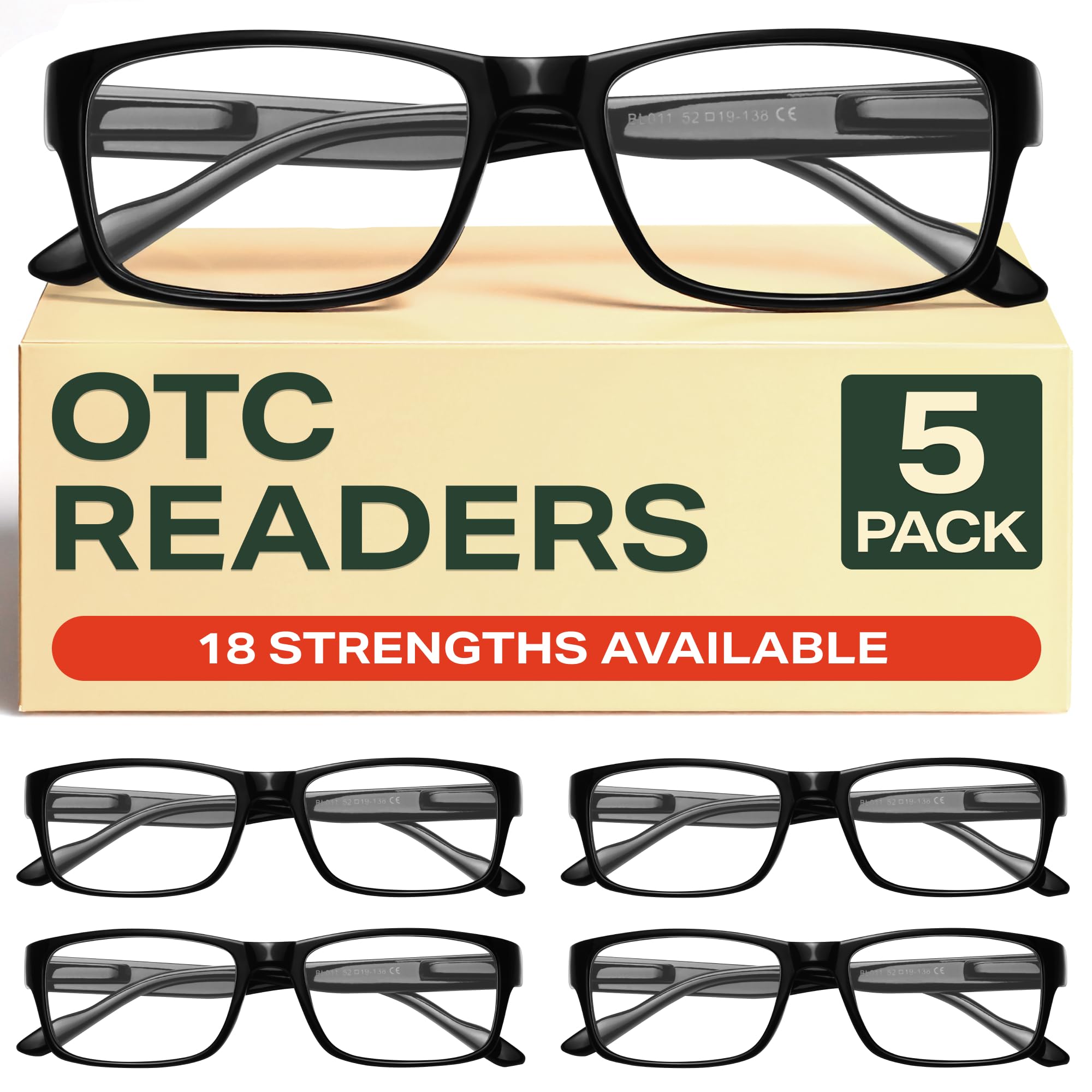
Stop paying more: This tier's review volume makes it the safe default — paying more mostly buys frame material, not better lenses.
When to upgrade: Want a more durable metal frame? Move to the premium tier.
Metal Frame
$17 and upLcbestbro Reading Glasses for Men

Stop paying more: Metal frame construction here is the ceiling most buyers need — going pricier moves into designer eyewear, a different category.
When to upgrade: Need a true prescription rather than a fixed off-the-shelf diopter? An eye exam is the next step, not a pricier multi-pack.
Common Mistakes to Avoid
Guessing your diopter strength instead of measuring it
Buying the wrong strength is the most common reason people say readers 'don't work' — use an age-based chart, a working-distance calculation, or try a few strengths in person before committing to a multi-pack.
Cost of getting it wrong: A whole multi-pack at the wrong strength that goes unused
Expecting years of daily wear from a budget multi-pack
Verified buyer feedback repeatedly flags the same hinge breaking within a few months across multiple brands — these are built to be replaced, not to last indefinitely.
Cost of getting it wrong: Frustration when a pair breaks sooner than expected
Trusting 'anti-scratch' claims and skipping a case
Buyer feedback notes lenses scratching easily despite anti-scratch marketing — a simple case in a bag or on a desk prevents most of this.
Cost of getting it wrong: Replacing a pair early due to scratched lenses rather than a broken frame
Using over-the-counter readers when you actually need a prescription
Off-the-shelf readers assume both eyes need the same, simple magnification — if your vision differs between eyes or involves astigmatism, an eye exam and real prescription will serve you better.
Cost of getting it wrong: Continued eye strain or headaches that readers alone can't fix
Find Your Match
Do you know your diopter strength?
Frequently Asked Questions
How much should I spend on reading glasses?
Multi-packs typically run $10-$20 for 3-6 pairs. Metal-frame options cost a bit more within that range than all-plastic packs.
What should I avoid when buying reading glasses?
Avoid guessing your diopter strength, and don't expect years of daily wear from a budget multi-pack — hinge breakage within a few months is a common, reported issue across brands.
How do I know what strength (diopter) reading glasses I need?
An optometrist can measure this exactly, but common self-check methods include an age-based estimation chart, a working-distance calculation, or simply trying on a few strengths and picking the one that reads clearly at arm's length.
Do blue light blocking reading glasses actually help?
Many buyers report less eye strain after extended screen time, though individual sensitivity to blue light varies and it isn't a substitute for regular screen breaks.
Why do cheap reading glasses break so fast?
The hinge is the most common failure point across budget multi-packs — buying a metal-frame option or simply treating them as semi-disposable both help manage expectations.
Can I use reading glasses instead of getting a real eye exam?
Only for simple, equal-strength magnification needs. If your vision differs between eyes, involves astigmatism, or causes ongoing headaches, an eye exam and a real prescription will serve you better than off-the-shelf readers.
How we wrote this guide
Synthesized from 6 finalists and 40,000+ verified Amazon reviews across value packs, metal frames, and style-focused readers. Prices update weekly from Amazon.
About this guide
Mubboo Editorial Team. Picks based on comparison of diopter labeling, hinge durability, and verified user reviews. This guide is educational and doesn't replace a real eye exam.