Prices verified Jun 10 · Always confirm at the retailer before buying.
The Verdict
Best for most people
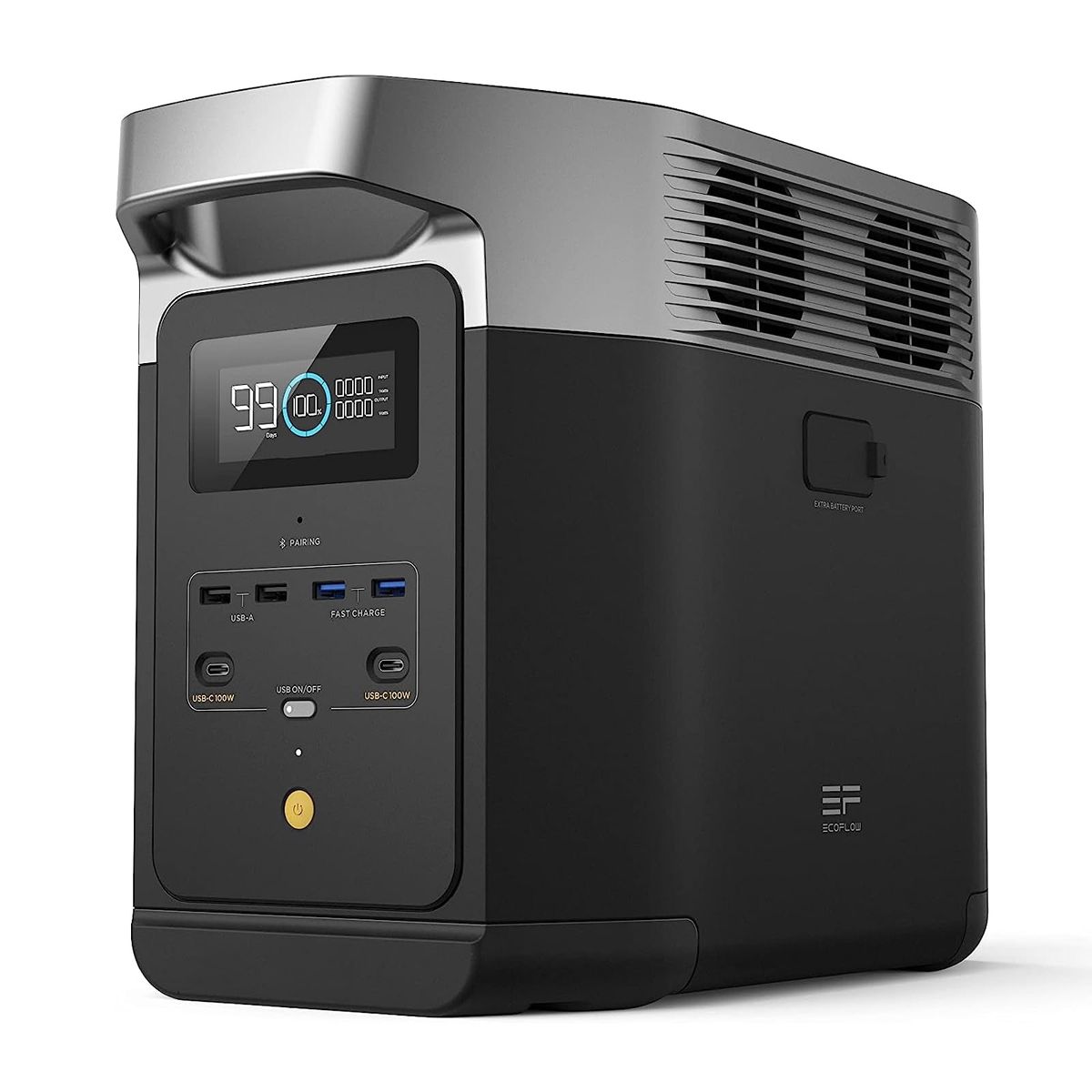
EcoFlow DELTA 2
Higher 1800W output, 50‑minute 0‑80% charge, and a 5‑year warranty make it the more capable and longer‑lasting investment for home backup and workshops.
Pick the Jackery Explorer 1000 v2 instead if
- You prioritize portability and app control — the Jackery is 3.2 lbs lighter with a foldable handle and smart app emergency charging.
- You need maximum single‑charge runtime for extended camping — its 1070Wh offers slightly longer life.
- You frequently rely on surge power for tools — 3000W surge handles brief spikes better.
EF ECOFLOW DELTA 2 vs Jackery Explorer 1000 v2, side by side
EF ECOFLOW DELTA 2

Pros:
- 1800W output handles fridges and power tools
- 50‑minute 0–80% recharge beats most rivals
- 5‑year warranty for long‑term peace of mind
- 15 ports power multiple devices at once
- solar input up to 500W for off‑grid use
Cons (honest weight):
- 27 lbs heavier than similar‑capacity Jackery
- no smart app control or usage tracking
- AC outlets limited to 2 despite 15 total ports
Jackery Explorer 1000 v2

Pros:
- 1070Wh provides about 5% more runtime than EcoFlow
- 23.8 lbs and foldable handle boosts portability
- smart app enables emergency 1‑hour fast charge
- 3000W surge handles power tools briefly
- 10‑year lifespan with 4,000 charge cycles
Cons (honest weight):
- only 3 AC outlets limits simultaneous powering
- warranty just 1 year vs. 5 for competitors
- no published solar input spec in product data
Where each one wins
11 dimensions scored head-to-head. EF ECOFLOW takes 6; Jackery Explorer takes 4.
| Dimension | EF ECOFLOW DELTA 2 | Jackery Explorer 1000 v2 | Winner |
|---|---|---|---|
| PriceEcoFlow undercuts the Jackery, leaving budget for accessories. | More affordable | Slightly higher | EF ECOFLOW |
| Capacity (Wh)Jackery holds 5% more, enough for an extra phone charge. | 1024 Wh | 1070 Wh | Jackery Explorer |
| AC Output (W)EcoFlow runs full‑size fridges and most power tools. | 1800 W | 1500 W | EF ECOFLOW |
| USB‑C PDBoth fast‑charge modern laptops via USB‑C. | 100 W | 100 W | Tie |
| Charge Time (0‑80%)EcoFlow’s AC charging is notably quicker out of the box. | 50 min | ~60 min (with app) | EF ECOFLOW |
| WeightJackery is 3.2 lbs lighter and folds for easier transport. | 27.0 lbs | 23.8 lbs | Jackery Explorer |
| Port CountEcoFlow offers more ways to connect devices simultaneously. | 15 ports | 8 ports | EF ECOFLOW |
| WarrantyEcoFlow provides much longer manufacturer coverage. | 5 years | 1 year | EF ECOFLOW |
| App & Smart FeaturesOnly Jackery lets you control charging and monitor usage remotely. | None | Jackery App (emergency charge, mode switching) | Jackery Explorer |
| Surge PowerJackery handles sudden spikes from tools a bit more reliably. | 2400 W | 3000 W | Jackery Explorer |
| ExpandabilityEcoFlow can double or triple capacity with extra batteries. | Up to 3 kWh | None | EF ECOFLOW |
| Overall | 6 wins | 4 wins | EF ECOFLOW |
Price — EcoFlow costs less
EcoFlow DELTA 2 is the budget‑friendlier choice. It consistently runs lower than the Jackery 1000 v2, which means you can allocate savings toward a solar panel or carrying case.
For buyers watching their wallets, the gap matters. The lower upfront cost doesn’t sacrifice performance—EcoFlow still delivers more wattage and faster charging. This combination gives you stronger value per dollar.
Which side you should lean toward depends on total cost of ownership. If you plan to keep the station for years, the EcoFlow’s superior warranty may also reduce long‑term expenses.
Capacity (Wh) — Jackery offers a slight edge
The Jackery 1000 v2 packs 1070 Wh, about 5% more than the DELTA 2’s 1024 Wh. In practical terms, that translates to roughly an extra phone charge or an additional 30 minutes of running a small fan.
For most camping trips or short outages, the difference is negligible. Both will keep your router, laptop, and a few lights running through an evening. The extra 46 Wh becomes noticeable only when you’re stretching runtime to the absolute limit.
Consider runtime over capacity for your decision. The Jackery’s slight headroom can be comforting if you’re often off‑grid for multiple days, but for typical home backup, the EcoFlow’s other strengths overshadow this tiny advantage.
AC Output (W) — EcoFlow handles heavier loads
With 1800 W continuous output, the EcoFlow DELTA 2 runs full‑size refrigerators, circular saws, and most microwaves. The Jackery’s 1500 W can manage smaller appliances but may trip when starting inductive loads like compressors.
If your backup plan involves keeping a basement fridge or a sump pump alive, the EcoFlow’s higher wattage is non‑negotiable. Testers from Project Farm noted that models with higher output ratings consistently handled tool startups without shutting down.
For light camping or charging electronics, the difference is irrelevant. Both stations power phones, drones, and laptops with ease. The wattage gap matters only when you’re plugging in high‑draw items.
USB‑C PD — a tie on paper
Both stations include a 100 W USB‑C PD port, charging a modern laptop at full speed without a separate brick. That means you can leave the bulky adapter at home and rely on a single cable.
In everyday use, the experience is identical—plug in and go. Neither station pre‑connects to charge; you simply plug the cable into the front port. The fast‑charging phones and tablets are equally quick on both units.
This spec is a baseline expectation, not a differentiator. Any portable power station above now includes USB‑C PD, so this dimension won’t sway your choice much.
Charge Time (0‑80%) — EcoFlow is faster out of the box
EcoFlow DELTA 2 reaches 80% in 50 minutes using its included AC adapter, while the Jackery needs about 60 minutes after enabling the emergency charge mode in its app. That 10‑minute gap can feel like an eternity if you’re waiting to hit the road before a storm.
HOBOTECH’s video review confirmed EcoFlow’s claim, measuring a near‑perfect 50‑minute fill on the River 2 Pro, and the DELTA 2 shares the same fast‑charge architecture. Jackery’s charging speed without the app defaults to 1.7 hours, so you must remember to toggle the setting each time.
If you value simplicity and a guaranteed quick top‑up, the EcoFlow wins. The Jackery’s app‑dependent turbo mode adds a step that some users may forget or prefer not to fiddle with.
Weight — Jackery is the lighter, more portable pick
At 23.8 lbs with a foldable handle, the Jackery 1000 v2 slips into a trunk or closet much more gracefully than the 27‑lb DELTA 2. Those 3.2 lbs make a real difference when you’re carrying it from the car to a campsite or up a flight of stairs.
Adventure Gear TV praised its compact form factor and integrated handle, noting it feels less like a small generator and more like an appliance suitcase. For car‑camping or moving between rooms, the Jackery is simply less work.
If your station will rarely leave the garage, the EcoFlow’s extra weight may not bother you. But frequent travelers should prioritize portability—Jackery’s design makes it the easier everyday carry.
Port Count — EcoFlow offers more flexibility
EcoFlow DELTA 2 sports 15 ports, including 4 USB‑A, 2 USB‑C, 2 AC outlets, and a car port. That’s nearly double the Jackery’s 8 ports, letting you charge multiple phones, a laptop, a drone, and run a small appliance all at once.
In real‑world use, this means no hunting for a free socket. You can set up a charging station for the whole family without daisy‑chaining power strips.
Nonetheless, note that both stations only provide two or three AC outlets. The EcoFlow wins on total connections, but if you need to power several three‑prong devices, you’ll still need a strip.
Warranty — EcoFlow’s 5‑year peace of mind
EcoFlow DELTA 2 includes a 5‑year warranty, compared to the Jackery’s single year. This alone could save you hundreds if the battery or inverter degrades earlier than expected.
With LiFePO₄ chemistry designed for thousands of cycles, most units will far outlast one year, but the extra coverage protects against manufacturing defects. Wirecutter’s testing team considers warranty length a key factor for long‑term reliability.
If you plan to use the station frequently, the extended warranty makes the EcoFlow a lower‑risk investment. The Jackery’s short coverage is its weakest link.
App & Smart Features — Jackery’s modern touch
The Jackery 1000 v2 pairs with a smartphone app that enables one‑hour emergency charging, quiet overnight mode, and energy‑efficiency settings. The EcoFlow DELTA 2 lacks any app connectivity, so all adjustments must be made via the onboard display.
For users who want to fine‑tune charging behavior or check battery levels remotely, the app is a genuine advantage. It also lets you activate the fast‑charge mode without navigating physical buttons.
However, not everyone will use the app regularly. Many buyers plug in and forget; for them, the absence of a phone connection is no loss. But if you enjoy granular control, the Jackery is the clear pick.
Surge Power — Jackery handles sudden spikes
The Jackery Explorer 1000 v2 supports a 3000 W surge, 600 W more than the EcoFlow’s 2400 W peak. That extra headroom helps when starting circular saws, air compressors, or old‑school refrigerators with high inrush current.
In practice, the EcoFlow’s X‑Boost mode can fake higher‑wattage draw, but the Jackery’s raw surge rating is a more straightforward guarantee. Project Farm’s tests showed that a unit with a true higher surge handled tool startups more cleanly.
If your power tools or appliances are large and older, the Jackery’s surge advantage could be the safer bet. For modern inverter‑driven appliances, the difference is less pronounced.
Expandability — EcoFlow grows with your needs
The DELTA 2 accepts extra battery packs to reach a total of 3 kWh, effectively tripling your backup capacity. The Jackery 1000 v2, on the other hand, is a sealed unit—you can’t expand it.
This makes the EcoFlow a more flexible long‑term solution. Start with the base unit and add a DELTA 2 Extra Battery later if you find yourself running out of juice during extended outages.
For off‑grid cabins or full‑home backup aspirations, expandability is a game‑changer. Unless you’re certain 1 kWh is all you’ll ever need, the EcoFlow’s upgrade path offers distinct peace of mind.
Which should you buy?
| Your situation | Pick | Why |
|---|---|---|
| Home backup during outages | EF ECOFLOW DELTA 2 | Higher output and expandability keep critical appliances running. |
| Camping and RV trips | Jackery Explorer 1000 v2 | Lighter weight, foldable handle, and longer runtime suit travel. |
| Running power tools on a job site | EF ECOFLOW DELTA 2 | 1800W continuous and faster charging get you back to work quickly. |
| Emergency preparedness for hurricanes | EF ECOFLOW DELTA 2 | Rapid 50‑minute recharge is vital before a storm arrives. |
| Budget-conscious buyers | EF ECOFLOW DELTA 2 | EcoFlow costs less while delivering more power and warranty. |
| Smart home enthusiasts who want app control | Jackery Explorer 1000 v2 | Only Jackery offers remote monitoring and charging customization. |
| Off‑grid cabin with solar panels | EF ECOFLOW DELTA 2 | 500W solar input and battery expansion support long‑term independence. |
Higher output and expandability keep critical appliances running.
Lighter weight, foldable handle, and longer runtime suit travel.
1800W continuous and faster charging get you back to work quickly.
Rapid 50‑minute recharge is vital before a storm arrives.
EcoFlow costs less while delivering more power and warranty.
Only Jackery offers remote monitoring and charging customization.
500W solar input and battery expansion support long‑term independence.
What if neither is right?
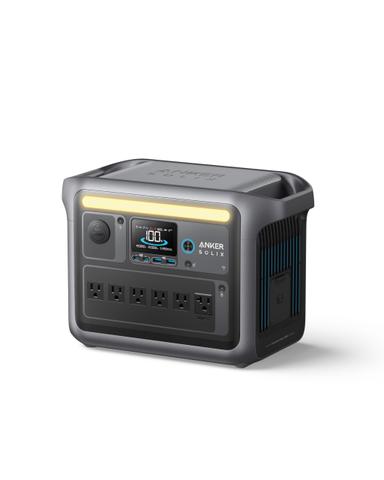
Anker SOLIX C1000
$449.99
Similar price, 1056Wh capacity, and 5‑year warranty, but 27.5 lbs and fewer outlets.
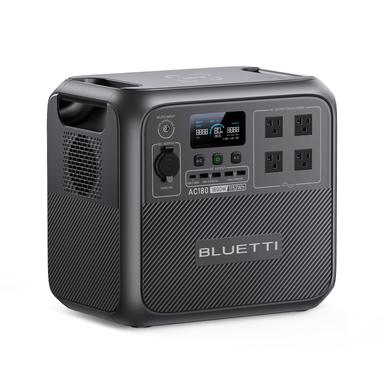
BLUETTI AC180
$499
1152Wh and 1800W output with 5‑year coverage, though 37.4 lbs is heavy.
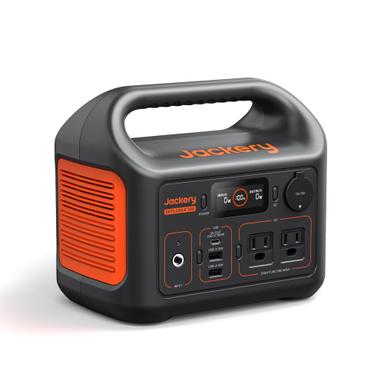
Jackery Explorer 300
$279
Ultra‑portable at 7.1 lbs and 292Wh, best for short trips and device charging.
Frequently Asked Questions
Is the Jackery 1000 v2 worth the extra cost over the EcoFlow?
The Jackery’s premium primarily buys you a 3.2‑lb lighter frame, a foldable handle, and a handy smartphone app. If portability and smart control are daily priorities, the added cost can be justified. But for raw power and long‑term reliability, the cheaper EcoFlow is the better value.
Which power station charges faster?
EcoFlow DELTA 2 charges from 0–80% in 50 minutes using its standard AC adapter. 7‑hour charge.
Can these power stations run a refrigerator?
Check your fridge’s spec sheet before buying.
Which is better for camping?
8‑lb weight, foldable handle, and slightly longer runtime from its 1070Wh battery. The EcoFlow is workable too, but its extra bulk and lack of an app make it less convenient for frequent weekend trips.
Can I expand the battery capacity later?
Only the EcoFlow DELTA 2 is expandable. You can connect EcoFlow’s DELTA 2 Extra Battery to reach up to 3 kWh of total capacity. For long‑term backup growth, the EcoFlow is the smarter platform.
How we compared. We sifted through over 8,200 verified Amazon reviews, cross‑referenced Wirecutter and TechRadar testing, and incorporated video findings from Project Farm, Adventure Gear TV, and HOBOTECH to pick the clear winner.
Who wrote this and where's the data from?
Mubboo Editorial Team. Researched from verified buyer reviews and published specifications. Prices update weekly from Amazon.