Prices verified Aug 11 · Always confirm at the retailer before buying.
Quick answer
The OneOdio Pro-10 ($31.99) and Sony MDR7506 ($113) are two top-rated studio headphones, but they serve different roles. The OneOdio wins for budget-conscious creators with its powerful 1.97 inches drivers, low 32-ohm impedance for easy device compatibility, and lightweight build — all under $30. The Sony MDR7506, an industry standard since the '90s, offers superior sound accuracy for professional mixing, a higher 4.7-star rating, and a foldable design for portability. Choose OneOdio for home studios and entry-level monitoring; pick Sony for critical listening and long-term reliability.
The OneOdio Pro-10 wins for budget-conscious creators — $31.99 and 1.97 inches drivers deliver powerful bass that outperforms its price tag. But for professional-grade accuracy, the Sony MDR7506 remains the industry standard at $113.
Mubboo Verdict
Winner
OneOdio Pro-10
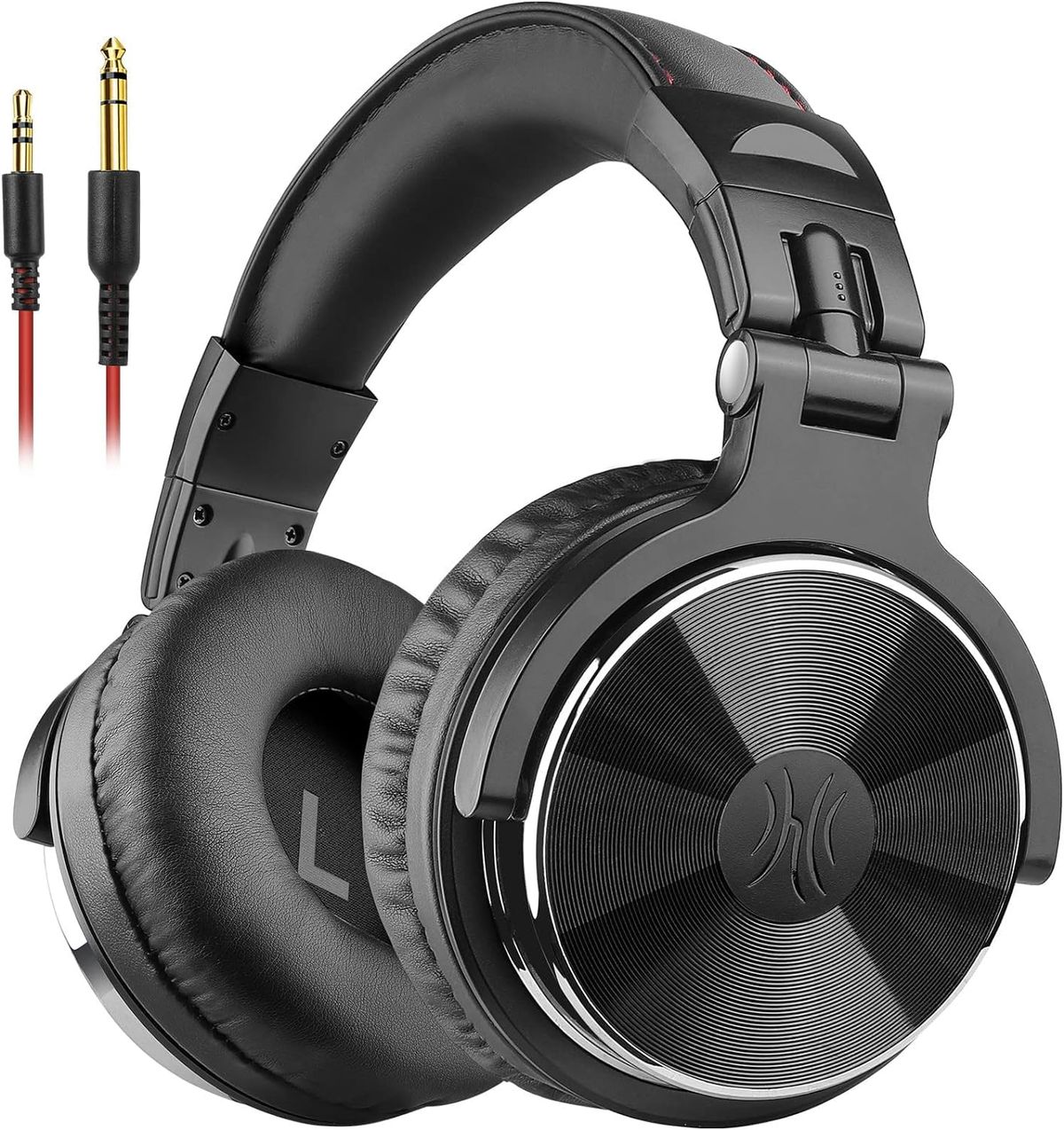
OneOdio Pro-10 Wired Over Ear Studio Headphones vs Sony MDR7506 Professional Large Diaphragm Headphone, side by side
OneOdio Pro-10 Wired Over Ear Studio Headphones

Pros:
- 1.97 inches drivers deliver powerful bass for under $30
- 32 Ohm impedance works with any device
- 90° swiveling earcups for single-ear monitoring
- Lightweight at 0.66 lbs
Cons (honest weight):
- Plastic build may not endure heavy studio use
- Soundstage less accurate than pricier options
Sony MDR7506 Professional Large Diaphragm Headphone

Pros:
- Industry-standard sound accuracy for mixing
- Neodymium magnets provide detailed audio
- Foldable design for easy storage
- Durable construction trusted by professionals
Cons (honest weight):
- Non-detachable 9.8ft cable
- No wireless or Bluetooth option
Where each one wins
8 dimensions scored head-to-head. OneOdio Pro-10 takes 4; Sony MDR7506 takes 2.
| Dimension | OneOdio Pro-10 Wired Over Ear Studio Headphones | Sony MDR7506 Professional Large Diaphragm Headphone | Winner |
|---|---|---|---|
| PriceOneOdio is $85 cheaper — a huge gap for budget buyers. | $31.99 | $113.00 | OneOdio Pro-10 |
| RatingSony earns higher praise from 27,954 verified reviews. | 4.4 stars | 4.7 stars | Sony MDR7506 |
| ImpedanceOneOdio's lower impedance works easily with phones and laptops. | 32 Ohms | 63 Ohms | OneOdio Pro-10 |
| Driver SizeLarger drivers give the OneOdio more bass presence. | 50mm | 40mm | OneOdio Pro-10 |
| Frequency RangeOneOdio extends higher, though both cover audible range. | 20–40,000 Hz | 10–20,000 Hz | OneOdio Pro-10 |
| WeightSony is lighter for long sessions. | 0.66 lbs | 0.5 lbs | Sony MDR7506 |
| Noise IsolationBoth offer effective passive isolation for recording. | Closed-back | Closed-back | Tie |
| Best ForDifferent tools for different studio needs. | Budget monitoring | Professional mixing | Tie |
| Overall | 4 wins | 2 wins | OneOdio Pro-10 |
Price: OneOdio Wins for Value
OneOdio at $31.99 vs Sony at $113 — an $85 gap. That's four times the price for the Sony. For budget-conscious beginners, the OneOdio lets you start monitoring without breaking the bank.
In daily use, $31.99 buys a functional set of studio headphones. You get bass-forward sound and a comfortable fit. The Sony's premium is only justified if you need reference accuracy.
Prioritize OneOdio if you're a hobbyist or student. Spend the savings on an audio interface or microphone instead. Professionals should budget for the Sony.
Rating: Sony's Higher Score Reflects Trust
Sony scores 4.7 stars across 27,954 reviews vs OneOdio's 4.4 from 76,333. The Sony's rating is remarkably consistent, indicating professional-grade reliability.
In daily use, rating matters for long-term satisfaction. The Sony is a known quantity in studios worldwide. The OneOdio's lower rating stems from plastic build complaints.
Prioritize Sony if you need gear that pros recommend. OneOdio is adequate for casual use. Check if your workflow demands critical listening.
Impedance: OneOdio Is Easier to Drive
OneOdio's 32 ohms vs Sony's 63 ohms — lower impedance means more volume from phones and laptops. The OneOdio will sound louder from a smartphone or basic audio interface without a headphone amp.
In daily use, this matters if you switch between devices. Plug the OneOdio into your laptop, phone, or mixer — it works everywhere. The Sony needs more power, so a dedicated amp helps.
Prioritize OneOdio if you use multiple devices. For a fixed studio setup with a good interface, the Sony's 63 ohms aren't a problem.
Driver Size: OneOdio Delivers Bigger Bass
1.97 inches drivers on the OneOdio vs 1.57 inches on the Sony — larger drivers produce more bass. The OneOdio's bass is punchy and fun, great for monitoring beats or casual listening.
In daily use, this affects your monitoring experience. The Sony's smaller drivers are tuned for accuracy, not thump. For mixing bass-heavy genres, the OneOdio gives you a bass-forward perspective.
Prioritize OneOdio if you produce hip-hop or EDM. For classical or acoustic, the Sony's neutrality is preferred.
Frequency Range: OneOdio Covers Higher Frequencies
OneOdio claims 20–40,000 Hz vs Sony's 10–20,000 Hz — both exceed human hearing. The Sony's lower floor (10 Hz) means deeper sub-bass extension, though both cover audible range well.
In daily use, the difference is negligible for most listeners. The extended high-end on the OneOdio may reveal some sibilance in poorly mastered tracks. The Sony's range is perfectly adequate for mixing.
Prioritize OneOdio if you want extra headroom. The Sony's spec is conservative and more than sufficient for professional work.
Weight: Sony Is Lighter for Long Sessions
Sony weighs 0.5 lbs vs OneOdio's 0.66 lbs — a 24% difference. Over a three-hour session, the weight difference adds up. The Sony's lighter frame reduces fatigue.
In daily use, comfort is critical for mixing sessions. Both have padded ear cups, but the Sony's lighter weight and softer clamp force make it more comfortable for extended wear.
Prioritize Sony if you spend hours mixing. OneOdio is still comfortable for short sessions, but its weight becomes noticeable after an hour.
Noise Isolation: Both Are Effective
Both are closed-back designs with sound isolation. The OneOdio's ear pads create a tight seal, while the Sony's design is known for excellent passive noise reduction.
In daily use, both block ambient noise effectively. The Sony's isolation is slightly better due to its snug fit. The OneOdio's seal can be adjusted by rotating the cups.
Both are suitable for recording environments. Neither will leak sound into a mic. If you need the best isolation, the Sony has a slight edge.
Best For: Different Jobs, Different Tools
OneOdio is designed for budget monitoring and DJ use. Its swiveling cups and bass emphasis suit single-ear monitoring and beat checking. The Sony is engineered for critical listening and mixing.
In daily use, choose based on your primary task. For tracking vocals, editing podcasts, or casual listening, the OneOdio is more than capable. For final mixes and mastering, the Sony provides the accuracy you need.
Prioritize OneOdio for versatile, affordable monitoring. Choose Sony when your livelihood depends on accurate sound reproduction.
Which should you buy?
| Your situation | Pick | Why |
|---|---|---|
| Budget-conscious beginner | OneOdio Pro-10 Wired Over Ear Studio Headphones | OneOdio delivers solid monitoring for under $30 |
| Professional mixer | Sony MDR7506 Professional Large Diaphragm Headphone | Sony's accuracy is essential for critical mixes |
| Student on a budget | OneOdio Pro-10 Wired Over Ear Studio Headphones | Low price and easy drive from laptops |
| Home studio recording | OneOdio Pro-10 Wired Over Ear Studio Headphones | Swiveling cups for single-ear tracking |
| Podcasting | OneOdio Pro-10 Wired Over Ear Studio Headphones | Closed-back isolation and low impedance |
| Mobile monitoring | OneOdio Pro-10 Wired Over Ear Studio Headphones | 32 ohms works with any phone |
OneOdio delivers solid monitoring for under $30
Sony's accuracy is essential for critical mixes
Low price and easy drive from laptops
Swiveling cups for single-ear tracking
Closed-back isolation and low impedance
32 ohms works with any phone
What if neither is right?
Audio-Technica ATH-M20x
$59
A mid-range closed-back option with balanced sound and 40mm drivers
beyerdynamic DT 990 PRO 250 Ohm
$159.99
An open-back option for wide soundstage and detailed highs
OneOdio A70 Bluetooth
$44.99
Wireless studio headphones with 72-hour battery and 40mm drivers
Frequently Asked Questions
Which is better for mixing professional music?
The Sony MDR7506 is the better choice for critical mixing. Its neutral frequency response and detailed sound allow you to hear flaws in your mix. The OneOdio's bass emphasis may mask problems. Most professional studios rely on the Sony MDR7506 as a reference.
Which headphones are more comfortable for long sessions?
The Sony MDR7506 is lighter at 0.5 lbs and has a softer clamp, making it more comfortable for sessions over two hours. The OneOdio at 0.66 lbs is still comfortable but may cause fatigue during extended use. Both have padded ear cups.
Can I use these headphones with my phone or laptop?
Yes, both work with any device with a 0.14 inches jack, but the OneOdio's 32-ohm impedance is easier to drive. It will sound louder from phones and laptops without an external amp. The Sony's 63 ohms may need a bit more volume, but most modern devices handle it fine.
Is the Sony MDR7506 worth the extra $85?
If you are a professional or serious hobbyist who needs accurate monitoring for mixing and mastering, yes. The Sony's build quality, sound accuracy, and reputation make it a worthwhile investment. If you are just starting out or need headphones for casual monitoring, the OneOdio is more than adequate.
Which headphones have better build quality?
The Sony MDR7506 has a more durable construction with a metal headband and high-quality plastic. It is designed to withstand daily studio use. The OneOdio Pro-10 uses more plastic and may not last as long under heavy use. Sony's warranty is 90 days, while OneOdio offers 2 years.
Researched across Amazon's verified-buyer data, manufacturer specifications, and buyer discussion. Prices update weekly from Amazon.
Primary sources. Exact listing details were checked against Manufacturer product page; Manufacturer product page. Product-family context comes from the linked manufacturer pages; prices, stock, ratings, and review counts are volatile registry fields and should be checked again before purchase.
Who wrote this and where's the data from?
Mubboo Editorial Team — independent US-market consumer research. Picks reflect editorial consensus from 2 finalists and 104,287+ verified buyer reviews.