Prices verified Aug 10 · Always confirm at the retailer before buying.
Quick answer
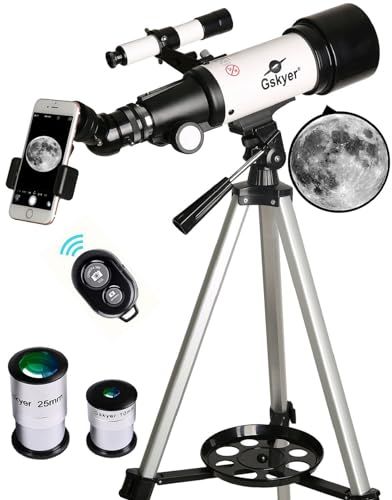
Choose the Gskyer 70mm AZ Astronomical Refracting Telescope if you want a lighter entry-level refractor with a 70mm objective, 400mm focal length, manual alt-azimuth mount, phone adapter, and current US registry price of $96.99. Choose the Koolpte 80mm AZ Refracting Telescope if you want the larger 80mm objective and 600mm focal length; its current registry price is $89.99, only $7.00 higher. Both current registry rows show 4.3/5 ratings, but Gskyer has 21,926 reviews versus Koolpte’s 3,922. That larger sample is marketplace context, not proof that Gskyer is more reliable or easier to use. The 80mm aperture has about 31% more light-collecting area than 70mm by diameter-squared calculation, but actual views depend on eyepieces, alignment, atmospheric conditions, light pollution, and mount stability. Verify the exact included accessories, seller, warranty, and safe-use instructions before checkout.
Choose Gskyer for the lower-weight 70mm/400mm format and Koolpte for the larger 80mm/600mm format. The current registry price gap is only $7.00, so compare optics, mount, accessories, and use case.
Mubboo Verdict
Best for most people
Gskyer 70mm AZ Astronomical Refracting Telescope
It is the better fit when you want a lower-weight 70mm/400mm beginner refractor and a slightly lower current price.
Pick the Koolpte 80mm AZ Refracting Telescope instead if
- You want the larger 80mm objective and 600mm focal length on the current listing.
- You want about 31% more theoretical light-collecting area by aperture calculation and accept that actual views depend on conditions.
- You have checked the exact Koolpte accessory bundle and prefer that optical format.
Gskyer 70mm AZ Astronomical Refracting Telescope vs Koolpte 80mm AZ Refracting Telescope, side by side
Gskyer 70mm AZ Astronomical Refracting Telescope

Pros:
- Lower current registry price by $7.00
- 70mm objective and 400mm focal length in a compact refractor format
- Registry lists a 5.7-pound weight, smartphone adapter, and wireless remote
- Gskyer’s official page lists a 70mm/400mm AZ telescope with included adapter, remote, and tripod
Cons (honest weight):
- Smaller objective than Koolpte’s 80mm listing
- Manual alt-azimuth mount requires user aiming and tracking
- This comparison does not include hands-on optical or astrophotography testing
Koolpte 80mm AZ Refracting Telescope
Pros:
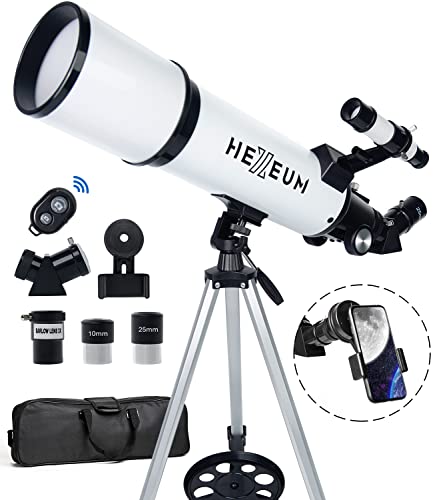
- 80mm objective has about 31% more light-collecting area than 70mm by diameter-squared calculation
- 600mm focal length compared with Gskyer’s 400mm registry specification
- Registry lists fully multi-coated optics, phone adapter, wireless remote, carrying bag, and 5x24 finder scope
- Only $7.00 higher in the current registry
Cons (honest weight):
- Slightly higher current registry price
- Manual alt-azimuth mount still requires user aiming and tracking
- The smaller review sample is not evidence of lower quality, reliability, or performance
Where each one wins
8 dimensions scored head-to-head. Gskyer 70mm takes 2; Koolpte 80mm takes 3.
| Dimension | Gskyer 70mm AZ Astronomical Refracting Telescope | Koolpte 80mm AZ Refracting Telescope | Winner |
|---|---|---|---|
| Current registry priceGskyer is $7.00 lower in the current registry; the gap is small and prices can change. | $96.99 | $89.99 | Koolpte 80mm |
| Objective diameterKoolpte has the larger objective; area is about 31% higher by diameter-squared calculation. | 70mm | 80mm | Koolpte 80mm |
| Focal lengthKoolpte has the longer listed focal length; actual magnification still depends on the eyepiece. | 400mm | 600mm | Koolpte 80mm |
| MountBoth require manual aiming and tracking rather than motorized object tracking. | Manual alt-azimuth | Manual alt-azimuth | Tie |
| Phone and remote accessoriesVerify the current package contents and phone compatibility before relying on either for photography. | Registry lists adapter and wireless remote | Registry lists adapter and wireless remote | Tie |
| Portability contextGskyer has the clearer lower-weight signal in the current registry; confirm package weight for both. | Registry lists 5.7 pounds | Registry lists 2-year warranty and carrying bag | Gskyer 70mm |
| Current marketplace ratingThe current ratings match; neither establishes optical sharpness or tracking quality. | 4.3/5 | 4.3/5 | Tie |
| Current review countGskyer has the larger current marketplace sample, but review volume is not reliability evidence. | 21,926 | 3,922 | Gskyer 70mm |
| Overall | 2 wins | 3 wins | Koolpte 80mm |
Start With the Current Price Gap
The prior price gap is no longer current. The registry now lists Gskyer at $96.99 and Koolpte at $89.99, only $7.00 apart.
Because the prices are close, choose by objective size, focal length, weight, mount, and included accessories. Verify the exact seller and package before checkout.
Aperture: 70mm Versus 80mm
Koolpte has the larger listed objective. An 80mm circle has about 31% more area than a 70mm circle, calculated from diameter squared.
That calculation describes potential light collection, not a guaranteed view. Eyepieces, alignment, atmospheric conditions, light pollution, and mount stability also affect what you see.
Focal Length and Magnification
Koolpte lists a 600mm focal length, while Gskyer lists 400mm. A longer focal length can support a different framing and magnification range with the same eyepiece.
Do not treat an advertised maximum magnification as a guarantee of a sharp view. Check the included eyepieces and the exact listing before assuming a particular planetary result.
Mount and Tracking
Both primary listings use manual alt-azimuth mounts. You aim the telescope by hand and nudge it to follow an object as Earth rotates.
A manual mount keeps the setup simpler, but it is different from motorized tracking. If automatic object finding is important, consider the Celestron StarSense alternative instead.
Phone Adapters and Included Accessories
Both current registry rows list a phone adapter and wireless remote. Gskyer’s official page also lists an adapter, Bluetooth remote, and adjustable tripod.
Phone compatibility and included accessories can vary by bundle. Confirm the current ASIN contents before treating either telescope as a photography kit.
What the Review Counts Can Tell You
Gskyer has 21,926 current registry reviews versus Koolpte’s 3,922. That is a marketplace-sample difference, not evidence of reliability, optical quality, or easier tracking.
Both current registry ratings are 4.3/5. We removed the old article’s claims that review volume made Gskyer the safer or lower-risk telescope.
Alternatives by Upgrade Goal
Celestron AstroMaster 70AZ is the branded 70mm manual refractor alternative. Celestron StarSense Explorer DX 130AZ is a higher-price 130mm reflector with smartphone-guided object finding.
Neither alternative is a direct price replacement. Confirm the current price, mount, optical design, app requirements, and package contents.
Final Choice
Choose Gskyer for the lower-weight 70mm/400mm format and Koolpte for the larger 80mm/600mm format. The current price difference is small enough that optical format matters more than the old savings claim.
Never point a telescope at the Sun without a purpose-built solar filter and correct instructions. Follow the live manual and verify all accessories before observing.
Which should you buy?
| Your situation | Pick | Why |
|---|---|---|
| Lower current registry price | Koolpte 80mm AZ Refracting Telescope | Gskyer is $7.00 lower in the current registry. |
| Larger objective diameter | Koolpte 80mm AZ Refracting Telescope | Koolpte lists an 80mm objective versus Gskyer’s 70mm. |
| Lower-weight beginner setup | Gskyer 70mm AZ Astronomical Refracting Telescope | The registry lists Gskyer at 5.7 pounds; verify the live package weight. |
| Longer listed focal length | Koolpte 80mm AZ Refracting Telescope | Koolpte lists 600mm versus Gskyer’s 400mm; eyepiece choice still controls magnification. |
| Established-brand 70mm alternative | Koolpte 80mm AZ Refracting Telescope | Celestron AstroMaster 70AZ is the current in-stock branded 70mm alternative, at a higher price. |
| Smartphone-guided object finding | Koolpte 80mm AZ Refracting Telescope | Celestron StarSense Explorer DX 130AZ is the current in-stock smartphone-guided alternative, at a much higher price. |
Gskyer is $7.00 lower in the current registry.
Koolpte lists an 80mm objective versus Gskyer’s 70mm.
The registry lists Gskyer at 5.7 pounds; verify the live package weight.
Koolpte lists 600mm versus Gskyer’s 400mm; eyepiece choice still controls magnification.
Celestron AstroMaster 70AZ is the current in-stock branded 70mm alternative, at a higher price.
Celestron StarSense Explorer DX 130AZ is the current in-stock smartphone-guided alternative, at a much higher price.
What if neither is right?
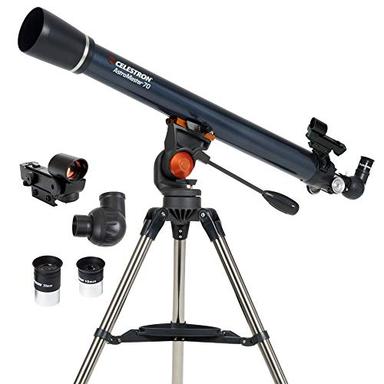
Celestron AstroMaster 70AZ Telescope
$159.99
A verified in-stock branded 70mm manual refractor with fully coated optics, two eyepieces, a finderscope, and astronomy software.
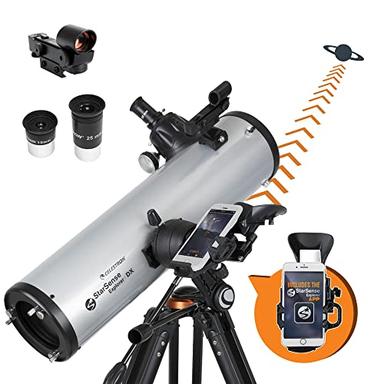
Celestron StarSense Explorer DX 130AZ App-Enabled Telescope
$439.99
A verified in-stock 130mm reflector with smartphone-guided StarSense object finding; it is a substantial price and format upgrade.
Frequently Asked Questions
Gskyer 70mm vs Koolpte 80mm: which should I buy?
Choose Gskyer for a lower-weight 70mm/400mm refractor and slightly lower current price. Choose Koolpte for the larger 80mm/600mm format. The $7.00 current gap makes the optical format and accessory bundle more important than price.
Which telescope is cheaper right now?
The current US registry lists Gskyer at $96.99 and Koolpte at $89.99, a $7.00 difference. Prices, sellers, variants, and included accessories can change.
Does the Koolpte 80mm gather more light than Gskyer 70mm?
By objective diameter squared, an 80mm circle has about 31% more area than a 70mm circle. That is a theoretical aperture comparison, not a guarantee of brighter or sharper views in every session.
Can I see planets with either telescope?
Both are beginner refractor listings intended for astronomical viewing, but the actual result depends on eyepieces, focus, atmospheric conditions, light pollution, and mount stability. Verify the live accessories and follow the manual.
Do these telescopes have automatic tracking?
The current registry lists both primary products with manual alt-azimuth mounts. You aim and nudge the telescope by hand. The Celestron StarSense alternative adds smartphone-guided object finding but remains a much higher-price manual-mount format.
Are these telescopes good for smartphone astrophotography?
Both current registry rows list a phone adapter and wireless remote, but this comparison does not test phone compatibility or image quality. Confirm the exact bundle and treat phone photography as a use-case experiment, not a guarantee.
What are good alternatives?
Celestron AstroMaster 70AZ is a higher-price branded 70mm manual refractor. Celestron StarSense Explorer DX 130AZ is a higher-price 130mm reflector with smartphone-guided object finding.
Can I point either telescope at the Sun?
Never point a telescope at the Sun without a purpose-built solar filter mounted correctly for the objective and the manufacturer’s instructions. Follow the live manual and use appropriate solar-safety guidance.
How we compared. We used current US registry records for price, rating, review count, stock, images, and listed specifications; first-party pages for Gskyer and Celestron product details; and a diameter-squared calculation for aperture area. We do not claim hands-on optical or astrophotography testing.
Primary sources. Exact listing details were checked against Manufacturer product page; Manufacturer product page; Manufacturer product page; Amazon US product listing (B081RJ8DW1); Amazon US product listing (B09P8JQWF4); Amazon US product listing (B000MLHMAS); Amazon US product listing (B083JRF1MH). Product-family context comes from the linked manufacturer pages; prices, stock, ratings, and review counts are volatile registry fields and should be checked again before purchase.
Who wrote this and where's the data from?
Mubboo Editorial Team. Independent US-market consumer research. We separate registry facts from manufacturer specifications and keep sky-condition, accessory, and safe-observation limits visible.