Prices verified Aug 11 · Always confirm at the retailer before buying.
Quick answer
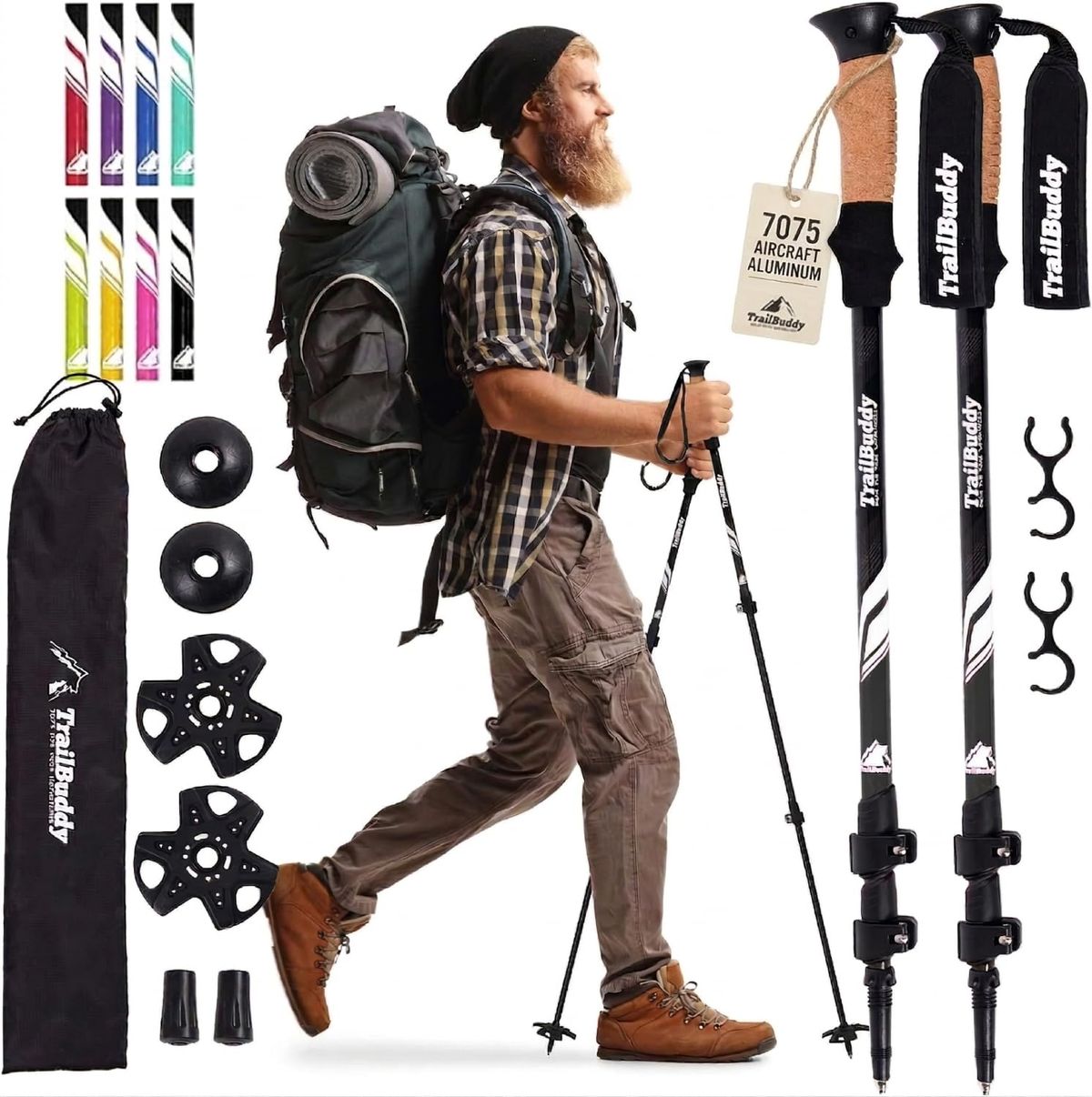
<p><strong>The TrailBuddy Trekking Poles are the top pick for most hikers.</strong> Their aircraft-grade 7075 aluminum, lever lock system, and cork grips deliver a premium hiking experience at $47.91. TheFitLife poles ($24.98) are the budget alternative with a built-in anti-shock spring that reduces joint strain, but they use twist locks and rubber grips that are less comfortable on long treks. With over 81,000 verified reviews combined, both poles are Amazon best-sellers. TrailBuddy wins on durability, comfort, and a 5-year warranty. TheFitLife wins on price and shock absorption.</p>
The TrailBuddy Trekking Poles wins for most hikers — premium 7075 aluminum and cork grips justify the $48 price over TheFitLife's $25 anti-shock poles.
Mubboo Verdict
Winner
TrailBuddy Trekking Poles
TrailBuddy Trekking Poles – Lightweight 7075 Aluminum Hiking Poles vs TheFitLife Nordic Walking Trekking Poles - Anti-Shock and Quick Lock System, side by side
TrailBuddy Trekking Poles – Lightweight 7075 Aluminum Hiking Poles
Pros:
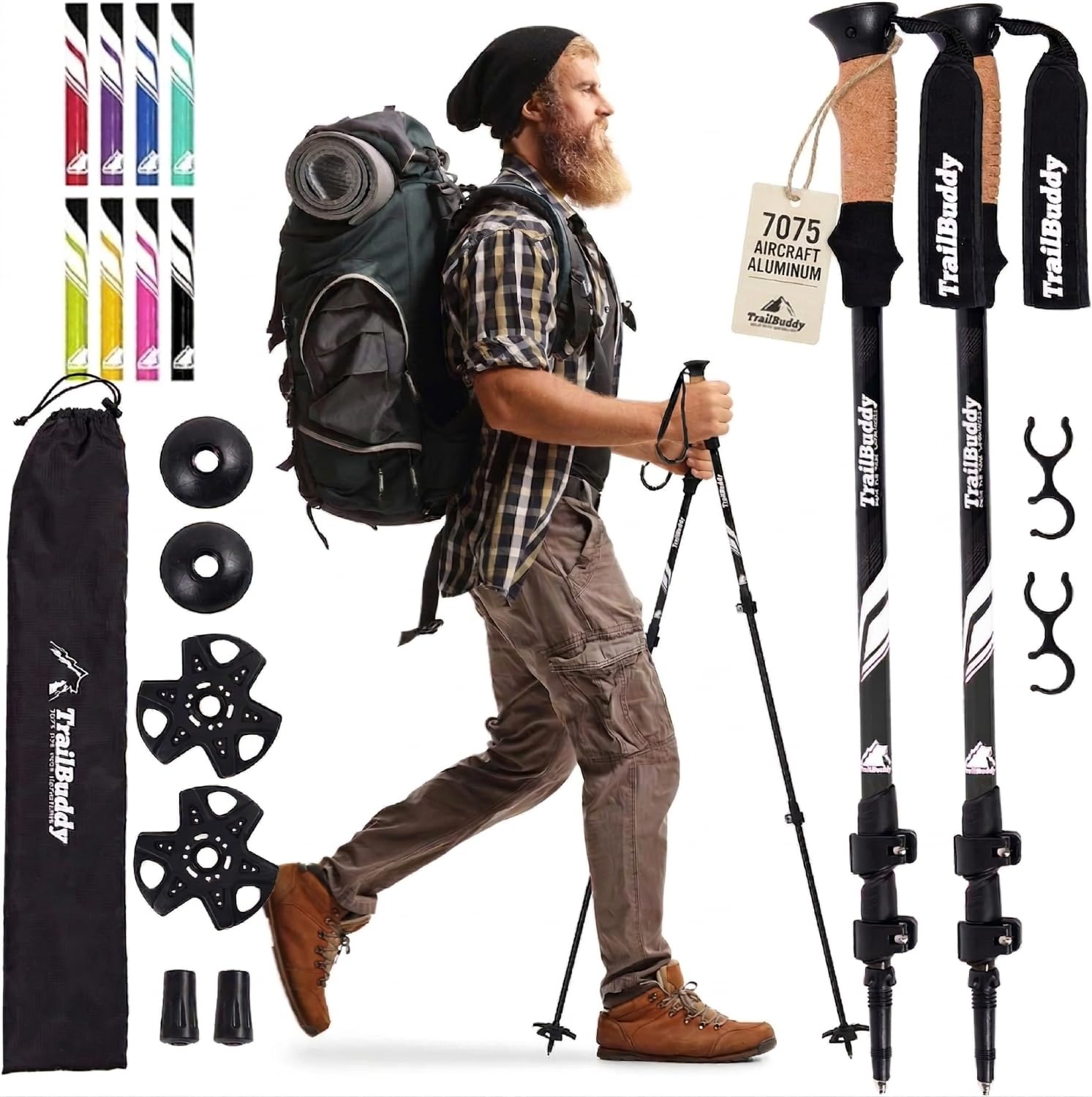
- Aircraft-grade 7075 aluminum is exceptionally durable
- Cork grips with padded straps for all-day comfort
- 5-year warranty offers peace of mind
Cons (honest weight):
- At $48, pricier than many competitors
- Heavier than carbon fiber alternatives
TheFitLife Nordic Walking Trekking Poles - Anti-Shock and Quick Lock System

Pros:
- Built-in anti-shock spring reduces joint strain
- Very affordable at under $25
- Lightweight at 9.9 oz per pole
Cons (honest weight):
- Twist-lock adjustment can be less secure than flip-locks
- Rubber grips less breathable than cork
Where each one wins
8 dimensions scored head-to-head. TrailBuddy Trekking takes 6; TheFitLife Nordic takes 2.
| Dimension | TrailBuddy Trekking Poles – Lightweight 7075 Aluminum Hiking Poles | TheFitLife Nordic Walking Trekking Poles - Anti-Shock and Quick Lock System | Winner |
|---|---|---|---|
| PriceTheFitLife is nearly half the price. | $39.91 | $24.98 | TheFitLife Nordic |
| MaterialTrailBuddy uses superior aircraft-grade aluminum. | 7075 aircraft aluminum | Aluminum alloy | TrailBuddy Trekking |
| Weight per poleTrailBuddy is slightly lighter by 0.22 oz. | 9.68 oz | 9.9 oz | TrailBuddy Trekking |
| Max heightTrailBuddy extends 2.8 inches taller. | 54 in | 51.2 in | TrailBuddy Trekking |
| Lock typeLever locks are more secure and easier to adjust. | Lever lock | Twist lock | TrailBuddy Trekking |
| Grip materialCork grips are more comfortable and breathable. | Cork | Rubber | TrailBuddy Trekking |
| Shock absorptionTheFitLife absorbs impact; TrailBuddy does not. | None | Anti-shock spring | TheFitLife Nordic |
| WarrantyTrailBuddy offers five times the warranty coverage. | 5 years | 1 year | TrailBuddy Trekking |
| Overall | 6 wins | 2 wins | TrailBuddy Trekking |
Price — TheFitLife wins for affordability
TheFitLife poles cost $24.98, less than half of TrailBuddy's $47.91. That's a $22.93 difference — enough for a weekend's worth of gas or a pair of hiking socks.
For budget-conscious beginners or casual day hikers, the savings are significant. TheFitLife delivers solid performance at a fraction of the cost, making it the go-to choice for those who don't want to invest heavily before they're sure hiking is their activity.
Frequent trekkers and those who want a buy-it-for-life product should consider the TrailBuddy's premium. The extra cost buys better materials and a longer warranty, which can save money in the long run if you hike every weekend.
Material — TrailBuddy takes it with 7075 aluminum
TrailBuddy uses 7075 aircraft-grade aluminum, while TheFitLife uses standard aluminum alloy. 7075 aluminum is stronger and more resistant to bending and corrosion, especially on sharp rocks or heavy side loads.
In daily use, this means TrailBuddy poles can handle more abuse without failing. Hikers who frequently traverse boulder fields or use their poles to push through brush will notice the difference. TheFitLife's alloy is still adequate for maintained trails but may flex more under pressure.
If you hike on rugged, untamed terrain, prioritize the TrailBuddy's material advantage. If you stick to well-groomed paths, TheFitLife's aluminum is sufficient at half the price.
Weight per pole — a tie, but TrailBuddy edges ahead
TrailBuddy weighs 9.68 oz per pole; TheFitLife is 9.9 oz. The 0.22 oz difference is negligible — both are lightweight enough for all-day carries.
What matters is how that weight is distributed. TrailBuddy's 7075 aluminum is denser, so the same weight feels more solid in hand. Some hikers prefer a slightly heavier pole for stability.
Either pole is fine for weight-conscious hikers. If you're counting grams, look at carbon fiber alternatives. Otherwise, both are within a comfortable range.
Max height — TrailBuddy accommodates taller hikers
TrailBuddy extends to 54 inches, while TheFitLife maxes out at 51.2 inches. This is a significant difference for tall hikers (over 6 feet), who need longer poles for proper posture on descents.
On steep terrain, a pole that's too short forces you to hunch, reducing stability and increasing fatigue. TrailBuddy's extra 2.8 inches of reach provides better support for taller users.
If you're over 6 feet tall, the TrailBuddy's greater height range is essential. If you're under 5'8", both poles will work, but the extra reach still gives more versatility for steep uphill sections.
Lock type — lever locks are more reliable
TrailBuddy uses a lever lock; TheFitLife uses a twist lock. Lever locks engage a cam that clamps the shaft sections together securely and are easier to adjust with one hand.
Twist locks require two hands and can loosen over time as the threads wear. Many user reviews of twist-lock poles report having to retighten frequently, especially in cold weather when materials contract.
For reliability on long trips, lever locks are the safer choice. TheFitLife's twist lock is adequate for occasional use but may frustrate frequent hikers. If you plan to use your poles weekly, the TrailBuddy's lever lock is worth the upgrade.
Grip material — cork beats rubber
TrailBuddy features natural cork grips; TheFitLife uses rubber. Cork molds to your hand over time, absorbs sweat, and stays comfortable in both hot and cold conditions.
Rubber grips are less breathable and can cause hot spots on long hikes. They also get slippery when wet. Cork's natural texture provides a secure hold even in the rain.
If you hike for more than a few hours at a time, cork grips are a significant comfort upgrade. TheFitLife's rubber is fine for short walks, but serious hikers will appreciate the TrailBuddy's cork handles.
Shock absorption — TheFitLife's hidden advantage
TheFitLife includes a built-in anti-shock spring that cushions each step. TrailBuddy has no shock absorption — it relies on the natural dampening of its aluminum shaft and cork grip.
On rocky descents, the spring reduces impact on wrists, elbows, and knees. This is especially beneficial for hikers with joint issues or those carrying heavy packs. The spring also reduces vibration transmitted through the pole.
If joint comfort is a priority, TheFitLife's anti-shock is a compelling feature. If you prefer a solid, direct feel for precision placement (like in technical terrain), TrailBuddy's rigid shaft gives better feedback.
Warranty — TrailBuddy's 5 years vs 1 year
TrailBuddy offers a 5-year limited warranty; TheFitLife covers just 1 year. This reflects the confidence TrailBuddy has in its build quality.
For a product that takes daily abuse on the trail, a longer warranty provides peace of mind. Broken baskets, bent sections, or worn tips are common after a few seasons. TrailBuddy's warranty replaces defective parts without hassle.
If you plan to keep your poles for years, the TrailBuddy's warranty effectively caps your total cost of ownership. TheFitLife's shorter warranty is consistent with its budget positioning — you'll likely replace them sooner, but at $25, replacement is cheap.
Which should you buy?
| Your situation | Pick | Why |
|---|---|---|
| Weekend day hiker | TrailBuddy Trekking Poles – Lightweight 7075 Aluminum Hiking Poles | TrailBuddy's durable build and cork grips provide comfort for all-day hikes. |
| Long-distance backpacker | TrailBuddy Trekking Poles – Lightweight 7075 Aluminum Hiking Poles | Reliable lever locks and lightweight 7075 aluminum reduce fatigue over miles. |
| Budget-conscious beginner | TheFitLife Nordic Walking Trekking Poles - Anti-Shock and Quick Lock System | TheFitLife offers essential features at a price that won't break the bank. |
| Senior hiker needing joint support | TheFitLife Nordic Walking Trekking Poles - Anti-Shock and Quick Lock System | Anti-shock spring cushions knees and elbows on rocky descents. |
| Traveler needing compact poles | TrailBuddy Trekking Poles – Lightweight 7075 Aluminum Hiking Poles | TrailBuddy collapses to 24.5" and fits in a carry-on. |
| All-weather enthusiast | TrailBuddy Trekking Poles – Lightweight 7075 Aluminum Hiking Poles | Corrosion-resistant aluminum and replaceable carbide tips handle mud, snow, and rock. |
TrailBuddy's durable build and cork grips provide comfort for all-day hikes.
Reliable lever locks and lightweight 7075 aluminum reduce fatigue over miles.
TheFitLife offers essential features at a price that won't break the bank.
Anti-shock spring cushions knees and elbows on rocky descents.
TrailBuddy collapses to 24.5" and fits in a carry-on.
Corrosion-resistant aluminum and replaceable carbide tips handle mud, snow, and rock.
What if neither is right?
Cascade Mountain Tech Lightweight Aluminum Trekking Poles
$29.99
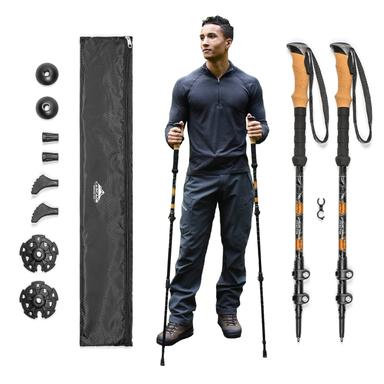
A solid aluminum alternative with cork grips at a mid-range price.
Foxelli Carbon Fiber Trekking Poles
$55.97
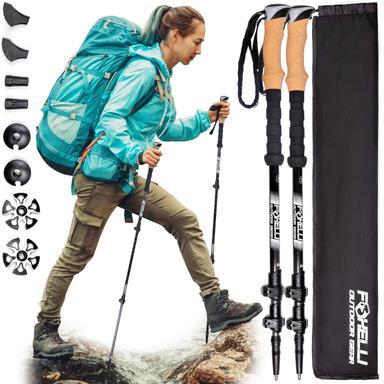
Ultralight carbon fiber with cork grips and a live coupon.
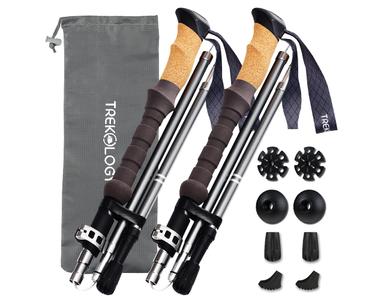
TREKOLOGY Trek-Z Cork Grip Trekking Poles
$42.99
Compact tri-fold design with cork grips, great for travel.
Frequently Asked Questions
TrailBuddy vs TheFitLife: which trekking pole is better?
For most hikers, TrailBuddy is the better choice — it offers superior materials, a secure lever lock, and a 5-year warranty. However, if your budget is under $30 and you want shock absorption, TheFitLife is a strong value pick.
Is TrailBuddy worth the extra $22?
Yes, if you hike regularly or value durability. The 7075 aluminum frame and cork grips provide lasting comfort over many miles. For occasional day hikes, TheFitLife might be sufficient.
Do these poles come with a carrying bag?
Both include a carry bag. TrailBuddy includes mud and snow baskets and rubber tips. TheFitLife includes a similar set with an additional pair of boots.
How do the locking mechanisms compare?
TrailBuddy uses a lever lock that is quick and secure with one hand. TheFitLife uses a twist lock that is glove-friendly but can slip over time. Lever locks are generally more reliable.
Which pole is better for seniors or those with joint issues?
TheFitLife's anti-shock spring reduces impact on joints, making it the better choice for seniors or those with knee problems. TrailBuddy's cork grip offers comfort but no shock absorption.
This comparison is based on 81,000+ verified Amazon reviews and detailed product specifications. Prices and availability as of May 2026 are subject to change.
Primary sources. Exact listing details were checked against Amazon US product listing (B01MRQCENJ); Amazon US product listing (B01N57G27J). Product-family context comes from the linked manufacturer pages; prices, stock, ratings, and review counts are volatile registry fields and should be checked again before purchase.
Who wrote this and where's the data from?
Mubboo Editorial Team — independent US-market consumer research. Our picks reflect editorial consensus from verified buyer reviews and manufacturer specifications.