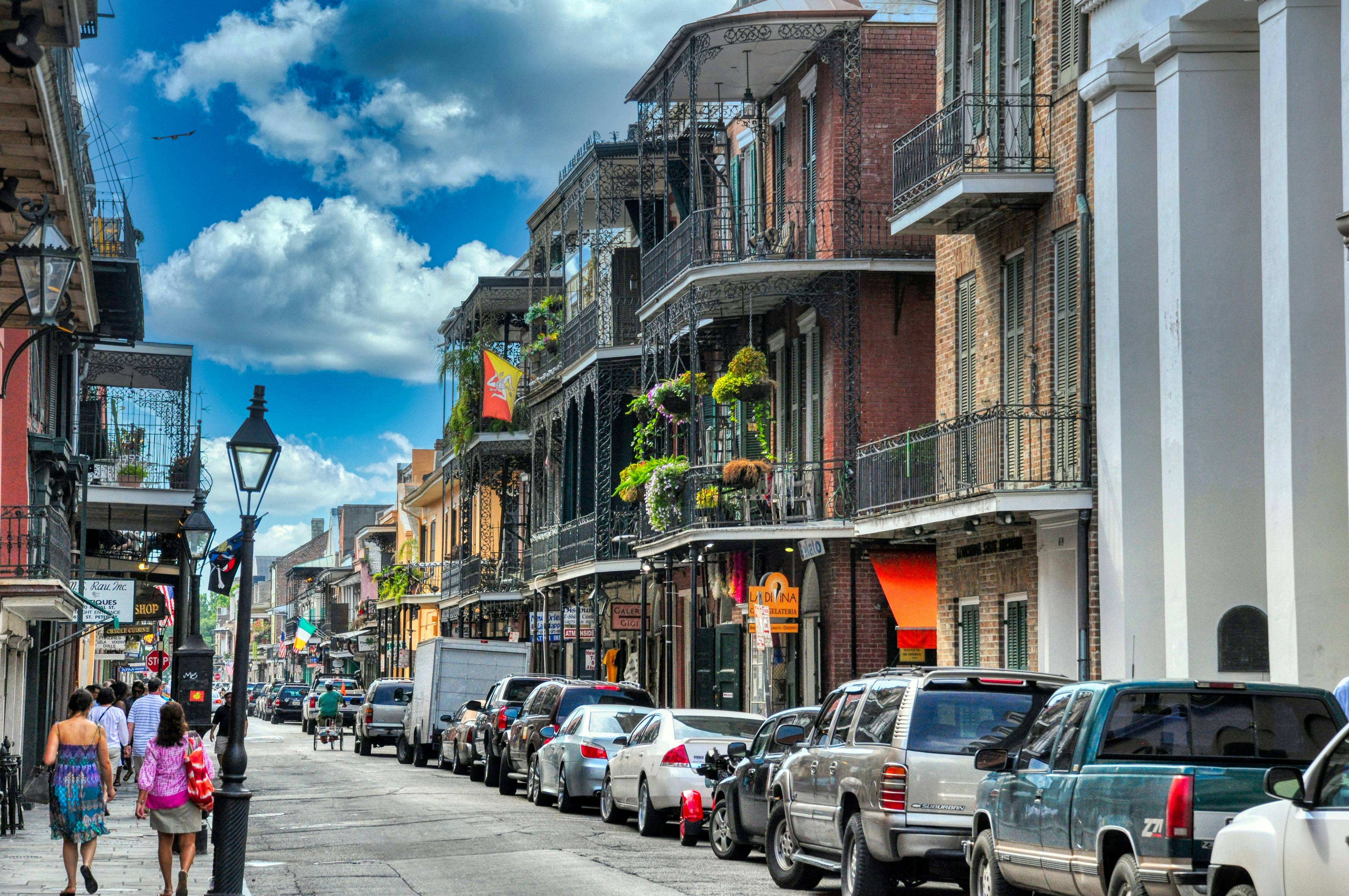
Austin vs New Orleans: Which Should You Visit?
New Orleans wins for most travelers chasing a one-of-a-kind trip — a singular Creole and Cajun cuisine, jazz born on its streets, and 300 years of French, Spanish, and Caribbean culture you can't find anywhere else in America. It's also cheaper and more walkable, with a 24-hour, open-container party in the French Quarter. Choose Austin for top-tier barbecue and tacos, an eclectic multi-genre music scene with SXSW and ACL, and real outdoors — Lady Bird Lake and Barton Springs put swimming in the middle of the city. Both are brutally hot in July and August, so visit in spring or fall. They sit about 510 miles apart, a short flight, making a music-and-food double bill easy. Pick New Orleans for the most distinctive city in the country; pick Austin for BBQ, the lake, and a more modern energy.
Mubboo Verdict: New Orleans wins for most travelers chasing a one-of-a-kind trip — a singular Creole and Cajun cuisine, jazz, and 300 years of French-Caribbean culture give it a sense of place nowhere else in America matches, and it's cheaper and more walkable. Choose Austin for top-tier barbecue and tacos, an eclectic multi-genre music scene, and genuine outdoors at Lady Bird Lake and Barton Springs. New Orleans is the most distinctive US city; Austin is the more modern, active one.
Prices from 800+ airlines · Book direct, get direct support
The short answer
Pick Austin: Go to Austin for the best BBQ and tacos in the country, an eclectic multi-genre music scene, and a city lake for swimming and paddling.
Pick New Orleans: Go to New Orleans for America's most distinctive food and culture, jazz, a 24-hour walkable party, and slightly lower costs.
Do both: Do both — they're a 1h20m flight apart, so split six days three nights each for a music-and-food double bill across the Gulf South.
Austin vs New Orleans, category by category
| Dimension | Austin | New Orleans | Winner |
|---|---|---|---|
| BBQ & tacos | Franklin, breakfast tacosbest in the US | Po'boys, not the drawdifferent lane | Austin ✓ |
| Outdoors | Lady Bird Lake, Barton Springsswim & paddle in town | Flat, swampyfew options | Austin ✓ |
| Live music variety | Blues to indie to countrySXSW, ACL | Jazz, brass, funkdeep but narrower | Austin ✓ |
| Creole cuisine | Tex-Mex, modernno regional tradition | Gumbo, jambalaya, beignetsa whole cuisine | New Orleans ✓ |
| Culture & history | Young, tech-modern~1 era deep | French-Creole, 300 yearsMardi Gras, cemeteries | New Orleans ✓ |
| Nightlife & partying | 6th St, Rainey Stspread out | Bourbon St, go-cups24h, walkable | New Orleans ✓ |
| Walkability | Car-reliant, spreadrideshare needed | Quarter + streetcarfully walkable | New Orleans ✓ |
| Value (daily cost) | ~$200/day mid-rangefestival spikes | ~$180/day mid-rangecheaper food & drink | New Orleans ✓ |
| Overall | New Orleans wins 5 of 8 categories | ||
Austin
Franklin, breakfast tacos
best in the US
New Orleans
Po'boys, not the draw
different lane
Austin
Lady Bird Lake, Barton Springs
swim & paddle in town
New Orleans
Flat, swampy
few options
Austin
Blues to indie to country
SXSW, ACL
New Orleans
Jazz, brass, funk
deep but narrower
Austin
Tex-Mex, modern
no regional tradition
New Orleans
Gumbo, jambalaya, beignets
a whole cuisine
Austin
Young, tech-modern
~1 era deep
New Orleans
French-Creole, 300 years
Mardi Gras, cemeteries
Austin
6th St, Rainey St
spread out
New Orleans
Bourbon St, go-cups
24h, walkable
Austin
Car-reliant, spread
rideshare needed
New Orleans
Quarter + streetcar
fully walkable
Austin
~$200/day mid-range
festival spikes
New Orleans
~$180/day mid-range
cheaper food & drink
New Orleans wins 5 of 8 categories
Budget face-off (4 days, 3 nights)
| Per person / day | Austin | New Orleans |
|---|---|---|
| Budget | $115/day | $100/daycheaper |
| Mid-range | $200/day | $180/daycheaper |
| Comfort | $400/day | $360/daycheaper |
| Flights from NYC | Nonstop from NYC (JFK/EWR) to AUS, ~4h, from $130 round-trip | Nonstop from NYC (JFK/EWR) to MSY, ~3h30m, from $130 round-trip |
New Orleans wins on cost: New Orleans is the cheaper trip by roughly $20 a day mid-range, with a wider gap on food and drinks.
Compare prices month by month:
Search flights & hotels to Austin
Search flights & hotels to New Orleans
The dimensions that decide it
Food
Austin
Austin is one of America's great eating cities, and barbecue is its crown. Franklin Barbecue draws hours-long lines for a reason, and a deep bench — Terry Black's, la Barbecue, and dozens more — makes Texas-style brisket a daily pilgrimage.
Beyond smoke, the breakfast taco is a way of life, food trucks park on nearly every lot, and an ambitious fine-dining scene has grown with the tech money.
The range across Vietnamese, Mexican, and new-American kitchens is real, and you can eat extraordinarily well from a $3 taco to a tasting menu.
As a broad, everyday eating city — the variety, the value, the sheer quality of the barbecue — Austin arguably edges even New Orleans for daily dining.
New Orleans
New Orleans offers something Austin can't: a singular regional cuisine. Creole and Cajun cooking — gumbo, jambalaya, étouffée, char-grilled oysters, po'boys, and powdered-sugar beignets at Café du Monde — form a genuine culinary tradition you can't replicate elsewhere.
The famous rooms book out weeks ahead, but the neighborhood joints are where locals point you, and a $15 muffuletta is as memorable as a white-tablecloth dinner.
Where Austin assembles a superb modern food scene from many influences, New Orleans serves a cuisine that is wholly its own, woven into the city's history and music. For a sense of place on the plate, nothing matches it.
Austin wins for everyday range and barbecue; New Orleans wins for a singular cuisine you can't find anywhere else.
Music & nightlife
Austin
Austin calls itself the Live Music Capital of the World, and the claim holds up on range.
On any night you can find blues, rock, indie, jazz, and country across hundreds of venues, from the historic Continental Club to the patios of Rainey Street, and the festival calendar — SXSW in March, Austin City Limits in October — draws global lineups.
The scene leans toward discovery: original acts and songwriters over cover bands. Nightlife spreads across districts — the rowdy Sixth Street, the bungalow bars of Rainey, the upscale Domain — so a big night means rideshares between them.
It's varied and lively, but less of a single walkable strip than New Orleans delivers.
New Orleans
New Orleans invented jazz, and its nightlife runs deeper and looser. Frenchmen Street is where locals go for brass bands, jazz, and funk in intimate clubs, while Bourbon Street delivers the rowdy, go-cup-in-hand spectacle.
The legal open container and the lack of a closing time give the night a later, freer rhythm than Austin's, and live music spills out of doorways across the Marigny and the Quarter, often with no cover.
It's grittier and less polished, and it sits in one famously walkable core rather than scattered districts. For depth of musical roots and a 24-hour walkable party, New Orleans has a soul Austin's varied scene can't quite replicate.
Austin wins for live-music variety; New Orleans wins for jazz roots and a 24-hour walkable night — call it New Orleans.
Culture & history
Austin
Austin's identity is young, tech-driven, and laid-back — 'Keep Austin Weird' more than centuries of heritage. The cultural draws are real but modern: the live-music legacy, the Texas Capitol, the LBJ Library, and the bats that stream from under the Congress Avenue Bridge at dusk.
The University of Texas brings energy and a strong museum or two. But the city's story is essentially one of recent, rapid growth into a creative-tech hub, and it reads that way — lively and current rather than layered with deep history.
You come to Austin for what it is now: the music, the food, the outdoors, and the easygoing vibe, not for an immersion in the distant past.
New Orleans
New Orleans is one of the most culturally singular cities in America, shaped by 300 years of French, Spanish, African, and Caribbean influence. Mardi Gras, second-line parades, voodoo history, above-ground cemeteries, and the architecture of the French Quarter and Garden District make the whole city a living museum.
A $35 Garden District or Tremé walking tour peels back layer after layer most visitors never expect. The blend of Catholic ritual, Creole heritage, and music isn't a tourist overlay — it's how the city actually lives.
For travelers who want a destination with genuine depth and strangeness, New Orleans stands almost alone in the country.
New Orleans wins easily — three centuries of layered, living culture dwarf Austin's young, modern identity.
Outdoors & city life
Austin
Austin folds the outdoors into daily life in a way New Orleans can't. Lady Bird Lake runs right through downtown, with a 10-mile hike-and-bike trail, kayaks, and stand-up paddleboards rented by the hour.
Barton Springs Pool — a spring-fed swimming hole that stays 68°F year-round — is a beloved local ritual, and the Greenbelt offers trails and swimming holes minutes from the center.
Add a strong coffee culture, the Hill Country and wineries a short drive west, and an active, sporty rhythm, and Austin feels like a place you could live as much as visit.
For a trip where swimming, paddling, and being outdoors are part of the daily routine, Austin is built for it.
New Orleans
New Orleans sits below sea level on flat, swampy ground, and outdoor recreation isn't its strength.
There's the lovely City Park — larger than Central Park, with ancient live oaks and the sculpture garden — and the Lafitte Greenway for a walk or ride, plus swamp and bayou tours into the surrounding wetlands.
But there's no swimmable lake in the city, no spring-fed pool, and the summer heat and humidity discourage daytime exertion regardless. New Orleans pulls you indoors and onto its streets — to the food, the music, and the history — rather than out onto the water or trails.
For an active, outdoorsy trip, it simply isn't set up the way Austin is.
Austin wins easily — a swimmable city lake and spring-fed pools make the outdoors central in a way New Orleans can't.
Which one is right for you?
Made your choice? Search flights:
Why not both?
Feasibility
Feasible — about 510 miles apart, a 1h20m nonstop flight (or a 7.5-hour drive).
Getting between them
Nonstop flights from around $90 one-way on Southwest or American; a domestic flight beats the long drive across Texas and Louisiana.
Suggested split
3 nights Austin, 3 nights New Orleans.
Combined budget
$1,800-3,200 per person
Plan 6 days total.
Plan the combined trip →When to go
Austin — best
February-March and October-November bring mild days and festival season — SXSW in March, ACL in October.
New Orleans — best
February-April is prime — Mardi Gras, Jazz Fest, and pleasant 70-80°F days before summer humidity sets in.
Sweet spot for both: Late February through April and October-November are pleasant in both cities at once, ideal for pairing them.
Avoid: Skip both in July-August (90-100°F and humid); New Orleans also peaks for hurricanes in August-September.
Getting there from the US
| From | Austin | New Orleans |
|---|---|---|
| New York | Nonstop from NYC (JFK/EWR) to AUS, ~4h, from $130 round-trip off-peak | Nonstop from NYC (JFK/EWR) to MSY, ~3h30m, from $130 round-trip off-peak |
| Los Angeles | LAX to AUS nonstop, ~3h15m, from $120 round-trip | LAX to MSY nonstop, ~4h15m, from $180 round-trip |
| Chicago | ORD/MDW to AUS nonstop, ~2h45m, from $110 round-trip | ORD/MDW to MSY nonstop, ~2h30m, from $110 round-trip |
| Airlines | Southwest, American, Delta, United, plus JetBlue and Frontier | Southwest, Delta, United, American, plus Spirit and Frontier |
| Flight time | ~4h from New York, ~2h45m from Chicago, ~3h15m from LA | ~3h30m from New York, ~2h30m from Chicago, ~4h15m from LA |
Austin vs New Orleans FAQ
Is Austin or New Orleans more expensive?
New Orleans is cheaper for a comparable trip, about $180 a day mid-range versus $200 in Austin, with a wider gap on food and drinks and many $35 walking tours. Austin spikes hard around SXSW, F1, and ACL. Transfer Chase Ultimate Rewards to Southwest or Amex points to Delta to trim airfare.
Which is better for a first visit?
New Orleans. No other US city feels as distinct — Creole cooking, above-ground cemeteries, streetcars, and live jazz give it a sense of place Austin can't match. Austin is a fantastic, more modern city, but it reads as a great food-and-music town rather than a singular destination.
Can I do both Austin and New Orleans in one trip?
Yes — they're about 510 miles and a 1h20m nonstop flight apart, three nights each over six days. The 7.5-hour drive across Texas and Louisiana is long, so a domestic flight beats it unless you want a road trip with stops in Houston or Lake Charles along the way.
Which has better food?
It's close and both rank among America's best. Austin owns barbecue — Franklin and a deep bench of smokehouses — plus breakfast tacos and food trucks. New Orleans counters with a whole regional cuisine: gumbo, jambalaya, po'boys, and beignets. For a singular culinary tradition, New Orleans; for BBQ and tacos, Austin.
Which has better live music?
Austin for sheer range — it calls itself the Live Music Capital, with blues, rock, indie, and country across hundreds of venues plus SXSW and ACL. New Orleans is the birthplace of jazz and runs deeper on brass and funk. For variety, Austin; for musical roots and a later night, New Orleans.
When is the best time to visit each?
Visit Austin February-March or October-November for mild days and festival season; New Orleans is best February-April for Mardi Gras, Jazz Fest, and 70-80°F weather. Skip both in July-August, when 90-100°F heat and humidity make all-day sightseeing rough.
Plan either trip
Austin
More comparisons
Some links on this page are affiliate links, at no extra cost to you.