Boston vs Washington, D.C.: Which Should You Visit?
Washington, D.C. wins for most travelers and families — the free Smithsonian museums and the monuments of the National Mall give it unmatched depth of things to do for the money, plus a clean, extensive Metro and a diverse dining scene. It's a first-timer's dream on a budget. Choose Boston for compact colonial charm: the Freedom Trail, Beacon Hill's cobblestones, the best seafood on the East Coast, Harvard and MIT, and Fenway Park, all in a tight, walkable core that doubles as a New England launchpad. Both are historic, walkable, expensive Northeast cities with cold winters, so visit in fall or spring. On value, DC pulls ahead because so many of its headline attractions are free. The two are a 1h30m flight or a Northeast Corridor train apart. Pick D.C. for the museums and monuments; pick Boston for the history, the seafood, and the charm.
Mubboo Verdict: Washington, D.C. wins for most travelers and families — the free Smithsonian museums and the monuments of the National Mall give it unmatched depth of things to do for the money, plus a clean, extensive Metro. Choose Boston for compact colonial charm: the Freedom Trail, Beacon Hill, the best seafood on the East Coast, and Fenway Park, all in a tight, walkable core. D.C. is the better-value first-timer trip; Boston is the more charming, historic one.
Prices from 800+ airlines · Book direct, get direct support
The short answer
Pick Boston: Go to Boston for the Freedom Trail, Beacon Hill cobblestones, the best East Coast seafood, Harvard and MIT, and Fenway Park in a compact, walkable core.
Pick Washington DC: Go to Washington, D.C. for the free Smithsonian museums, the monuments of the National Mall, a clean Metro, and the best value of any major US city.
Do both: Do both — they're a 1h30m flight or a 6h45m Amtrak Acela apart, so split six days three nights each down the Northeast Corridor.
Boston vs Washington DC, category by category
| Dimension | Boston | Washington DC | Winner |
|---|---|---|---|
| Museums & attractions | MFA, Gardner (paid)strong, ticketed | Smithsonian (free)exceptional, vast | Washington DC ✓ |
| Free things to do | Freedom Trail walkextras cost | Museums & monuments freehuge savings | Washington DC ✓ |
| Monuments & grandeur | Colonial sitesintimate scale | National Mall, memorialsmonumental | Washington DC ✓ |
| Historic charm & old core | Beacon Hill, North Endcobblestone, walkable | Georgetown, Capitol Hillhandsome, broader | Boston ✓ |
| Seafood & local fare | Chowder, lobster, oystersNew England classic | Good, not coastalfewer raw bars | Boston ✓ |
| Diverse dining scene | Strong, smallerItalian North End | Ethiopian, Michelin, globaldeeper, broader | Washington DC ✓ |
| College energy & sports | Harvard, MIT, Fenwaystudent city | Politics, fewer campusesdifferent vibe | Boston ✓ |
| Getting around | Compact, walkable, the Toldest subway | Clean, extensive Metroreaches the airport | Tie |
| Overall | Washington DC wins 4 of 8 categories | ||
Boston
MFA, Gardner (paid)
strong, ticketed
Washington DC
Smithsonian (free)
exceptional, vast
Boston
Freedom Trail walk
extras cost
Washington DC
Museums & monuments free
huge savings
Boston
Colonial sites
intimate scale
Washington DC
National Mall, memorials
monumental
Boston
Beacon Hill, North End
cobblestone, walkable
Washington DC
Georgetown, Capitol Hill
handsome, broader
Boston
Chowder, lobster, oysters
New England classic
Washington DC
Good, not coastal
fewer raw bars
Boston
Strong, smaller
Italian North End
Washington DC
Ethiopian, Michelin, global
deeper, broader
Boston
Harvard, MIT, Fenway
student city
Washington DC
Politics, fewer campuses
different vibe
Boston
Compact, walkable, the T
oldest subway
Washington DC
Clean, extensive Metro
reaches the airport
Washington DC wins 4 of 8 categories
Budget face-off (5 days, 4 nights)
| Per person / day | Boston | Washington DC |
|---|---|---|
| Budget | $130/day | $125/daycheaper |
| Mid-range | $215/day | $210/daycheaper |
| Comfort | $430/day | $420/daycheaper |
| Flights from NYC | Nonstop from NYC (JFK/LGA/EWR) to BOS, ~1h15m, from $80 round-trip — or 3h45m on Amtrak | Nonstop from NYC to DCA/IAD, ~1h30m, from $80 round-trip — or 3h on Amtrak |
Washington DC wins on cost: Hotel prices are close, but Washington, D.C. is the better value because its headline museums and monuments are free.
Compare prices month by month:
Search flights & hotels to Boston
Search flights & hotels to Washington DC
The dimensions that decide it
Museums, monuments & things to do
Boston
Boston's attractions are excellent but mostly ticketed, and its scale is intimate rather than grand. The Museum of Fine Arts is genuinely top-tier, the Isabella Stewart Gardner is a jewel, and the JFK Library and the Boston Tea Party Ships add depth, but you'll pay admission at nearly every door.
The headline experience is the Freedom Trail — a 2.5-mile, 16-site walk through Revolutionary history that's free to follow, with paid entries at sites like the Old North Church. It's a wonderful, walkable way to absorb the nation's founding story.
But the sheer volume and price of marquee attractions sit below what Washington offers a few hundred miles south.
Washington DC
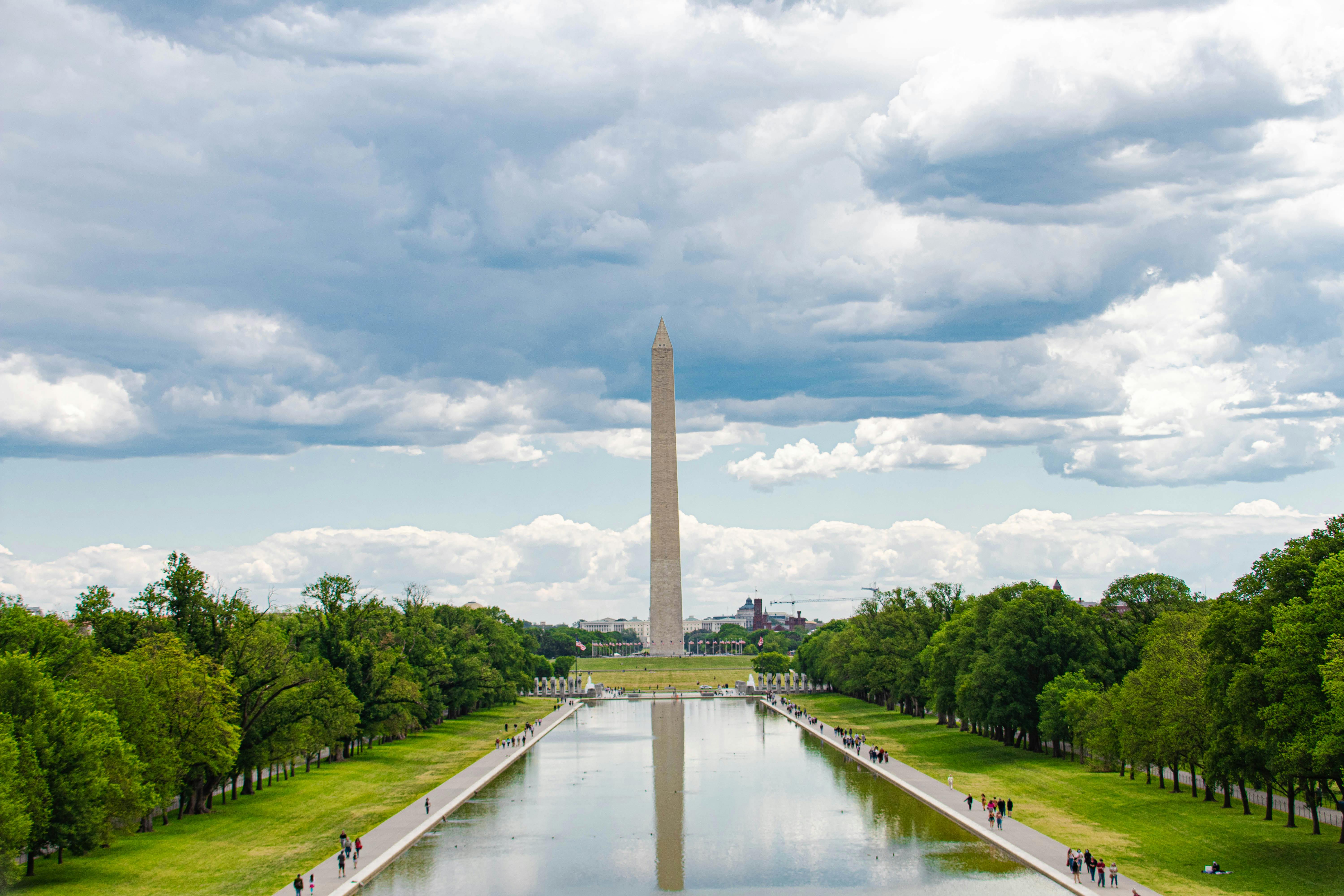
Washington, D.C. has the best free attraction lineup in America, and it defines the trip. The Smithsonian's cluster of museums on the National Mall — Air and Space, Natural History, American History, the National Gallery, the African American History and Culture museum — are exceptional and cost nothing to enter.
Ringing them are the monuments and memorials: the Lincoln, Washington, Jefferson, MLK, and war memorials, plus the Capitol and the White House. Arlington National Cemetery and the National Zoo add more, much of it free.
For depth, variety, and value of things to do, no US city comes close — a family can fill a week here on exceptional sights without buying a single ticket.
Washington wins decisively — a cluster of free, exceptional museums and monuments outclasses Boston's ticketed attractions.
Historic charm & walkability
Boston
Boston is the more charming, atmospheric city of the two, and it wears its history beautifully.
Beacon Hill's gas-lit, cobblestoned lanes and brick row houses are among the prettiest urban blocks in America, the North End packs Italian bakeries and trattorias into narrow colonial streets, and Faneuil Hall and the waterfront tie it together.
The whole core is genuinely compact and walkable — you can stroll from the Common across to the North End in twenty minutes — and the T, the country's oldest subway, fills the gaps. The scale is human and the sense of the 18th century is everywhere underfoot.
For old-world charm and a city you experience on foot, Boston is the stronger draw.
Washington DC
Washington is handsome and walkable too, but in a grander, more deliberate way.
Georgetown's cobblestones and Federal townhouses are genuinely lovely, Capitol Hill's rowhouses are stately, and the monumental core is built for strolling — though the Mall's distances are deceptively long, and a hot, humid summer day turns a museum march into a slog.
The Metro is clean, modern, and extensive, reaching Reagan National Airport directly, which Boston's setup can't quite match for newcomers. But the city's planned, monumental layout feels more formal than Boston's organic, lived-in tangle of colonial streets. For intimate historic charm, Boston edges it; for grand, orderly cityscape, Washington.
Boston wins for intimate colonial charm — cobblestoned, human-scaled, and walkable in a way Washington's grand plan isn't.
Food & dining
Boston
Boston's food is anchored by the sea, and it does that better than almost anywhere. This is the city for a classic raw bar, creamy New England clam chowder, a buttery lobster roll, and fresh oysters pulled from cold Atlantic waters, whether at Neptune Oyster or a no-frills fish shack.
The North End delivers old-school Italian — handmade pasta and a cannoli from Mike's or Modern as the rivalry demands — and the student population keeps casual, affordable spots thriving. The scene has grown more ambitious in recent years.
Where it lags is breadth: Boston's range across global cuisines is narrower than Washington's, and the identity leans hard, and happily, on seafood and Italian tradition.
Washington DC
Washington's dining has quietly become one of the most diverse and ambitious in the country. U Street's Ethiopian restaurants reflect the largest such community in America, the city's global neighborhoods serve Salvadoran, Vietnamese, and Korean, and the high end stacks Michelin stars and destination rooms like Maydan and Rose's Luxury.
The power-lunch and embassy-driven scene supports serious kitchens across price points, and the food halls and markets keep it accessible. What it lacks is Boston's coastal-seafood birthright — there's no equivalent of a New England raw bar.
But for sheer range, ambition, and variety of cuisines, Washington's table is the broader and deeper of the two.
It's close — Boston wins on seafood and Italian tradition; Washington wins on range and ambition. Call it Washington for variety.
Vibe, value & everyday experience
Boston
Boston feels like a compact, brainy New England town that happens to be a major city.
The huge student population from Harvard, MIT, BU, and dozens of other schools keeps it young, walkable, and energetic, and the sports culture — Fenway Park, the oldest ballpark in baseball, plus the Celtics and Bruins — runs deep and passionate.
Fall is magic, with New England foliage a short drive away and crisp, clear days. The trade-offs are real: winters are long, cold, and snowy from January into March, hotel prices are steep, and many of the best attractions charge admission.
But for charm, sports, and college-town energy in a walkable package, Boston delivers a distinct, lived-in character.
Washington DC
Washington's everyday appeal is its blend of grandeur and genuine value. Because the museums and monuments are free, a trip here stretches further than almost anywhere — you can spend lavishly on hotels and dinners or barely at all on the headline sights.
The city is leafy, safe in the visitor core, and surprisingly good for solo travelers, with strong Metro access reducing the need for a car. The neighborhoods beyond the Mall — Georgetown, Shaw, Capitol Hill — reward exploring once you tire of monuments.
Summers are hot and humid, and a government shutdown can occasionally shutter the federal museums, so it pays to check ahead. But for value and breadth, Washington is hard to beat.
Washington wins on value and breadth; Boston wins on charm and college-sports energy — call it Washington for the money.
Which one is right for you?
Made your choice? Search flights:
Why not both?
Feasibility
Feasible — about 440 miles apart, a 1h30m flight or the Amtrak Acela down the Northeast Corridor in roughly 6h45m.
Getting between them
Fly nonstop from around $80 one-way, or take Amtrak through New York; a domestic flight is fastest, the train is city-center to city-center.
Suggested split
3 nights Washington, D.C., 3 nights Boston.
Combined budget
$2,000-3,600 per person
Plan 6 days total.
Plan the combined trip →When to go
Boston — best
June and August-October are ideal — warm days, and brilliant New England foliage arrives in October.
Washington DC — best
March-April for the cherry blossoms and September-October for mild, comfortable days with thinner crowds.
Sweet spot for both: September-October is excellent in both cities at once — mild, clear, and ahead of winter.
Avoid: Skip Boston in January-February (cold and snow); expect hot, humid Washington summers and possible shutdown closures.
Getting there from the US
| From | Boston | Washington DC |
|---|---|---|
| New York | Nonstop from NYC (JFK/LGA/EWR) to BOS, ~1h15m, from $80 round-trip — or 3h45m on Amtrak | Nonstop from NYC (JFK/LGA/EWR) to DCA/IAD, ~1h30m, from $80 round-trip — or 3h on Amtrak |
| Los Angeles | LAX to BOS nonstop, ~5h30m, from $180 round-trip | LAX to IAD/DCA nonstop, ~5h, from $180 round-trip |
| Chicago | ORD/MDW to BOS nonstop, ~2h30m, from $120 round-trip | ORD to DCA/IAD nonstop, ~2h, from $110 round-trip |
| Airlines | JetBlue (big BOS presence), Delta, American, United, plus Alaska | American, United (Dulles hub), Delta, Southwest, JetBlue |
| Flight time | ~1h15m from New York, ~2h30m from Chicago, ~5h30m from LA | ~1h30m from New York, ~2h from Chicago, ~5h from LA |
Boston vs Washington DC FAQ
Is Boston or Washington DC more expensive?
Hotel prices are similar and high in both, but D.C. is the better value overall because its headline attractions — the Smithsonian museums and the monuments — are free. Boston's museums and Freedom Trail extras are paid. Budget about $210 a day mid-range in D.C. versus $215 in Boston, and use Chase or Amex points on flights.
Which is better for a first visit or families?
Washington, D.C. The free Smithsonian museums — Air and Space, Natural History, American History — plus the monuments and the National Zoo make it ideal and affordable for families and first-timers. Boston is wonderful too, but more of its attractions carry an admission fee.
Can I visit both Boston and Washington DC in one trip?
Yes — they're about 440 miles apart, a 1h30m flight or the Amtrak Acela down the Northeast Corridor in roughly 6h45m. Pair them with six days, three nights each. A domestic flight is fastest, but the train runs city-center to city-center through New York.
Which has better museums?
Washington, D.C., and it isn't close. The Smithsonian's cluster of free, exceptional museums on the National Mall is unmatched in America. Boston's Museum of Fine Arts and Isabella Stewart Gardner are excellent, but D.C. offers more depth, more variety, and no admission price.
Which has better food?
It splits. Boston owns seafood — clam chowder, lobster rolls, and oysters — plus the Italian North End. D.C. counters with a deeper, more diverse dining scene, from U Street's Ethiopian to acclaimed and Michelin-starred kitchens. For seafood, Boston; for range, D.C.
When is the best time to visit each?
Both shine in fall — September and October bring mild days and, in Boston, New England foliage. D.C.'s cherry blossoms peak late March into April, though crowds swell. Skip Boston in January-February, when cold and snow set in, and expect hot, humid D.C. summers.
Plan either trip
Boston
More comparisons
Some links on this page are affiliate links, at no extra cost to you.