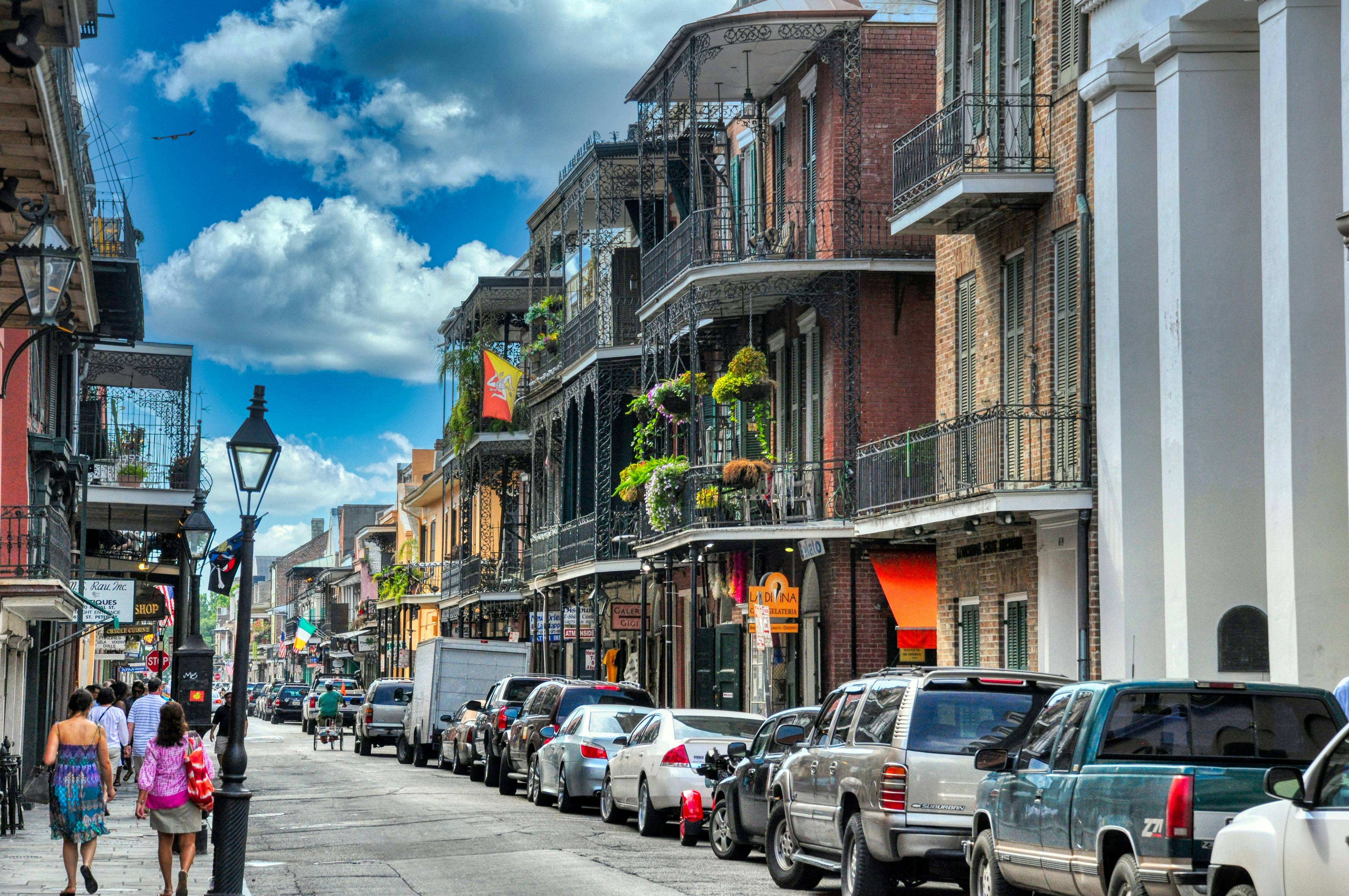
Miami vs New Orleans: Which Should You Visit?
New Orleans wins for most travelers chasing a distinctive trip — a singular Creole and Cajun cuisine, jazz born on its streets, and 300 years of French, Spanish, and Caribbean culture you can't find anywhere else in America, all at a lower cost. It's also walkable, with a 24-hour, open-container party in the French Quarter. Choose Miami when the trip is about the beach: warm Atlantic swimming, South Beach, Little Havana's Cuban food, glamorous nightlife, and reliable winter sun. New Orleans has no beach; Miami has no equal for sand and Latin glamour. Both are warm and humid, with hot summers and hurricane risk, so visit November through April. They're about 865 miles apart, a short flight, so a Gulf-South combo is easy. Pick New Orleans for the food, music, and culture; pick Miami for the beaches and the winter warmth.
Mubboo Verdict: New Orleans wins for most travelers chasing a distinctive trip — a singular Creole and Cajun cuisine, jazz, and 300 years of French-Caribbean culture give it a sense of place nowhere else in America matches, and it's cheaper and more walkable. Choose Miami when the trip is about the beach: warm Atlantic swimming, Little Havana's Cuban food, glamorous nightlife, and reliable winter sun. New Orleans is the most distinctive US city; Miami is the better beach-and-warmth escape.
Prices from 800+ airlines · Book direct, get direct support
The short answer
Pick Miami: Go to Miami for warm-ocean beaches, Cuban food and culture, glamorous nightlife, and winter sun while the Northeast freezes.
Pick New Orleans: Go to New Orleans for America's most distinctive food, jazz, a 24-hour walkable party, and 300 years of culture at a lower cost.
Do both: Do both — they're a 1h45m flight apart, so split six days three nights each for a Gulf-South food, music, and beach combo.
Miami vs New Orleans, category by category
| Dimension | Miami | New Orleans | Winner |
|---|---|---|---|
| Food & cuisine | Cuban, Latin, seafooddeep, Caribbean | Creole, Cajun, beignetsa singular cuisine | New Orleans ✓ |
| Beaches | South Beach, warm Atlanticswim on arrival | None, coast 1h+ awayriver, not ocean | Miami ✓ |
| Culture & history | Cuban heritage, Art Decovivid, recent | French-Creole, 300 yearsMardi Gras, cemeteries | New Orleans ✓ |
| Nightlife & partying | LIV, South Beach clubsglamorous, pricey | Bourbon St, go-cups24h, walkable | Tie |
| Walkability | Car or ridesharespread out | Quarter + streetcarfully walkable | New Orleans ✓ |
| Winter warmth & weather | 74-78°F, sunnybeach season | 56-66°F, coolermild, some rain | Miami ✓ |
| Value (daily cost) | ~$215/day mid-rangebeach premium | ~$180/day mid-rangecheaper food & drink | New Orleans ✓ |
| Latin glamour & scene | South Beach, Wynwoodstylish, modern | Gritty, historicdifferent vibe | Miami ✓ |
| Overall | New Orleans wins 4 of 8 categories | ||
Miami
Cuban, Latin, seafood
deep, Caribbean
New Orleans
Creole, Cajun, beignets
a singular cuisine
Miami
South Beach, warm Atlantic
swim on arrival
New Orleans
None, coast 1h+ away
river, not ocean
Miami
Cuban heritage, Art Deco
vivid, recent
New Orleans
French-Creole, 300 years
Mardi Gras, cemeteries
Miami
LIV, South Beach clubs
glamorous, pricey
New Orleans
Bourbon St, go-cups
24h, walkable
Miami
Car or rideshare
spread out
New Orleans
Quarter + streetcar
fully walkable
Miami
74-78°F, sunny
beach season
New Orleans
56-66°F, cooler
mild, some rain
Miami
~$215/day mid-range
beach premium
New Orleans
~$180/day mid-range
cheaper food & drink
Miami
South Beach, Wynwood
stylish, modern
New Orleans
Gritty, historic
different vibe
New Orleans wins 4 of 8 categories
Budget face-off (5 days, 4 nights)
| Per person / day | Miami | New Orleans |
|---|---|---|
| Budget | $120/day | $100/daycheaper |
| Mid-range | $215/day | $180/daycheaper |
| Comfort | $430/day | $360/daycheaper |
| Flights from NYC | Nonstop from NYC (JFK/EWR/LGA) to MIA, ~3h15m, from $100 round-trip | Nonstop from NYC (JFK/EWR) to MSY, ~3h30m, from $130 round-trip |
New Orleans wins on cost: New Orleans is the cheaper trip by roughly $35 a day mid-range, with a wider gap on food, drinks, and lodging.
Compare prices month by month:
Search flights & hotels to Miami
Search flights & hotels to New Orleans
The dimensions that decide it
Food & cuisine
Miami
Miami's food is its culture, rooted in a deep Cuban and Latin American community. Little Havana serves cafecito, croquetas, and hand-rolled cigars; Cuban, Colombian, Venezuelan, and Haitian kitchens spread across the metro, often at honest prices.
The seafood is fresh and Caribbean-inflected, stone crab is a winter institution, and Wynwood layers a trendy dining-and-bar scene over its murals. It's a vivid, bilingual food culture that reflects Miami's identity as the gateway between the US and Latin America.
The range is real and the flavors are bright, but it's a regional offshoot of broader Latin cooking rather than a wholly singular cuisine the way New Orleans serves up.
New Orleans
New Orleans offers something almost nowhere else in America can: a singular regional cuisine. Creole and Cajun cooking — gumbo, jambalaya, étouffée, char-grilled oysters, po'boys, and powdered-sugar beignets at Café du Monde — form a genuine culinary tradition born of French, Spanish, African, and Caribbean influences and found nowhere else.
The famous rooms book out weeks ahead, but the neighborhood joints are where locals point you, and a $15 muffuletta is as memorable as a white-tablecloth dinner. Eating here isn't a side activity; it's woven into the music and the history, the very reason many travelers come.
For a sense of place on the plate, New Orleans stands almost alone.
New Orleans wins narrowly — a wholly singular Creole cuisine edges Miami's vivid but more familiar Cuban-Latin scene.
Beaches & weather
Miami
This is Miami's trump card, and New Orleans simply can't answer it. South Beach delivers wide sand and warm Atlantic water you can swim in nearly year-round, with winter highs around 74-78°F and the ocean bath-warm through summer. Key Biscayne, Bal Harbour, and Crandon Park add calmer, more local stretches.
Crucially, Miami shines in winter, exactly when much of the country is cold — December through March it's sunny and warm, prime beach season. The trade-offs are real: hurricane season runs June to November, summers are humid with afternoon storms, and September peaks for storms.
But for sun, sand, and a winter escape, Miami operates in a category New Orleans has no entry in.
New Orleans
New Orleans sits on the Mississippi River, not the coast, and beaches simply aren't part of the trip — the nearest Gulf sand is over an hour away in Mississippi or Grand Isle.
Its weather is warm and humid like Miami's but a notch cooler in winter, with highs in the upper 50s to 60s from December through February and frequent rain. Summers are hot, sticky, and stormy, and the city shares the Gulf's hurricane risk, peaking in late summer.
The appeal here is never the climate or a coastline; it's the food, the music, and the streets. If sun and swimming drive your trip, this is the wrong city — but New Orleans never pretended otherwise.
Miami wins easily — real swimmable beaches and dependable winter sun against a city with no coast at all.
Culture, music & history
Miami
Miami's culture is vivid and modern, defined by its role as the capital of Latin America in the US. The Cuban heritage of Little Havana, the Art Deco district of South Beach, the murals and galleries of Wynwood, and the December spectacle of Art Basel give it real cultural energy.
Spanish is everywhere, the music is salsa and reggaeton, and the city feels young, stylish, and Caribbean-facing. But its story is essentially a 20th-century one of rapid growth and immigration, and locals worry that fast development is erasing what historic character it had.
It's a fascinating, lively culture — just a relatively recent one compared with the deep roots a few hundred miles west.
New Orleans
New Orleans is one of the most culturally singular cities in America, shaped by 300 years of French, Spanish, African, and Caribbean influence. It invented jazz, and live brass, funk, and blues spill out of doorways across Frenchmen Street and the Quarter.
Mardi Gras, second-line parades, voodoo history, above-ground cemeteries, and the architecture of the French Quarter and Garden District make the whole city a living museum. A $35 Garden District or Tremé walking tour peels back layer after layer.
The blend of Catholic ritual, Creole heritage, and music isn't a tourist overlay — it's how the city actually lives. For genuine depth and strangeness, nothing in the country compares.
New Orleans wins easily — three centuries of layered culture and the birthplace of jazz dwarf Miami's lively but recent identity.
Nightlife, cost & getting around
Miami
Miami's nightlife is glamorous and world-renowned, but it costs you. South Beach and Brickell anchor a club scene that draws big-name DJs to rooms like LIV and Story, rooftop bars deliver ocean sunsets, and the dress-to-impress energy is the whole point.
The catch is logistics and price: the scenes are spread across the metro, so you'll rideshare between them, cover charges and bottle minimums are steep, and the city overall runs expensive, with a real beach-hotel premium.
Getting around essentially requires a car or a steady rideshare budget, as transit is thin. It's a stylish, high-end night out — the most glamorous of the two — but it asks for a bigger wallet and more planning.
New Orleans
New Orleans delivers a different, cheaper, and more walkable night. The legal open container and the lack of a closing time give it a 24-hour rhythm, Frenchmen Street offers brass and jazz with little or no cover, and Bourbon Street brings the rowdy go-cup spectacle.
Crucially, it all sits in one famously walkable core — you stroll between bars and music clubs rather than rideshare across a metro. The whole city is cheaper, from $35 tours to neighborhood meals to the drinks themselves, and the French Quarter and streetcar make a car unnecessary.
It's grittier and less polished than Miami's beach-club glamour, but for a walkable, affordable, all-night scene, New Orleans wins.
Miami wins for glamorous beach-club nights; New Orleans wins for a walkable, cheaper, 24-hour scene — call it New Orleans for value.
Which one is right for you?
Made your choice? Search flights:
Why not both?
Feasibility
Feasible — about 865 miles apart, a 1h45m nonstop flight (a long 12-hour drive).
Getting between them
Nonstop flights from around $90 one-way; a domestic flight beats the drive along the Gulf Coast.
Suggested split
3 nights New Orleans, 3 nights Miami.
Combined budget
$2,000-3,500 per person
Plan 6 days total.
Plan the combined trip →When to go
Miami — best
November-April is prime — warm, drier days around 74-82°F with low humidity and the best beach weather.
New Orleans — best
February-April is prime — Mardi Gras, Jazz Fest, and pleasant 70-80°F days before summer humidity sets in.
Sweet spot for both: November and March-April are pleasant in both cities at once, though Miami stays the warmer pick.
Avoid: Skip both in the hot, humid summer and especially August-September, the peak of Gulf and Atlantic hurricane season.
Getting there from the US
| From | Miami | New Orleans |
|---|---|---|
| New York | Nonstop from NYC (JFK/EWR/LGA) to MIA, ~3h15m, from $100 round-trip off-peak | Nonstop from NYC (JFK/EWR) to MSY, ~3h30m, from $130 round-trip off-peak |
| Los Angeles | LAX to MIA nonstop, ~5h, from $180 round-trip | LAX to MSY nonstop, ~4h15m, from $180 round-trip |
| Chicago | ORD to MIA nonstop, ~3h15m, from $130 round-trip | ORD/MDW to MSY nonstop, ~2h30m, from $110 round-trip |
| Airlines | American (Miami hub), Delta, JetBlue, United, plus Frontier and Spirit | Southwest, Delta, United, American, plus Spirit and Frontier |
| Flight time | ~3h15m from New York, ~3h15m from Chicago, ~5h from LA | ~3h30m from New York, ~2h30m from Chicago, ~4h15m from LA |
Miami vs New Orleans FAQ
Is Miami or New Orleans more expensive?
Miami is pricier — about $215 a day mid-range versus $180 in New Orleans, driven by its beach-hotel premium. New Orleans runs cheaper on food, drinks, and $35 walking tours. Both spike around festivals, so book early for Mardi Gras or Art Basel. Use Chase Ultimate Rewards or Amex points to offset flights.
Which is better for a first visit?
New Orleans. No other US city feels as distinct — Creole cooking, above-ground cemeteries, streetcars, and live jazz give it a sense of place Miami can't match. Miami is wonderful for beaches and Latin culture, but New Orleans is the more singular, once-in-a-lifetime destination.
Can I do both Miami and New Orleans in one trip?
Yes — they're about 865 miles and a 1h45m nonstop flight apart. Pair them with six days, three nights each, for a Gulf-South combo: New Orleans for food and music, Miami for the beach. The 12-hour drive is long, so a domestic flight is the smart move.
Which has better food?
It's close, and both are top US food cities. New Orleans offers a singular regional cuisine — gumbo, jambalaya, po'boys, and beignets — that you can't find elsewhere. Miami counters with deep Cuban and Latin cooking, from Little Havana to fresh seafood. For a one-of-a-kind tradition, New Orleans; for Cuban-Latin range, Miami.
Does New Orleans have beaches?
Not its own — it sits on the Mississippi, not the coast, and the nearest Gulf beaches are over an hour away. If a beach is central to your trip, Miami delivers warm Atlantic swimming on arrival; in New Orleans, the draw is the food, music, and streets, not the sand.
When is the best time to visit each?
Visit New Orleans February-April for Mardi Gras, Jazz Fest, and 70-80°F days, and Miami November-April for warm, dry beach weather. Skip both in the hot, humid summer, and especially August-September, the peak of hurricane season along the Gulf and Atlantic.
Plan either trip
Miami
More comparisons
Some links on this page are affiliate links, at no extra cost to you.