💰 When is the cheapest time to fly from San Francisco to Seoul?
This month: Fares peak for the year; monsoon runs late June through July.
SFO-ICN economy pricing follows a clear seasonal curve. February is cheapest at $720-$890 floors; the first two weeks of November are the secondary window.
Summer (June through mid-August) peaks at $1,250-$1,450 on K-pop tourism and family visits. Cherry blossom season (late March-early April) adds a $300-$400 premium, and Lunar New Year and Chuseok weeks spike 30-40% — avoid those weeks.
Next 30 days — daily low fares
Tooltip shows stops + source. Cached fares from Aviasales.
Here's a month-by-month look at prices on this route:
✈️ Which airlines fly from San Francisco to Seoul?
Four nonstop carriers fly SFO-ICN with sharply different value. Korean Air owns the premium tier with 787-9 Prestige Suites; Asiana matches its economy hard product but loses on cabin freshness.
United Polaris is competitive but its economy is the route's worst seat. Air Premia is the disruptor — 35-inch pitch and Premium Economy $300-$500 below legacy carriers.
The premium pick on this route.
787-9 Prestige Suites deliver 1-2-1 lie-flat with privacy doors — competitive with the best transpacific business products. Economy is 33-inch pitch on slim seats that beat United's 777.
On-time hit 84% in 2025 per OAG; SkyTeam Delta SkyMiles earn at 100%. Departs SFO Area A to ICN Terminal 2, the quieter terminal.
Note: Korean Air completed its 63.9% acquisition of Asiana in December 2024, with full brand absorption planned for 2027 — confirm award rules at booking.
Best for: business travelers, premium cabin seekers, SkyTeam Delta SkyMiles earners
The Star Alliance pick for travelers who don't want United metal.
The A350-900 cabin is quieter than United's 777, and 32-inch pitch matches the industry baseline. Service is warm and Korean-fluent — a real plus for families visiting relatives.
Earns United MileagePlus at full economy rates; on-time was 81% in 2025. Departs SFO Area G, arrives ICN Terminal 1.
Status note: Asiana is now a 63.9% Korean Air subsidiary set for full absorption in 2027, though it flies its own code through 2026.
Best for: United MileagePlus earners who prefer Asian-carrier service, families wanting Korean-language crew

The only US carrier flying SFO-ICN nonstop, and the home team for MileagePlus loyalists.
Polaris business is competitive — direct aisle access, lie-flat — though Korean Air's suites beat it on privacy. The weak spot is economy: the 777-300ER at 31-inch pitch is the route's least-liked seat.
DOT on-time was 76% in 2025, lowest of the four. Skip United Basic Economy — no free bag, last boarding group, no seat selection on an 11.5-hour crossing. Book it for Premier-qualifying segments, not comfort.
Best for: Premier status qualifiers, Chase Sapphire/Ultimate Rewards transfer users, Polaris award redeemers
The value disruptor and the smartest economy choice on the route.
The 787-9 runs a 35-inch economy pitch — 2 to 4 inches more than every legacy carrier here, and the most-praised feature in traveler reviews. Its premium-wide Premium Economy undercuts United Premium Plus by $200-$400 round trip; reviewers rate the Wi-Fi well too.
Two honest caveats: a small fleet (~6-7 aircraft) means any irregular operation can cascade into long delays, and customer service is hard to reach. No alliance miles — the hard product is the point. The 4-5x weekly schedule constrains dates outside summer; check the grid first.
Best for: leisure travelers, families, Premium Economy buyers, points-agnostic flyers
Mubboo verdict: Korean Air 787-9 Prestige Suites for business, Air Premia for economy value, United for Star Alliance loyalists only.
Prices shown are approximate averages based on recent searches (April 2026). Actual fares vary by date, class, and availability.
🎯 Ready to compare flights?
We compare prices from airlines and travel platforms so you can find the best deal.
Compare all flights →📅 When should you book San Francisco to Seoul flights?
Book SFO-ICN economy 8-12 weeks ahead and business 14-20 weeks ahead. We tracked fares across major booking platforms and the cheapest floors land consistently in the 60-84 day window; booking inside 21 days adds an average $280 to round-trip economy.
Day-of-week matters more than most travelers think: Tuesday and Wednesday departures average $110 cheaper than Friday and Sunday across all four carriers. Saturday returns from Seoul cost the most — shift to a Wednesday and save $80-$140. For business, Korean Air Saver fares appear earliest and sell out fastest.
The year's priciest and rainiest month — highs near 90°F with monsoon rain. Travel only if dates are fixed.
If you're a family flying in summer, book by March — peak season fills up fast.
Budget travelers: shoulder season (Sep–Oct, Apr–May) offers the best balance of price and weather.
💡 This Jul: Book 16-20 weeks ahead. Pack rain gear. Avoid if you can.
🏙️ Why visit Seoul?
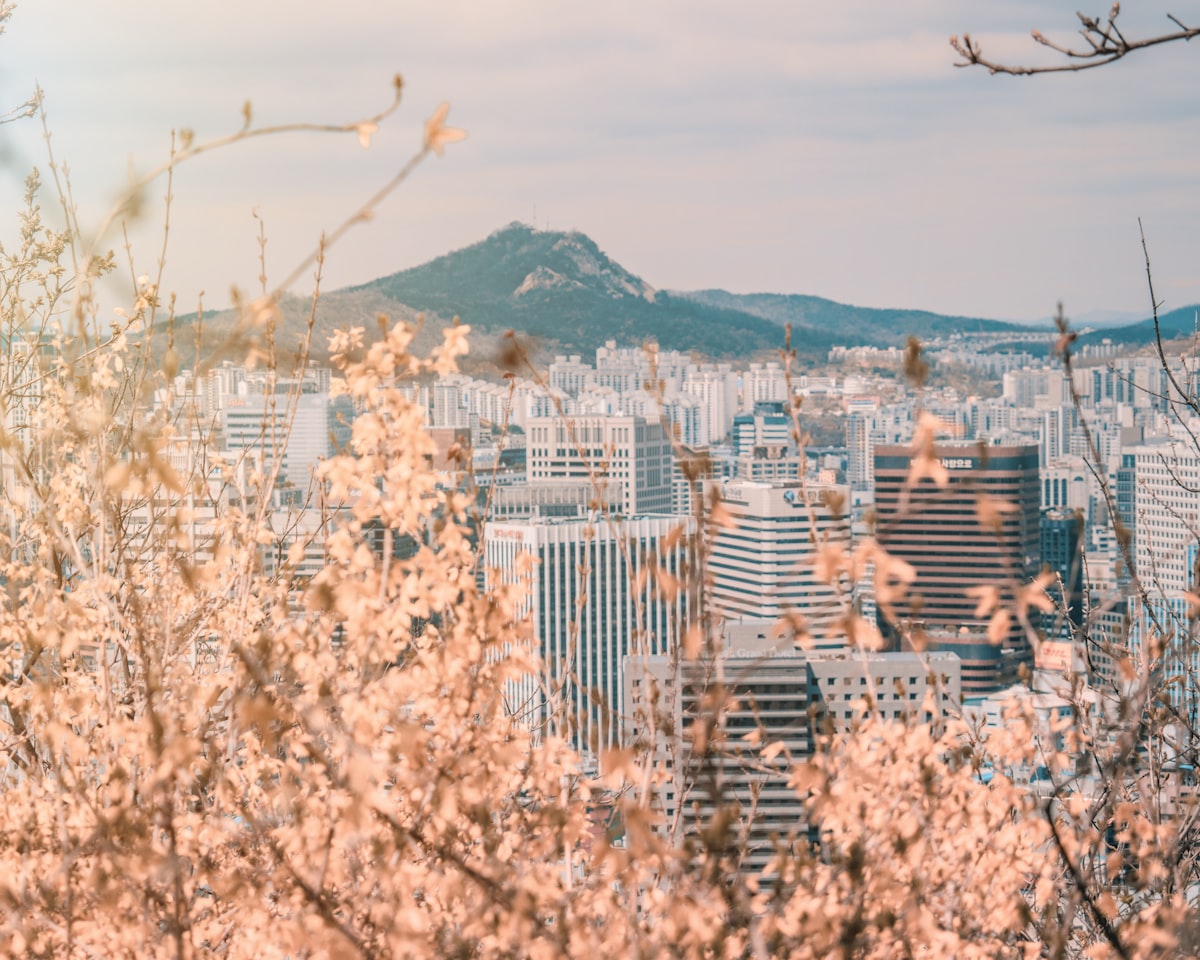
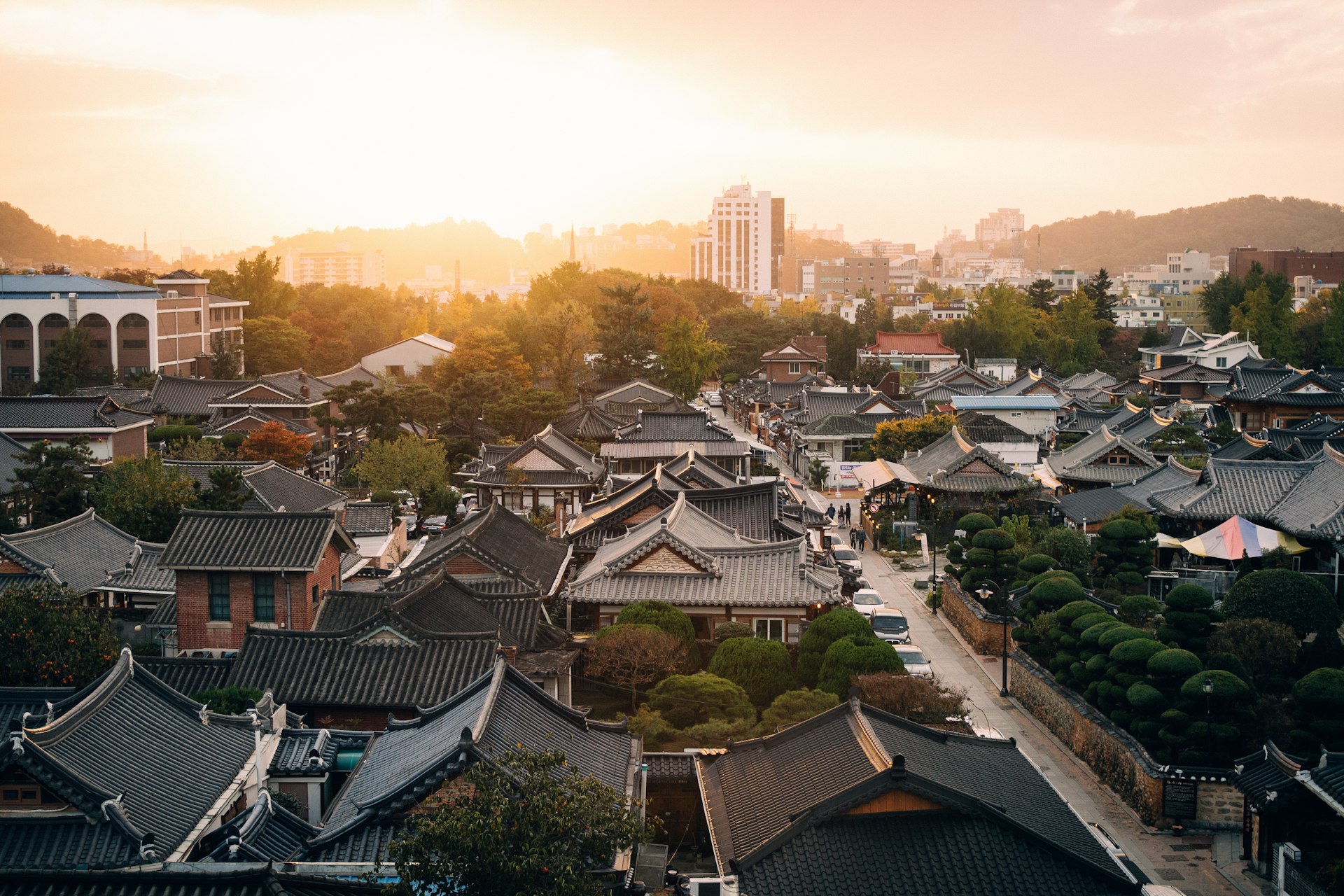
Seoul gets the modern-traditional balance right better than any East Asian capital. Five Joseon-era palaces and six UNESCO sites coexist with the world's cleanest subway.
Whole neighborhoods reward walking — Bukchon Hanok Village, Ikseondong, and Seochon are afternoon-on-foot territory. The Han River threads the city's spine with 12 parks; sunset from Yeouido is the most-photographed view.
Food is the through-line: Gwangjang Market for street food, Mapo for Korean BBQ, Gangnam for fine dining. Subway signage is bilingual and safety is excellent — most travelers walk at 11pm without concern.
What makes Seoul worth the flight:
8 hours: Gyeongbokgung's changing-of-the-guard (free, 10am and 2pm), a Bukchon Hanok Village walk, then a Gwangjang Market street-food crawl.
48 hours: add N Seoul Tower at sunset, a Han River bike ride from Yeouido, Hongdae nightlife, plus Myeongdong skincare and Korean BBQ in Mapo.
A week: book a DMZ tour 24-48 hours ahead, hike Bukhansan, and slow-walk the palaces. Spring brings cherry blossoms at Yeouido (April 1-10 peak); autumn delivers foliage at Namsan (mid-October to early November).
Best neighborhoods to explore:
The central tourist hub — densest concentration of skincare shops, street-food carts, and mid-range hotels. Loud, crowded, and where most first-timers should base, within walking distance of Namdaemun Market and Gyeongbokgung.
Seoul's youth-culture epicenter around Hongik University: indie venues, late-night clubs, themed cafes, and the best street performances. It gets rowdy on weekends — stick to well-lit main streets after midnight.
The modern business and luxury district south of the Han River — Samsung HQ, major K-pop offices, COEX, Lotte World Tower. Hotels skew expensive but it's quieter, reading more LA than Tokyo.
A preserved hanok neighborhood between Gyeongbokgung and Changdeokgung: narrow alleys, craft shops, tea houses, and several hanok guesthouses run as boutique hotels. Quiet residential streets — still a working neighborhood.
Seoul's most international neighborhood — Turkish, Indian, Mexican, and Middle Eastern restaurants alongside Korean spots. Yongsan-gu hosts the US embassy, with good access to the Han River and Namsan Park.
Don't miss:
Gyeongbokgung Palace
Joseon dynasty's main royal palace; free changing-of-the-guard at 10am and 2pm. Admission ₩3,000 (about $2). Closed Tuesdays.
Browse Gyeongbokgung Palace tours →Bukchon Hanok Village
Preserved traditional neighborhood between two palaces, with narrow alleys, craft shops, and tea houses. Free to walk; keep voices low — people live here.
Browse Bukchon Hanok Village tours →N Seoul Tower (Namsan)
Seoul's iconic observation tower on Namsan Mountain. Cable car ₩14,000 round trip ($9.30); observation deck ₩21,000 ($14). Sunset is peak time.
Browse N Seoul Tower (Namsan) tours →Gwangjang Market
Seoul's most famous street-food market — bindaetteok, mayak gimbap, tteokbokki, live octopus. Most items ₩3,000-₩10,000 ($2-$7).
Browse Gwangjang Market tours →Han River Park (Yeouido or Banpo)
Free riverside parks with bike rentals and sunset views. The Banpo Bridge Rainbow Fountain runs hourly evening shows April-October.
Browse Han River Park (Yeouido or Banpo) tours →DMZ (Demilitarized Zone)
Half- or full-day tours to the North Korean border from $107-$170 per person. Advance booking required (24-48 hours); bring your passport.
Browse DMZ (Demilitarized Zone) tours →Changdeokgung Palace & Secret Garden
UNESCO palace whose Secret Garden requires a guided tour. Combined admission ₩8,000 ($5.30). English tours at 11:30am and 2:30pm.
Browse Changdeokgung Palace & Secret Garden tours →Mubboo Verdict:
Seoul is the most underrated major Asian capital for first-time East Asia travelers. Tokyo gets the press, but Seoul is cheaper, more walkable, and delivers a denser cultural experience per day. Base in Myeongdong for a first trip and plan 4-6 days.
🎟️ Top activities in Seoul
Ranked by traveler ratings and recent booking volume.
Seoul Vegan & Vegetarian Gwangjang Market Food Tour (11 Tastings)
$89.00DMZ 2nd Tunnel, Pocheon Sky Bridge & Waterfall Tour from Seoul
$107Traditional Korean 6-Dish Cooking Class + Hidden Alley Tour Seoul
$87.00Source: Viator · Prices in USD · Affiliate links.
🧳 What do you need to know before flying to Seoul?
🛂 Do Americans need a visa for Seoul?
Visa-free for US passports up to 90 days · K-ETA currently waived through Dec 31, 2026.
US passport holders do not need a visa for tourism or short business up to 90 days. South Korea's K-ETA is currently waived for US citizens through December 31, 2026 under a temporary exemption, so you do not need to file one during the waiver window. [GOV]
Always reconfirm at k-eta.go.kr and travel.state.gov before booking — exemptions can change. Keep your passport valid six months past departure; immigration may ask for a return ticket. [GOV]
🕐 What's the time difference?
Seoul is +17h ahead of San Francisco (+16h during US daylight saving).
Korea observes no daylight saving, so the offset shifts twice a year with California's clocks. Westbound jet lag is harder — you cross the date line and lose a calendar day, landing after dark.
Force 90 minutes of direct daylight after arrival to reset faster. The eastbound return lands the same calendar day you departed Seoul.
🚇 How do you get from the airport to the city?
Incheon Airport to central Seoul: 28 miles west of the city center.
| Option | Time | Cost | Best for |
|---|---|---|---|
| AREX All-Stop Train | 58 min | ₩4,750 (~$3.15) | Solo budget travelers, light luggage |
| AREX Express Train ✅ | 43 min | ₩11,000 (~$7.30) | Editor's pick — couples, families, fastest non-taxi |
| Airport Limousine Bus | 60-90 min | ₩10,000-₩18,000 (~$6.60-$11.90) | Hotels with a direct bus stop, heavy luggage |
| Taxi | 60-90 min | ₩70,000-₩90,000 (~$46-$60) | Late-night arrivals, 3+ travelers, door-to-door |
Editor's pick: AREX Express to Seoul Station, then a ₩6,000-₩12,000 taxi — about $20 for two travelers beats every option on cost and speed. Fares as of 2026.
💷 What about money and tipping?
South Korean Won (KRW) · cards accepted almost everywhere · no tipping.
The won typically trades around ₩1,300-₩1,500 per dollar — check current rates before exchanging. Visa, Mastercard, and Amex work even at many street stalls; carry ₩50,000-₩100,000 cash for traditional markets.
A T-money transit card (₩4,000 at any CU or 7-Eleven) is essential for subway, bus, and most taxis. Do not tip — it's considered awkward.
Seoul currency snapshot
1 USD = 1,549 KRW
1 KRW = $0.0006 USD
Korean Won
Cash
ATMs offer the best rate. Avoid airport currency desks.
Tipping
T-money transit card recommended. Cards widely accepted. No tipping culture; do not add gratuity.
Cards
Visa and Mastercard widely accepted. Tell your bank before you go.
Source: open.er-api.com · Updated Jul 1, 2026 · Rates fluctuate — check before booking.
📱 Will your phone work?
Activate an eSIM before takeoff for instant data on arrival.
Korean networks (KT, SK Telecom, LG U+) all run 5G across Seoul. Country code is +82; drop the leading 0 from local numbers when dialing in.
ICN, subway stations, cafes, and convenience stores all offer free Wi-Fi, so short central trips can skip the eSIM. Emergency calls work without a SIM.
☁️ Seoul climate overview
Best: Apr, MayAvoid: SepHistorical highs, lows, and rainfall by month. Plan packing and outdoor time around the extremes.
Jan
36°/22°F
0.8″ rain
Feb
36°/20°F
0.2″ rain
Mar
53°/34°F
1.8″ rain
Apr
63°/43°F
4.1″ rain
May
71°/54°F
4.0″ rain
Jun
83°/67°F
4.0″ rain
Jul
90°/76°F
9.2″ rain
Aug
88°/75°F
8.1″ rain
Sep
79°/67°F
11.7″ rain
Oct
67°/54°F
6.3″ rain
Nov
54°/38°F
0.6″ rain
Dec
38°/24°F
1.8″ rain
Source: Open-Meteo Archive API · 2025 historical data · Updated June 2026
Ready to lock in your fare? Search live prices below:
✈️ Ready to book? Compare San Francisco to Seoul flights
Search flights →🛫 Flying from San Francisco — airport tips
ICN Terminal 1 — Asiana, United, Air Premia (Asiana, United, Air Premia)
- Asiana Lounge (Concourse, near Gate 25) is the best Star Alliance option for non-Polaris travelers
- United Polaris Lounge at T1 is a 2024-renovated space; Air Premia has none, but Priority Pass holders can use Matina or Sky Hub Lounge
ICN Terminal 2 — Korean Air, Delta, Air France, KLM (Korean Air)
- Korean Air Prestige Lounge (T2 East Wing) is the largest SkyTeam lounge in Asia — quiet dining, shower suites
- T2 is far less crowded — security and immigration averaged 8 minutes vs 18 at T1 in 2025; connecting T1↔T2 uses the free shuttle, so allow 90 minutes
SFO International Terminal — Area A (Korean Air) / Area G (others) (All carriers)
- Korean Air departs SFO International Terminal Boarding Area A; Asiana, United, and Air Premia all use Boarding Area G
- United domestic feeders arrive at Terminal 2/3 — allow 75 minutes to reach Area G
🚐 Skip the hassle? Book a private airport transfer
Fixed price, meet & greet at arrivals, door-to-door service
💡 Insider tips: San Francisco to Seoul
Korean Air business saver inventory opens 330 days out — set a calendar alertMubboo original data
Korean Air loads Prestige Suites saver award inventory exactly 330 days before departure, and for peak dates (April blossom, October foliage) those seats often vanish within 72 hours of release.
Search availability on the British Airways Executive Club site (cleanest interface — Avios don't redeem on Korean Air, but the search works), then transfer 88,000 Virgin Atlantic points from Amex and book with Virgin — beating Aeroplan's 75,000 miles plus $180 in fees.
Tuesday/Wednesday SFO departures save an average $110 vs Friday/SundayMubboo original data
We tracked SFO-ICN fares across major booking platforms through 2025, and midweek departures (Tuesday/Wednesday) averaged 12% cheaper than weekend ones on identical itineraries. The pattern holds across all four carriers.
Asian carriers price for Korean business demand, which clusters Thursday outbound, so shifting two days earlier captures the off-peak band — pair it with a Wednesday return for another $60-$140 off.
Air Premia's 4-5x weekly schedule constrains dates — verify before bookingMubboo original data
Air Premia operates SFO-ICN 4-5 days a week outside summer peak — typically Monday, Wednesday, Friday, Saturday, Sunday with Tuesday/Thursday gaps. Summer (June-August) scales to daily.
If you're date-fixed — an anniversary, a business meeting — check the grid before assuming Air Premia is an option. When dates don't line up, Asiana on the same Star Alliance tier is the cleanest daily fallback at $50-$150 more.
Pre-book AREX Express seats from the airport, not at Seoul Station
AREX Express needs an advance seat reservation; the All-Stop doesn't. Arriving with heavy bags, use the reservation kiosk in arrivals (Level B1, near the platform) rather than the Seoul Station counter at peak times.
Express runs every 25 minutes at ₩11,000 (~$7.30); the All-Stop runs every 12 minutes, takes 58, and costs ₩4,750 — fine solo, tedious with checked bags.
Skip United Basic Economy on a transpacific flight — no exceptions
United Basic Economy on SFO-ICN includes no checked bag, last boarding group, no seat selection, and no upgrades — typically $60-$120 below standard economy.
On an 11.5-hour crossing, paying $120 to guarantee a bag, a chosen seat, and upgrade eligibility is a one-way decision. Air Premia's Standard fare includes a 23 kg bag at fares below United Basic on most dates — book Air Premia instead.
Korean Air Prestige Suites have privacy doors — request center seats for couples
The 787-9 Prestige Suites layout is 1-2-1, and the center pair (D/G) share a low partition that drops on request — the best couples' business product on the Pacific.
Window seats suit solo travelers thanks to the suite door angles, but couples should request 4D/4G or 5D/5G. Seat selection is free on all Prestige fares, so lock the pair at booking.
👥 Who flies this route — and what they should know
Family of four visiting Korean relatives
Featured this monthRecommended: Asiana A350-900 economy, afternoon SFO departure (~1pm) arriving ICN evening next day.
Four seats with checked bags run roughly $3,200-$4,800 round trip total — below Korean Air for near-equivalent service. The A350 is quieter than United's 777, the crew is Korean-fluent, and Korean meals are standard.
Mubboo Pick: Asiana for Korean-American families — language and cultural touchpoints matter more than the points earn. Reserve seats together and book direct to dodge OTA name-correction errors. Avoid Lunar New Year week — fares spike 35% and seats together vanish.
First-time Seoul pop culture tourist
Recommended: Air Premia Premium Economy, 787-9, late-evening SFO departure (~11pm) arriving ICN late afternoon next day.
The premium-wide seat at $1,100-$1,650 round trip undercuts United Premium Plus by $200-$400 on identical airframes. You'll land Terminal 1 with daylight left and take the AREX Express for $7.30 to Hongdae or Myeongdong before dinner.
Mubboo Pick: Air Premia Premium Economy for first-timers who want comfort without the $4,000 business spend. Book 8-10 weeks out, target Tuesday/Wednesday, and skip United Basic Economy — the 31-inch 777 seat is miserable for 11.5 hours.
Business traveler with Samsung or LG meetings in Gangnam
Recommended: Korean Air Prestige Suites on the 787-9, midday SFO departure (~12pm) arriving ICN late afternoon next day.
The door-equipped suites deliver real lie-flat sleep across the 11.5-hour block, and the SkyTeam Delta SkyMiles earn suits US elites. Korean Air arrives ICN Terminal 2 — the quieter terminal for fast immigration.
Mubboo Pick: Korean Air over United Polaris — the suite hard product and cabin service are two notches better. Book 14-20 weeks ahead for Saver business at $4,200-$4,800; closer-in fares jump past $5,600.
Points redemption aspirational flyer
Recommended: Korean Air 787-9 Prestige Suites for 88,000 Virgin Atlantic points one-way (1:1 from Amex Membership Rewards) — the best business redemption from the West Coast to Asia.
Virgin's taxes and fees on Korean Air awards run $90-$180, well below Aeroplan's $180-$240. Search availability on the British Airways Executive Club site, then book through Virgin.
Mubboo Pick: this over Aeroplan's 75,000-mile rate. Set an alert for 330 days out; Korean Air loads saver inventory on a rolling 330-day schedule and peak seats vanish within 72 hours. Chase doesn't transfer to Virgin, so this is Amex-only.
Digital nomad spending a month in Seoul
Recommended: Air Premia Standard economy, Tuesday or Wednesday late-evening SFO departure during the February or early-November cheap bands.
Round trips hit $720-$890 in those windows on the 787-9 with 35-inch pitch — more legroom than United or Asiana. A month-long stay sits inside the 90-day visa-free window, and the K-ETA waiver removes the pre-arrival step through 2026.
Mubboo Pick: Air Premia for the price-to-pitch ratio. Buy a 30-day eSIM before takeoff and grab a T-money card at any arrivals CU. Avoid Lunar New Year and Chuseok weeks — fares spike 30-40%.
Couple on cherry blossom anniversary trip
Recommended: Korean Air Premium Economy on the 787-9, late-March or early-April departure landing in the April 1-10 peak-bloom window.
Yeouido Hangang Park and Seokchon Lake hit peak bloom then. Korean Air Premium Economy runs $1,800-$2,400 per person at 38-inch pitch — far better than economy for the 11.5-hour flight.
Mubboo Pick: Korean Air over Air Premia here because its daily schedule lets you pin the exact arrival date. Book 16-20 weeks ahead — bloom flights sell out 90+ days out. Base in Yeouido or Jamsil for walking access.
⚖️ Flight delayed or canceled?
South Korea has no EU261-equivalent passenger compensation. For US-origin flights, US DOT rules apply: tarmac delays over 3 hours on US carriers trigger compensation, and cancellations entitle you to a full refund regardless of fare type if you decline rebooking.
Korean Air and Asiana follow Korean Ministry of Land guidelines providing meals and accommodation for delays over 4 hours, but no cash. For schedule changes of 90+ minutes, all four carriers allow free rebooking or refund — request it in writing within 24 hours.
📱
Free option: Free first: ICN, most subway stations, cafes, and convenience stores have free Wi-Fi. Staying under 4 days in central Seoul? Skip the eSIM and pair free Wi-Fi with Naver Maps offline mode.
Activate a Korea eSIM before takeoff for instant data on arrival. KT, SK Telecom, and LG U+ all run 5G across Seoul, so you're connected the moment you clear immigration.
🛡️
Free option: Free first: check your card before buying a policy. Chase Sapphire Reserve and Amex Platinum include trip cancellation and emergency medical evacuation when you pay for the flight with the card — often enough for trips under 21 days.
Trip insurance with medical coverage is the right call for an 11.5-hour Pacific crossing. Korean care is excellent, but out-of-pocket costs for tourists can run $400-$1,200 a day without coverage.
🚆
Free option: Free first: the AREX Express is the editor's pick at ₩11,000 (~$7.30) — 43 minutes with luggage space. A last-mile taxi from Seoul Station is ₩6,000-₩12,000, so two travelers pay about $20 versus $55+ for a private car.
A private transfer from ICN to your hotel is the easiest option after an 11.5-hour flight, especially with luggage or kids. Fixed-rate door-to-door service runs $55-$85 to central Seoul.
Emergency contacts in Seoul
Frequently asked questions about San Francisco to Seoul flights
11h 30m westbound and 10h 45m eastbound — the gap is Pacific jet stream tailwinds on the return. All four carriers share the great-circle routing north of Hawaii, so block times barely differ. Seoul runs 17 hours ahead (16 during US daylight saving).
Flights from San Francisco
Popular Seoul routes
Researched by Mubboo Editorial Team · Reviewed by Richard Lee, Founder
Prices from Aviasales. Seasonal advice updated: July 2026 · Last editorial review: 2026-06-23 · Government info: travel.state.gov
Prices last updated just now · cached fares aggregating 800+ airlines and agencies · Check current prices →
M verdicts are based on editorial research — not pulled from a database.