Where to Stay in New York
From $120/night (budget) to $700+ (luxury) · 5 neighborhoods compared
For first-time visitors, Midtown Manhattan is the unbeatable hub: walk to Times Square, Broadway, and Central Park, with hotels from $180-350/night. If you want cobblestone charm, Downtown’s Financial District puts you near the Statue of Liberty and Wall Street luxury. For a hipper, local vibe, Brooklyn offers craft coffee and skyline views at sometimes lower prices. Families love the Upper West Side’s museums and quiet streets, while nightlife seekers gravitate to Chelsea’s clubs and the elevated High Line.
Mubboo Verdict: Stay in Midtown if it's your first time — you’ll walk to icons and never need a taxi. Move to Downtown if you prefer cobblestones over neon, or Brooklyn for a creative hideaway with skyline views.
First Night Tip
Most US flights land at JFK around 3pm-5pm, LaGuardia mid-afternoon, or Newark at all hours. JetBlue's frequent JFK service from the West Coast and United's hub at Newark give plenty of options.
From JFK: take the Long Island Rail Road (LIRR) to Penn Station — 35 minutes, about $15. You'll be in Midtown with time for dinner. Trains run until midnight.
For late-night arrivals or LaGuardia landings: the M60 bus from LGA to Harlem takes 45 minutes ($2.90), then transfer to the subway downtown. Or grab a taxi to Midtown for a flat $70 from JFK.
Where these neighborhoods sit
How far apart the areas are, and how you get in from the airport. ★ = Mubboo Top Pick.
The neighborhoods, ranked
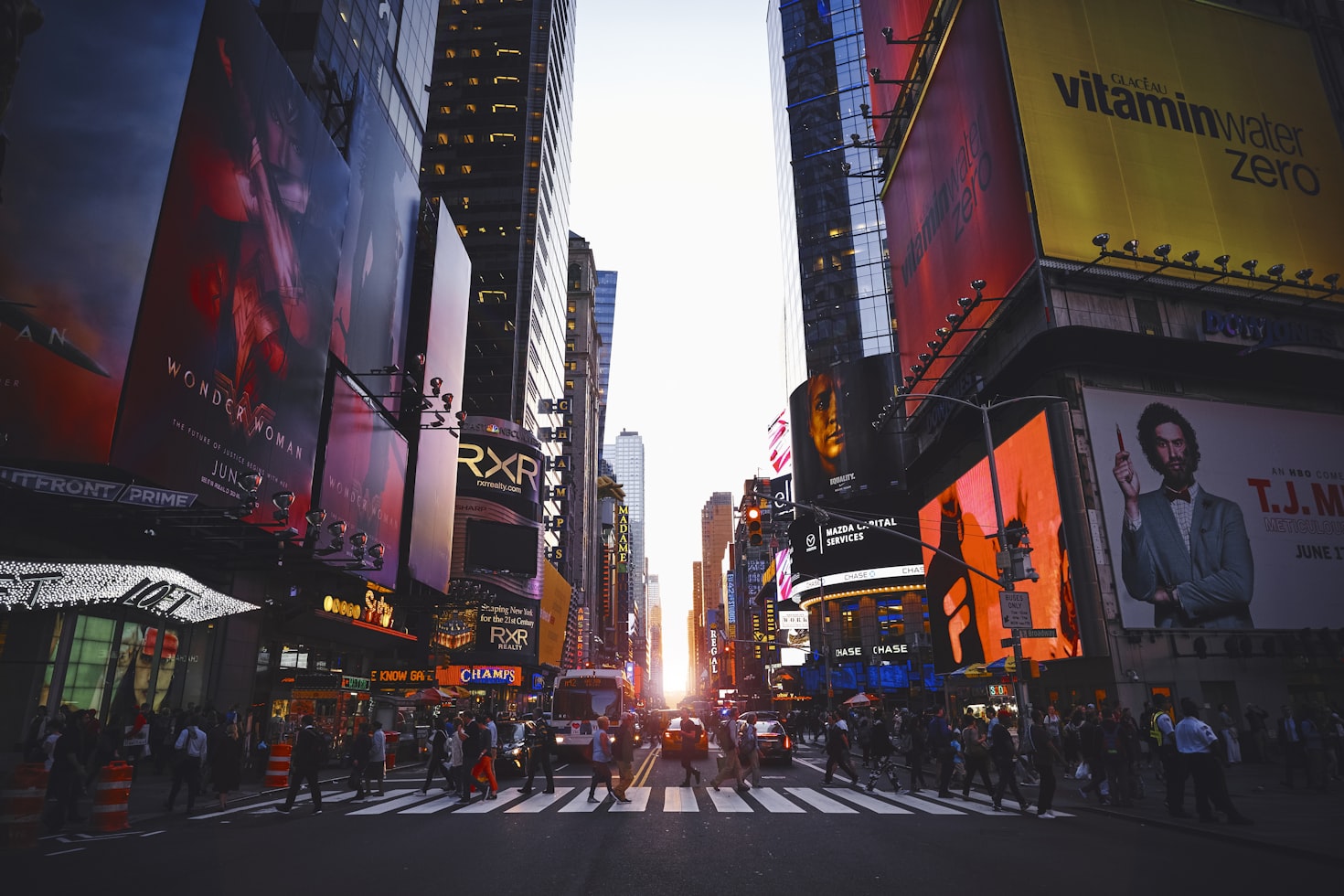
Midtown Manhattan is the classic postcard, where neon billboards bathe Times Square in perpetual glow and Broadway’s marquees light up 42nd Street. It’s the city’s beating heart — chaotic, dazzling, and alive until 4am. Downtown, the Financial District and Tribeca mix cobblestone streets with glass towers; you’ll walk past the New York Stock Exchange by day and sip cocktails in converted warehouses by night. Across the East River, Brooklyn offers a creative escape: brownstone-lined streets in Park Slope, indie boutiques in Williamsburg, and the waterfront promenade with that iconic Lower Manhattan skyline. The Upper West Side feels like a polished village — think museums, sidewalk cafes, and a slower pulse between Central Park and the Hudson River. Chelsea merges industrial grit with high culture, where art galleries rub shoulders with High Line greenery and a thriving LGBTQ nightlife. If it’s your first time, plant yourself in Midtown — you’re steps from the 1 train and the city’s greatest hits, from Rockefeller Center to the chaos of Times Square at midnight.
1. Midtown
9.2 / 10The classic NYC postcard — walk to everything
Price: $180-350/night
Transit: Times Square-42nd St (1/2/3/7/N/Q/R/S) + Penn Station (Amtrak/LIRR)
Food: 24h pizza joints, Altair’s lively bar, Lulla’s Italian-American comfort, Katz’s Deli
Vibe: Neon canyon streets, the scent of roasted nuts, a constant rumble of yellow taxis and crowd chatter echoing off skyscrapers.
Midtown puts you at the gravitational center of NYC’s greatest hits. From your hotel, you can walk to Top of the Rock for a skyline panorama, then catch a Broadway show at 8pm without a cab.
The Times Square-42nd Street station is a transit superhero, linking 11 subway lines — you can reach the Met Museum in 15 minutes or Brooklyn Bridge in 20.
Hotels here pack a punch: $180-220/night gets you a clean, efficient room near 8th Avenue. For $300-350, expect Empire State Building views and a queen bed. Grab a slice at Joe’s Pizza on Broadway at 2am — the quintessential NYC nightcap.
This is the city’s engine, not its quiet corner. You’ll trade serenity for the electric hum that makes New York iconic.
Best for
First-timers who want walkable access to Times Square, Broadway, and Central Park, and unbeatable transit to every borough.
Skip if
You’ll eye-roll at selfie-stick crowds and thrift shops replaced by chain stores — try the Upper West Side for a calmer, more residential rhythm.
2. Downtown8.8 / 10Cobblestone history meets skyscraper luxury💰 $200-500/night+ Full breakdown
Transit: Wall St (2/3), Fulton Center (A/C/J/Z/2/3/4/5), PATH to NJ
Food: Michelin-starred tasting menus, Stone Street’s outdoor bars, Eataly’s marketplace
Vibe: Skyscraper canyons soften into narrow, lamp-lit streets after 7pm, when suits vanish and cobblestone patios fill with laughter.
The Financial District and Tribeca form a striking blend of 18th-century lanes and glass monoliths. Wander over the Brooklyn Bridge at sunrise, then visit the 9/11 Memorial — both within a 10-minute walk. Fulton Center connects 10 subway lines, whisking you to Midtown in 15 minutes.
Accommodations here lean upscale: $250-350/night bags a boutique room with exposed brick. The Wall Street Hotel (from $707) delivers five-star river-view luxury. Artezen Hotel (from $270) offers a sleek, modern stay at a midrange price.
By night, the area can feel sleepy, but that’s its charm — you get Manhattan without the neon roar.
Best for
History buffs, business travelers with Wall Street meetings, and anyone seeking a more composed, grown-up Manhattan.
Skip if
You crave street energy after dark — many restaurants pack up by 10pm, and the subway quiets down. Head to Brooklyn for late-night buzz.
3. Brooklyn8.5 / 10Brownstone charm and a locals-only feel💰 $150-350/night+ Full breakdown
Transit: L train (Williamsburg), 2/3/4/5 (Downtown Brooklyn), F/G (Park Slope)
Food: Smorgasburg food market, Roberta’s pizza, Juliana’s under the bridge, craft coffee on every corner
Vibe: Sunlight filters through ginkgo trees onto stoop-lined streets; at dusk, rooftop bars light up with Manhattan’s silhouette across the river.
Brooklyn is not a single neighborhood but a collection of distinct villages. Williamsburg hums with indie shops and live music; Park Slope is all strollers and brownstones; Downtown Brooklyn bridges the two with cultural venues like the Barclays Center.
The walk across the Brooklyn Bridge lands you in Lower Manhattan in 30 minutes.
Hotels here offer more space for your dollar: $150-250/night nets a Williamsburg loft-style room. Kasa Lantern Lower East Side (from $327) blends Brooklyn cool with Manhattan access. The waterfront Brooklyn Bridge Park gives you that classic skyline shot without the crowds.
You’ll feel like a resident, not a tourist — but expect to commute 20–30 minutes to Midtown’s attractions.
Best for
Repeat visitors or slow travelers who prioritize neighborhood cafés, river views, and a creative atmosphere over Times Square proximity.
Skip if
You have a packed itinerary of Midtown museums and shows — the daily commute on the L train will eat into your time.
4. Upper West Side8.3 / 10Museum-lined avenues and a village calm💰 $180-400/night+ Full breakdown
Transit: 1/2/3 lines along Broadway, B/C lines on Central Park West
Food: Zabar’s bagels, upscale bistros, Amelie wine bar, family-friendly diners
Vibe: Prewar buildings, dog walkers, and stroller traffic hum quietly beneath a canopy of trees stretching toward Central Park.
Bordered by Central Park and Riverside Park, the Upper West Side feels like a polished, intellectual cousin to busy Midtown. You’re 5 minutes from the American Museum of Natural History and 10 from Lincoln Center’s opera house. The Wallace (from $559) is a standout luxury pick with park-view suites.
Dining here is neighborhood-centric: grab breakfast at Absolute Bagels or a slice of challah French toast at Barney Greengrass. Rents are high, so hotel rooms run $200-300 for the standard 25–30㎡, but you get a quiet night’s sleep.
This is the anti-Times Square: cultured, leafy, and almost suburban in rhythm — yet you’re only two subway stops from Midtown chaos.
Best for
Families with kids, museum lovers, and anyone who needs a calm retreat after a hectic day (jet-lagged West Coast fliers, we see you).
Skip if
You want 2am dining and neon-lit thrills — the UWS rolls up its sidewalks early, and Broadway’s shops close by 9pm.
5. Chelsea8.0 / 10Art, nightlife, and an elevated park💰 $180-450/night+ Full breakdown
Transit: C/E lines on 8th Ave, 1 train on 7th Ave, plus the High Line’s linear park
Food: Da Andrea Chelsea’s authentic pasta, Boucherie West Village’s French fare, Chelsea Market’s global bites
Vibe: Industrial galleries transform into thumping clubs after dark; by day, the High Line’s wildflowers brush against converted warehouses.
Chelsea straddles art-world elegance and LGBTQ nightlife. Spend an afternoon gallery-hopping, then climb the High Line for a sunset stroll above the city’s streets. The neighborhood’s edge spills into the West Village and Meatpacking District, giving you access to Boucherie West Village and its lively jazz bar.
Hotels here occupy converted factories and sleek new builds. $200-300/night gets you a design-forward room steps from the galleries. Da Andrea Chelsea (★4.8) is a Mubboo top pick for authentic Italian plates after a long day.
While it lacks a single iconic landmark, Chelsea rewards curious travelers with a sense of discovery.
Best for
Art lovers, nightlife seekers, and couples who want a chic, walkable neighborhood without the Midtown crowds.
Skip if
You’re traveling with kids — the bar scene dominates after dark, and the nearest playground is a trek to Hudson River Park.
Compare every area at a glance
| Area | Price/night | Transport | Food | Nightlife | Safety | Vibe |
|---|---|---|---|---|---|---|
| Midtown ★ | $180-350 | ⭐⭐⭐⭐⭐ | ⭐⭐⭐⭐ | ⭐⭐⭐⭐ | ⭐⭐⭐⭐ | Electric, 24/7 tourism energy |
| Downtown | $200-500 | ⭐⭐⭐⭐ | ⭐⭐⭐⭐⭐ | ⭐⭐⭐ | ⭐⭐⭐⭐⭐ | Polished, historic, quietly upscale |
| Brooklyn | $150-350 | ⭐⭐⭐ | ⭐⭐⭐⭐ | ⭐⭐⭐⭐ | ⭐⭐⭐⭐ | Creative, local, skyline views |
| Upper West Side | $180-400 | ⭐⭐⭐⭐ | ⭐⭐⭐ | ⭐⭐ | ⭐⭐⭐⭐⭐ | Leafy, intellectual, family-centric |
| Chelsea | $180-450 | ⭐⭐⭐⭐ | ⭐⭐⭐⭐ | ⭐⭐⭐⭐⭐ | ⭐⭐⭐⭐ | Artistic, chic, after-hours pulse |
What your budget actually buys
New York’s budget range ($120-180/night) buys a clean, compact room with a bed and maybe a window onto an air shaft — think Pod Hotels or a shared bathroom. You’ll sacrifice space and silence, but you’ll be steps from a subway stop. At the midrange tier ($200-400), rooms grow to 25–35㎡, beds improve, and you’ll often get a proper lobby and maybe a rooftop bar. This is the sweet spot for most visitors. Luxury ($500-700+) delivers skyline views, expansive suites, and full-service amenities like spas and Michelin-starred restaurants. The Wall Street Hotel (from $707) exemplifies this with river views and butler service. No matter your budget, book early — prices leap during the holidays and summer weekends, when even a hostel bed can hit $100.
A 15–20㎡ room with a double bed, often a private bath but sometimes shared; window might face a wall. Expect minimal amenities but superb location near subway lines.
Best areas: Midtown
Interfaith 21 (from $144) is a stellar budget find in Midtown — clean, simple, and central.
25–35㎡ with a queen bed, a view (maybe of a street or courtyard), and a proper bathroom. Boutique charm or reliable chain comfort — think Artezen Hotel Downtown (from $270).
Best areas: Midtown, Downtown, Brooklyn, Chelsea
The sweet spot for a classic NYC experience with room to breathe and a few design touches.
A 40㎡+ suite with skyline or park views, high-end linens, marble bathrooms, rooftop bars, and concierge service. The Wallace (from $559) and The Wall Street Hotel (from $707) define this tier.
Best areas: Downtown, Upper West Side, Midtown
Book when you want the NYC movie montage — but compare Amex Fine Hotels perks for upgrades.
Where you should stay, by traveler
First-timers should land in Midtown, where the sidewalks are your itinerary. Couples gravitate to Chelsea’s romantic High Line strolls and West Village wine bars, or the Upper West Side for museum dates. Families with kids need the UWS’s parks and quiet streets, plus easy access to the American Museum of Natural History. Budget backpackers find their tribe in Brooklyn’s Williamsburg hostels or Midtown’s micro-hotels. Business travelers heading to Wall Street settle Downtown, while nightlife seekers thrive in Chelsea’s club scene or Williamsburg’s rooftop bars. Culture vultures make a beeline for the Upper West Side.
First-timer → Midtown
You’re within walking distance of Times Square, Broadway, and Central Park — no subway needed for the big hits.
Honeymoon couple → Chelsea
The High Line’s sunset walks and Da Andrea Chelsea’s intimate pasta dinners set the mood, plus West Village jazz nearby.
Family with kids → Upper West Side
Quiet streets, Central Park playgrounds, and the Natural History Museum across the street — your 6-year-old will sleep well.
Budget backpacker → Brooklyn
Williamsburg hostels and affordable eat-and-drink spots like Smorgasburg keep costs low, and the L train connects you to Manhattan in 20 minutes.
Business traveler → Downtown
Wall Street offices and the World Trade Center are steps away; the Wall Street Hotel’s speed and elegance fit your schedule.
Nightlife seeker → Chelsea
Legendary clubs and a lively LGBTQ scene run until 4am, plus you’re adjacent to Meatpacking’s late-night haunts.
Culture vulture → Upper West Side
Lincoln Center, the American Museum of Natural History, and the New-York Historical Society are all within a 10-minute radius.
When to book for the best price
New York swings between frigid winters and sticky summers. January and February bring the lowest hotel prices (as chilly as 25°F) and Rockefeller Center’s ice rink. Spring (April–June) and fall (September–October) offer near-perfect weather around 65–75°F and Central Park blooms or foliage — but rates crest with tourist demand.
Peak season runs from Thanksgiving to New Year’s, when festive lights push Midtown hotel rates past $500/night. Avoid July 4th weekend and the US Open (late August) unless you book far ahead.
For the best value, target early December or January midweek; book 2-3 months out, especially if using Chase Sapphire points, as award availability tightens fast.
Cheapest seasons
January–February, late July–August (except holidays)
Peak (priciest)
Thanksgiving–New Year, May–June, September–October
Avoid these dates
Thanksgiving week, Christmas–New Year, July 4th weekend
Book this far ahead
2-3 months for best rates; 6 months for luxury suites and peak dates.
Still need flights? Search here:
What to know before you book in New York
Room sizes (vs US)
US average 30㎡; New York hotels average 20–25㎡ — don’t panic, it’s normal. Some budget rooms dip to 15㎡. Expect to live out of your suitcase. Look for properties with a window view and good natural light to offset the tight quarters.
Resort fees and taxes
Many NYC hotels charge a 'facility fee' of $25–50/day on top of the room rate. This covers Wi-Fi, gym access, and sometimes a free drink. Always check the total with tax (14.75% city+state) before booking.
5 red flags on a hotel listing
🚩 Only stock photos — no real room views
Stock images hide tiny rooms, air-shaft views, or dated interiors. Real photos show the actual bed size and window.
What to do: Filter reviews by 'Traveler photos' on booking platforms and look for recent images. If none exist, skip it.
🚩 Too-good-to-be-true rates near Times Square
A $90/night hotel in Midtown during peak season likely has no natural light, paper-thin walls, or is a hostel with no elevator.
What to do: Cross-check the address on Google Street View; if it’s above a neon-lit souvenir shop on 8th Ave, you’ll hear drums until 2am.
🚩 No elevator listed for a 5th-floor walk-up
New York walk-ups are charming but brutal after a long day. Luggage becomes a workout.
What to do: Confirm elevator access in the amenities list, especially in older Downtown or Brooklyn buildings. Look for 'lift' or 'elevator' explicitly.
New York hotel FAQ
Midtown or Downtown — which is better?
Midtown is best for first-timers who want walkable access to Times Square, Broadway, and Central Park. Downtown (Financial District/Tribeca) is ideal if you prefer historic cobblestone streets, waterfront strolls, and a skyline that mixes old and new.
How much do New York City hotels cost per night?
Expect $120-180/night for a budget hotel with small rooms, $200-400 for midrange comfort, and $500-700+ for luxury properties with views and full-service amenities. Prices spike during holidays and peak tourism months.
Is New York City safe at night?
Tourist-heavy areas like Midtown, the Upper West Side, and Downtown are well-lit and busy late into the night. Like any big city, avoid deserted subway cars and stick to main streets. Brooklyn’s popular neighborhoods are safe but stay aware in outer areas.
Should I stay near JFK, LaGuardia, or Newark airport?
No — airport neighborhoods lack NYC’s energy and require long commutes to attractions. Stay in Manhattan or inner Brooklyn and take the train (35-50 minutes) to the airports when it’s time to fly out.
Can I use US credit cards in New York hotels?
Yes, credit cards are accepted everywhere. You can even use points: transfer Chase Sapphire Ultimate Rewards to Hyatt for a stay at the Park Hyatt New York or use Amex Fine Hotels & Resorts for perks.
What’s the best neighborhood for families?
The Upper West Side is our top family pick — quiet streets, easy access to Central Park and the American Museum of Natural History, and spacious hotel suites near Lincoln Center.
When should I book to get the best deal?
Book 2-3 months ahead. Avoid Thanksgiving, Christmas, and summer weekends, when rates skyrocket. January and February see the lowest prices, though you’ll brave cold weather.
Williamsburg or Chelsea for nightlife?
Chelsea is grittier, with legendary clubs and the High Line’s sunset scene. Williamsburg is Brooklyn’s hipster hub with rooftop bars and live music in converted warehouses — better for a low-key, creative crowd.
Keep planning New York
Some links on this page are affiliate links, at no extra cost to you.