Where to Stay in Tokyo
From $60/night (budget) to $500+ (luxury) · 6 neighborhoods compared
Stay in Shinjuku for your first trip to Tokyo — it is the most connected hub on the JR Yamanote line, runs 24 hours, and links direct to Narita Airport. Rooms run $120-280 a night. Pick Asakusa ($80-180) for traditional temples on a budget, Ginza ($200-500+) for luxury and quiet, or Ueno ($60-150) for families near museums. All six areas sit 5-20 minutes apart on one loop line.
Mubboo Verdict: Stay in Shinjuku if this is your first time — it is the most connected hub on the Yamanote line, has 24-hour everything, and puts you 20 minutes from anywhere. Move to Asakusa if you want traditional Tokyo without the neon, or Ginza if you came to splurge.
First Night Tip
Most US flights from NYC or LAX land at Narita between 3-5 PM, or at Haneda late at 10-11 PM. Tokyo runs 14 hours ahead of ET, so jet lag hits hard that first night.
From Narita, take the Narita Express to Shinjuku — about 90 minutes and $30 — and you arrive near 7 PM with time for ramen.
For a Haneda red-eye, the monorail to Shinagawa takes 15 minutes and $5. Stay one night there and move to your real hotel rested in the morning.
Where these neighborhoods sit
How far apart the areas are, and how you get in from the airport. ★ = Mubboo Top Pick.
The neighborhoods, ranked
Tokyo's six main hotel neighborhoods spread along the JR Yamanote loop line, so none is more than 20 minutes from the rest. Shinjuku is the all-rounder — the busiest station on earth, 24-hour convenience, and a direct Narita Express link that makes your first night painless. Asakusa is the traditional pick, with Senso-ji temple steps from your door and the cheapest comfortable rooms, though late-night options thin out. Shibuya runs younger and louder, built around the famous scramble crossing and the best nightlife. Ginza is the luxury strip, quiet at night with the city's top hotels and department stores. Ueno is the budget base for families, ringed by museums and a zoo, and Akihabara is the electronics-and-anime capital for niche travelers. Prices climb from about $60 a night in Ueno to past $500 in Ginza. First-timers should default to Shinjuku and only move if a specific need — tradition, luxury, or a tight budget — points them elsewhere.

1. Shinjuku
9.0 / 10The all-rounder hub
Price: $120-280/night
Transit: JR Yamanote + Metro + Narita Express direct
Food: 24h ramen, Golden Gai bars, depachika food halls
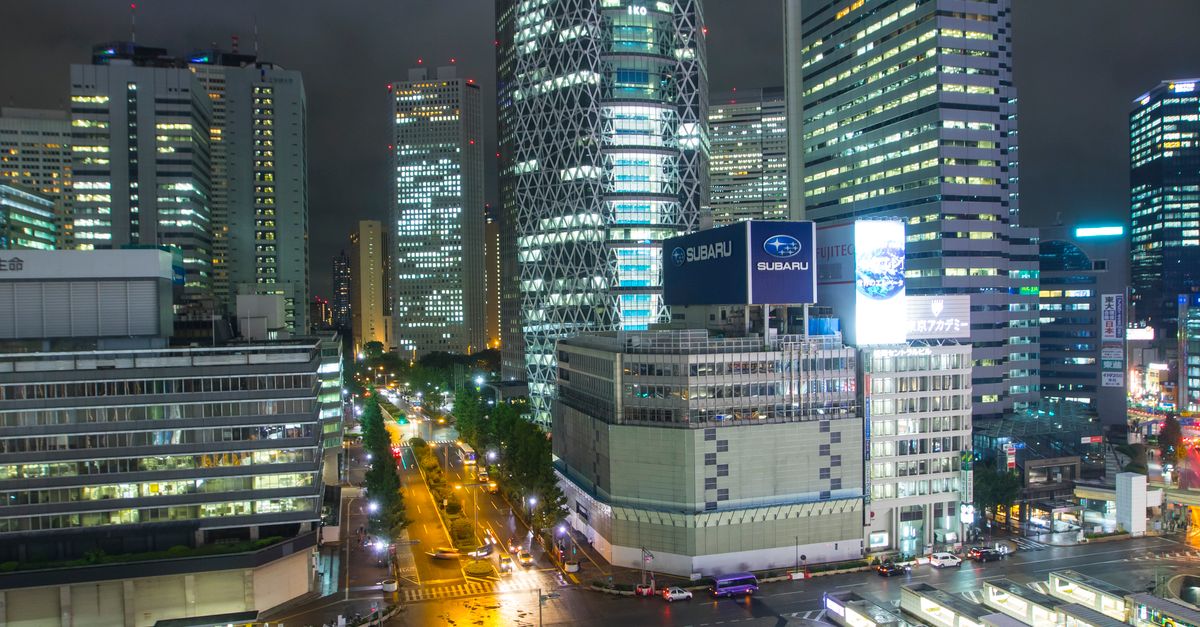
Vibe: Neon signs over wet streets, suit-and-tourist crowds, energy past 2am
Shinjuku Station handles 3.5 million passengers a day — more than any station on earth. You can reach almost anywhere in Tokyo in under 20 minutes with no transfer.
The Narita Express runs direct here, so your jet-lagged first night needs zero subway puzzles. United flies NYC-Narita daily.
Budget hotels cluster around the east exit. About $150/night buys a clean 18㎡ room — small by US standards, where the average is 30㎡, but spotless and often with a shared sento bath.
Best for
First-timers who want maximum connectivity and 24-hour convenience
Skip if
You came for quiet, traditional Japan — Shinjuku is neon, concrete, and commuter crowds
2. Asakusa8.5 / 10Old Tokyo on a budget💰 $80-180/night+ Full breakdown
Transit: Ginza + Asakusa Metro lines; 5 min to Ueno
Food: Tempura counters, monjayaki, riverside beer gardens
Vibe: Lantern-lit temple lanes, rickshaws, low-rise streets that quiet by 10pm
Senso-ji temple sits at the center, and waking up to its lantern-lined approach before the tour buses arrive is the best free thing you will do in Tokyo.
Rooms run $80-180/night, the cheapest comfortable tier of any central area, and traditional ryokan with tatami floors are common here.
The trade-off is fewer late-night options — kitchens close early and the nightlife is across town. Easy 5-minute hop to Ueno for the wider Yamanote loop.
Best for
Culture-first and budget travelers who want temples over nightlife
Skip if
You want late dinners and bars within walking distance of your hotel
3. Shibuya8.3 / 10Young, loud, after dark💰 $130-300/night+ Full breakdown
Transit: JR Yamanote + Metro; 7 min to Shinjuku
Food: Izakaya alleys, late-night ramen, third-wave coffee
Vibe: The scramble crossing, screens five stories tall, crowds until sunrise
Shibuya is built around the world-famous scramble crossing and stays awake longest of any hub. If your trip is about nightlife and people-watching, base here.
Rooms run $130-300/night, a notch above Shinjuku, and newer towers like the Shibuya Stream area skew design-forward.
It is 7 minutes to Shinjuku and 15 to Ginza, so nothing is far. The downside is noise — light sleepers should ask for a high floor away from Center Gai.
Best for
Travelers under 30 and anyone prioritizing nightlife and dining
Skip if
You are a light sleeper or traveling with young kids who need early quiet
4. Ginza8.0 / 10Quiet luxury💰 $200-500+/night+ Full breakdown
Transit: Three Metro lines; 15 min to most hubs
Food: Michelin sushi, department-store basements, hotel afternoon tea
Vibe: Wide boulevards, flagship stores, calm and polished after dark
Ginza is the luxury and shopping strip, home to the city's flagship hotels and the highest concentration of Michelin stars. It is calm at night, which couples and honeymooners value.
Expect $200-500+/night; this is where points pay off — a Chase Sapphire transfer to a partner program can cover a Park Hotel or Conrad stay.
It is central but not a transit hub, so you trade a little connectivity for quiet and class. Department-store food halls here are a destination in themselves.
Best for
Couples, honeymooners, and luxury travelers who want quiet and refinement
Skip if
You are on a budget — even mid-range rooms here start near $200
5. Ueno7.5 / 10Family base by the museums💰 $60-150/night+ Full breakdown
Transit: JR Yamanote + Keisei to Narita; 4 min to Akihabara
Food: Ameyoko market stalls, cheap eats, family izakaya
Vibe: A big park, museums, a zoo, and a working-class market energy
Ueno wraps around a large park with the city zoo and four major museums, which makes it the easy pick for families with kids who need daytime space.
Rooms are the cheapest central tier at $60-150/night, and the Keisei line runs straight to Narita for a smooth airport exit.
It is 4 minutes to Akihabara and on the Yamanote loop, so older sights stay close. Evenings are quieter and the dining is casual rather than refined.
Best for
Families and budget travelers who want museums, a zoo, and low rates
Skip if
You want nightlife or a polished, upscale base
6. Akihabara7.2 / 10Electronics and anime capital💰 $70-160/night+ Full breakdown
Transit: JR Yamanote + Metro; 4 min to Ueno
Food: Themed cafes, standing ramen, conveyor sushi
Vibe: Neon arcades, multi-floor electronics towers, anime billboards
Akihabara is the electronics and anime district, a niche base that delights collectors and gamers and underwhelms everyone else.
Rooms run $70-160/night, and the area is central on the Yamanote loop — 4 minutes to Ueno, 20 to Shinjuku.
The streets are arcade-bright by day and thin out at night beyond the cafes. Choose it for the theme, not for dining range or a romantic mood.
Best for
Gamers, collectors, and anime fans who want their hobby at street level
Skip if
You have no interest in electronics or anime — the area is a one-note base
Compare every area at a glance
| Area | Price/night | Transport | Food | Nightlife | Safety | Vibe |
|---|---|---|---|---|---|---|
| Shinjuku ★ | $120-280 | ⭐⭐⭐⭐⭐ | ⭐⭐⭐⭐ | ⭐⭐⭐⭐⭐ | ⭐⭐⭐⭐ | Urban, 2am energy |
| Asakusa | $80-180 | ⭐⭐⭐ | ⭐⭐⭐ | ⭐ | ⭐⭐⭐⭐⭐ | Traditional, calm |
| Shibuya | $130-300 | ⭐⭐⭐⭐ | ⭐⭐⭐⭐⭐ | ⭐⭐⭐⭐⭐ | ⭐⭐⭐⭐ | Young, loud |
| Ginza | $200-500+ | ⭐⭐⭐⭐ | ⭐⭐⭐⭐ | ⭐⭐⭐ | ⭐⭐⭐⭐⭐ | Luxury, quiet |
| Ueno | $60-150 | ⭐⭐⭐ | ⭐⭐⭐ | ⭐ | ⭐⭐⭐ | Museums, family |
| Akihabara | $70-160 | ⭐⭐⭐ | ⭐⭐ | ⭐⭐ | ⭐⭐⭐⭐ | Nerd culture |
What your budget actually buys
In Tokyo, $60-100 a night gets a capsule pod or a 10㎡ business room — clean and functional but tiny by US standards. The $120-200 mid-range tier, the sweet spot, buys an 18-25㎡ room with a private bath and often a shared hot-spring style bath downstairs. Luxury starts near $300 and tops $500 in Ginza, where points transfers from a Chase Sapphire or Amex card stretch the value. Cherry-blossom season and Golden Week add 30-50% across every tier, so the same room swings hundreds of dollars by date.
A capsule pod or a 10㎡ business room — clean, soundproofed, with a shared or pod bathroom. Tiny, but you came to be outside it.
Best areas: Ueno, Akihabara
Good enough — spend the savings on the food.
An 18-25㎡ room with a private bath, often a shared sento or onsen-style bath downstairs, and reliable English check-in.
Best areas: Shinjuku, Asakusa
The sweet spot for most US travelers.
A 40㎡+ room with city views, a club lounge, and a Michelin-level breakfast. Use card points here to soften the rate.
Best areas: Ginza
Worth it for a honeymoon or a milestone trip.
Where you should stay, by traveler
Match the area to your trip, not the other way around. First-timers and business travelers want Shinjuku for its connectivity. Honeymoon couples should book Ginza for quiet luxury. Families do best in Ueno, beside the museums and zoo, on the lowest central rates. Budget backpackers get the most character per dollar in Asakusa, and night owls belong in Shibuya, steps from the bars.
First-timer → Shinjuku
Maximum connectivity and the direct airport link make the first trip effortless.
Honeymoon couple → Ginza
Quiet streets, top hotels, and the best dining for a milestone trip.
Family with kids → Ueno
Museums, a zoo, and a park next door at the lowest central rates.
Budget backpacker → Asakusa
The cheapest comfortable rooms and the most traditional character.
Business traveler → Shinjuku
Three rail networks and 24-hour services keep a packed schedule moving.
Nightlife seeker → Shibuya
The scramble crossing, izakaya alleys, and bars that run until sunrise.
When to book for the best price
Tokyo hotel rates swing hard by date. Cherry-blossom season in late March and April can add 50% to the same room, and Golden Week in early May and Obon in mid-August are nearly as steep.
The cheapest windows are late January to early March (skip New Year) and the June rainy season, around 80°F and humid. Book international stays 2-3 months ahead for the best rates, and avoid US Spring Break and Thanksgiving weeks when flights from NYC and LAX spike.
Cheapest seasons
Late January-early March, June (rainy season)
Peak (priciest)
Late March-April (cherry blossom), Early May (Golden Week), Mid-August (Obon)
Avoid these dates
Dec 29-Jan 3 (New Year), Golden Week, Obon
Book this far ahead
Book 2-3 months ahead for international trips
Still need flights? Search here:
What to know before you book in Tokyo
Room sizes (vs US)
The US average hotel room is about 30㎡; Tokyo averages 15-20㎡. Do not panic — rooms are small but efficient and immaculate.
Plugs and voltage
Japan uses Type A plugs, the same as the US, at 100V. Your chargers work with no adapter, though high-watt hair tools run slightly slower.
Heating and cooling
Most rooms use a single window AC/heat unit, not central air. It is quiet and effective, but expect one unit per room, not a whole-floor system.
WiFi and data
Hotel WiFi is nearly universal and fast, but a pocket WiFi or eSIM is better for navigating transit. Set one up before you fly from the US.
Tipping
There is zero tipping in Japan — at hotels, restaurants, or taxis. Leaving cash on the table is considered confusing, even rude. The price is the price.
Health coverage
Medicare and most US health plans do not cover you in Japan. A travel insurance policy that includes medical evacuation is cheap and worth it for the long flight.
5 red flags on a hotel listing
🚩 Only stock photos in the listing
A listing with no real room photos often hides a dated or tiny space that looks nothing like the renders.
What to do: Filter for listings with guest photos, or check recent reviews for room shots before booking.
🚩 The word "cozy" with no square meters
"Cozy" in Tokyo can mean an 8㎡ room you can touch both walls in at once.
What to do: Look for the actual room size in square meters; under 12㎡ is genuinely tight for two.
🚩 No reviews in the last 6 months
A property that went quiet may have changed management or slipped in quality since renovation.
What to do: Prioritize hotels with steady recent reviews over a high score from two years ago.
🚩 "5-minute walk to the station" with no exit named
Tokyo stations have a dozen exits; the "5 minutes" can be from an exit 10 minutes from yours.
What to do: Drop the address into Google Maps and check the walking route to your actual line.
🚩 Free cancellation but a vague "facility fee"
A few properties advertise free cancellation, then add an onsite service or facility fee at check-in.
What to do: Read the fine print for resort or facility fees and confirm the all-in total before you book.
Tokyo hotel FAQ
Is Shinjuku or Shibuya better for first-time visitors?
Shinjuku wins for first-timers. It has the direct Narita Express link, more 24-hour services, and more budget-to-mid hotels. Shibuya is younger and louder — better if you are under 30 and here for nightlife.
How much do Tokyo hotels cost per night?
Budget capsule and business hotels run $60-100. A comfortable mid-range room is $120-200. Luxury starts around $300 and climbs past $500 in Ginza. Cherry-blossom season adds 30-50%.
Is Tokyo safe at night?
Tokyo is one of the safest major cities on earth — solo travelers walk home at 2am without issue. The usual caution applies in Kabukicho (Shinjuku) and Roppongi, where touts work the bar streets.
Should I stay near the airport on my first night?
Only for very late Haneda arrivals. Stay one night near Shinagawa (15-minute monorail) and move to your real hotel in the morning. From Narita, the express to Shinjuku is easy even at 7pm.
Do I need to speak Japanese at Tokyo hotels?
No. Front desks at international and chain hotels speak English, and check-in kiosks offer English menus. A translation app covers the rest. Smaller ryokan may need more patience.
When is the cheapest time to visit Tokyo?
Late January to early March (excluding New Year) and June rainy season are cheapest. Avoid cherry-blossom late March-April, Golden Week early May, and Obon in mid-August, when rates spike.
Can I use US credit cards in Tokyo hotels?
Yes. Visa, Mastercard, and Amex are accepted at hotels, and a Chase Sapphire or Amex with no foreign-transaction fee saves about 3%. Carry some yen — roughly ¥15,000 ≈ $100 — since small ryokan and izakaya are still cash-first.
Some links on this page are affiliate links, at no extra cost to you.