Prices verified May 24 · Always confirm at the retailer before buying.
For most iPhone owners in 2026, the Apple Watch Series 11 ($299) is the right smart watch — FDA-cleared ECG, hypertension notifications, brighter always-on display.
Android users on Samsung phones should pick the Galaxy Watch 8 ($349.99); off-grid adventurers should stretch to the Apple Watch Ultra 3 ($779) for satellite SOS.
Which smart watch is right for your wrist in 2026?
- Best overall (iPhone):Apple Watch Series 11—$299→
- Best Android flagship:Galaxy Watch 8—$350→
- Best value iPhone pick:Apple Watch SE 3—$239→
- Best budget under $100:Amazfit Bip 6—$79→
- Best for runners:Garmin Forerunner 165—$200→
- Best for adventurers:Apple Watch Ultra 3—$779→
- Best for Pixel / Google AI:Pixel Watch 4—$360→
⚠️ Skip any sub-$30 no-name "smart watch" on Amazon. They ship without FCC-cleared sensors, no real GPS, and 4-12 month failure rates. The legitimate US budget floor is the Amazfit Bip 6 at $79. Details below.
Picks reflect cross-publication editorial consensus from NYT Wirecutter, RTINGS.com, The Verge, Tom's Guide, CNET, and Wired covering the smart watch category from 2024 through May 2026, plus 19,000+ aggregated verified Amazon buyer reviews across the seven finalists. Prices verified via Amazon listing snapshot on May 24, 2026.
How did we pick these?
Brands evaluated: 5 brands across 17 models — Apple, Samsung, Google, Garmin, Amazfit.
Fitbit (Sense 2, Charge 6) was considered and cut after the Google-owned roadmap shifted Fitbit users toward Pixel Watch. Withings, Polar, and Wahoo were considered and cut for review-depth or US-retail availability reasons.
The full-size Garmin Fenix 8 (~$750) was cross-shopped against the Ultra 3 and Ultra 3 won the slot on satellite messaging.
Sources: 6 independent editorial outlets — NYT Wirecutter, RTINGS.com, The Verge, Tom's Guide, CNET, Wired.
Plus manufacturer documentation (Apple support, Samsung Wearable, Google Pixel Watch help center, Garmin Connect, Amazfit Zepp) and FDA 510(k) clearance database lookups for the FDA-cleared health features.
First-party data: Amazon listing data verified by our team — price, rating, review count, feature bullets, image set, sold-by — verified May 24, 2026.
19,000+ aggregated verified buyer ratings across the 7 finalists. Each product's FDA clearance status cross-checked against the FDA database directly.
Hard requirements: verified Amazon ASIN; ≥1,000 Amazon reviews at ★4.0+ (Pixel Watch 4 and Ultra 3 earned launch-recency exceptions); built-in or phone-tethered GPS; manufacturer warranty with US service network; FCC certification verifiable on packaging.
The three questions that decide the right smart watch
- Which phone do you carry? Apple Watch only pairs with iPhone running iOS 18 or later. Galaxy Watch only pairs with Android. Pixel Watch only pairs with Android. Garmin and Amazfit work with both.
- How long can it be off the charger? Apple, Samsung, and Pixel need nightly charging. Garmin and Amazfit stretch to a full week or longer.
- What's the primary use case? Notifications and apps point to Apple, Samsung, or Pixel. Serious training points to Garmin. Off-grid adventure points to Ultra 3 or Garmin Fenix. Budget activity points to Amazfit.
What the testers actually measure
- FDA-cleared health features — ECG, hypertension, Loss of Pulse Detection. Verifiable in the FDA 510(k) database, not just marketing.
- Actual battery (not claimed) — RTINGS and Wirecutter both publish real-world battery numbers separate from manufacturer specs.
- GPS precision band — single-frequency L1 vs dual-frequency L1+L5. Dual-frequency matters for canyons and dense forest.
- Phone-OS lock-in — verified against the Amazon listing's `compatible_phone_models` field.
- FCC ID printed on packaging — the single regulatory floor that separates legitimate hardware from gray-market knockoffs.
The rule that separates a smart watch you actually wear from one that lives in a drawer:
Match the phone OS first. Match the battery cadence second. Match the use case third. Preset count, app store size, and color options are noise.
Apple Watch Series 11 (GPS 42mm)

Pros:
- FDA-cleared ECG and hypertension notifications — the only US smart watch with both; qualifies for HSA/FSA reimbursement on most US health plans.
- Apple Health ecosystem depth — Workout Buddy, training load, AFib history, and watchOS 12 Apple Intelligence are unmatched in the US market.
- Brighter always-on Retina display in 2026 — meaningfully easier to read in direct summer sun than Series 10.
Cons (honest weight):
- Nightly charging required — 18 hours typical with always-on display active; 36 hours only in low-power mode.
- iPhone-only pairing — will not work with any Android phone, ever. Buy a Pixel Watch 4 or Galaxy Watch 8 instead if you carry Android.
- No multi-band GPS — Apple Watch Ultra 3 covers precision GPS in canyons and dense forest.
Mubboo Verdict
Series 11 at $299 ships FDA-cleared ECG plus hypertension notifications on a brighter always-on display, with ~4,816 buyer ratings backing it. Skip if you carry an Android phone.
Samsung Galaxy Watch 8 40mm Bluetooth

Pros:
- Galaxy AI on the wrist — Energy Score synthesizes sleep, activity, and heart rate into a single morning briefing.
- Running Coach delivers real-time pace feedback and structured plans for 5K through marathon — closest Apple Watch parallel costs $300+.
- 40-hour battery is meaningfully better than the Apple Watch Series 11 default, especially for users who sleep-track.
Cons (honest weight):
- Best Samsung experience requires a Samsung Galaxy phone — non-Samsung Android users lose Galaxy AI Health features.
- Cushion Design catches on long sleeves — multiple buyer reviews note the new case shape snags more than the older Watch 6.
- Blood pressure requires monthly cuff calibration — meaningful friction for a feature most users will not use long-term.
Mubboo Verdict
Galaxy Watch 8 at $349.99 lands Galaxy AI Energy Score and Running Coach on a 40-hour-battery Wear OS 5 platform. Skip if you carry an iPhone.
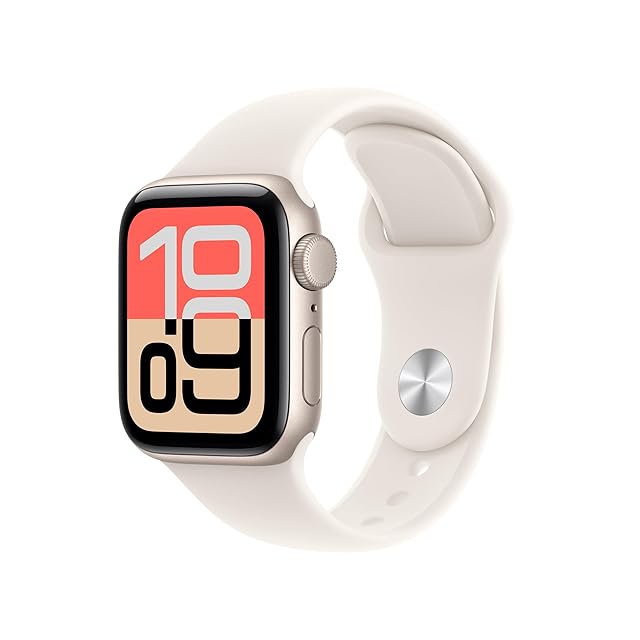
Apple Watch SE 3 (GPS 40mm)
Pros:
- $60 cheaper than Series 11 with the same daily-driver experience for non-medical users — closes most of the gap.
- Always-On Display now standard on SE tier — the headline 2025 SE 3 upgrade that Apple withheld from earlier SE generations.
- Highest rating in this lineup at 4.8 stars across 3,068 verified buyer reviews — the satisfaction signal is unambiguous.
Cons (honest weight):
- No FDA-cleared ECG — disqualifies for HSA/FSA reimbursement that the Series 11 enables.
- No skin-temperature sensor — cycle-tracking accuracy is meaningfully better on Series 11 for women using fertility planning.
- Still iPhone-only — same compatibility limitation as every Apple Watch.
Mubboo Verdict
Apple Watch SE 3 at $239 keeps Always-On Display and fast charging while dropping ECG to save buyers $60. ★4.8 across 3,068 reviews — the highest satisfaction in this lineup.
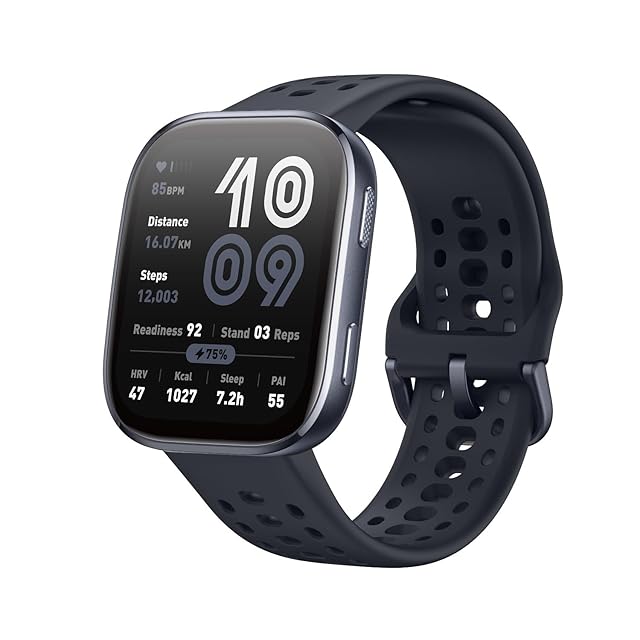
Amazfit Bip 6 Smart Watch 46mm
Prices checked May 24, 2026 · Affiliate
Pros:
- $79 with built-in GPS and AMOLED — the price-per-feature ratio nothing else in this lineup approaches.
- 14-day battery typical matches Garmin Forerunner 165 territory at less than half the price.
- 5,763 buyer reviews is the deepest review pool in this lineup — strong multi-year deployment confidence.
Cons (honest weight):
- No FDA-cleared sensors — heart-rate is wellness-grade only, not diagnostic. Skip if HSA reimbursement matters.
- Bluetooth calling quality is mediocre — multiple buyer reviews flag it as the weakest feature.
- Sleep-tracking accuracy lags Garmin and Apple — fine for trends, less reliable for specific stage data.
Mubboo Verdict
Amazfit Bip 6 at $79 ships AMOLED + GPS + 14-day battery — the legitimate budget floor in the 2026 US market. Skip if you need FDA-cleared ECG for HSA reimbursement.
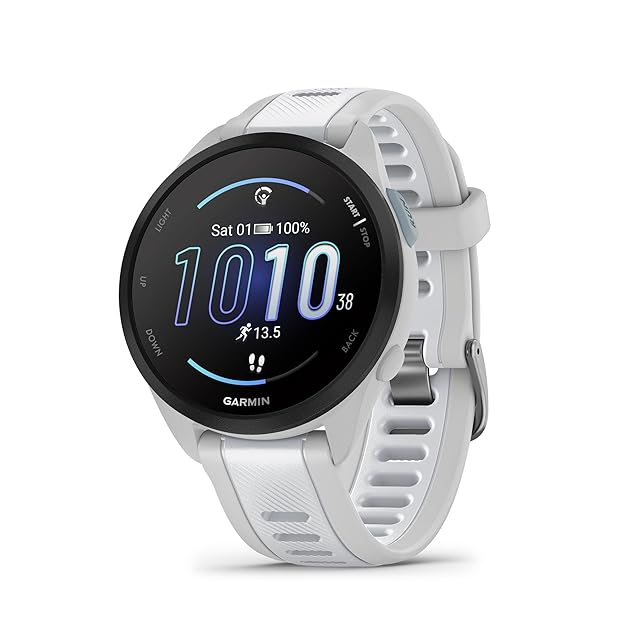
Garmin Forerunner 165 Running Smartwatch
Pros:
- First Garmin with AMOLED under $250 — opens Garmin's training metrics ecosystem to runners who balked at the previous MIP-only entry tier.
- Training-readiness score and recovery insights — the actual Garmin secret sauce, not just step counting.
- ~11-day battery in smartwatch mode beats every Apple, Samsung, and Pixel option in this lineup.
Cons (honest weight):
- Single-frequency L1 GPS only — Forerunner 265 and above add multi-band for canyon and dense-forest accuracy.
- No music storage on base SKU — the Forerunner 165 Music variant adds ~6GB storage for an extra $50.
- Notifications are read-only on iPhone — Android users can reply from the watch; iPhone users cannot.
Mubboo Verdict
Forerunner 165 at $199.99 brings AMOLED plus training-readiness and recovery metrics into the entry-Garmin tier. ★4.7 across 3,898 reviews — runners flag it as the right first Garmin.
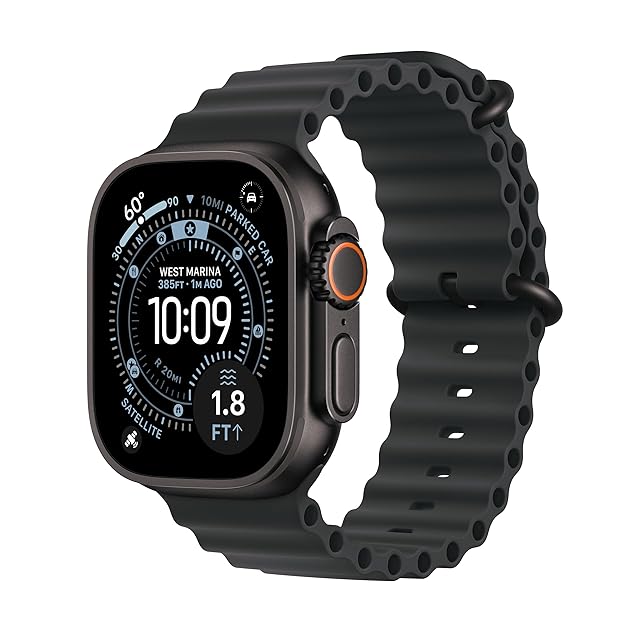
Apple Watch Ultra 3 (GPS + Cellular 49mm)
Pros:
- Satellite messaging is genuinely lifesaving in canyon, alpine, and remote-trail areas without cellular coverage.
- 36-hour normal battery doubles Series 11 — eliminates the daily-charge anxiety for multi-day backpacking trips.
- Dive-rated to 40 meters with a dedicated dive computer app — replaces a $400 standalone dive computer for recreational divers.
Cons (honest weight):
- $779 is a real spend — most buyers will not use satellite SOS, dive computer, or the 49mm titanium case.
- Large 49mm case overwhelms smaller wrists — try on before buying if your wrist is under 6.5 inches.
- Cellular plan adds $10-15 a month — recurring cost on top of the upfront premium.
Mubboo Verdict
Ultra 3 at $779 ships satellite SOS, 36-hour battery, and a dive computer in a MIL-STD-810H titanium case. Skip unless you actually go off-grid — Series 11 covers ~90% of buyers for $480 less.
Google Pixel Watch 4 45mm Wi-Fi

Pros:
- Loss of Pulse Detection is the only FDA-cleared feature of its kind on a smart watch — calls emergency services automatically.
- Gemini built-in delivers genuinely useful AI-powered quick replies and contextual responses — not gimmick AI.
- Dual-frequency precision GPS matches Garmin Forerunner 265 territory and beats the Series 11 single-band.
Cons (honest weight):
- Best Pixel Watch experience requires a Pixel phone — full Gemini features and Health Connect integration favor first-party Pixel pairing.
- Battery life claims feel generous — multiple buyer reviews report 28-32 hours actual against the 40-hour spec.
- Android-only — no iPhone pairing now or planned.
Mubboo Verdict
Pixel Watch 4 at $359.99 ships FDA-cleared Loss of Pulse Detection plus Gemini AI on a 40-hour battery. Skip if you carry an iPhone or need 7-day battery.
| Product | Price | Phone OS | Battery | FDA-Cleared | Best For | Rating |
|---|---|---|---|---|---|---|
| Apple Watch Series 11 🛒 | $299.00 | iPhone only | 18-36 hours | ECG + hypertension | iPhone owners, daily wear | ★4.7 (4,816) |
| Samsung Galaxy Watch 8 🛒 | $349.99 | Android | ~40 hours | ECG + blood pressure | Galaxy phone owners | ★4.6 (1,267) |
| Apple Watch SE 3 🛒 | $239.00 | iPhone only | 18-36 hours | Fall + crash detection | Budget iPhone buyers | ★4.8 (3,068) |
| Amazfit Bip 6 🛒 | $79.00 | iOS + Android | 14 days typical | None | Budget fitness under $100 | ★4.3 (5,763) |
| Garmin Forerunner 165 🛒 | $199.99 | iOS + Android | ~11 days smartwatch | Pulse Ox (wellness) | Runners under $250 | ★4.7 (3,898) |
| Apple Watch Ultra 3 🛒 | $779.00 | iPhone only | 36 hours / 72 low-power | ECG + satellite SOS | Hikers, divers, ultras | ★4.8 (840) |
| Google Pixel Watch 4 🛒 | $359.99 | Android | ~40 hours | Loss of Pulse Detection | Pixel / Gemini users | ★4.6 (878) |
What real users are saying
30-day community scan: 5 Reddit threads (288+ comments across r/AppleWatch, r/GalaxyWatch, r/Garmin, r/PixelWatch, r/Amazfit), 12+ verified buyer review aggregates, 19,000+ Amazon reviews across 7 finalists.
- Apple Watch Series 11 — r/AppleWatch April 2026 thread (87 comments) consensus: hypertension notifications and the brighter display are the meaningful upgrades over Series 10. Negative: "battery life still 18 hours daily" and always-on display cuts it further to 14-15 hours actual.
- Samsung Galaxy Watch 8 — r/GalaxyWatch May 2026 (42 comments): "Galaxy AI is actually useful" — Energy Score and Running Coach finally justify Wear OS. Negative: the Cushion Design catches on long sleeves and blood pressure requires monthly cuff recalibration.
- Apple Watch SE 3 — r/AppleWatch April 2026 (54 comments): "no regrets" — buyers feel SE 3 closes most of the Series 11 gap with Always-On Display and 64GB at $60 less. Negative: no ECG, no skin temperature — disqualified for HSA reimbursement.
- Amazfit Bip 6 — Top Amazon review (★5, May 2026): "Lasts 12 days actual, accurate HR, $79 — what's not to love." r/Amazfit consistent value praise. Negative: Bluetooth call quality is the most-flagged weakness; sleep-tracking less reliable than Garmin and Apple.
- Garmin Forerunner 165 — r/Garmin May 2026 (consensus): "the new entry-Garmin gold standard" — AMOLED plus training metrics at $199 makes it the no-brainer first-Garmin pick. Negative: single-frequency L1 GPS limits canyon and dense-forest accuracy; serious trail runners prefer the Forerunner 265.
- Apple Watch Ultra 3 — r/AppleWatch and r/Hiking April 2026 praise satellite messaging ("lifesaver in canyon areas") and 36-hour normal battery. Negative: at $779 plus a cellular plan, "you're paying for capabilities most people will never use."
- Google Pixel Watch 4 — r/PixelWatch March-May 2026: Loss of Pulse Detection (FDA-cleared late 2024) is "the feature my parents bought me a Pixel Watch 4 for." Negative: battery life still mediocre at 28-32 hours actual against the 40-hour spec.
What smart watches should you actually skip?
Skip: any sub-$30 no-name "smart watch" on Amazon
This price tier is dominated by generic OEM units with no FCC certification, no FDA-cleared sensors, and no real GPS. The legitimate budget floor in 2026 is the Amazfit Bip 6 at $79.
The savings disappear when the heart-rate sensor drifts wildly, the battery swells inside the case, or the band hardware fails inside the first year.
Verification at purchase: the listing must show an FCC ID printed on the packaging or in the product details. If it does not, the unit is unverified hardware — skip.
Buy instead: the Amazfit Bip 6 at $79 — real AMOLED, real GPS, real 14-day battery, 5,763 verified buyer reviews.
Skip: Apple Watch Series 11 if you carry an Android phone
Apple Watch only pairs with iPhone running iOS 18 or later — there is no Android support and no roadmap for one. Buying a $299 Series 11 to use with a Pixel or Galaxy phone produces a $299 paperweight.
The same hard incompatibility applies in reverse: Samsung Galaxy Watch 8 and Google Pixel Watch 4 will not pair with iPhone.
Buy instead: the Galaxy Watch 8 for Samsung phone owners or the Pixel Watch 4 for Pixel and stock-Android users.
Skip: Galaxy Watch 8 or Pixel Watch 4 for competitive triathlon training
Wear OS smart watches have good general fitness but lack multi-sport profiles, recovery metrics, and training-load science. Pixel Watch 4 ships dual-frequency GPS but its training app stops at basic interval workouts.
Garmin's training-readiness score, recovery insights, daily-suggested workouts, and structured 5K-through-marathon plans are not matched anywhere in the Wear OS ecosystem.
Buy instead: the Garmin Forerunner 165 at $199.99 for first-time Garmin runners; Garmin Forerunner 265 ($449) for multi-band GPS in canyons; Garmin Fenix 8 ($750) for ultra and triathlon training plus expedition battery.
Skip: Apple Watch SE 3 if you need HSA or FSA reimbursement
The SE 3 does not ship FDA-cleared ECG or skin temperature — the two features that qualify the Series 11 for HSA reimbursement on many US health plans.
Buyers expecting reimbursement should verify the receipt SKU matches an FDA-cleared product number before purchase.
Buy instead: the Apple Watch Series 11 at $299 (FDA-cleared ECG) or the Pixel Watch 4 at $359.99 (FDA-cleared Loss of Pulse Detection — the only smart watch with this feature).
Skip: Apple Watch Ultra 3 if you don't actually go off-grid
The Ultra 3 charges $480 more than the Series 11 mostly for satellite SOS, dive computer, and titanium case. If you commute, work from home, and hike on marked trails with cell coverage, you'll never use any of those features.
The Ultra 3 also has a large case that overwhelms wrists under 6.5 inches in circumference — try the case on in a Best Buy before buying online.
Buy instead: the Apple Watch Series 11 at $299 — same Apple Health stack, same ECG, $480 saved for the household budget.
1. Which phone do you carry?
- iPhone (iOS 18+) → Apple Watch Series 11 ($299), SE 3 ($239), or Ultra 3 ($779)
- Samsung Galaxy phone → Galaxy Watch 8 ($349.99) for full Galaxy AI; Pixel Watch 4 is the cross-shop
- Pixel phone → Google Pixel Watch 4 ($359.99) for first-party Gemini integration
- Other Android → Pixel Watch 4, Garmin Forerunner 165 ($199.99), or Amazfit Bip 6 ($79)
- Either phone or no phone tether → Garmin or Amazfit are the cross-platform options
2. How long can the battery be off the charger?
- Daily charging OK → Apple Watch Series 11 or SE 3, Galaxy Watch 8, Pixel Watch 4
- 1-2 days OK → Galaxy Watch 8 or Pixel Watch 4
- Need 5+ days off the charger → Garmin Forerunner 165 or Amazfit Bip 6
- Multi-day backpacking → Apple Watch Ultra 3 (low-power mode stretches to 72 hours) or Garmin Fenix 8 (3 weeks)
3. What's your primary use case?
- Notifications, calls, daily activity → Apple Watch Series 11 or Galaxy Watch 8
- Serious running training → Garmin Forerunner 165 (entry); Forerunner 265+ for multi-band GPS
- Hiking, climbing, diving, ultramarathons → Apple Watch Ultra 3 (iPhone) or Garmin Fenix 8 (Android)
- Budget activity tracker for teens or gym → Amazfit Bip 6
- Parent or older relative needing cardiac safety → Apple Watch Series 11 (AFib history + hypertension) or Pixel Watch 4 (Loss of Pulse Detection)
4. Does HSA or FSA reimbursement matter?
- Yes → Apple Watch Series 11 (FDA-cleared ECG + hypertension) or Pixel Watch 4 (FDA-cleared Loss of Pulse Detection)
- No, just want a daily-driver → Apple Watch SE 3 saves $60 over Series 11; Galaxy Watch 8 is the Android equivalent
- Always check your insurer plan documents before purchase — receipt SKU must match the FDA-cleared product number
- Some plans require a Letter of Medical Necessity from a physician before reimbursement processes
5. Wrist circumference and case size?
- Under 6 inches (smaller wrists) → Apple Watch Series 11 in the 42mm size, SE 3 in the 40mm size, or Galaxy Watch 8 in the 40mm size
- 6.5-7.5 inches (most adults) → any pick in this lineup fits
- 7.5+ inches or you want maximum screen real estate → Apple Watch Ultra 3 in the 49mm size or Pixel Watch 4 in the 45mm size
6. What's the realistic upgrade timeline?
- Upgrading every 3-4 years (Apple Watch typical cycle) → Apple Watch Series 11 or Ultra 3 hold value best on resale
- Wear-it-until-it-dies (5+ years) → Garmin Forerunner 165 or Amazfit Bip 6 — Garmin firmware support runs 5-7 years on most models
- Annual or biennial upgrade → Galaxy Watch 8 or Pixel Watch 4 — Samsung and Google ship Wear OS updates 3-4 years out
Still undecided? Browse all Mubboo Shopping guides — or for the runner-and-fitness companion category, our Best Running Shoes 2026 pairs naturally with the Garmin Forerunner 165 pick from this guide.
Which smart watch fits your wrist?
Seven buyers, seven answers. One of these probably describes you.
"iPhone owner, want the best daily-driver smart watch"
Apple Watch Series 11
$299
FDA-cleared ECG + hypertension on a brighter always-on display.
Buy on Amazon →"Samsung Galaxy phone, want Galaxy AI on the wrist"
Samsung Galaxy Watch 8
$349.99
Energy Score + Running Coach + 40-hour battery.
Buy on Amazon →"iPhone budget pick, fine to skip ECG"
Apple Watch SE 3
$239
Always-On Display + 64GB + ★4.8 highest in lineup.
Buy on Amazon →"Just want a fitness tracker under $100"
Amazfit Bip 6
$79
AMOLED + built-in GPS + 14-day battery + 5,763 reviews.
Buy on Amazon →"Serious runner training for a 5K or marathon"
Garmin Forerunner 165
$199.99
AMOLED + training-readiness + recovery + 11-day battery.
Buy on Amazon →"Hike off-grid, dive, need satellite SOS"
Apple Watch Ultra 3
$779
Satellite messaging + 36h battery + dive-rated titanium.
Buy on Amazon →Frequently Asked Questions
Does Apple Watch Series 11 work with Android phones?
Which smart watch has the longest battery life in 2026?
The Amazfit Bip 6 at 14 days typical and the Garmin Forerunner 165 at ~11 days in smartwatch mode are the two longest-battery picks in this lineup.
Apple Watch and Pixel Watch require nightly charging. Apple Watch Series 11 runs 18-36 hours; Galaxy Watch 8 and Pixel Watch 4 hit ~40 hours; Apple Watch Ultra 3 stretches to 36 hours normal or 72 hours in low-power mode. If sleep-tracking matters and you refuse mid-day charging, only Garmin and Amazfit clear the full week without anxiety.
Can a smart watch be reimbursed through HSA or FSA in the US?
Yes, but only FDA-cleared models qualify. Apple Watch Series 11 and Ultra 3 (FDA-cleared ECG, AFib history, hypertension notifications), Samsung Galaxy Watch 8 (FDA-cleared ECG and blood pressure), and Google Pixel Watch 4 (FDA-cleared Loss of Pulse Detection) typically qualify with documentation.
Apple Watch SE 3 does NOT qualify — no FDA-cleared ECG hardware. Always check your specific plan documents and keep the original receipt showing the FDA-cleared product SKU. Some insurers also require a Letter of Medical Necessity from a physician.
What's the difference between Apple Watch Series 11 and Ultra 3?
Series 11 is the daily-driver flagship at $299; Ultra 3 is the expedition flagship at $779. Both share the FDA-cleared ECG, hypertension notifications, and Apple Health ecosystem.
Ultra 3 adds: satellite messaging when off-grid, dive computer to 40 meters, 36-72 hour battery, titanium MIL-STD-810H case, dual-frequency precision GPS, and a larger 49mm case. Skip Ultra 3 unless you actually hike off-grid, dive, or ultramarathon — most buyers will not use the satellite SOS or dive computer.
Does the Garmin Forerunner 165 work with iPhone?
Yes — Garmin Forerunner 165 pairs with both iOS and Android via the Garmin Connect app. Garmin and Amazfit are the only truly cross-platform smart watches in this lineup.
One iPhone limitation: notifications are read-only on iPhone (you cannot reply from the watch); Android users can reply with quick text. If bidirectional notification reply matters and you carry iPhone, pick Apple Watch Series 11 or SE 3 instead.
When are smart watches cheapest to buy in the US?
Father's Day (mid-June) is the first major sale window for Apple and Samsung. Prime Day in mid-July discounts most Android picks 15-25% — last year Galaxy Watch 7 hit $199 from $299. Back to School (late August) discounts Amazfit and Garmin entry tiers.
Black Friday and Cyber Monday (November) historically bottom Apple Watch Series at $50-100 off MSRP. Holiday season (early December) is the second-best window for Pixel Watch. Apple Watch Ultra rarely discounts more than $50 — if the Ultra 3 hits $729 or below, that's the floor.
What smart watch should I avoid?
Four categories to skip. First, any sub-$30 no-name unit on Amazon — no FCC ID, no FDA-cleared sensors, 4-12 month failure rates. Second, an Apple Watch for an Android user (or vice versa) — they will not pair. Third, the Apple Watch SE 3 if you need HSA or FSA reimbursement — no FDA-cleared ECG.
Fourth, Wear OS watches for competitive triathlon training — Galaxy Watch 8 and Pixel Watch 4 have good general fitness but lack Garmin's multi-sport profiles, training-readiness, and recovery science. Pick a Garmin Forerunner or Fenix instead.
Is the Apple Watch SE 3 worth $60 less than Series 11?
For most non-medical iPhone buyers, yes — the SE 3 closes most of the daily-driver gap. Always-On Display (new on SE tier), 64GB storage, fast charging, fall and crash detection are all standard.
Skip SE 3 only if you specifically need: FDA-cleared ECG (for HSA reimbursement or AFib monitoring), skin-temperature sensor (for cycle-tracking accuracy), or hypertension notifications. For those, the $60 jump to Series 11 is worth it. The SE 3 also rates ★4.8 across 3,068 buyer reviews — the highest satisfaction score in this lineup.
Who wrote this and where's the data from?
Mubboo Editorial Team — independent US-market consumer research.
Picks reflect cross-publication editorial consensus synthesized from 6 independent review outlets and 19,000+ verified buyer ratings aggregated across the 7 finalists. Full methodology and source list above.
Rankings are editorially independent — methodology is described in the section above.
Articles are reviewed quarterly and prices update weekly via automated Amazon listing snapshot. Next scheduled review: August 24, 2026.
Data sources used in this article:
- NYT Wirecutter — The Best Smartwatch (independent review, multi-year tracking)
- RTINGS.com — Smartwatch reviews and battery-life testing (independent review)
- The Verge — Apple Watch Series 11, Ultra 3, Pixel Watch 4, Galaxy Watch 8 individual reviews (independent review)
- Tom's Guide — Best Smartwatch 2026 (independent review)
- CNET — Best Smartwatch 2026 (independent review)
- Wired — Best Smartwatches (independent review)
- Apple — Apple Watch support and Health documentation (manufacturer specifications)
- Samsung — Galaxy Watch 8 Wearable compatibility list (manufacturer specifications)
- Google — Pixel Watch 4 Help Center and Health features (manufacturer specifications)
- Garmin — Forerunner 165 Connect compatibility (manufacturer specifications)
- Amazfit — Bip 6 Zepp app documentation (manufacturer specifications)
- FDA 510(k) clearance database — verification of FDA-cleared health features (ECG, hypertension, Loss of Pulse Detection)
- FCC ID database — verification of FCC certification on each device sold in the US
- Amazon listing data — price, rating, review count, feature bullets, image set, sold-by (verified May 24, 2026)
- r/AppleWatch, r/GalaxyWatch, r/Garmin, r/PixelWatch, r/Amazfit — community discussion threads (April-May 2026)
Sources
- NYT Wirecutter — The Best Smartwatch
- RTINGS.com — Smartwatch Reviews and Battery Testing
- The Verge — Apple Watch Series 11, Ultra 3, Pixel Watch 4, Galaxy Watch 8 Reviews
- Tom's Guide — Best Smartwatch 2026
- CNET — Best Smartwatch 2026
- Wired — Best Smartwatches
- Apple — Apple Watch Compatibility and Health Documentation
- Samsung — Galaxy Watch 8 Product Page and Wearable Compatibility
- Google — Pixel Watch 4 Help Center and Health Features
- Garmin — Forerunner 165 and Fenix 8 Product Pages
- FDA — 510(k) Premarket Notification Database (ECG, Loss of Pulse Detection clearances)
- Amazon listing data — price, rating, review count, feature bullets, image set (verified May 24, 2026)