Prices verified Aug 2 · Always confirm at the retailer before buying.
Quick answer
Bosch ESI6 is the better fit for a street vehicle when the owner's manual allows its stated DOT 3, DOT 4, or DOT 5.1 replacement use and you want a low-viscosity formulation with Bosch's extended-service claim. Bosch's official ESI6 data lists approximately 520°F dry boiling point, 360°F wet boiling point, and 685 mm²/s viscosity at -40°F. Motul RBF 600 is the better fit when the manual permits non-silicone synthetic DOT 4 fluid and the vehicle repeatedly sees high brake temperatures. Motul's official technical data lists 594°F dry and 401°F wet boiling points, but that does not guarantee a firm pedal or prevent fade in every vehicle. The current US registry lists Bosch at $19.99 with 4.8 stars from 3,711 reviews and Motul at $20.46 with 4.9 stars from 2,512 reviews. The price gap is $0.47, but pack sizes differ. If neither exact specification fits, consider the Valvoline or Prestone alternatives listed below. Never mix with silicone DOT 5 or mineral LHM; follow the vehicle manual and flush instructions.
Choose Bosch when the manual permits its DOT replacement use; choose Motul when it permits non-silicone DOT 4 for repeated high-temperature use. Neither manufacturer specification replaces the vehicle manual.
Mubboo Verdict
Best for most people
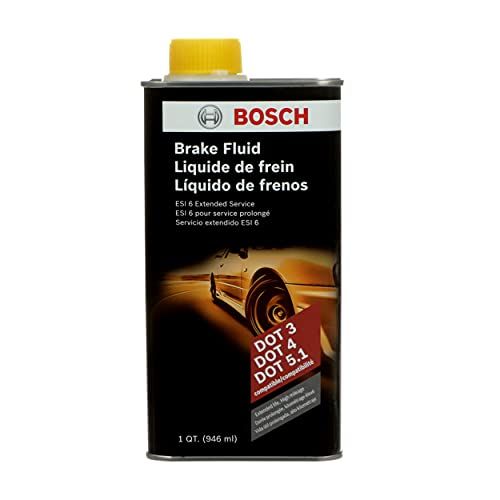
Bosch ESI6-32N Low Viscosity Extended Life Brake Fluid
Its published replacement use and low-viscosity data make it the more practical street-oriented fit when the exact vehicle manual permits it.
Pick the Motul RBF 600 Factory Line DOT 4 Brake Fluid 500ml instead if
- The vehicle manual permits non-silicone synthetic DOT 4 and the car repeatedly sees high brake temperatures.
- You prioritize the higher published dry and wet boiling points in the Motul technical data.
- You accept a smaller 500ml pack and the need to follow Motul's use-specific change guidance.
- You understand that boiling-point data does not guarantee a particular pedal feel or fade resistance.
Bosch ESI6-32N Low Viscosity Extended Life Brake Fluid vs Motul RBF 600 Factory Line DOT 4 Brake Fluid 500ml, side by side
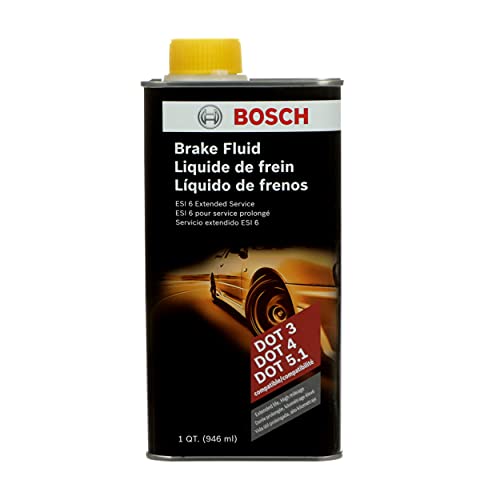
Bosch ESI6-32N Low Viscosity Extended Life Brake Fluid
Pros:
- Bosch publishes approximately 520°F dry and 360°F wet boiling points
- Bosch publishes approximately 685 mm²/s viscosity at -40°F
- Bosch says it can be used with or as a direct replacement for DOT 3, DOT 4, and DOT 5.1 fluids
- Bosch claims an extended service interval versus standard fluids
- Lower current registry price by $0.47
Cons (honest weight):
- The exact vehicle manual and marked specification still control compatibility
- Published data is not a Mubboo brake test or a guarantee of pedal feel
- Do not use in mineral LHM systems or treat the replacement claim as universal
Motul RBF 600 Factory Line DOT 4 Brake Fluid 500ml

Pros:
- Motul publishes 594°F dry and 401°F wet boiling points
- 100% synthetic non-silicone DOT 4 formulation
- Motul designs it for high-temperature racing-brake use
- Suitable for compatible hydraulic brake and clutch systems according to Motul's product description
- Higher published boiling points than Bosch's ESI6 data
Cons (honest weight):
- The 500ml pack has less fluid than the Bosch ESI6-32N product format
- A higher published boiling point does not guarantee performance in every vehicle
- Vehicle manual, flush procedure, and change interval still control
- Do not mix with silicone DOT 5 or mineral LHM fluids
Where each one wins
8 dimensions scored head-to-head. Bosch ESI6-32N takes 3; Motul RBF takes 3.
| Dimension | Bosch ESI6-32N Low Viscosity Extended Life Brake Fluid | Motul RBF 600 Factory Line DOT 4 Brake Fluid 500ml | Winner |
|---|---|---|---|
| Current registry priceBosch is $0.47 lower in the current registry; pack sizes differ. | $19.99 | $20.46 | Bosch ESI6-32N |
| Fluid specificationThe exact vehicle specification controls before any price or performance comparison. | Bosch ESI6; verify vehicle manual | Non-silicone synthetic DOT 4 | Tie |
| Published dry boiling pointMotul's published dry value is higher; this is manufacturer data, not a Mubboo brake test. | ~520°F | 594°F | Motul RBF |
| Published wet boiling pointMotul's published wet value is higher; water absorption and service still depend on use and guidance. | ~360°F | 401°F | Motul RBF |
| Published low-temperature viscosityThese published values are not a promise of a measurable ABS response or pedal feel in a particular vehicle. | ~685 mm²/s at -40°F | 1,750 mm²/s at -40°C | Bosch ESI6-32N |
| Service claimNeither product overrides the vehicle maker's interval or flush procedure. | Bosch claims extended service interval | Follow Motul and vehicle-maker guidance | Bosch ESI6-32N |
| High-temperature use caseMotul is the more directly heat-focused option when the manual permits it. | Street-oriented when compatible | Motul describes racing-brake use | Motul RBF |
| Fluid-base boundaryDo not mix or substitute without the exact system specification and procedure. | Exclude mineral LHM; verify manual | Do not mix with silicone DOT 5 or mineral LHM | Tie |
| Overall | 3 wins | 3 wins | Tie |
Start With the Vehicle Manual
Brake-fluid selection is a compatibility decision before it is a performance decision. Check the owner's manual, reservoir marking, fluid base, and required DOT specification before comparing these bottles.
Do not mix silicone DOT 5 or mineral LHM with products intended for glycol-based systems. Follow the exact flush procedure and service interval.
Current Price and Pack Size
The current US registry lists Bosch at $19.99 and Motul at $20.46. Bosch is $0.47 lower, but the package sizes differ.
The price gap is too small to decide the purchase by itself. Confirm the fluid specification and the quantity needed for the vehicle's procedure.
Bosch ESI6 Published Data
Bosch publishes approximately 520°F dry and 360°F wet boiling points for ESI6. Its technical flyer also lists approximately 685 mm²/s viscosity at -40°F.
Bosch says ESI6 can be used with or as a direct replacement for DOT 3, DOT 4, and DOT 5.1 fluids. Treat that as a product claim to verify against the exact vehicle manual, not as universal permission.
Motul RBF 600 Published Data
Motul publishes a 594°F dry and 401°F wet boiling point for RBF 600. Motul describes it as a non-silicone synthetic DOT 4 fluid for hydraulic brake and clutch systems, with a racing-brake focus.
Those numbers support a high-heat use case when the vehicle permits the specification. They do not guarantee pedal feel, brake response, or fade resistance in every vehicle.
What the Review Counts Mean
Bosch has 3,711 current registry reviews at 4.8 stars; Motul has 2,512 at 4.9. Ratings are marketplace context only.
Reviews do not establish compatibility, boiling point, water content, service life, or safe braking performance. Mubboo did not perform a hands-on brake test.
Which One Should You Choose?
Choose Bosch when the manual permits its stated replacement use and low-viscosity format fits the vehicle. Choose Motul when the manual permits non-silicone DOT 4 and repeated high-temperature use makes its published boiling points relevant.
If the vehicle calls for another base or specification, choose neither until you identify the correct fluid. Use qualified service when the work is outside your training.
Current Alternatives
Valvoline B00AN1X4UE is a current in-stock DOT 3/4 alternative. The registry lists $10.18 and 1,198 reviews.
Prestone B004AHDCB8 is a current in-stock DOT 3 alternative. The registry lists $9.38 and 3,037 reviews. Check each manual before use.
Which should you buy?
| Your situation | Pick | Why |
|---|---|---|
| Compatible street vehicle and lower current price | Bosch ESI6-32N Low Viscosity Extended Life Brake Fluid | Bosch is $0.47 lower in the current registry and publishes street-oriented replacement use. |
| Repeated high-temperature brake use | Motul RBF 600 Factory Line DOT 4 Brake Fluid 500ml | Motul publishes higher dry and wet boiling points and describes racing-brake use. |
| Published low-temperature viscosity is a priority | Bosch ESI6-32N Low Viscosity Extended Life Brake Fluid | Bosch publishes the lower ESI6 viscosity figure at its stated low temperature. |
| Choose by owner's manual first | Bosch ESI6-32N Low Viscosity Extended Life Brake Fluid | Bosch is the practical choice only when its stated replacement use matches the exact manual. |
| Need a 500ml high-heat DOT 4 pack | Motul RBF 600 Factory Line DOT 4 Brake Fluid 500ml | Motul is the 500ml high-heat DOT 4 option in this comparison. |
| Vehicle requires silicone DOT 5 or mineral LHM | Bosch ESI6-32N Low Viscosity Extended Life Brake Fluid | Do not select Motul; Bosch is also not a substitute until the exact vehicle specification is confirmed. |
Bosch is $0.47 lower in the current registry and publishes street-oriented replacement use.
Motul publishes higher dry and wet boiling points and describes racing-brake use.
Bosch publishes the lower ESI6 viscosity figure at its stated low temperature.
Bosch is the practical choice only when its stated replacement use matches the exact manual.
Motul is the 500ml high-heat DOT 4 option in this comparison.
Do not select Motul; Bosch is also not a substitute until the exact vehicle specification is confirmed.
What if neither is right?
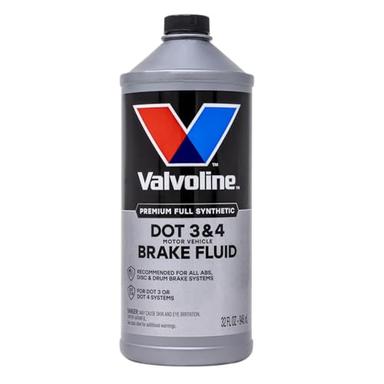
Valvoline DOT 3 & 4 Synthetic Brake Fluid
$10.18
A current in-stock DOT 3/4 alternative with a lower registry price; verify the vehicle specification before use.
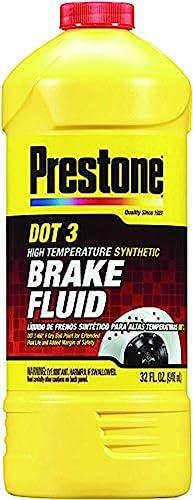
Prestone AS401 DOT 3 Synthetic Brake Fluid
$9.38
A current in-stock DOT 3 alternative at a lower registry price; confirm the manual and do not treat price as compatibility proof.
Frequently Asked Questions
Bosch ESI6 vs Motul RBF 600: which should I buy?
Choose Bosch when the vehicle manual permits its stated DOT 3, DOT 4, or DOT 5.1 replacement use and low-viscosity format fits. Choose Motul when the manual permits non-silicone synthetic DOT 4 and the vehicle repeatedly sees high brake temperatures. The manual controls.
Which is cheaper right now?
The current US registry lists Bosch at $19.99 and Motul at $20.46, a $0.47 difference. Pack sizes, sellers, and prices can change, so verify the live listings and the quantity your vehicle procedure requires.
What are the published boiling points?
Bosch's ESI6 data lists approximately 520°F dry and 360°F wet boiling points. Motul's RBF 600 data lists 594°F dry and 401°F wet. These are manufacturer figures, not a Mubboo brake test or a guarantee for a particular car.
Is Bosch ESI6 compatible with DOT 3, DOT 4, or DOT 5.1?
Bosch says ESI6 can be used with or as a direct replacement for DOT 3, DOT 4, and DOT 5.1 fluids. Verify the exact owner's manual, exclude mineral LHM systems, and follow the manufacturer's flush procedure before relying on that claim.
Is Motul RBF 600 suitable for daily driving?
It may be suitable when the vehicle manual permits non-silicone synthetic DOT 4, but this comparison does not make a universal vehicle recommendation. Motul describes RBF 600 for hydraulic brake and clutch systems and high-temperature racing use. Follow the manual and Motul's service guidance.
Can I mix Bosch ESI6 and Motul RBF 600?
Do not mix brake fluids casually. Follow the vehicle maker's fluid specification and flush procedure. Motul specifically warns against mixing with silicone DOT 5 or mineral-base LHM fluids; use qualified service when you are unsure.
Which is better in cold weather?
Bosch publishes lower low-temperature viscosity for ESI6, which is why it is the better fit when low-viscosity data is a selection priority and the manual permits it. This does not prove a measurable ABS response or pedal-feel improvement in your vehicle.
Are there lower-cost alternatives?
Valvoline B00AN1X4UE and Prestone B004AHDCB8 are current in-stock alternatives listed in this article. Their lower prices do not prove compatibility; confirm the exact DOT specification and vehicle manual before use.
How we compared. We used current US product-registry records for price, rating, review count, stock, and images.
We checked Bosch's official ESI6 product page and technical flyer, plus Motul's RBF 600 product page and technical data.
We did not conduct a hands-on brake test. Manufacturer boiling points and viscosity do not replace the vehicle manual, marked specification, flush procedure, or service interval.
Who wrote this and where's the data from?
Mubboo Editorial Team. Independent US-market consumer research. We separate manufacturer data from marketplace context and keep vehicle-compatibility and fluid-mixing boundaries visible.