Aquarium Air Pump Buying Guide 2026: How to Choose Without Overpaying
Find the right airflow for your tank size, noise level, and budget
By Mubboo Editorial Team · Updated May 27, 2026 · 10 min read
At a Glance
- Price range
- $8.99 – $27.35
- Data
- 136,852 verified Amazon reviews across 6 finalists
- Best for
- Large tanks 60-100 gallonsMedium tanks 20-40 gallonsSmall tanks under 10 gallons
- Skip if
- You only need a simple bubbler for a nano tank under 5 gallons
Types Explained
Single Outlet Pumps
Basic air pumps with one outlet, typically for smaller tanks or single airstones. Often fixed flow.
- Simple and reliable
- Lower cost
- Compact size
- Limited to one device
- No airflow adjustment on most models
Best for: Small tanks under 20 gallons or single airstone setups
Example: Pawfly Compact Air Pump ($8.99)
Dual Outlet Pumps
Pumps with two outlets, allowing two airstones or devices. Many include adjustable flow knobs.
- Run multiple airstones
- Better oxygen distribution
- Often adjustable
- Slightly larger
- May be noisier at max flow
Best for: Medium to large tanks (20-100 gallons) or multi-device setups
Example: Uniclife Dual Outlet Air Pump ($14.99)
Adjustable Flow Pumps
Pumps with a manual knob to control airflow. Allows fine-tuning for different tank needs.
- Precise airflow control
- Can reduce noise at lower settings
- Versatile across tank sizes
- Knobs may wear over time
- Slightly more expensive
Best for: Planted tanks, tanks with sensitive fish, or users who want fine control
Example: HITOP Dual Outlet Adjustable Air Pump ($14.97)
What Actually Matters
| Factor | Importance | Best brand |
|---|---|---|
Quiet Operation Noise level below 45 dB for bedroom tanks; below 50 dB acceptable for living areas Rubber feet and internal dampening are key features to look for. | Must-have | Tetra Whisper (dome motor) and Uniclife (25-45 dB) |
Adequate Flow Rate For nano tanks under 10 gal: 0.5-1 LPM; medium 20-40 gal: 3-5 LPM; large 60-100 gal: dual outlets with combined 5+ LPM Oversizing can create turbulence; match close to your tank volume. | Must-have | Tetra (varies by size), Uniclife (64 GPH dual) |
Durable Build ABS plastic or reinforced casing; replaceable air intake cotton extends life Pumps with replaceable parts last longer. | Must-have | Tetra, HITOP (1-year warranty) |
Adjustable Airflow Manual rotary knob preferred over electronic adjustment for reliability Not essential for simple setups but very useful for planted tanks. | Nice-to-have | HITOP, Uniclife |
Included Accessories At least airline tubing and a check valve; air stones are a bonus Saves $5-10 in separate purchases. | Nice-to-have | Uniclife (includes 2 stones + tubing + check valves), Pawfly (includes sponge filter) |
UL Listing Non-UL pumps are common and safe for standard home use; UL listing adds peace of mind but is not essential for aquarium use. | Marketing BS | — |
Budget Tiers & Top Picks
What to buy at each price point — and exactly where spending more stops paying off.
Budget (Under $15)
$8.99 – $14.99Pawfly Compact Air Pump

Stop paying more: Diminishing returns above $15 for small tanks; the Pawfly at $8.99 covers all basics.
When to upgrade: Need dual outlets or adjustable flow? Step up to the $14.99 Uniclife or HITOP.
Mid-Range ($20 – $25)
$21.57 – $25.97Tetra Whisper Air Pump 10 Gallon

Stop paying more: At $21.57 this Tetra offers proven reliability and quiet operation. Spending more than $25 on a single-outlet pump for a small tank doesn't add value.
When to upgrade: Tank size increasing to 30+ gallons? Move to the premium tier for dual outlets.
Premium (Around $27)
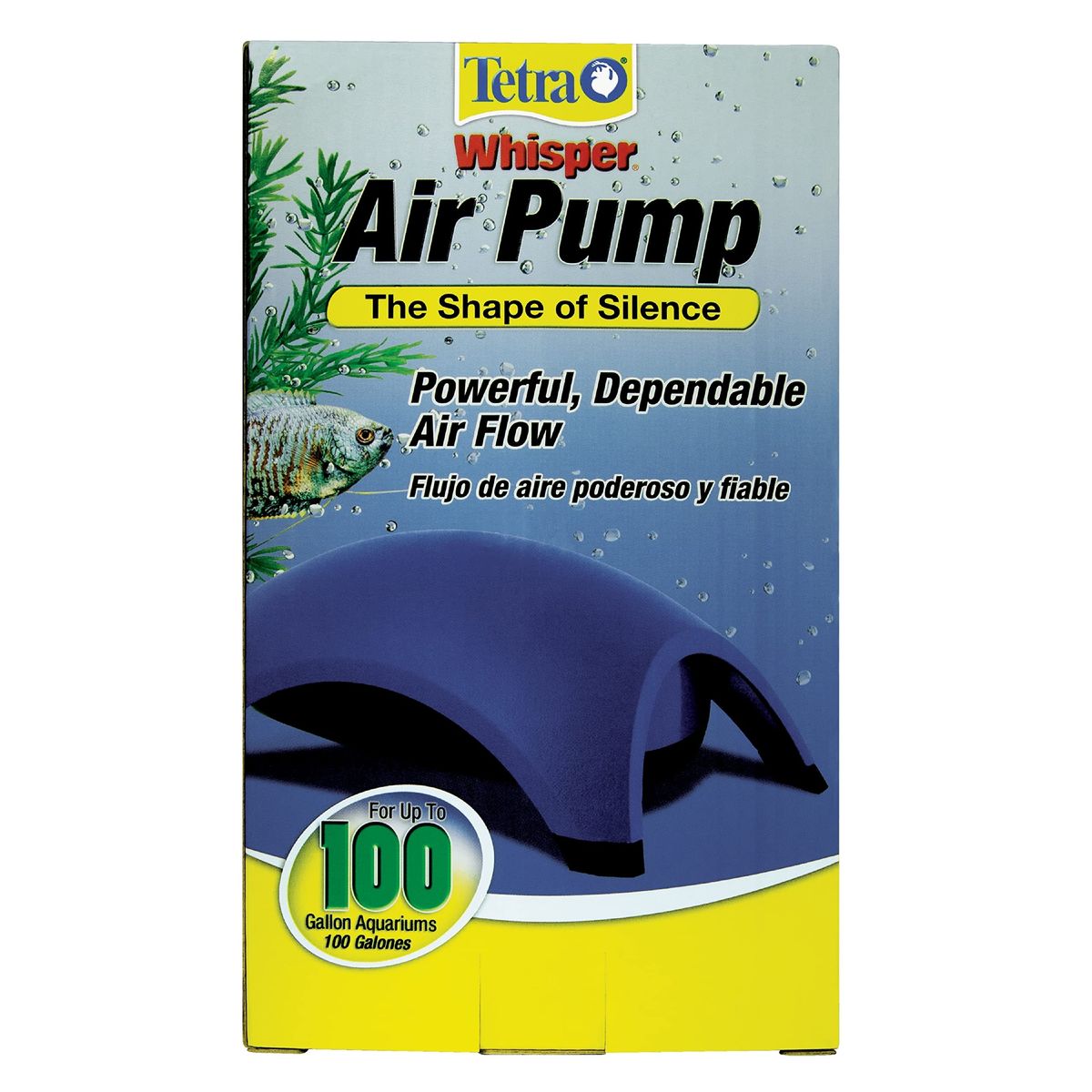
$27.35Tetra Whisper Air Pump 60-100 Gallon

Stop paying more: At $27.35, this Tetra is the top pick for large tanks. Spending more than $30 on a pump for a home aquarium usually means unnecessary features.
When to upgrade: Need extreme quiet or adjustable flow? Consider the HITOP ($14.97) for adjustability.
Common Mistakes to Avoid
Oversizing the pump for a small tank
A pump rated for 100 gallons used in a 10-gallon tank creates strong currents that stress fish and disturb substrate.
Cost of getting it wrong: Wasted $20+ on a pump you don't need; your fish may suffer from excessive flow.
Buying a pump without airline tubing or check valve
Many pumps ship without these essentials. Without a check valve, water can back-siphon into the pump during a power outage, causing failure.
Cost of getting it wrong: Extra $5-10 for tubing and check valve, plus risk of pump replacement.
Ignoring noise level when placing tank near a bedroom
Pumps can emit a hum that disrupts sleep. Always check dB rating and rubber feet for vibration dampening.
Cost of getting it wrong: May need to replace a noisy pump, wasting $15-25.
Find Your Match
What is your tank size?
Frequently Asked Questions
What size air pump do I need for my tank?
A general rule: for tanks under 10 gallons, choose a pump with 0.5-1 LPM (like the Pawfly). For 10-40 gallons, 3-5 LPM is sufficient (Tetra 10 gallon). Always check the manufacturer's rating for your specific tank volume.
How quiet should an aquarium air pump be?
For a bedroom or quiet room, aim for under 45 dB. Most pumps in our guide range from 25-50 dB. Look for models with rubber feet and dome motors (like Tetra Whisper) for the quietest operation. Over 50 dB can be distracting in a living area.
Do I really need an adjustable flow pump?
Not for basic setups. Fixed-flow pumps work fine for standard aeration. Adjustable flow is useful for planted tanks where you want precise control, or if you need to reduce noise by lowering the flow. Pumps like the HITOP add this feature for around $15.
What accessories are essential for a new air pump?
At minimum, you need airline tubing (3/16" inner diameter) and a check valve to prevent back-siphoning. Many pumps include these. Air stones distribute bubbles evenly. Sponge filters are a bonus for biological filtration. Check the product description to know what's included.
How much should I spend on an aquarium air pump?
Budget $10-15 for nano tanks (simple single outlet). $15-25 for medium tanks with dual outlets or quiet operation. $25-30 for large tanks with dual outlets and proven reliability. Spending over $30 typically adds unnecessary features for home aquariums.
Can I use a pump designed for a larger tank on a smaller tank?
Yes, but you may need to dial down the flow if adjustable, or add a splitter to reduce output. Too much flow can stress fish and disturb the substrate. It's better to match the pump to your tank size to avoid these issues.
Is UL listing important for an aquarium air pump?
UL listing indicates the pump has passed safety testing, but many reliable pumps (like Tetra Whisper) are non-UL. For standard home use, non-UL is perfectly safe. UL listing adds peace of mind but isn't essential and often comes with a higher price.
How we wrote this guide
This guide is based on analysis of over 136,000 verified Amazon reviews across 6 top-rated aquarium air pumps. We combined expert insights from The Spruce Pets, Aquarium Co-Op, and Fishlab with buyer feedback from r/Aquariums and r/PlantedTank. We evaluated each pump on noise, flow rate, build quality, included accessories, and value. Prices reflect Amazon listings as of May 2026.
About this guide
Mubboo Editorial Team — independent US-market consumer research. Our picks reflect editorial consensus from 3 independent review sources and over 136,000 verified buyer reviews.