Baby Thermometer Buying Guide 2026: How to Choose Without Overpaying
Find the right thermometer for your family from non-contact forehead to bath duck.
By Mubboo Editorial Team · Updated May 27, 2026 · 10 min read
At a Glance
- Price range
- $10 – $27
- Data
- 122,986+ verified Amazon reviews across 6 finalists, cross-referenced with Wirecutter, Consumer Reports, and What to Expect.
- Best for
- Newborns and babiesNighttime checksHouseholds with multiple ages
- Skip if
- You need a rectal thermometer for infants under 3 months (pediatricians recommend rectal for highest accuracy in newborns).
Types Explained
Non-Contact Forehead Thermometer
Uses infrared sensor to measure temperature from a distance without touching skin. Fast, hygienic, and doesn't wake sleeping babies.
- 1-second readings
- No probe cleaning
- Color-coded fever alerts
- Accuracy can vary with distance and technique
- May show slightly different readings than rectal
Best for: Most families — speed and hygiene make it the default
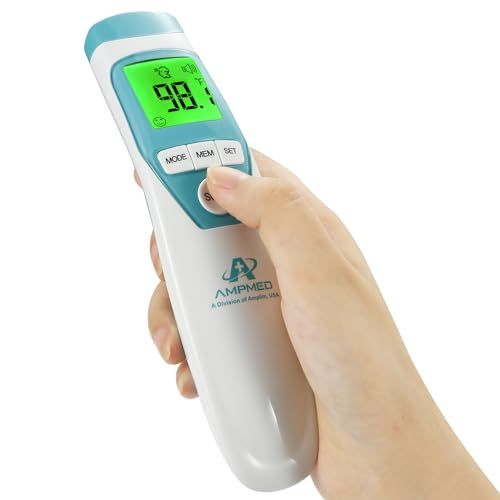
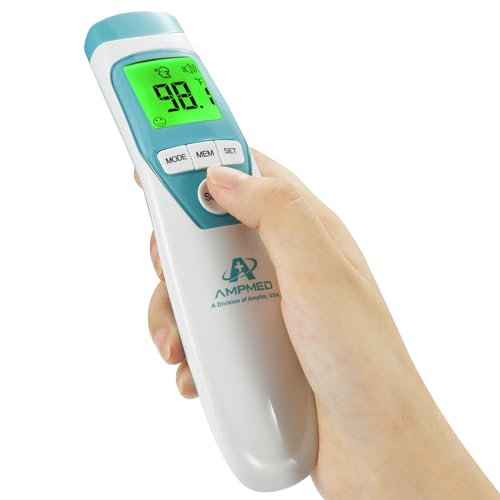
Example: Amplim CA-3 ($23.71)
Dual-Mode (Forehead + Ear) Thermometer
Combines non-contact forehead with an ear probe. The ear mode can be more accurate for older children but requires correct positioning.
- Two measurement options
- Room/object mode often included
- Ear mode less reliable for infants under 6 months
- Requires correct angle in ear
Best for: Families who want a versatile option for different ages
Example: GoodBaby AOJ-20B ($20.99)
Bath Thermometer
Floats in bathwater to display temperature. Adds a fun element while ensuring safe bath temps.
- Prevents scalding
- Cute design
- Also shows time
- Not for body temperature
- Requires special batteries (LR44)
Best for: Parents who want peace of mind during bath time
Example: B&H Baby Bath Thermometer Classic Duck ($13.49)
What Actually Matters
| Factor | Importance | Best brand |
|---|---|---|
Reading Speed ≤2 seconds Fast readings prevent squirming and help with sleeping babies. | Must-have | Most non-contact models deliver 1-second readings |
Non-Contact / Hygienic Infrared sensor, no skin contact Reduces cross-contamination and cleaning. | Must-have | Amplim, GoodBaby, femometer offer non-contact |
Fever Alarm Audible and/or color-coded at >100.4°F Essential for sleep-deprived parents to quickly assess severity. | Must-have | All non-contact models include color-coded alarm |
Memory Storage ≥30 readings Helps track fever trends over time. | Nice-to-have | Amplim CA-3 stores 60; GoodBaby FC-IR2000 stores 35 |
Battery Type (Rechargeable vs AAA) AAA batteries are standard and easily replaced. Rechargeable adds cost and complexity. | Marketing BS | — |
App Connectivity Snake oil. Apps add bugs, require pairing, and are rarely needed for a simple temperature check. | Marketing BS | — |
Budget Tiers & Top Picks
What to buy at each price point — and exactly where spending more stops paying off.
Budget (Under $15)
$10 – $14femometer Forehead Thermometer

Stop paying more: Diminishing returns above $15. Spending more gets dual-mode or higher memory, but basic non-contact works fine.
When to upgrade: Need faster reading or object mode? Step up to $20-25.
Mid-Range ($15 – $25)
$19 – $24Amplim CA-3 Non-Contact Forehead Thermometer
Stop paying more: This tier offers full feature set: fever alarm, memory, object mode. Spending more than $25 rarely adds value.
When to upgrade: Need dual-mode (forehead+ear)? Consider GoodBaby AOJ-20B at $20.99.
Premium (Over $25 – special features)
$26 – $27Amplim 2001W2 Baby Thermometer

Stop paying more: Stop at $30. Premium picks offer special ergonomics or quieter operation, but core accuracy is equal to mid-range.
When to upgrade: None needed — this tier is for specific use cases.
Common Mistakes to Avoid
Buying a forehead-only thermometer when you need rectal accuracy for newborns
For infants under 3 months, the American Academy of Pediatrics recommends rectal digital thermometers for the most reliable readings. Forehead models can be off by up to 1°F.
Cost of getting it wrong: Wasted $25 if you end up buying a second thermometer for the baby.
Choosing an ear thermometer for a baby under 6 months
Ear thermometers require correct positioning in a straight ear canal — babies' ear canals are small and curved, often leading to inaccurately low readings.
Cost of getting it wrong: Frustration and potential fever miss — $20 wasted on an unreliable tool.
Overlooking the memory recall feature
Memory storage lets you track fever trends over time. Without it, you'll need to manually log readings or rely on memory.
Cost of getting it wrong: Minor inconvenience, but can delay recognizing a worsening fever pattern.
Find Your Match
How old is your child?
Frequently Asked Questions
Which baby thermometer is most accurate?
Rectal thermometers (digital stick type) are the gold standard for infants under 3 months. For older children, non-contact forehead thermometers like the Amplim CA-3 offer fast, reliable results within ±0.4°F. Ear thermometers are less accurate for babies under 6 months due to small ear canals.
What is the best non-contact thermometer for newborns?
The Amplim CA-3 ($23.71) is our top pick: it reads in one second, has a fever alarm at 100.4°F, stores 60 readings, and includes an object mode for milk or room temperature. It's FDA-cleared and recommended for all ages.
Should I get a forehead or ear thermometer?
For most families, a forehead non-contact thermometer is the better choice — it's faster, easier, and works for all ages. Ear thermometers are more accurate for older children and adults but require correct technique and aren't reliable under 6 months.
How much should I spend on a baby thermometer?
A reliable non-contact forehead thermometer costs $20–$25. Under $15 gets you basic accuracy but fewer features like memory storage. Over $30 rarely adds meaningful value — the core sensor technology is similar across models.
Is a bath thermometer necessary?
Not strictly necessary — you can test bath water with your elbow. But the B&H Duck ($13) gives exact temperature readings and alarms if water is too hot or cold, offering peace of mind and a fun bath toy.
What features do I need in a baby thermometer?
At minimum: fast reading (≤2 seconds), fever alarm (color-coded or audible), and a clear display. Nice-to-have: memory storage to track trends, and dual mode for body and object/liquid temperatures.
Best budget baby thermometer?
The femometer forehead thermometer ($9.99) is the best under $15. It reads in 1 second, has a color-coded fever alarm, and includes dual mode (body and object). Some users report inconsistent readings, but at this price it's a solid backup.
What should I avoid when buying a baby thermometer?
Avoid ear-only thermometers for infants under 6 months, glass mercury (dangerous if broken), and models without a fever alarm. Also skip app-connected thermometers — the app adds complexity and potential pairing issues.
How we wrote this guide
We analyzed 122,986+ verified Amazon reviews across 6 finalists, cross-referenced against Wirecutter and Consumer Reports evaluations. Prices and availability updated weekly. Methodology reflected in best-of article linked below.
About this guide
Mubboo Editorial Team — independent US-market consumer research. Picks reflect editorial consensus from 3 independent review sources and 122,986+ verified buyer reviews.