Dehumidifier Buying Guide 2026: How to Choose Without Overpaying
From basements to bedrooms, here's what to look for.
By Mubboo Editorial Team · Updated May 27, 2026 · 10 min read
At a Glance
- Price range
- $176 – $310
- Data
- 120,928 verified Amazon reviews across 6 finalists
- Best for
- Large basements needing pump drainageSmart home integration with Wi-FiBudget-friendly small rooms
- Skip if
- You need a unit for a small, dry bedroom – our budget pick works fine.
Types Explained
Standard Portable Dehumidifiers
Freestanding units with wheels and a water tank, designed to move from room to room.
- Affordable
- Easy to relocate
- Variety of sizes
- Must empty tank regularly unless connected to a drain
- Larger units can be heavy
Best for: Most homes with a dedicated problem area like a basement or laundry room
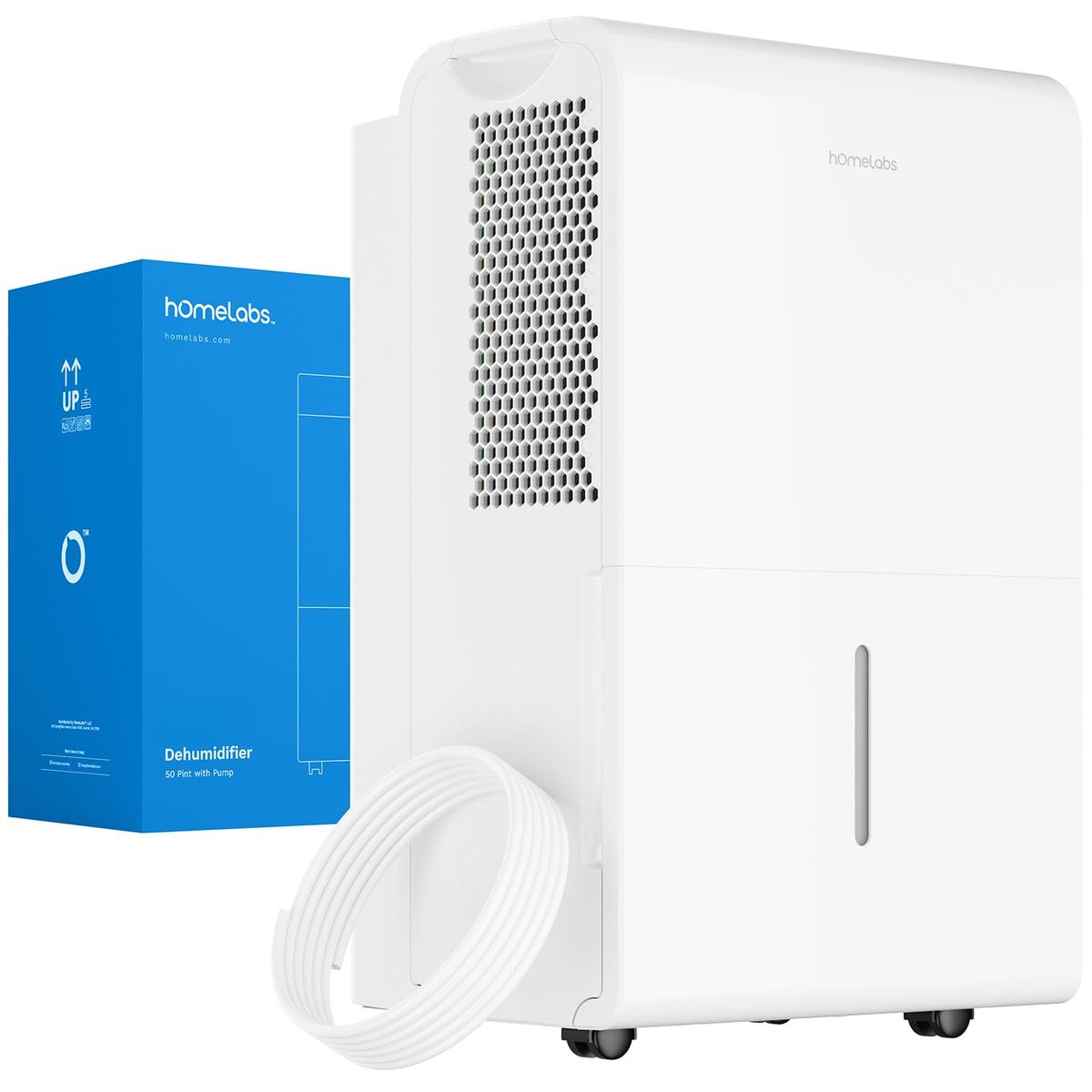
Example: hOmeLabs 50-Pint Wi-Fi Dehumidifier (7,000 sq ft)
Smart Dehumidifiers
Wi-Fi-enabled units that can be controlled via smartphone app, voice assistants, and scheduled.
- Remote monitoring and control
- Integrates with smart home ecosystems
- Timers and humidity presets
- Higher cost
- Requires stable Wi-Fi
- App reliability varies by brand
Best for: Tech-savvy homeowners who want convenience and automation
Example: hOmeLabs 4,500 Sq Ft Wi-Fi Dehumidifier
Compact/Cube Dehumidifiers
Small, lightweight units designed for tight spaces like bathrooms, closets, or RVs.
- Space-saving design
- Very quiet
- Low energy consumption
- Limited coverage (under 2,000 sq ft)
- Small tank requires frequent emptying
- Less powerful
Best for: Small rooms, bathrooms, and offices
Example: Midea 22-Pint Cube Dehumidifier
What Actually Matters
| Factor | Importance | Best brand |
|---|---|---|
Pints per Day Capacity 50 pints for basements, 22 for small rooms Higher pint ratings pull more moisture faster. Overrating wastes money; underrating leaves dampness. | Must-have | hOmeLabs |
Coverage Area (sq ft) Match to room size: 1,500 sq ft → 22 pints, 4,500 sq ft → 50 pints Capacity claims assume standard humidity. In very damp basements, go one size up. | Must-have | Frigidaire |
Energy Star Efficiency Look for 'Most Efficient' badge Energy Star Most Efficient models use 20–30% less electricity than non-certified units. | Must-have | Waykar (80-pint model) |
Continuous Drainage (Pump) Gravity drain works if drain is below unit; pump allows upward drainage A pump is essential for basements without floor drains. Saves daily bucket-carrying. | Nice-to-have | hOmeLabs (built-in pump on premium models) |
Noise Level Under 40 dB for bedrooms, under 50 dB for living spaces Check decibel ratings. Some 'quiet' units get loud on max fan. | Nice-to-have | Midea (noted for quiet operation) |
Ionizer / Air Purifier Feature Ionizers add negligible air quality benefit. Don't pay extra for this gimmick. | Marketing BS | — |
UV Sterilization UV lights kill some bacteria but require maintenance and add little value in residential dehumidifiers. | Marketing BS | — |
Budget Tiers & Top Picks
What to buy at each price point — and exactly where spending more stops paying off.
Budget ($150–$200)
$150 – $200Midea 22-Pint Energy Star Dehumidifier

Stop paying more: Stop at $200. Spending more in this pint range doesn't get better performance – check your square footage first.
When to upgrade: If your space exceeds 1,500 sq ft, step up to the mid-tier 50-pint models.
Mid-Range ($200–$280)
$200 – $280Yaufey 80-Pint Smart Dehumidifier (5,000 sq ft)

Stop paying more: At $230, you get 80-pint capacity and Wi-Fi. Spending $280+ buys only incremental convenience like a bigger tank.
When to upgrade: For a truly premium experience with a built-in pump and 7,500 sq ft coverage, move to the premium tier.
Premium ($280–$350)
$280 – $350hOmeLabs 7,500 Sq Ft Dehumidifier with Pump
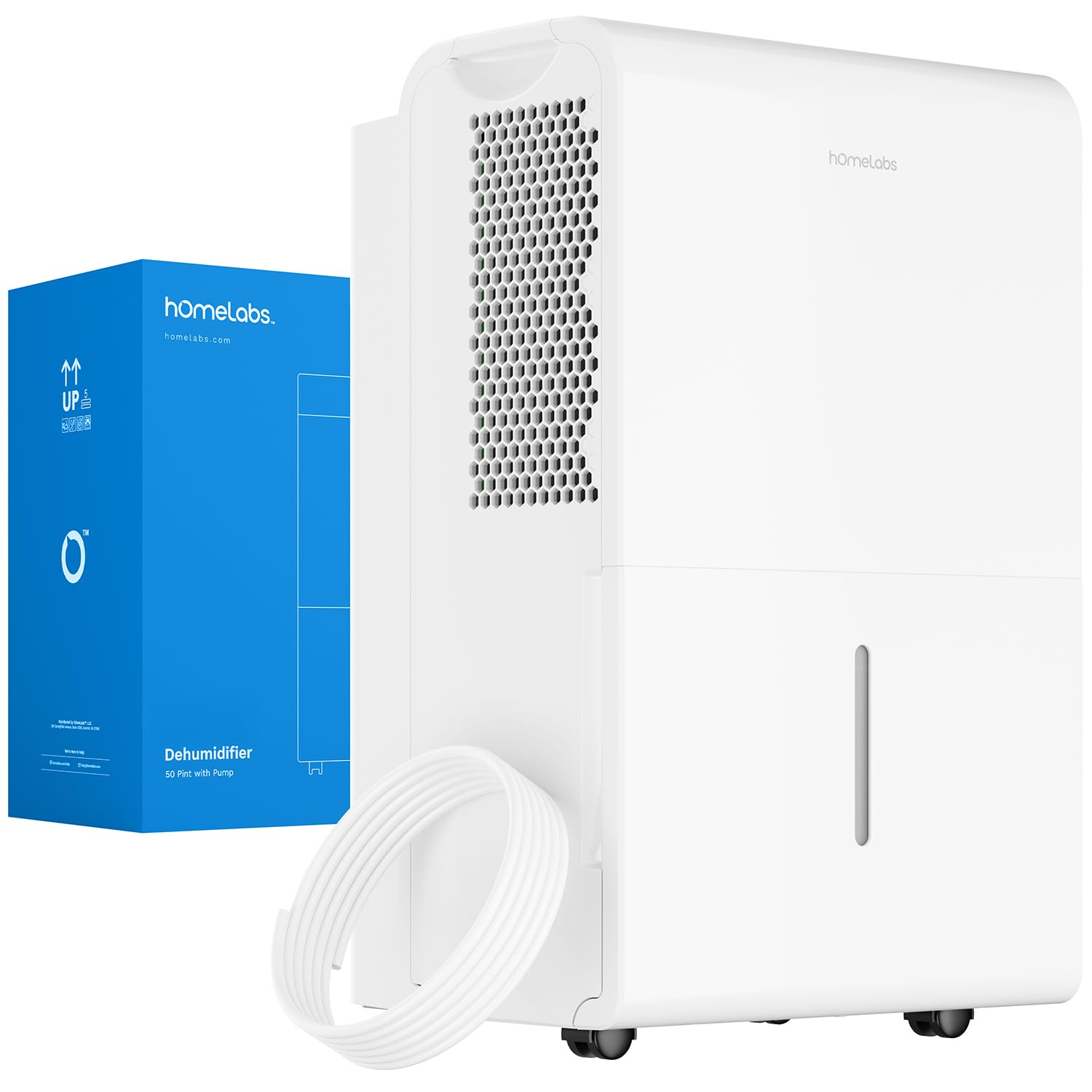
Stop paying more: Beyond $310, you're paying for brand or extra smart features. The hOmeLabs pump model already covers the largest home spaces.
When to upgrade: If you need whole-home coverage and have central HVAC, consider a professionally installed whole-home dehumidifier.
Common Mistakes to Avoid
Buying too small for your space
A 22-pint unit in a 5,000 sq ft basement will run constantly and never catch up.
Cost of getting it wrong: Re-buying a larger unit – $150–$300 wasted.
Ignoring pump vs gravity drain
Gravity drain only works if your drainage point is below the unit. In a basement with a floor drain, fine. But most basements need a pump to push water up.
Cost of getting it wrong: Returning a unit or adding a separate pump – $50–$100 extra.
Overlooking noise levels
Some units hit 52 dB on high – that's loud enough to disrupt sleep or TV. Always check decibel ratings for your intended room.
Cost of getting it wrong: No direct cost, but real annoyance and potential return shipping.
Choosing without Energy Star
Non-certified units can cost $30–$50 more per year in electricity. Over five years, that's $150–$250.
Cost of getting it wrong: Higher utility bills – up to $250 over the product's life.
Find Your Match
What size is your space?
Frequently Asked Questions
What size dehumidifier do I need for my basement?
For a finished basement up to 1,500 sq ft, a 22-pint unit works. For larger spaces (up to 5,000 sq ft), choose a 50-pint model. Very damp basements or crawl spaces may need 80 pints or more.
Should I get a dehumidifier with a pump?
Yes if your drainage point is above the unit (common in basements). A pump lets you drain via a hose into a sink or drain at a higher level. Without a pump, you'd carry buckets or rely on gravity.
How many pints per day does my space require?
General rule: 22 pints for up to 1,500 sq ft, 30–50 pints for 2,500–4,000 sq ft, and 80+ pints for 5,000 sq ft or more. Very humid areas may need one size up.
Is Energy Star certification worth the extra cost?
Yes. Energy Star Most Efficient models use 20–30% less electricity, saving $30–$50 annually. Over 5 years, that's $150–$250 – offsetting a higher upfront price.
Can a dehumidifier run continuously?
Yes, most units offer continuous operation. With a hose connected to a drain, they can run 24/7 without emptying. During very humid months, this is common.
How often do I need to empty the water tank?
It depends on tank size and humidity. A 1-gallon tank in a damp basement may need emptying every 6–12 hours. Larger tanks (2.5 gallons) last a day or two. Continuous drainage eliminates this.
What is the best dehumidifier for a large basement?
Look for 50+ pints per day, a pump, and Energy Star certification. The hOmeLabs 7,500 sq ft model (with pump) is a top pick, but many reliable 50-pint units also work well.
What is the best budget dehumidifier under $200?
The Midea 22-pint cube model is a top seller with 6,954 reviews and 4.4 stars. It's Energy Star certified and quiet, ideal for small rooms. For larger needs, save up for the mid-tier.
Which dehumidifier is quietest for a bedroom?
Midea's cube models are rated as some of the quietest, around 32 dB on low. Look for decibel ratings under 40 dB. Avoid models with loud compressors; check reviews for noise complaints.
Do Wi-Fi dehumidifiers offer real benefits?
Yes for convenience: you can set schedules, monitor humidity remotely, and receive filter alerts. But if you just set it and forget it, the extra $40–$60 may not be worth it.
How we wrote this guide
We analyzed 120,928 verified Amazon reviews across 6 finalists, cross-referenced expert verdicts from Wirecutter, Consumer Reports, and Good Housekeeping, and scanned community discussions on r/HomeImprovement and r/BuyItForLife.
About this guide
Mubboo Editorial Team – independent US-market consumer research. Picks reflect editorial consensus from 3 independent review sources and 120,928+ verified buyer reviews.