Pressure Washer Buying Guide 2026: PSI vs. GPM, Electric vs. Gas Explained
Why cleaning power is really two numbers multiplied together, and when gas is genuinely worth the extra weight.
By Mubboo Editorial Team · Updated Jul 1, 2026 · 7 min read
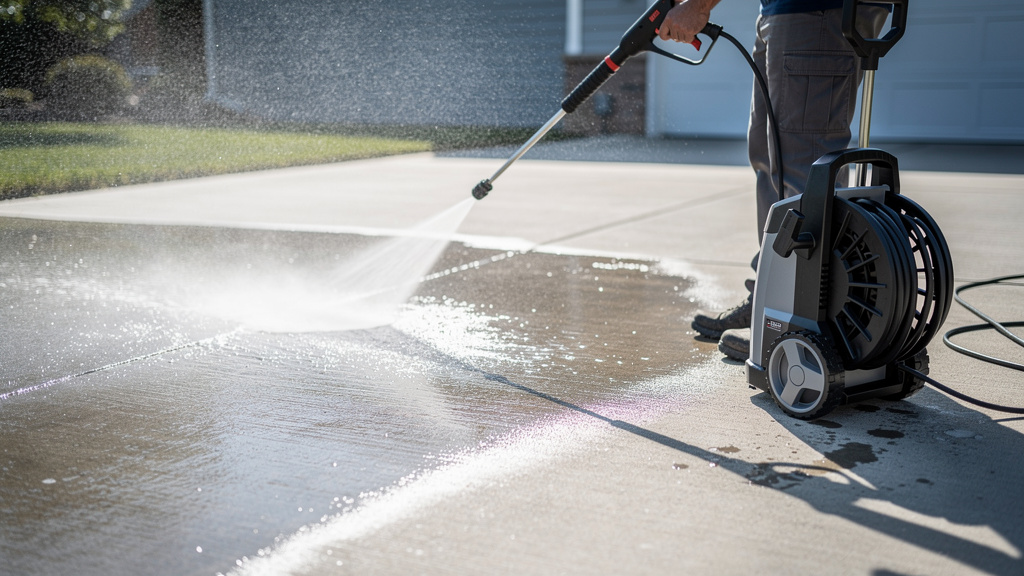
At a Glance
- Price range
- $120 – $349
- Data
- 107,000+ verified reviews analyzed across 6 finalists
- Best for
- Car and patio furniture washingDriveway and concrete cleaningLight siding and fence cleaning
- Skip if
- You need daily commercial-duty use — that's typically gas or diesel equipment sold through different channels
Types Explained
Electric Pressure Washers
Corded electric washers that plug into a standard outlet, generally topping out around 2,500 PSI.
- Lighter and quieter than gas models
- No fuel, oil, or engine maintenance
- Lower maximum PSI and GPM than gas models
- Needs an outlet within extension-cord range
Best for: Cars, patio furniture, fences, and light siding
Example: Sun Joe SPX3000 Electric Pressure Washer
Gas Pressure Washers
Engine-powered washers reaching higher PSI and GPM than electric models, at the cost of more weight and maintenance.
- Highest PSI and GPM available in this category
- No outlet or extension cord required
- Significantly heavier than electric models
- Requires engine oil, fuel, and regular maintenance
Best for: Large concrete areas, driveways, and heavy grime removal
Example: Westinghouse WPX3400 Gas Pressure Washer
Compact / Portable Electric Washers
The lightest electric models in the category, built for easy carrying and storage over dual-tank capacity.
- Easiest to move around a property
- Simple to store in a closet or garage corner
- Typically smaller detergent capacity than larger electric models
- Slightly lower PSI than the largest electric models
Best for: Smaller properties or anyone who values portability over maximum capacity
Example: Westinghouse ePX3100v Electric Pressure Washer
What Actually Matters
| Factor | Importance | Best brand |
|---|---|---|
PSI (pounds per square inch) matched to the job 1,500-2,300 PSI handles cars, patio furniture, and light siding; 2,800+ PSI is better suited to driveways, concrete, and heavy-duty stripping Higher PSI isn't automatically better — too much pressure can damage wood, vehicle paint, or older siding. Match the number to the surface, not just the highest spec. | Must-have | The Westinghouse WPX3400 leads this list at 3,400 PSI |
GPM (gallons per minute) alongside PSI PSI measures force, but GPM measures how much water moves the dirt away — a higher GPM clears grime faster at the same PSI Cleaning power is really PSI multiplied by GPM together, not either number alone. | Must-have | The gas models in this list both exceed 2.5 GPM, well above the electric models' roughly 1.2-1.76 GPM |
Electric vs. gas power source Electric models are lighter, quieter, and need no fuel or oil, but top out around 2,500 PSI; gas models reach higher PSI and GPM but are heavier and need engine maintenance Most residential cleaning tasks — cars, patios, fences — don't need gas-level power; reserve gas for large concrete areas or heavy stripping jobs. | Must-have | Sun Joe and the Westinghouse ePX line are all electric; the WPX line is gas-powered |
Weight and portability Electric models in this list range from about 17 to 24 pounds; gas models run 60+ pounds — a real factor if you're moving it around a property regularly. | Nice-to-have | — |
'Heavy-duty' or 'commercial-grade' claims on a consumer electric washer True commercial-duty pressure washers are typically gas- or diesel-powered units built for daily use, sold through different channels — a consumer electric washer marketed as 'commercial-grade' is describing durability, not a duty-cycle certification. | Marketing BS | — |
Max PSI headline numbers vs. rated PSI Listings often headline 'max PSI,' measured at the lowest-pressure nozzle setting — the 'rated PSI' figure, when listed, better reflects sustained real-world pressure. | Marketing BS | — |
Budget Tiers & Top Picks
What to buy at each price point — and exactly where spending more stops paying off.
Entry Electric
$120 – $140Westinghouse ePX3100v Electric Pressure Washer

Stop paying more: At this price, you get a compact, well-reviewed electric washer — paying more mostly buys higher PSI or extra tank capacity.
When to upgrade: Want the most-reviewed option or dual detergent tanks? Step up to the mid tier.
Standard Electric
$140 – $170Sun Joe SPX3000 Electric Pressure Washer

Stop paying more: This tier's review volume and feature set are the ceiling for electric washers most homeowners need.
When to upgrade: Need to clean large concrete areas or heavy grime? Move to the gas tier.
Gas Powered
$300 and upWestinghouse WPX3400 Gas Pressure Washer
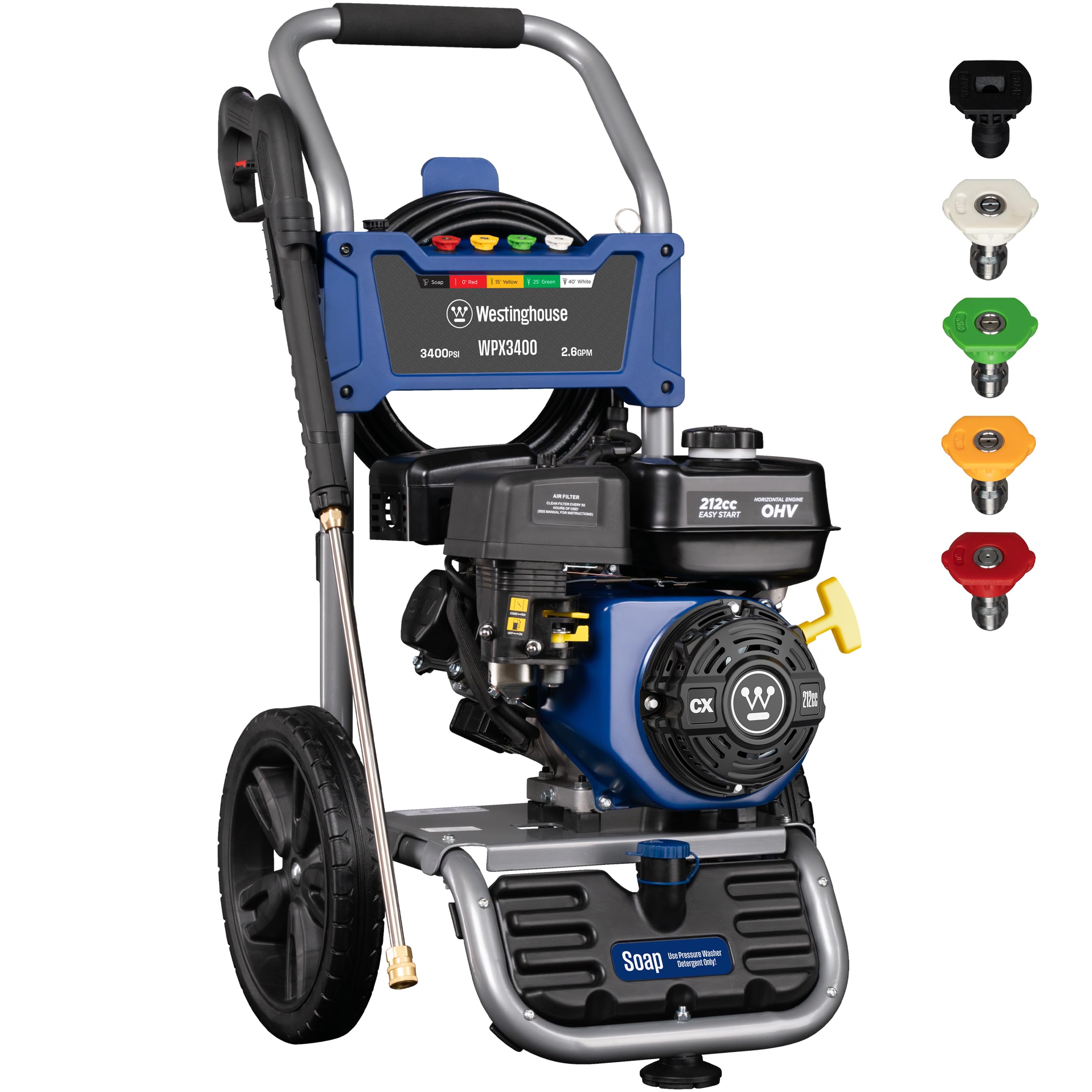
Stop paying more: 3,400 PSI and 2.6 GPM here are the ceiling for consumer gas pressure washers — going higher moves into commercial-duty equipment sold through different channels.
When to upgrade: There isn't a meaningful step up from here for residential use — beyond this is commercial-grade equipment.
Common Mistakes to Avoid
Buying based on PSI alone, ignoring GPM
Cleaning power comes from PSI and GPM together — a high-PSI, low-GPM washer can actually clean more slowly than a lower-PSI model with higher water flow.
Cost of getting it wrong: Slower cleaning than expected despite a higher headline PSI number
Choosing gas power for tasks electric handles fine
Most residential jobs — cars, patio furniture, fences — don't need gas-level pressure or flow. Gas adds weight, engine maintenance, and fuel costs for power most homeowners won't use.
Cost of getting it wrong: Ongoing fuel and maintenance costs for capability that goes unused
Using too much pressure on a delicate surface
The highest PSI settings can strip paint, gouge wood, or damage older siding — start with a wider-angle nozzle and lower pressure, then increase only if needed.
Cost of getting it wrong: Surface damage that costs more to repair than the pressure washer itself
Confusing 'max PSI' with sustained real-world pressure
Max PSI is often measured at the lowest-pressure nozzle setting — the rated PSI figure, when a listing provides one, better reflects what you'll actually get during normal use.
Cost of getting it wrong: Expecting more cleaning power than the unit delivers day-to-day
Find Your Match
What are you mostly cleaning?
Frequently Asked Questions
How much should I spend on a pressure washer?
Electric models run $120-$170. Gas-powered models with higher PSI and GPM run $300-$350.
What should I avoid when buying a pressure washer?
Avoid buying on PSI alone without checking GPM, and don't choose gas power for tasks electric handles fine — most residential cleaning doesn't need gas-level pressure.
What PSI do I need for a pressure washer?
1,500-2,300 PSI handles cars, patio furniture, and light siding. 2,800+ PSI suits driveways, concrete, and heavy-duty stripping — but too much pressure can damage delicate surfaces.
Is a gas or electric pressure washer better?
Electric is lighter, quieter, and needs no fuel, topping out around 2,500 PSI. Gas reaches higher PSI and GPM but weighs more and needs engine maintenance — reserve it for heavy-duty jobs.
What's the difference between max PSI and rated PSI?
Max PSI is often measured at the lowest-pressure nozzle setting. Rated PSI, when listed, better reflects the sustained pressure you'll get during normal use.
Can a pressure washer damage surfaces?
Yes, at high pressure — it can strip paint, gouge wood, or damage older siding. Start with a wider-angle nozzle and lower pressure, then increase only if needed.
How we wrote this guide
Synthesized from 6 finalists and 107,000+ verified Amazon reviews across electric and gas pressure washers. Prices update weekly from Amazon.
About this guide
Mubboo Editorial Team. Picks based on comparison of PSI, GPM, and verified user reviews. Prices update weekly from Amazon.