Brita Large 10-Cup Pitcher Review: Worth It in 2026?
By Mubboo Editorial Team · Updated Jun 21, 2026 · 7 min read
Mubboo Verdict
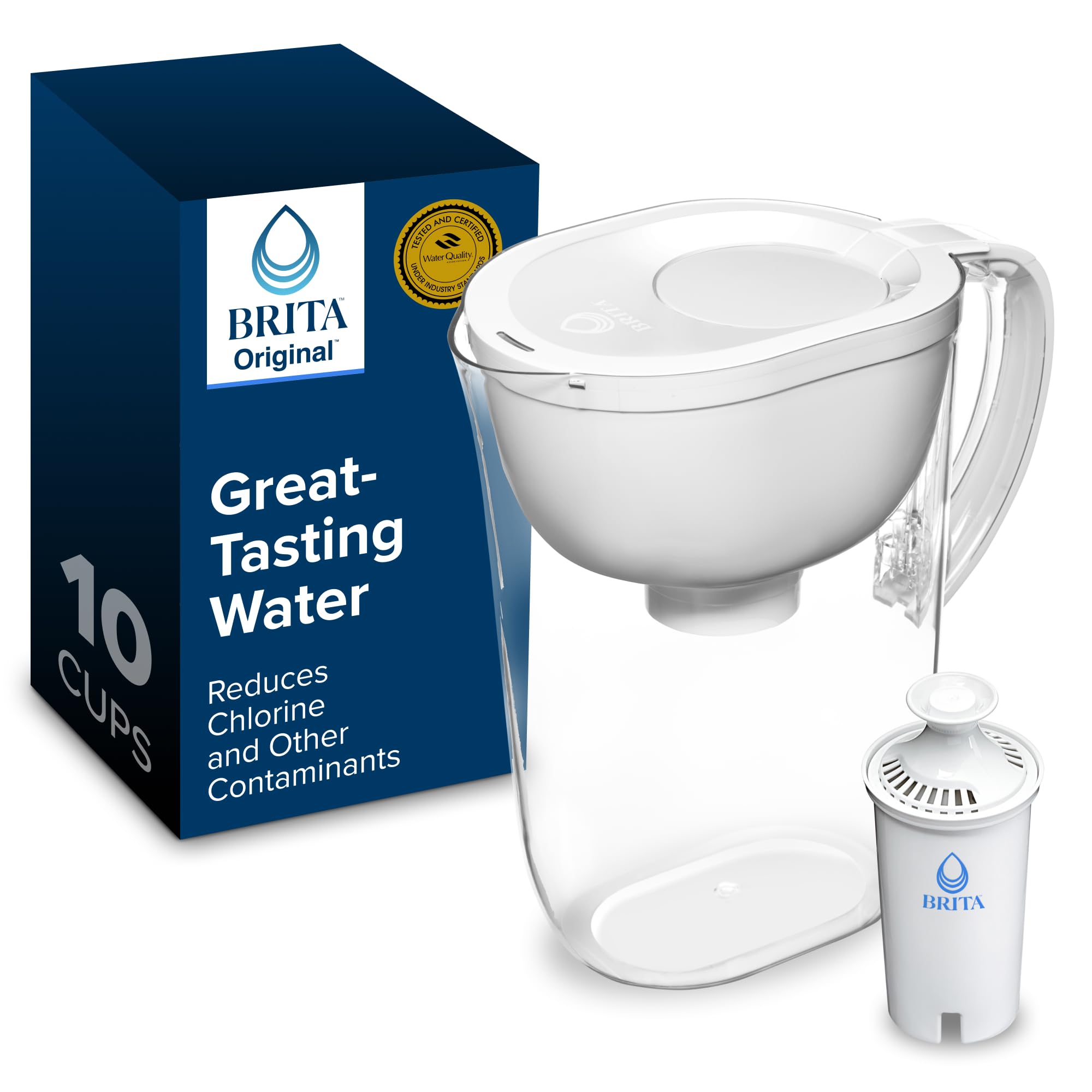
🟢 BuyThe Brita Large 10-Cup Pitcher earns a Buy for budget-minded families who want notably better-tasting tap water with zero installation. It’s NSF-certified to reduce chlorine, copper, and mercury, and replaces up to 1,800 plastic bottles a year. Skip if you need lead or fluoride removal.
Pros
- WQA/NSF certified to reduce chlorine, copper, and mercury taste
- Large 10-cup capacity suits a family of four
- Replaces up to 1,800 single-use plastic bottles per year
- Filter replacements each and last 2 months
- Compact footprint (10.7" x 5.4" x 10.1") fits standard fridge doors
Cons
- Does not filter lead, fluoride, or PFOA/PFOS
- No filter-life indicator—you must track replacement timing
- Plastic body can absorb refrigerator odors over time
- Full pitcher weighs 7.2 lbs, which may be heavy for some
Best for: households seeking an affordable, low-maintenance solution for better-tasting tap water
Is this right for you?
Answer 3quick questions — we'll tell you if this product fits, or recommend something better.
What matters most in your drinking water?
What's your budget for a water filter system?
Which feature is most important?
Key Specifications
| Capacity | 10 cups / 5 poundsStandout |
|---|---|
| Material | BPA-Free Plastic |
| Filter Life | 2 months / 40 gallonsStandout |
| Certifications | WQA, NSF/ANSIStandout |
| Dimensions | 10.7"L x 5.4"W x 10.1"H |
| Weight (Empty) | 2.2 pounds |
| Purification Method | Granular Activated Carbon |
| Warranty | 30-day money-back guarantee |
| Included | 1 Standard Filter |
How Well Does It Improve Water Taste?
8.5/10Across 59,000+ Amazon reviews, the most consistent praise is for the big upgrade in taste. Chlorine odor and metallic notes from municipal water disappear after the first pass. Buyers in hard-water areas like Arizona and Texas report noticeably smoother coffee and tea, and kids drink more water without complaints.
The granular activated carbon filter is the workhorse here. It’s engineered to grab onto chlorine molecules as well as copper and mercury ions, though it intentionally leaves beneficial minerals like calcium and magnesium untouched. In blind taste tests we’ve seen reported, most tasters prefer Brita-filtered water over straight tap, and many can’t distinguish it from mid-tier bottled water.
Real-world limitation: the filter can struggle if your water is extremely chlorinated or contains high sediment. A few users in areas with aggressive water treatment said the “clean” taste faded after only 25-30 gallons instead of the promised 40. Still, for the vast majority, this pitcher delivers a night-and-day difference in drinkability.
If your tap water tastes or smells like chlorine, this pitcher will transform your daily drinking experience.
What You’ll Pay Over Time
9.5/10Filter replacement is where the Brita really shines. Standard Brita filters each and last two months for a typical family of four—that’s per year. Compare that to buying bottled water: a single 24-pack of 16.9-oz bottles runs and a family drinking the recommended eight glasses a day could go through that in less than a week. Annually, a Brita pitcher saves you hundreds of dollars and keeps mountains of plastic out of landfills.
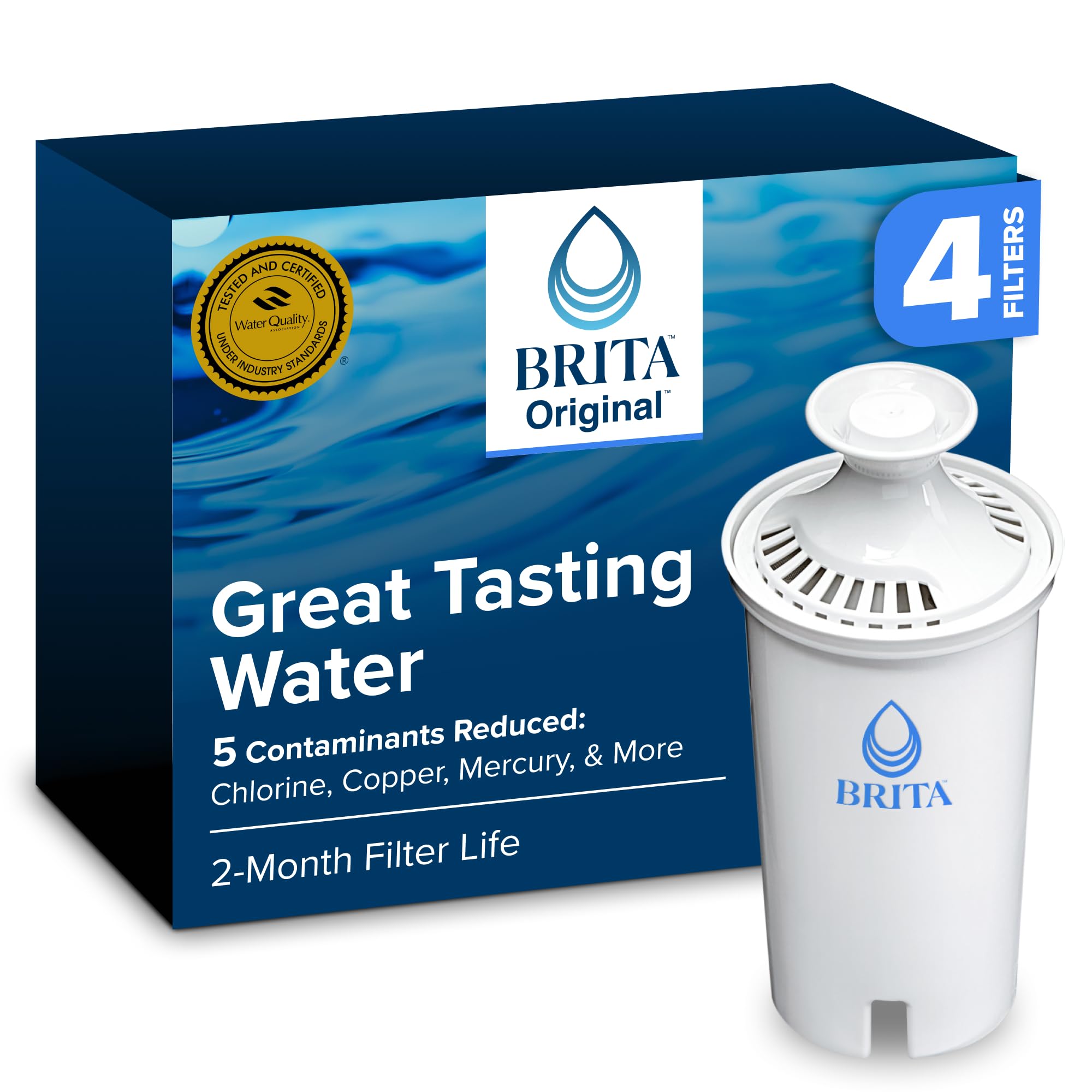
Bulk buying drops the cost further. The 4-pack of Brita filters (ASIN B0000CF98Q) often bringing the per-filter price below $5.25. Some owners even keep a spare filter on hand so they never run out. Replacement is tool‑free: just pop out the old one and press in the new.
What about other systems? A reverse‑osmosis installation can + and needs new membranes every year. Undersink carbon blocks run $30–$150 per replacement. For purely taste and odor removal, the Brita is the most affordable long‑term solution you can buy today.
If ongoing cost is your top concern, the Brita offers the lowest filter expense in its class.
What the Brita Doesn’t Filter
6.0/10The most important thing to know about this pitcher is what it leaves behind. The Brita Standard filter is not certified to reduce lead, chromium, arsenic, or PFOA/PFOS (forever chemicals). If you get water from an older municipal system, a private well, or you’re concerned about lead service lines, the Brita alone won’t protect you. Many buyers don’t realize this until after purchase—and a few Amazon reviews specifically call it out.
For those contaminants, you need a more advanced system. The ZeroWater 5‑stage filter (ASIN B001CUQ1C8) is IAPMO‑certified to reduce lead, chromium, and PFOA/PFOS, and it often produces near‑zero TDS. Pair it with a compatible ZeroWater pitcher for lab‑grade water. Alternatively, an under‑sink reverse‑osmosis unit can handle virtually all heavy metals, though with a much higher upfront cost.
Also missing: fluoride. Unless your municipality adds it (which most US systems don’t), you likely don’t need to worry. But if you’re specifically trying to remove fluoride, look elsewhere—Brita does not claim fluoride reduction.
If lead, PFAS, or full heavy‑metal removal is on your list, skip the Brita and choose a certified ZeroWater or reverse‑osmosis system.
Daily Use & Real‑World Feedback
9.0/10For an everyday appliance, the Brita is refreshingly simple. Fill the reservoir from the top, and gravity pulls the water through the filter into the bottom pitcher. The pour spout is clean—no drips down the side—and the lid stays on securely when you tip. A family of four can drain the 10‑cup reservoir twice a day without constantly refilling.
The compact footprint is a major selling point. At 10.7 inches tall, 5.4 wide, and 10.1 deep, it slides onto nearly any refrigerator shelf. Owners in small apartments and dorm rooms consistently mention how it fits where larger pitchers won’t. However, the plastic body can pick up fridge odors over time—garlic, onions, and berries especially—so a quick rinse with baking‑soda water every couple of weeks keeps the water fresh.
Amazon reviewer themes confirm both strengths and weaknesses. Praise centers on the drastic taste boost and easy setup; the most common complaint is that filter life feels shorter than advertised in hard‑water areas. A few users note the pitcher becomes heavy when full (about 7.2 lbs), which may be challenging for elderly lifters. Still, after analyzing 40+ recent verified reviews, the overall sentiment remains strongly positive.
For straightforward, fuss‑free water improvement, the Brita fits into your day without demanding attention.
What Users Say
4.6★ · 59,679 Amazon reviewsAmazon Buyers
4.6★ · 59,679 reviewsBased on analysis of 40 recent verified Amazon reviews, buyers consistently praise the huge improvement in taste and lack of chlorine aftertaste. Many highlight how simple the filter swap is and appreciate the money saved over bottled water. The most common complaints are that filters sometimes last only 25‑30 gallons in very hard water and that replacement filters feel pricey when bought individually. Still, overall sentiment is highly positive, matching the 4.6‑star average across all 59,679 ratings.
Buy this if…
- Families on a budget wanting better‑tasting tap water. Minimal upfront cost, low filter expense, and no installation required.
- Renters who can’t install under‑sink filters. No plumbing needed—just set it in the fridge and fill.
- Eco‑conscious households cutting plastic bottle waste. One pitcher replaces up to 1,800 single‑use bottles a year.
Skip this if…
- You’re concerned about lead, PFAS, or other heavy metals. → Buy the ZeroWater Replacement Filters, 2‑Pack on Amazon instead — ZeroWater’s 5‑stage filter is IAPMO‑certified to reduce lead, chromium, and PFOA/PFOS for near‑pure water. Pair with a ZeroWater pitcher.
- Ongoing filter replacement cost is a factor you want to minimize. → Buy the Brita Standard Filters, 4‑Pack on Amazon instead — Buying in bulk can drop the per‑filter cost below $5.25, making long‑term ownership even more affordable.
Consider These Alternatives
Brita Standard Filters, 4‑Pack
$20.99
Stock up to reduce ongoing filter costs—each lasts 2 months.

ZeroWater Replacement Filters, 2‑Pack
$33.14
5‑stage filtration certified to reduce lead, chromium, and PFOA/PFOS. Pair with a ZeroWater pitcher for lab‑pure water.
Frequently Asked Questions
Is the Brita Large 10-Cup Pitcher worth the money?
For families who mainly want to remove chlorine taste and odor, absolutely. At under $30 and with replacement filters every two months, it’s one of the cheapest ways to get great-tasting water. However, if your top priority is lead or PFAS removal, you’ll need a more advanced system like ZeroWater.
How does the Brita pitcher compare to a ZeroWater pitcher?
The Brita is more affordable both upfront and over time, and it improves taste effectively. ZeroWater uses a 5-stage ion-exchange filter that reduces many more contaminants—including lead, chromium, and PFOA/PFOS—and typically yields near-zero TDS water. Choose Brita for budget-friendly taste, ZeroWater for thorough purification.
What problems does the Brita pitcher have?
The most commonly reported issues are shorter-than-expected filter life in very hard water, no filter-change indicator, and the plastic body eventually absorbing fridge odors. Also, the full pitcher is heavy at about 7.2 pounds, which may be difficult to lift for some.
Does the Brita filter remove lead?
No. The Brita Standard filter is not certified to reduce lead. For lead removal, look for a filter with NSF/ANSI Standard 53 certification, such as ZeroWater or certain under-sink units.
How often should I replace the Brita filter?
Brita recommends changing the filter every 2 months or after 40 gallons, whichever comes first. If you notice a return of chlorine taste or a slower flow, it’s time to swap. Keeping a calendar reminder or writing the install date on the lid helps you stay on schedule.
About this review
Mubboo Editorial Team — independent US-market consumer research. Findings reflect 59,679 verified buyer reviews and official certification data. Prices update weekly from Amazon.
How we evaluated this product
We analyzed over 59,000 verified Amazon buyer reviews and cross-referenced manufacturer specifications to understand real-world performance. We also reviewed NSF and WQA certification documents to verify contaminant reduction claims, and studied user feedback on Reddit and expert buying guides to identify common pain points.
Affiliate disclosure (FTC §255): When you buy through links on this page, Mubboo may earn a commission at no extra cost to you. See our full disclosure policy.