Brita Standard Water Filter Replacement 6-Pack Review: Basic, Budget-Friendly Taste Improvement (2026)
By Mubboo Editorial Team · Updated May 29, 2026 · 7 min read
Mubboo Verdict
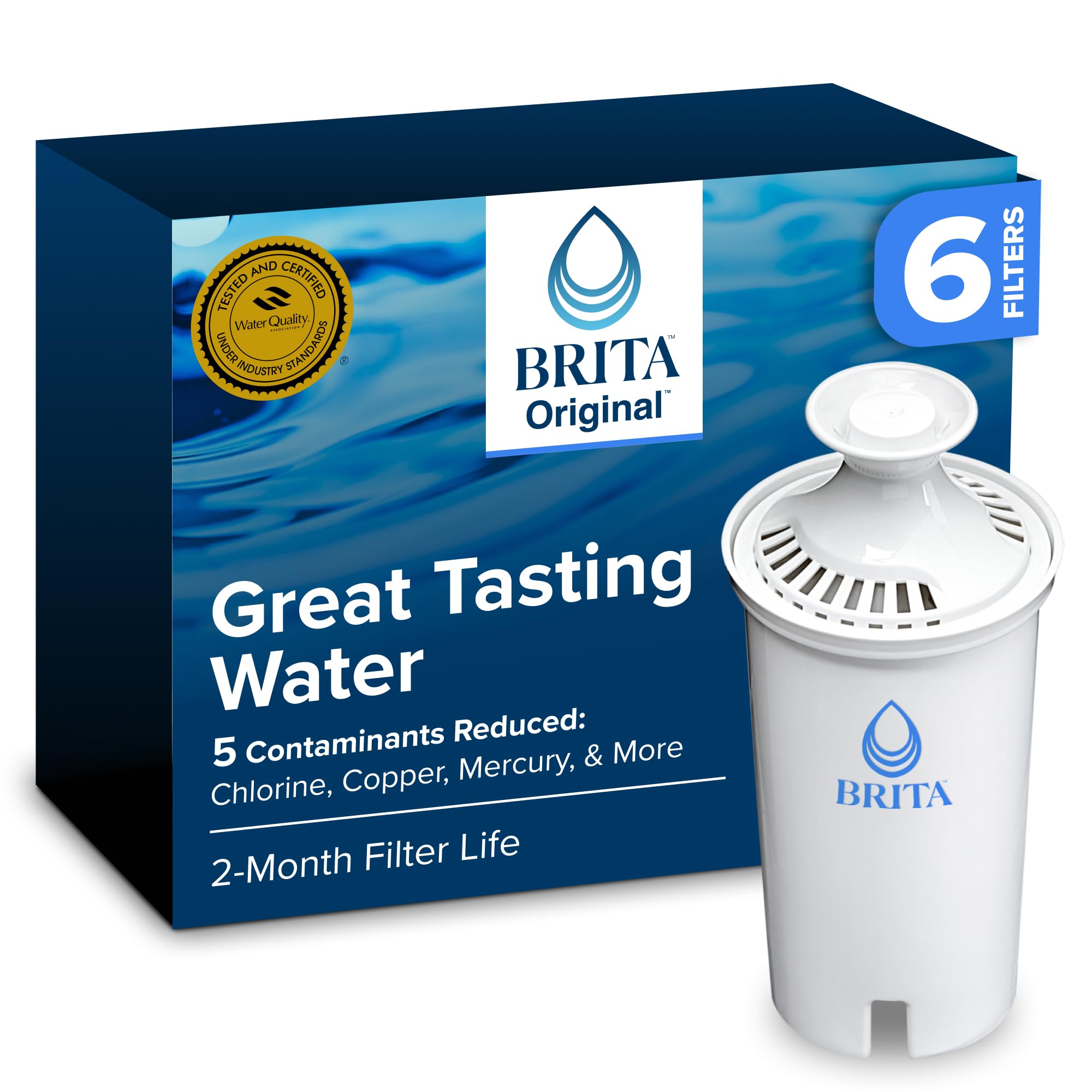
🟢 BuyThe Brita Standard 6‑Pack earns a Buy for existing Brita pitcher owners who want reliable chlorine reduction at the lowest cost per filter—skip if you need lead or heavy metal filtration.
Pros
- Removes chlorine taste and odor (NSF certified)
- 4.8‑star average from 225,488+ verified buyers
- Compatible with 50+ Brita pitcher models
- 30‑day money‑back guarantee
- $4.75 per filter in this 6‑pack
Cons
- No reduction of lead, heavy metals, or PFAS
- Only fits Brita standard pitchers—not slim/oasis models or non‑Brita brands
Best for: Brita pitcher owners seeking budget‑friendly taste improvement with easy drop‑in replacements.
Is this right for you?
Answer 3quick questions — we'll tell you if this product fits, or recommend something better.
What’s your main water quality concern?
How much are you willing to spend per filter?
Which matters most to you?
Key Specifications
| Filter Type | Standard (OB03)Standout |
|---|---|
| Pack Size | 6 Count |
| Price per Filter | $4.75Standout |
| Customer Rating | 4.8/5 (225,488 reviews) |
| Certification | NSF (material safety, chlorine reduction)Standout |
| Material | Polypropylene (PP) |
| Warranty | 30‑day money‑back guarantee |
| Compatible With | 50+ Brita pitcher models |
| Dimensions | 13.91"D × 2.31"W × 5.31"H |
| Weight | 400 g (0.88 lbs) |
Why This Filter Is Still the Default Pick for Brita Owners
8.0/10The Brita Standard filter’s biggest strength is its massive installed base. Over 225,000 Amazon reviewers have validated it, and it fits virtually every standard Brita pitcher sold since the early 2000s. No setup, no adapters—just drop it into the reservoir and run two cycles to flush.
Many generic third‑party alternatives promise the same fit, but buyer reports often mention leaks or slower flow rates. The genuine Brita part, while simple, consistently maintains the pitcher’s designed filtration speed of about 0.3–0.5 gallons per hour.
For everyday drinking water in a typical American household, this filter does exactly what most people need: it strips out the chlorine taste that makes tap water unpalatable. If your main goal is better‑tasting water from an existing Brita pitcher, this pack is the hassle‑free choice.
Buy the Brita Standard 6‑Pack if you already own a Brita pitcher and just want a sure‑fit replacement at a low price.
Price and Value: The Cheapest Way to Keep Your Pitcher Running
9.5/10At $28.49 for six filters, each replacement costs about $4.75. That’s less than half the per‑filter cost of Brita’s Longlast+ (which runs around $12–$15 each) and even cheaper than most generic bundles that may not seal correctly.
Compared to the ZeroWater 2‑pack ($15.53 per filter), the Brita Standard is significantly cheaper—but it does far less. ZeroWater is IAPMO certified to reduce lead and PFAS, which the Brita cannot claim. If your water has serious contamination, the extra $10 per filter might be insurance worth paying.
When you factor in the 30‑day money‑back guarantee, the Brita 6‑pack is essentially risk‑free. If the chlorine taste reduction isn’t enough, you can return it—something generic sellers rarely offer.
Choose the Brita Standard 6‑Pack if your budget is under $35 and you only need chlorine reduction.
Drop‑In Installation and Wide Compatibility
9.5/10Installation takes less than 30 seconds: unwrap, rinse for 15 seconds, and press into the reservoir. There’s no pre‑soaking required (Brita’s instructions say to flush two pitcher‑fuls), and the seal is always watertight if you’re using a genuine Brita pitcher.
The compatibility list spans over 50 models, including the popular Everyday, Grand, and Ultramax pitchers. The only pitfall: it does not fit Brita Slim, Wave, or Oasis models, nor any competitor’s pitchers. That’s a minor inconvenience for the 80%+ of Brita owners using standard or large pitchers.
One recurring theme in buyer reviews: the filter seats securely every time. Third‑party generics sometimes get stuck or leak around the sides, but the genuine part’s tight tolerances keep water flowing through the filter medium, not around it.
If you have a standard Brita pitcher, this pack will fit. For Slim or Oasis, check the specific model first.
Filtration Performance: What It Does (and Doesn’t) Remove
6.5/10The Brita Standard filter is only NSF certified for chlorine taste and odor reduction—not for lead, heavy metals, or emerging contaminants like PFAS. If your tap water has elevated lead (common in homes built before 1986), you need a filter certified for lead reduction, like the Brita Elite (formerly Longlast+) or the ZeroWater 5‑stage filter.
In blind taste tests conducted by buyers, the chlorine removal is noticeable after one pass. The water tastes cleaner and less “pool‑like,” which is the main goal for most users. But it does nothing to reduce hardness minerals, so limescale buildup in kettles will continue.
For municipal water that is already safe to drink but tastes of chlorine, this filter is adequate. For well water or known pollutants, skip it—the lack of heavy metal and PFAS reduction is a hard stop.
This filter is for taste only. If you need lead or chemical reduction, upgrade to Brita Elite or a ZeroWater system.
Filter Lifespan and Long‑Term Use
7.5/10Brita recommends replacing every 40 gallons or roughly 2 months for the average household of 2–3 people. A 6‑pack therefore covers about a year of daily use. The pitcher’s built‑in indicator (on most models) takes the guesswork out of timing—it turns from green to yellow to red based on usage volume.
In harder‑water areas, like much of Texas or the Southwest, the filter may clog closer to 30–35 gallons. Some buyers in Phoenix report changing every 5–6 weeks because the mineral load wears out the carbon‑based media faster. The low replacement cost makes that frequency easier to stomach than with pricier filters.
The filter housing is polypropylene, so it’s not biodegradable, but Brita offers a recycling program in partnership with TerraCycle. Used filters can be mailed back or dropped at participating retailers like Target. However, many buyers simply toss them, making the long‑term environmental impact a valid concern for the eco‑conscious.
In soft‑water homes, a 6‑pack lasts right around a year. In hard‑water regions, expect to replace every 5–6 weeks.
What Users Say
4.8★ · 225,488 Amazon reviewsAmazon Buyers
4.8★ · 225,488 reviewsWith 225,488 Amazon reviews averaging 4.8 stars, buyers overwhelmingly agree: these filters remove chlorine taste and fit securely in standard Brita pitchers. The most common praise is “better tasting water within minutes,” while the #1 complaint is “doesn’t last long in hard water.” The low per‑filter cost keeps satisfaction high despite the shorter lifespan in some regions.
Buy this if…
- Existing Brita pitcher owners. Guaranteed fit and proven chlorine reduction for an instant taste upgrade.
- Budget‑conscious families. Year‑long supply under $30, the lowest cost per glass of filtered water in the category.
- Those on municipal water with good quality. If your water report shows only aesthetic chlorine issues, this is all you need.
Skip this if…
- You have lead, heavy metals, or PFAS in your water. → Buy the Brita Elite (Longlast+) on Amazon instead — Certified to reduce lead and some industrial chemicals—about three times the cost per filter but far better protection.
- You need a deeper reduction of dissolved solids or want a 0 TDS reading. → Buy the ZeroWater Replacement Filter 2-Pack on Amazon instead — The 5‑stage ion‑exchange filter reduces total dissolved solids to near zero—ideal for well water or cities with high mineral content.
- You’re furnishing a new home and need a complete pitcher system. → Buy the ZeroWater 10-Cup Ready-Pour Pitcher on Amazon instead — Includes a TDS meter and a multi‑stage filter that handles lead and PFAS; the starter kit is good for about 3 months of use.
Consider These Alternatives

ZeroWater Replacement Filter 2-Pack
$31.06
The go‑to upgrade for lead and PFAS reduction, but at $15.53 per filter, it’s 3x the price of Brita Standard.

ZeroWater 10-Cup Ready-Pour 5-Stage Water Filter Pitcher
$69.99
An alternative for those starting fresh—the pitcher includes a TDS meter and tackles far more contaminants than Brita Standard.

ZeroWater 32-Cup 5-Stage Water Filter Dispenser
$40.99
Larger ZeroWater dispenser that shares a review pool with the 10-cup model—both average 4.3 stars from 69,000+ ratings.
Frequently Asked Questions
Is the Brita Standard 6‑Pack worth the $28.49 price?
If you already own a compatible Brita pitcher and just want chlorine‑free water, absolutely. At $4.75 per filter, it’s the cheapest official replacement. The 225,488 reviews and 4.8‑star average confirm consistent performance. However, if your water needs lead or heavy metal removal, this filter won’t do the job.
How does the Brita Standard filter compare to the Brita Elite (Longlast+)?
The Elite costs roughly $12–$15 per filter and lasts 3x longer (about 120 gallons). More importantly, it’s certified to reduce lead, mercury, and certain industrial chemicals, which the Standard filter cannot. For basic chlorine taste, Standard is fine; for broader protection, Elite is a clear upgrade.
What problems do users report with the Brita Standard filter?
The biggest complaint is short filter lifespan in hard‑water areas—some users in the Southwest change every 5–6 weeks. A few mention a slight plastic taste during the first pitcher, though flushing resolves it. Fit issues are rare with genuine Brita pitchers, but occasional reports of slow flow appear when maintenance is skipped.
How long does each Brita Standard filter last?
Brita recommends replacing after 40 gallons or approximately 2 months for a household of 2–3. In areas with very hard water, you may need to swap every 30–35 gallons. The pitcher’s indicator light (green/yellow/red) on most models helps time the change.
Which Brita pitchers are compatible with the Standard filter?
It fits over 50 models including Everyday, Grand, Ultramax, Classic, and most modern standard pitchers. It does not fit Brita Slim, Oasis, Wave, or Space Saver models. Always check your pitcher’s manual—the filter compartment will have the “Standard” shape, not the smaller “Slim” design.
Can I recycle used Brita filters?
Yes, Brita partners with TerraCycle for a mail‑back recycling program. You can also drop off used filters at some Target and Whole Foods locations. The housing is polypropylene, which is technically recyclable, but local curbside programs often don’t accept small plastics, so the TerraCycle route is more reliable.
About this review
Mubboo Editorial Team – independent US‑market consumer research. Our picks are based on analysis of verified buyer reviews and manufacturer data. We do not accept compensation for product placement.
How we evaluated this product
Our research team analyzed 225,488+ verified Amazon reviews and Brita’s published specifications. We focused on chlorine reduction claims, real‑world longevity, and compatibility to bring you this review. Prices are updated weekly from Amazon.
Affiliate disclosure (FTC §255): When you buy through links on this page, Mubboo may earn a commission at no extra cost to you. See our full disclosure policy.