Prices verified Jun 9 · Always confirm at the retailer before buying.
Quick answer
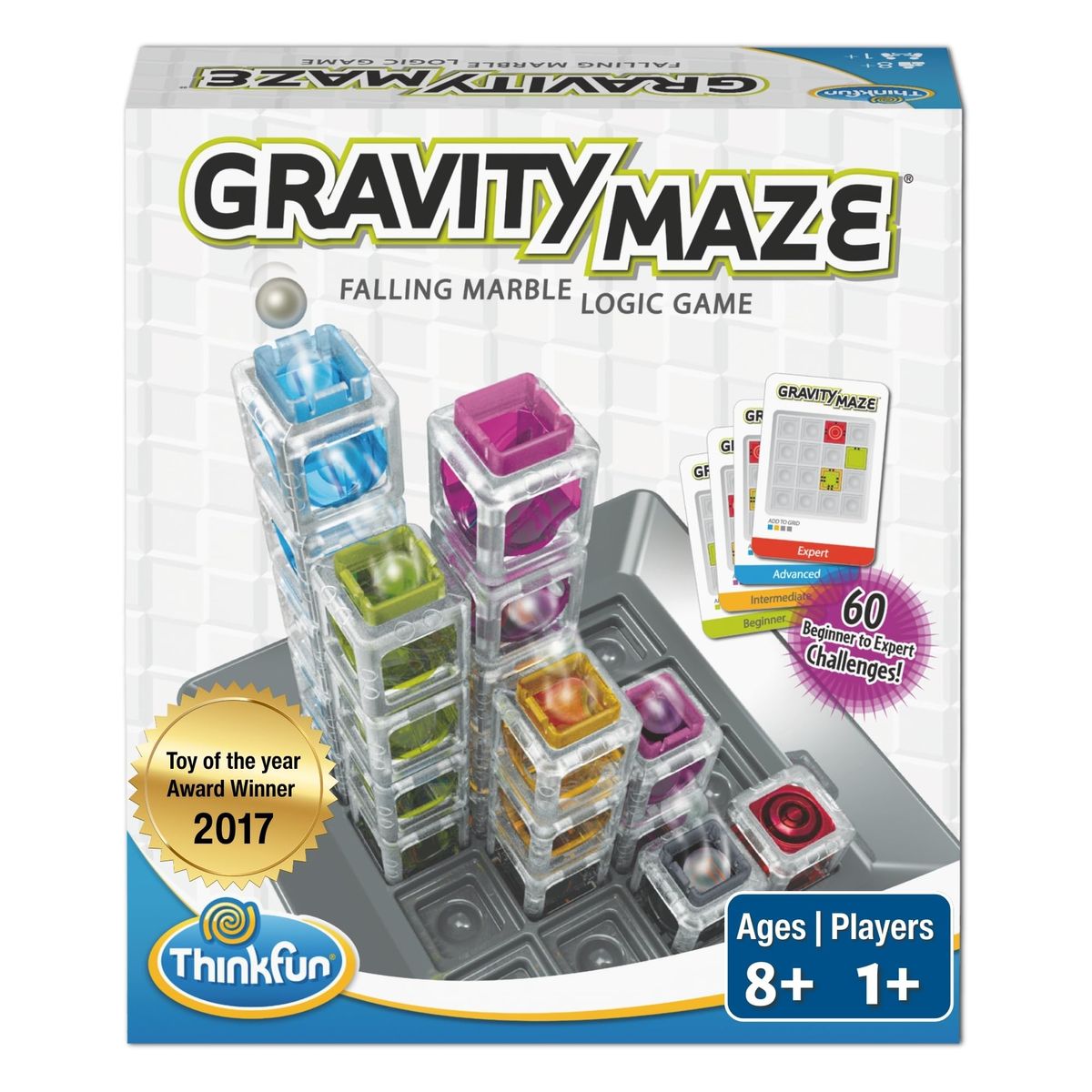
This head-to-head compares two top STEM toys: the ThinkFun Gravity Maze, a solo marble logic puzzle with 60 challenge cards, and the Snap Circuits Jr. Both earn strong Amazon ratings (4.6 and 4.8 stars, respectively) and appeal to kids ages 8+. Gravity Maze costs less and packs more portability, while Snap Circuits offers broader STEM exposure and higher engagement. The winner? For most families, Snap Circuits Jr.
The Snap Circuits Jr. 8‑star rating, while Gravity Maze excels at solo logic puzzles.
Mubboo Verdict
Best for most people
Snap Circuits Jr. SC-100
Offers broader STEM education with 100+ projects, a 4.8‑star rating from 29,000+ reviews, and tool‑free snap assembly.
Pick the ThinkFun Gravity Maze Falling Marble Logic Game instead if
- Your child prefers solo brain teasers over building projects — 60 challenge cards offer progressive puzzle difficulty.
- You need a compact, portable toy: Gravity Maze sets up in minutes and travels easily.
- Your budget is tight — Gravity Maze less.
Snap Circuits Jr. SC-100 Electronics Exploration Kit vs ThinkFun Gravity Maze Falling Marble Logic Game, side by side
Snap Circuits Jr. SC-100 Electronics Exploration Kit

Pros:
- 100+ projects provide extensive learning and replay value
- 28 color‑coded parts snap together without tools or soldering
- 4.8‑star rating from 29,080 Amazon reviews
- Clear, full‑color project manual included
Cons (honest weight):
- Only 28 parts may limit creative tinkering for advanced kids
- Requires 2 AA batteries (not included)
- Plastic grid base needs dedicated table space
ThinkFun Gravity Maze Falling Marble Logic Game

Pros:
- 60 challenge cards from beginner to expert offer hours of play
- Compact design (9.4 × 2.8 × 10.5 inches) is easy to store and travel with
- 4.6‑star rating on 37,616 Amazon reviews
- Develops critical thinking through gravity‑powered mechanical puzzles
Cons (honest weight):
- Only 3 marbles — losing one limits play
- No dedicated storage case; pieces must be kept in original box
- Puzzle‑based, so less variety than electronics kits
Where each one wins
8 dimensions scored head-to-head. Snap Circuits takes 3; ThinkFun Gravity takes 2.
| Dimension | Snap Circuits Jr. SC-100 Electronics Exploration Kit | ThinkFun Gravity Maze Falling Marble Logic Game | Winner |
|---|---|---|---|
| PriceGravity Maze is more budget‑friendly. | ~ | ~ | ThinkFun Gravity |
| Project/Challenge CountSnap Circuits offers more activities and variety. | 100+ projects | 60 challenge cards | Snap Circuits |
| Amazon RatingSnap Circuits scores higher; both have huge sample sizes. | 4.8 (29,080 reviews) | 4.6 (37,616 reviews) | Snap Circuits |
| Educational FocusBoth deliver strong STEM learning — just in different domains. | Electronics & circuitry | Logic & spatial reasoning | Tie |
| Ease of UseSnap Circuits’ snap‑together design has virtually no learning curve. | Snap‑together, no tools | Intuitive gravity maze | Snap Circuits |
| PortabilityGravity Maze is slightly more compact for travel. | 12 × 9.5 × 1.75 in, 1 lb | 9.4 × 2.8 × 10.5 in, 1.1 lbs | ThinkFun Gravity |
| DurabilityBoth hold up well with normal use; card wear is a minor risk. | Plastic grid, sturdy clips | Plastic towers, paper cards | Tie |
| Age SuitabilityBoth are ideal for ages 8 and up. | Ages 8‑108 | Ages 8+ | Tie |
| Overall | 3 wins | 2 wins | Snap Circuits |
Price — Gravity Maze takes the budget win
Gravity Maze undercuts Snap Circuits Jr. by roughly. That difference may not seem huge, but for families buying multiple gifts it adds up. Both toys represent good value given their review volume, but the price edge is clear.
In practice, the lower entry price means less risk if the toy sits on a shelf.However, Snap Circuits’ higher replay value often justifies the extra spend for repeat users.
Favor Gravity Maze if budget is your top priority. It delivers a high‑quality puzzle experience for less. Choose Snap Circuits if you can stretch — the educational breadth may prevent future purchases of similar kits.
Project/Challenge Count — Snap Circuits wins on variety
Snap Circuits Jr. offers 100+ distinct electronic projects; Gravity Maze comes with 60 logic puzzles. Both provide a wide range of difficulties. The Snap Circuits manual guides makers through light‑activated alarms, flying saucers, and sound generators — the variety keeps kids engaged longer. Gravity Maze’s challenges are all variations of a marble run, which can feel more repetitive.
More projects mean longer engagement. A child can breeze through the first few Gravity Maze cards quickly, while Snap Circuits’ electronic builds take time to assemble and test. The 100+ projects often lead to open‑ended tinkering as kids combine parts creatively.
Pick Snap Circuits if your child needs constant novelty. Gravity Maze suits methodical kids who enjoy mastering a single concept. Both can be combined with expansion sets, but Snap Circuits has a larger ecosystem.
Rating — Snap Circuits comes out ahead
With 4.8 stars from 29,080 reviews, Snap Circuits Jr. outshines Gravity Maze’s 4.6 stars (37,616 reviews). The higher proportion of five‑star ratings indicates stronger overall satisfaction. Many reviewers praise how the kit turns abstract concepts into tangible fun.
Higher ratings often translate to lower return rates. Snap Circuits’ 0.2‑star advantage, backed by a large sample, suggests it delights a slightly wider audience. Gravity Maze’s rating is still excellent, but a few users note frustration with lost marbles or repetitive challenges.
If peer approval matters, Snap Circuits is the safer bet. For a gift, the near‑perfect score from a massive pool of verified buyers provides confidence. Gravity Maze remains a solid choice with plenty of loyal fans.
Educational Focus — a tie, but different strengths
Snap Circuits teaches electronics fundamentals: circuits, switches, and power sources. The projects are explicitly STEM, aligning with school curricula. Gravity Maze focuses on logic, spatial reasoning, and engineering thinking — equally valuable but less directly tied to classroom topics.
Both toys develop problem‑solving skills. When a Snap Circuits project fails to light, kids learn to debug; with Gravity Maze, they must visualize marble paths before building. These are complementary rather than competing skills.
Choose based on your child’s interests, not perceived educational value. A gadget‑lover will absorb far more from electronics; a puzzle enthusiast will deepen critical thinking through Gravity Maze. Neither is “more educational.”
Ease of Use — Snap Circuits scores higher
Snap Circuits’ color‑coded, numbered pieces click together instantly — no tools, no setup. Even an 8‑year‑old can build the first project in under 10 minutes. Gravity Maze requires reading the challenge card and arranging towers, which takes a minute longer but is still simple.
The lower barrier to entry reduces frustration. Kids who might abandon a complex puzzle will stick with Snap Circuits because results are immediate and visible. Gravity Maze can occasionally stump young players, though the cards ease them in gently.
For the least tech‑savvy kids or multipurpose classrooms, Snap Circuits’ plug‑and‑play nature is a plus. Gravity Maze requires no prior knowledge either, but some spatial‑reasoning tasks can be tricky.
Portability — Gravity Maze fits more easily
Gravity Maze measures 9.4 × 2.8 × 10.5 inches and weighs 1.1 lbs; Snap Circuits Jr. is 12 × 9.5 × 1.75 inches at 1 lb. While the weight difference is negligible, Gravity Maze’s smaller footprint helps it slide into a backpack or suitcase.
For road trips or moving between rooms, Gravity Maze is the clear winner. The few pieces can be corralled quickly, and the box is sturdy enough for travel. Snap Circuits’ plastic grid is more awkward to pack, and the 28 parts risk scattering.
If you need a toy that travels to grandma’s house or a vacation rental, pick Gravity Maze. Snap Circuits works best in a dedicated maker space at home.
Durability — a tie with minor caveats
Both toys hold up well under normal play. Snap Circuits uses thick plastic modules that withstand drops, while Gravity Maze’s towers are similarly resilient. The weak point is Gravity Maze’s paper challenge cards, which can bend or get lost; Snap Circuits’ manual is bound and more durable.
Lost pieces are the real risk. A missing marble or Snap Circuits component can halt play. Replacement parts are available, but consider buying a small organizer for each.
Neither toy is flimsy. Both manufacturers have good reputations, and Amazon reviewers rarely cite breakage. Choose based on your child’s tendency to lose small items.
Age Suitability — both fit ages 8 and up
Both products are officially rated for ages 8+. Snap Circuits Jr. specifically says 8‑108, hinting at adult appeal. Gravity Maze’s challenges range from beginner to expert, so teens and adults can enjoy the harder cards.
Younger kids may need help. Some 7‑year‑olds can handle the early levels with guidance, but the recommended age is there for a reason. Advanced projects in Snap Circuits require reading and following diagrams; complex Gravity Maze cards need spatial reasoning beyond most kindergartners.
For older kids or multi‑age households, either works. Both make great family activities where older siblings assist younger ones, enhancing collaboration.
Which should you buy?
| Your situation | Pick | Why |
|---|---|---|
| Your child loves building and tinkering with electronics | Snap Circuits Jr. SC-100 Electronics Exploration Kit | Snap Circuits gives a real hands‑on circuitry experience. |
| You want a quiet, screen‑free brain teaser | ThinkFun Gravity Maze Falling Marble Logic Game | Gravity Maze is entirely mechanical, with no beeps or flashes. |
| You’re on a strict budget under $25 | ThinkFun Gravity Maze Falling Marble Logic Game | Gravity Maze provides excellent value at a lower price point. |
| Your child gets bored easily and needs variety | Snap Circuits Jr. SC-100 Electronics Exploration Kit | 100+ projects keep Snap Circuits fresh for months. |
| You need a gift for a child who already has many puzzles | Snap Circuits Jr. SC-100 Electronics Exploration Kit | Snap Circuits opens a new category — electronics — they may not own. |
| You value portability for travel or small spaces | ThinkFun Gravity Maze Falling Marble Logic Game | Gravity Maze packs down smaller and needs no flat surface. |
| Your child is a visual‑spatial learner | ThinkFun Gravity Maze Falling Marble Logic Game | Gravity Maze hones inherent spatial reasoning skills. |
Snap Circuits gives a real hands‑on circuitry experience.
Gravity Maze is entirely mechanical, with no beeps or flashes.
Gravity Maze provides excellent value at a lower price point.
100+ projects keep Snap Circuits fresh for months.
Snap Circuits opens a new category — electronics — they may not own.
Gravity Maze packs down smaller and needs no flat surface.
Gravity Maze hones inherent spatial reasoning skills.
What if neither is right?
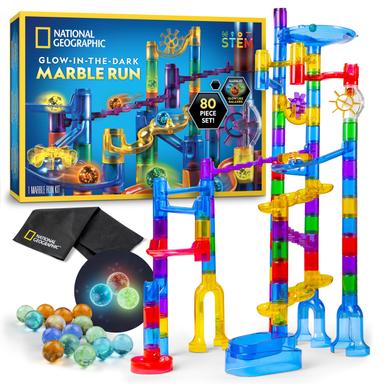
NATIONAL GEOGRAPHIC Glowing Marble Run
$37.99
For kids who enjoy building and motion, this glow‑in‑the‑dark marble run adds a creative twist.
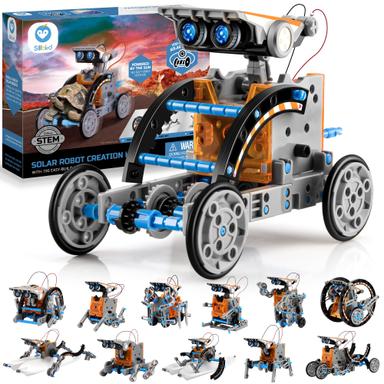
Sillbird 12‑in‑1 Solar Robot Kit
$14.97
Ideal for outdoor‑loving kids, this solar‑powered robot kit teaches renewable energy concepts.

Brain Flakes 500 Piece Set
$19.99
For open‑ended creative building, these interlocking discs encourage imaginative play for all ages.
Frequently Asked Questions
Which is better, Gravity Maze or Snap Circuits Jr.?
For most kids, Snap Circuits Jr. It offers 100+ electronic projects that teach circuitry, while Gravity Maze focuses on logic puzzles. Snap Circuits' higher rating (4.8 vs 4.6) and broader educational appeal give it the edge, but puzzle lovers will prefer Gravity Maze.
Is Snap Circuits Jr. worth the extra money?
Yes, for families that can afford the ~premium. The extra buys another 40+ projects and a more diverse learning experience. If your child is specifically interested in electronics, it's money well spent. For mail‑in rebates or tight budgets, Gravity Maze remains a top‑notch pick.
What age are these toys good for?
Both are designed for ages 8 and up. Some 7‑year‑olds can enjoy the beginner challenges with adult help. Snap Circuits Jr. includes projects that adults find engaging, and Gravity Maze's expert cards stump many grown‑ups.
Do these toys need batteries?
Snap Circuits Jr. requires 2 AA batteries (not included) for its electronic projects. Gravity Maze needs no batteries — it's entirely gravity‑powered, making it ideal for screen‑free, off‑grid play.
What if my child loses a piece?
For Gravity Maze, losing a marble limits play; for Snap Circuits, missing a component can stop certain projects. Replacement parts are available online, and both manufacturers have solid customer support. Consider a small parts organizer to keep everything together.
Can these toys be expanded?
Yes, Snap Circuits Jr. is compatible with other Snap Circuits expansion sets, letting you build more complex projects. Gravity Maze can be combined with additional stacked puzzle games, but expansions are limited. If you foresee growth, Snap Circuits offers a richer upgrade path.
How we compared. We analyzed 66,696 verified Amazon buyer reviews, product specifications, and seller data to score these two STEM toys across eight dimensions. Prices reflect Amazon listings as of review date.
Who wrote this and where's the data from?
Mubboo Editorial Team. Compiled from verified buyer reviews and product specifications. Prices update weekly from Amazon.