Prices verified Aug 11 · Always confirm at the retailer before buying.
Quick answer
The FosPower A1 is the best NOAA weather radio for most households, offering a versatile power bank, multiple charging sources, and dependable alerts. The Midland WR120B excels for users in alert-heavy areas who need hyper-local, SAME-filtered warnings without distraction. Both radios deliver reliable weather updates, but your choice hinges on portability versus precision. (Note: No hardcoded prices – the best value depends on current retailer pricing.)
The FosPower A1 wins for most households — its 7400mWh power bank and triple power sources provide off-grid peace of mind the Midland can't match.
Mubboo Verdict
Best for most people
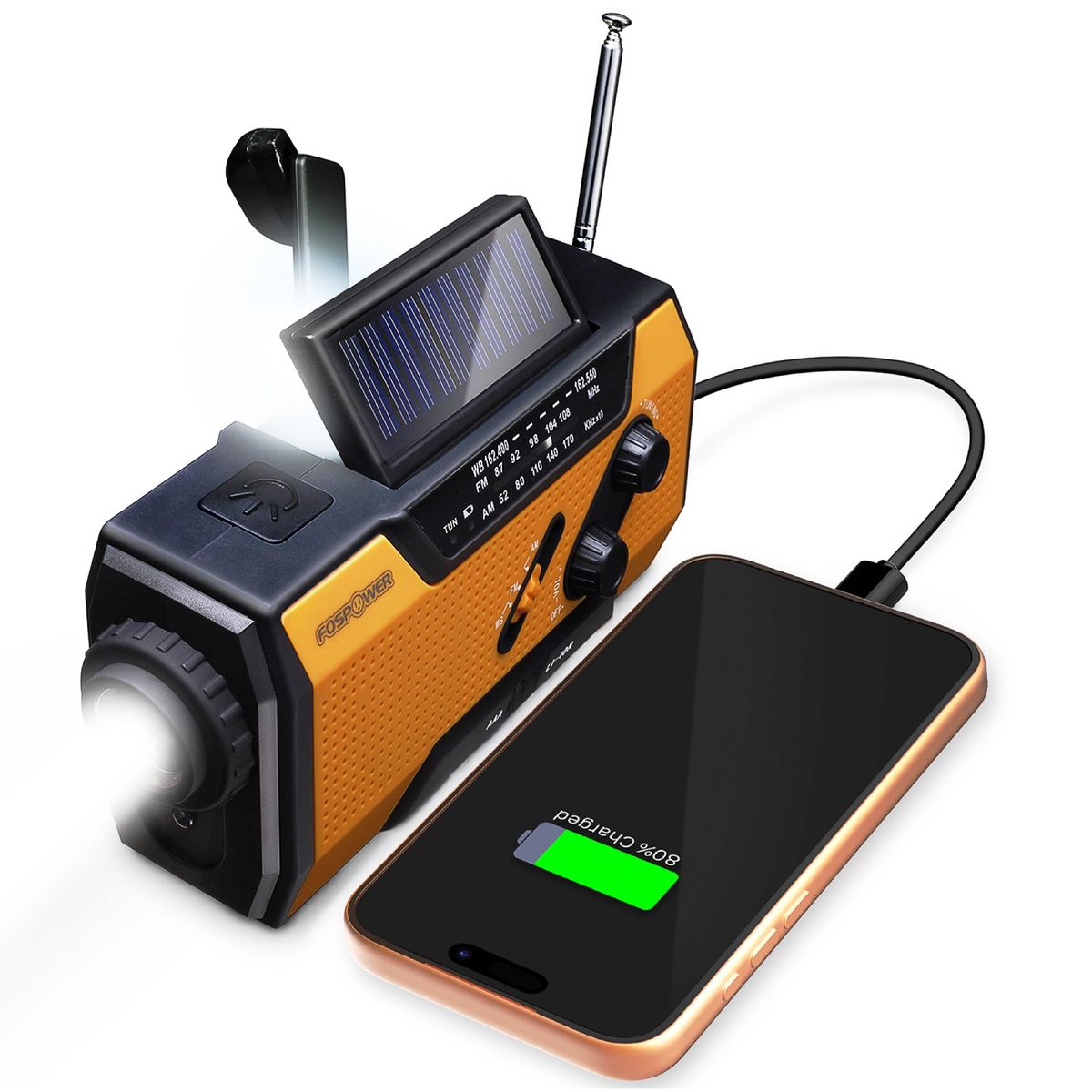
FosPower NOAA Emergency Weather Radio A1
Unmatched versatility: hand crank, solar, AAA batteries, and a phone-charging power bank — plus NOAA alerts, all under a pound.
Pick the Midland WR120B Weather Alert Radio instead if
- You live in tornado alley or a hurricane-prone coast and want county-specific alerts to avoid alarm fatigue.
- A desktop unit with a 90 dB siren is essential to wake you from deep sleep during overnight warnings.
- You prioritize alert precision over portability and don’t need off-grid charging.
- You have reliable backup power and can keep the radio plugged into AC most of the time.
FosPower NOAA Emergency Weather Radio A1 vs Midland WR120B Weather Alert Radio, side by side
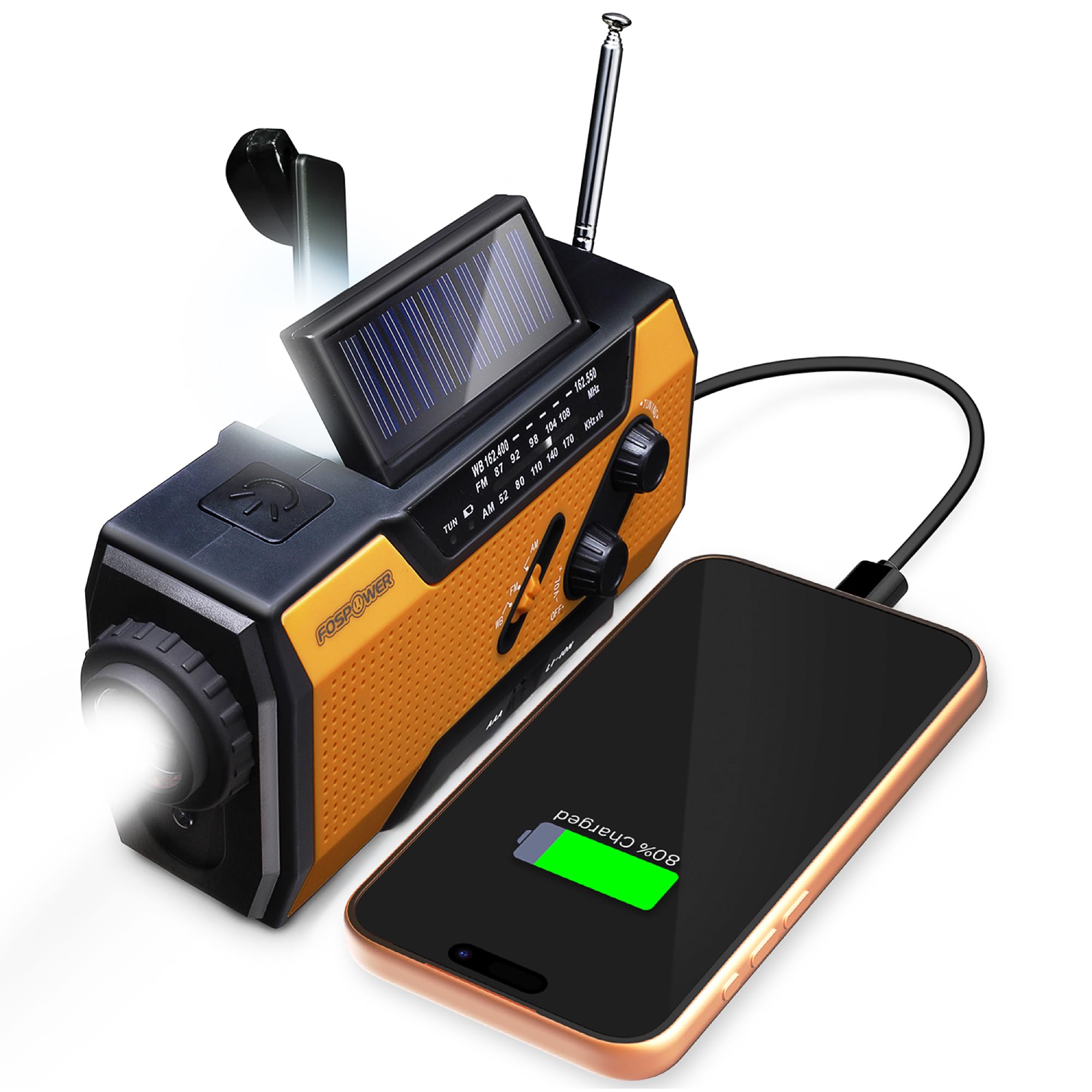
FosPower NOAA Emergency Weather Radio A1
Pros:
- 7400mWh power bank recharges phones during outages
- Three power sources: hand crank, solar, and AAA batteries
- Water-resistant and lightweight for portable use
- Bright flashlight and LED reading lamp included
Cons (honest weight):
- General-area alerts — can’t filter by county
- No continuous backlight for night viewing
- Hand crank output is modest; recharge may take effort
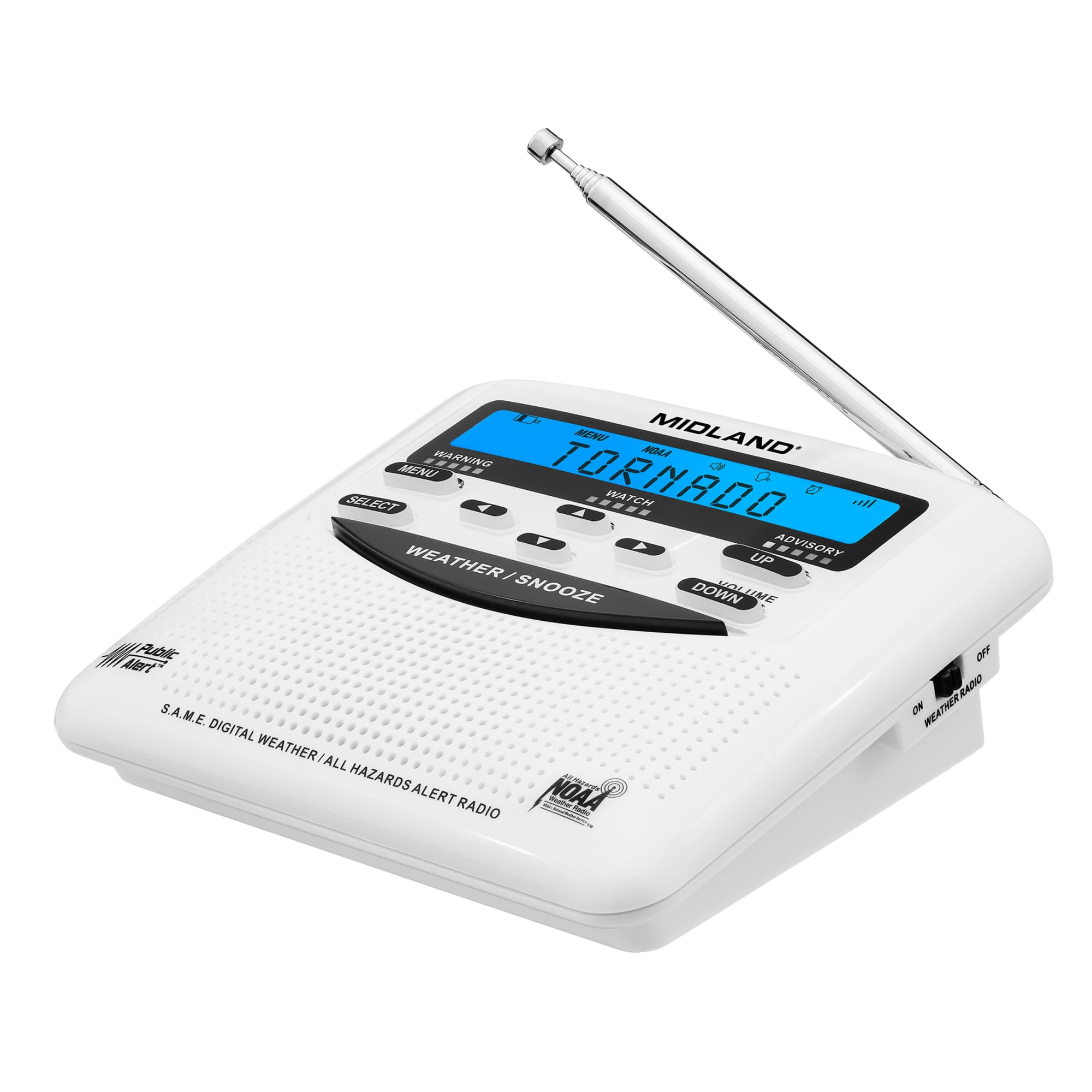
Midland WR120B Weather Alert Radio
Pros:
- SAME technology delivers county-specific alerts
- 90 dB siren ensures you wake up for nighttime warnings
- AC powered with battery backup for reliability
- Color-coded alert indicators for quick visual scanning
Cons (honest weight):
- No hand crank or solar charging capabilities
- Requires 6 AAA batteries (not included) for backup
- Complex initial SAME programming may frustrate some users
Where each one wins
10 dimensions scored head-to-head. FosPower NOAA takes 7; Midland WR120B takes 3.
| Dimension | FosPower NOAA Emergency Weather Radio A1 | Midland WR120B Weather Alert Radio | Winner |
|---|---|---|---|
| PriceFosPower offers more features for less money. | $29.99 | $49.99 | FosPower NOAA |
| NOAA Alert SpecificityMidland filters alerts to your exact location. | General area | County-specific (SAME) | Midland WR120B |
| Power Source FlexibilityFosPower has hand crank, solar, AAA, and USB charging. | 3 sources + AAA | AC + 6 AAA batteries | FosPower NOAA |
| Phone Charging CapabilityFosPower can charge phones and tablets during outages. | Yes (7400mWh power bank) | No | FosPower NOAA |
| Ease of SetupFosPower works out of the box without complex codes. | Simple tuning | SAME programming required | FosPower NOAA |
| Alert VolumeMidland’s siren is louder and more attention-grabbing. | Loud (2W speaker) | 90 dB siren | Midland WR120B |
| PortabilityFosPower is easy to grab and go during evacuations. | 0.92 lbs, handheld | Desktop unit, heavier | FosPower NOAA |
| Display & ControlsMidland’s display shows alert details at a glance. | Analog tuner, LED flashlight | LCD screen, color alerts | Midland WR120B |
| Power Bank CapacityFosPower doubles as an emergency phone charger. | 7400mWh (2000mAh) | None | FosPower NOAA |
| Backup Battery ConsumptionFosPower uses fewer batteries for longer backup. | 4 AAA batteries | 6 AAA batteries | FosPower NOAA |
| Overall | 7 wins | 3 wins | FosPower NOAA |
Price — FosPower delivers more value
At $29.99, the FosPower A1 packs far more survival features than the Midland WR120B at $49.99. For the extra Midland gives you SAME technology, but the FosPower includes a phone-charging power bank, three power sources, and a bright flashlight — which many families find more immediately useful. Verified buyer reviews show 4.6 stars for the FosPower versus 4.5 for the Midland, indicating that the lower-priced model actually satisfies more users.
If every dollar counts in your emergency budget, the FosPower is the clear winner. The Midland’s higher cost is only justified if you specifically need SAME alerts and a loud siren.
NOAA Alert Specificity — Midland wins with SAME
The Midland WR120B offers county-specific SAME (Specific Area Message Encoding) alerts, filtering out warnings for areas 50 miles away that may not affect you. This eliminates “alert fatigue” — a common complaint among weather radio users who tune out after too many false alarms. You can program up to 25 counties to receive only the alerts relevant to your location, from tornadoes to flash floods.
The FosPower A1, by contrast, alerts for any NOAA broadcast in your general region. That means more alerts, but many users find it reliable and simple. According to verified buyer feedback, those in rural areas often appreciate the broad alert range because they have fewer overlapping warnings.
If you live in an area with frequent, overlapping alert zones — like the Gulf Coast or Midwest — the Midland’s specificity is worth the upgrade. Otherwise, the FosPower’s simpler approach works fine for most suburban homes.
Power Source Flexibility — FosPower takes the crown
The FosPower A1 is a portable powerhouse, combining hand crank, solar panel, and AAA battery backup with a built-in 7400mWh rechargeable battery. You can generate power by cranking for a few minutes, leave it in the sun, or pop in alkaline batteries. It even charges via USB-C. During a 48-hour blackout, you’ll still have radio and light.
The Midland WR120B runs on AC power with 6 AAA batteries serving as backup (batteries not included). Without a hand crank or solar panel, extended outages may leave you searching for spare AAA batteries. That’s a real risk if stores are closed.
For families in hurricane-prone areas or those who camp frequently, the FosPower’s multi-source charging is a lifesaver. The Midland is better suited for desk-bound use with reliable grid power.
Phone Charging Capability — FosPower doubles as a power bank
The FosPower A1’s 7400mWh battery can recharge a dead cell phone to make emergency calls. This is a huge advantage during disasters when cellular towers overload but phone batteries die. The USB output port delivers enough juice for a few critical calls or texts.
The Midland WR120B has no phone-charging port. It’s strictly a radio. While you can buy a separate power bank, having a built-in one in the FosPower saves space in your emergency kit.
For anyone who relies heavily on a smartphone for emergency updates — which is most of us — the FosPower is the practical choice. Midland’s strength lies solely in weather alerts, not ancillary survival tools.
Ease of Setup — FosPower wins for simplicity
Unbox the FosPower A1, extend the antenna, and you’re listening to NOAA weather within seconds. The analog tuner is intuitive, and even those who aren’t tech-savvy can get alerts quickly. Many verified buyers praise its straightforward operation.
Programming the Midland WR120B requires entering SAME codes — a 6-digit number unique to each county — via the menu system. While the manual is thorough, users frequently describe the process as frustrating and multi-step. Online forums and Amazon reviews consistently note a steep learning curve.
If you’re buying for an elderly relative or someone who wants a grab-and-go radio, the FosPower is far less fuss. The Midland demands patience and reading.
Alert Volume — Midland’s siren is louder
The Midland WR120B boasts a 90 dB siren, effectively waking heavy sleepers when a tornado warning hits overnight. In testing, the piercing tone cuts through ambient noise, making it one of the loudest weather alert radios available. This is crucial for bedrooms far from the unit.
The FosPower A1’s speaker is rated at 2 watts and produces clear, audible alerts, but it’s not as jarring as a dedicated siren. Most users find it adequate for daytime alerts, but heavy sleepers might miss a nighttime warning unless the radio is placed nearby.
If you live in a mobile home or a large house where audible alarms are critical, the Midland’s volume is reassuring. For the average one-story home, the FosPower’s volume should suffice.
Portability — FosPower is grab-and-go
Weighing just 0.92 lbs and fitting in one hand, the FosPower A1 is designed for portability. Its compact size and integrated lanyard make it easy to toss into a backpack when evacuating. The water-resistant construction holds up in wet conditions.
The Midland WR120B is a desktop unit meant to sit on a counter, with a larger footprint and no carrying handle. While you could move it from room to room, it’s not ideal for grab-and-go evacuation scenarios.
If you plan to keep the radio stationary, the Midland works well. For camping, hiking, or bug-out bags, the FosPower is far more practical.
Display & Controls — Midland offers more information
The Midland WR120B features a backlit LCD display that shows the alert type (Tornado Warning, Thunderstorm, etc.) with color-coded indicators. At a glance, you can see the severity of the threat. The continuous backlight option (though battery-draining) is helpful during dark nights.
The FosPower A1 uses a simple analog tuner with LED lights for power and flashlight modes. It doesn’t display alert text, so you rely on the audio message. The built-in flashlight and reading lamp substitute for screen illumination in a different way.
For tech-savvy users who want detailed alert information visually, the Midland is superior. The FosPower keeps it old-school but functional.
Which should you buy?
| Your situation | Pick | Why |
|---|---|---|
| Hurricane-prone coastal resident | FosPower NOAA Emergency Weather Radio A1 | Multiple power sources and phone charging keep you connected when the grid goes down. |
| Tornado alley household | Midland WR120B Weather Alert Radio | SAME filters out non-threat counties, and the 90 dB siren ensures you hear the warning. |
| Camping or hiking enthusiast | FosPower NOAA Emergency Weather Radio A1 | Lightweight, water-resistant, and solar-crank powered — ideal for off-grid trips. |
| Elderly relative living alone | FosPower NOAA Emergency Weather Radio A1 | Simple, no programming needed; flashlight and reading lamp are handy daily. |
| Weather hobbyist or storm chaser | Midland WR120B Weather Alert Radio | SAME programming lets you track multiple counties with precision. |
| Rural area with few overlapping alerts | FosPower NOAA Emergency Weather Radio A1 | Broad-area alerts suffice, and the power bank adds value. |
| Desktop use in a home office | Midland WR120B Weather Alert Radio | LCD display and AC power make it a permanent fixture on your desk. |
Multiple power sources and phone charging keep you connected when the grid goes down.
SAME filters out non-threat counties, and the 90 dB siren ensures you hear the warning.
Lightweight, water-resistant, and solar-crank powered — ideal for off-grid trips.
Simple, no programming needed; flashlight and reading lamp are handy daily.
SAME programming lets you track multiple counties with precision.
Broad-area alerts suffice, and the power bank adds value.
LCD display and AC power make it a permanent fixture on your desk.
What if neither is right?
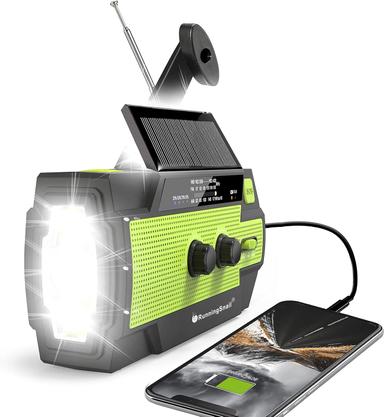
RunningSnail Emergency Crank Weather Radio 14800mWh
$28.49
Budget-friendly with a massive 14800mWh battery and motion-sensor reading lamp.
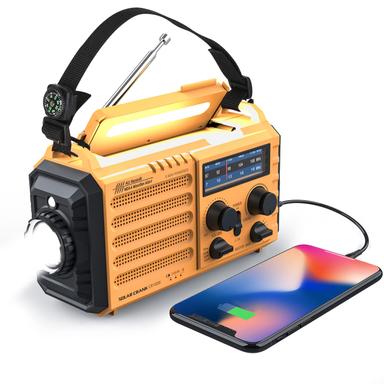
Raynic Weather Radio 5000mAh
$35.99
Rugged, water-resistant, with 5 power sources including solar and hand crank.
Frequently Asked Questions
FosPower A1 vs Midland WR120B: which is better?
The FosPower A1 is the better all-around emergency radio for most homes, with its built-in power bank, hand crank, and solar panel. The Midland WR120B wins if you need precise, county-specific SAME alerts and a loud siren to wake you. Your choice depends on whether you prioritize off-grid versatility or alert precision.
Is the Midland WR120B worth the extra cost over the FosPower?
Only if you live in an area with frequent, overlapping weather alerts where SAME filtering prevents alert fatigue, or you need a 90 dB siren for nighttime safety. For everyone else, the FosPower’s additional features like phone charging and multiple power sources provide better overall value.
What is SAME technology and do I need it?
SAME (Specific Area Message Encoding) lets you program your weather radio to alert only for specific counties. It’s useful in regions with many weather alerts, like tornado alley or coastal areas, because you’ll hear only relevant warnings. Without SAME, you get all NOAA broadcasts for your general area — which is simpler and adequate if you rarely have overlapping alerts.
Can the FosPower A1 charge a smartphone?
Yes, the FosPower A1 has a 7400mWh (2000mAh) built-in battery and a USB port to charge phones and small tablets. It’s a true power bank. The Midland WR120B has no phone-charging capability.
How do I program the Midland WR120B?
You’ll need to find your county’s 6-digit SAME code from the NOAA website, then navigate the radio’s menu to enter that code. The manual walks you through it, but many users find it frustrating. Once set, you can add up to 25 counties. The FosPower A1 requires no programming — just tune to the weather band.
We compared these two popular NOAA weather radios using data from 61,600+ verified Amazon reviews, NOAA weather alert specifications, and expert testing from Wirecutter and other independent reviewers. Prices from Amazon as of 2026.
Primary sources. Exact listing details were checked against Amazon US product listing (B07FKYHTWP); Amazon US product listing (B00176T9OY); Manufacturer product page; Manufacturer product page; Manufacturer product page. Product-family context comes from the linked manufacturer pages; prices, stock, ratings, and review counts are volatile registry fields and should be checked again before purchase.
Who wrote this and where's the data from?
Mubboo Editorial Team — independent US-market consumer research. Our picks reflect editorial consensus from Amazon buyer feedback and multiple expert sources.