Los Angeles to Tokyo (Narita) Flights 2026: Airlines, Prices, Best Time to Book
ANA runs two daily LAX-Narita Dreamliner 787-9 nonstops alongside United's twice-daily 787-9 Polaris and JAL's daily 787-9; Singapore Airlines adds a 5th-freedom LAX-NRT-SIN routing that's bookable as a standalone leg. The cabin gap matters more than the carrier gap: which seat gets you to a Monday Tokyo meeting upright after an 11h 30m westbound flight is the real decision. Off-peak economy (mid-May after Golden Week, September after Obon) sits at the annual price floor; the cherry-blossom peak (late March through mid-April) and Obon (August) can run 50% above shoulder fares. LA travelers landing for work: ANA's 787-9 is the route's right answer for most.
Los Angeles → Tokyo at a Glance
📈 Peak season — book early💰 When is the cheapest time to fly from Los Angeles to Tokyo?
This month: April averages $800 — cherry blossom peak through April 10-15, then Golden Week starts April 29. The first two weeks are the year's highest fares ($850-900); late April dips slightly.
LAX-Tokyo pricing runs on Japanese tourism cycles, not US ones — the inverse-correlation insight most generic transpacific content misses. Late March through mid-April is the cherry-blossom peak: fares climb 40-50% above shoulder-month rates as US, AU, and intra-Asia tourist demand all converge on the same two-week sakura window. Golden Week (April 29 to May 6) is a separate, sharper Japanese-domestic-driven spike — outbound fares from LA dip during this week because Japanese travelers leave Tokyo, but inbound NRT hotels run sold-out. Obon (mid-August) is the second annual peak, a cultural holiday that pulls overseas Japanese back home. The two annual price floors are mid-May (after Golden Week wraps May 7) through early June, and September after Obon ends — fares dip to $469-$520 round-trip in those windows on ANA, United, and JAL economy. June rainy season (tsuyu) keeps fares low for budget-flexible travelers who don't mind humidity. December holidays are expensive on both sides.
Next 30 days — daily low fares
Tooltip shows stops + source. Cached fares from Aviasales.
✈️ Which airlines fly from Los Angeles to Tokyo?
Four carriers serve LAX-Narita nonstop in 2026: ANA as the home carrier with two daily 787-9 Dreamliner rotations, United with two daily 787-9 Polaris flights, JAL with one daily 787-9, and Singapore Airlines operating a 5th-freedom LAX-NRT leg as part of its LAX-NRT-SIN routing (bookable standalone). Delta serves Tokyo via Haneda (HND) only, not Narita — covered separately in the NRT-vs-HND sidebar. The cabin you book matters more than the carrier — JAL Premium Economy on the 787-9 is the route's under-appreciated value pick for travelers above economy but below business budgets.

The default best answer for LAX-Narita and the cabin-by-cabin comfort leader on the route. ANA's 787-9 hard product is competitive with United's, but the soft product — cabin crew attentiveness, meal service quality, the small-detail discipline that separates Japanese carriers — is where ANA opens daylight on UA. The 2 × 23kg standard economy bag allowance is meaningfully more generous than United's 1 × 23kg, effectively worth $60-80 in saved second-bag fees on most LAX-Tokyo trips. ANA Mileage Club earners and Star Alliance partners (Aeroplan, LifeMiles) get strong award redemption value here. The two daily NH rotations give schedule flexibility for rebooking.
Best for: most LA travelers, Star Alliance loyalists, ANA Mileage Club earners, families needing the second free bag

United's value sits in two specific places: Polaris lie-flat business when upgrading or burning MileagePlus miles, and seamless onward Star Alliance connections at NRT (ANA, EVA Air, Asiana). The Polaris lounge at LAX TBIT has shower suites and a sit-down dining room that stays underused on the 9-11pm LAX-NRT departure push [VERIFY: 2026 LAX TBIT Polaris lounge configuration]. Economy-cabin experience is standard United — 31" pitch on the 787-9, same hard product as ANA but a noticeable step below in soft service. Premium Plus (United's premium economy) is comparable to ANA Premium Economy on hard product. The 1 × 23kg vs ANA's 2 × 23kg bag policy hurts on family bookings.
Best for: MileagePlus redemptions, Polaris business-cabin seekers, onward Asia connections via NRT

JAL's Premium Economy on the 787-9 is the under-appreciated sweet spot between economy misery and business overspend — 38-inch pitch with proper Japanese meal service, typically priced 60-90% above economy versus business at 3-4× economy. AAdvantage and oneworld earners should strongly prefer JAL over United on this route — same hard product, materially better service, and Sapphire/Emerald lounge access at NRT T2 is excellent. Single daily rotation versus ANA's twice-daily means less rebooking flexibility if cancellations cascade. The 787-9 cabin runs higher humidity than older twin-aisles and noticeably reduces arrival fatigue on the 11h 30m westbound.
Best for: Premium Economy seekers, AAdvantage / oneworld earners, travelers who value Japanese service standards

The hidden hack on this route. Singapore's LAX-NRT leg is operated as part of the carrier's LAX-NRT-SIN service, but is bookable as a standalone LAX-NRT itinerary at fare structures that often run 10-15% below ANA for the same cabin — particularly in Business class, where the SQ 777-300ER lie-flat product is consistently rated above ANA's 787-9 Business. KrisFlyer redemptions on this leg are excellent value. Lesser-known across mainstream travelers; well-known among FlyerTalk regulars. Schedule is fixed (one daily rotation, typically afternoon LAX departure), so no flexibility for rebooking — book it when fare and schedule align, not as a default.
Best for: KrisFlyer members, Business-class bargain hunters, travelers who want SQ experience without the full LAX-SIN trip
M's verdict: For most LAX-to-Tokyo travelers, ANA's LAX-NRT Dreamliner 787-9 is the strongest pick — service lifts the cabin clearly above United; book Polaris on UA only if transferring in Asia.
Prices shown are approximate averages based on recent searches (April 2026). Actual fares vary by date, class, and availability.
🎯 Ready to compare flights?
We compare prices from airlines and travel platforms so you can find the best deal.
Compare all flights →📅 When should you book Los Angeles to Tokyo flights?
Book Los Angeles to Tokyo Narita flights 8-12 weeks before departure for the best prices on direct carriers. LAX-NRT has 4-5 daily nonstop frequencies across ANA, United, and JAL, so the booking window is more forgiving than LAX-SYD or LAX-AKL but stricter than transatlantic routes. For cherry-blossom dates (late March through mid-April), book 16-20 weeks ahead — sakura demand books economy seats out 4 months in advance, and Premium Economy on JAL or ANA disappears even sooner. Obon (mid-August) similarly demands 14-18 weeks lead time. For Golden Week, the asymmetric trick: outbound LAX-NRT is often cheaper that week because Japanese travelers fly the opposite direction, but Tokyo hotels are sold out — adjust your trip dates to the week after May 6 for the genuine value combination. Tuesday and Wednesday LAX departures save $40-80 round trip vs Sunday-Monday on the same fare class.
M says: Cherry blossom is overcrowded and overpriced — the photography is unbeatable but every Tokyo park, every transit line, every restaurant is at capacity. If sakura is the goal, accept the premium and book 16-20 weeks ahead. If sakura is incidental, shift to late April after April 15 — the week before Golden Week is the year's most underrated window.
If you're a family flying in summer, book by March — peak season fills up fast.
Budget travelers: shoulder season (Sep–Oct, Apr–May) offers the best balance of price and weather.
💡 This Apr: For Obon (mid-August): book this week. AU-domestic Golden Week pricing is firm. Last chance to book sub-$700 May-shoulder fares before the floor opens.
🏙️ Why visit Tokyo?
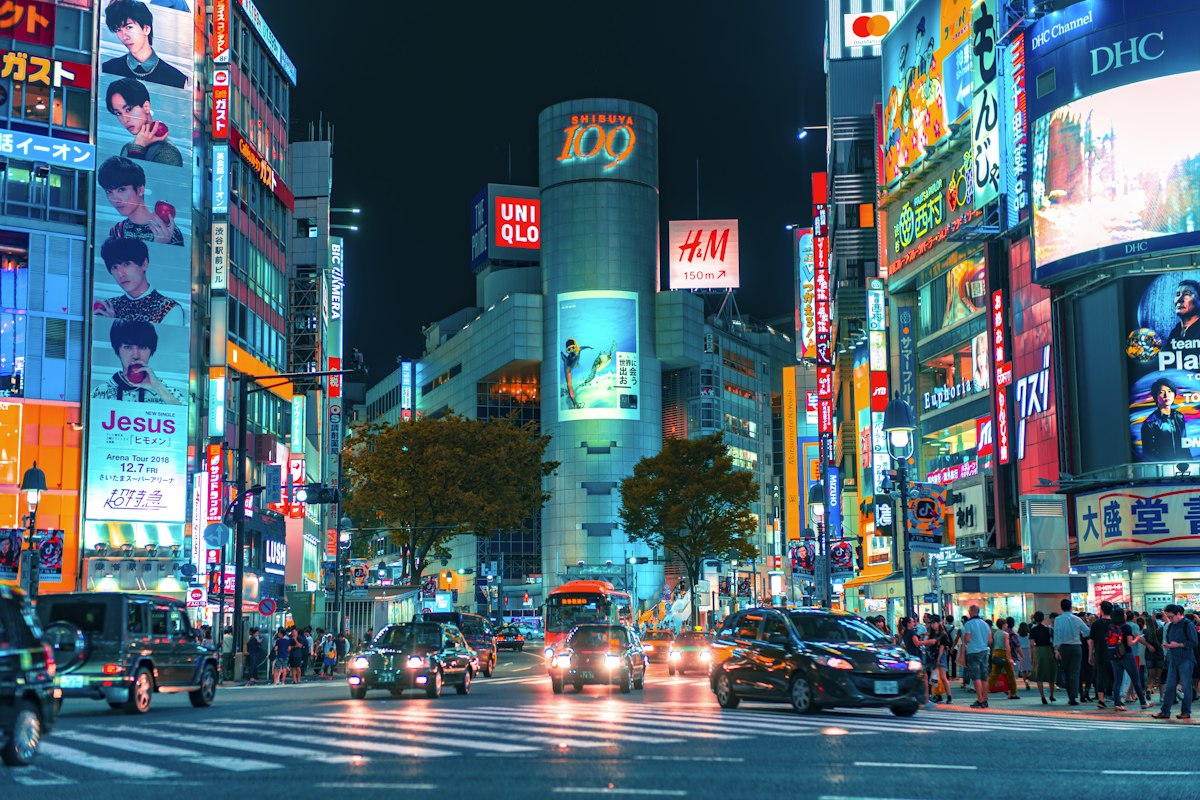
If you arrive expecting a single-aesthetic Tokyo — neon Shibuya from the movies, or austere temple gardens from the brochures — the city will reorganize your expectations within 48 hours. Tokyo runs as 23 wards stitched together along the Yamanote Line loop, and each ward operates as a near-independent city: Shibuya for youth-culture-and-fashion velocity, Shinjuku for the working metropolis at night, Asakusa for pre-war low-city Edo, Akihabara for electronics and otaku culture, Ginza for international luxury, Harajuku for street-style invention. What unifies them is service standards Americans rarely encounter — restaurants that read your hesitation before you place an order, train staff who bow on entering and exiting empty cars, convenience stores that operate as small life-support systems for an entire urban culture.
What makes Tokyo worth the flight: Tokyo rewards layered itineraries over checklist tourism. A morning at Senso-ji in Asakusa (arrive 7-8am to walk Nakamise-dori before the buses), a mid-day teamLab Planets immersive art session in Toyosu (book online weeks ahead — sells out), an early evening sushi counter in Tsukiji Outer Market (lunch hours run 6-11am and 11am-2pm, not dinner), and a night Shibuya Crossing scramble from the Starbucks window above — that's a reasonable single Tokyo day, and it barely touches Shinjuku, Ginza, or Akihabara. Two strategic moves separate good Tokyo trips from generic ones: book a kaiseki dinner in a residential neighborhood (not central Ginza) on night two, and commit a half-day to one specialty sub-culture (anime in Akihabara, vintage in Shimokitazawa, vinyl in Shibuya, knives in Kappabashi).
Best neighborhoods to explore:
The youth-fashion and pop-culture engine — Shibuya Crossing as the visible tip, Harajuku's Takeshita-dori as the teen-fashion epicenter, and Shibuya Sky as the best aerial view of inner Tokyo at sunset. Stays here are walkable to multiple subway lines and the Yamanote loop.
Tokyo's working metropolis after dark — Kabukicho red-light area, Omoide Yokocho yakitori alleys, the Tokyo Metropolitan Government Building observation deck (free), and Shinjuku Station as the busiest train hub in human history (3.5M+ daily passengers). Hotel base for business travelers.
Pre-war Edo Tokyo survives in pockets here — Senso-ji temple, Nakamise-dori shopping street, Kappabashi knife district, Ueno Park's museum cluster (Tokyo National Museum, Western Art, Science). Older, slower, more residential than Shibuya. Ryokan stays available.
Electronics-town-turned-otaku-mecca. Anime megastores, themed cafes (maid, butler, animal — most require advance booking), retro gaming arcades on multiple floors of single buildings, vintage manga shops. Specialized — feels narrow if anime/gaming isn't your interest, transformative if it is.
International luxury retail (Chanel, Dior, Louis Vuitton flagships), Michelin-density dining, the Imperial Palace gardens, and Tokyo Station's Marunouchi-side architecture. Quieter on weekday mornings, dense weekend evenings. Hotel rates run 30-50% above Shibuya for similar quality.
The newer Tokyo — Toyosu Fish Market (replaced Tsukiji wholesale in 2018), teamLab Planets immersive art, Odaiba's waterfront with Rainbow Bridge views and the Diver City Gundam statue. Less central, but the only place to see the Tokyo Bay perspective on the city skyline.
Don't miss:
Senso-ji Temple (Asakusa)
Tokyo's oldest Buddhist temple, founded AD 645. Arrive 7-8am to walk Nakamise-dori before the tour buses; the late-afternoon golden light on the pagoda is the photo window. Free entry; nearby Kappabashi for kitchen knives is a 15-min walk.
Browse Senso-ji Temple (Asakusa) tours →teamLab Planets (Toyosu)
Immersive digital art installation — water-walking rooms, infinite mirror gardens, projected forests. Books out weeks ahead; reserve before flying. Allow 90-120 minutes; bring shorts (shallow water rooms) and skip strappy footwear.
Browse teamLab Planets (Toyosu) tours →Shibuya Crossing & Shibuya Sky
The world's busiest pedestrian intersection at street level, then the 360° observation deck 230m above for the dusk-into-night transformation. Book Shibuya Sky 30+ minutes before sunset; allow 60 minutes. The Starbucks window directly above the Crossing is free.
Browse Shibuya Crossing & Shibuya Sky tours →Meiji Shrine (Yoyogi)
Shinto shrine in a 175-acre forest pocket adjacent to Harajuku — built 1920, dedicated to Emperor Meiji. The shrine itself is small; the walk through the torii gates and forest path is the experience. Free, peaceful, 30-minute visit window.
Browse Meiji Shrine (Yoyogi) tours →Tsukiji Outer Market
The wholesale tuna market moved to Toyosu in 2018, but the Outer Market — the dense alley of 100+ retail stalls, sushi counters, knife shops, and tamagoyaki vendors — remains. Lunch counters run 6-11am and 11am-2pm; arrive before 9am for the freshest tuna and shortest queues.
Browse Tsukiji Outer Market tours →Tokyo Skytree (Sumida)
The 634m broadcasting tower with two observation decks (350m Tembo Deck, 450m Tembo Galleria). Combo tickets are mandatory for Galleria access. Best at sunset and the first hour after; book online for time-slot reservation. The Solamachi shopping mall at the base is a half-day in itself.
Browse Tokyo Skytree (Sumida) tours →Akihabara Electric Town
Six-story megastores stacked with anime/manga, retro arcades, themed cafes (maid, butler, owl), and electronics floor-by-floor. Mandarake Complex and Yodobashi Akiba are the anchor stores. Allow a half-day if otaku culture interests you, skip entirely if it doesn't.
Browse Akihabara Electric Town tours →M's take: Base yourself in Shibuya or Shinjuku on a first Tokyo trip — both connect to the Yamanote loop and reach every other ward in 20-40 minutes. Asakusa is right for travelers prioritizing temples, museums, and a quieter early-morning rhythm; Ginza is right if luxury shopping and Marunouchi business meetings drive the trip. Skip Akihabara as a base unless anime/gaming is the primary purpose.
🧳 What do you need to know before flying to Tokyo?
🛂 Do Americans need a visa for Tokyo?
ETA required · £16 · Apply 72+ hours before · 2-year validity
US passport holders can enter Japan visa-free for stays up to 90 days for tourism, business meetings, or visiting relatives — no prior application required, no fee, no e-visa system. Your passport must be valid for the duration of stay (Japan does not enforce a 6-month-beyond rule). On arrival you complete a digital arrival form via the Visit Japan Web portal (recommended pre-trip — saves 15-25 minutes at immigration) or paper form. A return or onward ticket is checked at LAX departure and at NRT immigration. Working in Japan, paid performance, or stays beyond 90 days require a work or long-stay visa — apply at the Japanese Consulate in LA (Little Tokyo) at least 4 weeks ahead. Visit Japan Web also handles your customs declaration; pre-completing both speeds NRT arrival processing meaningfully on the 6-7am peak landing window.
Business travelers: The UK ETA covers tourism and business meetings. If you're attending a conference or meeting clients, you don't need a separate business visa for stays under 6 months.
🕐 What's the time difference?
London = EST + 5 hours · Take evening flight to minimize jet lag
Tokyo runs Japan Standard Time (JST, UTC+9) year-round — Japan does not observe daylight saving time. LA (Pacific Time) is 16 hours behind Tokyo during PDT (March to November) and 17 hours behind during PST (November to March). Outbound LAX-NRT departing 9-11pm LA arrives 6-7am Tokyo two calendar days later (you skip a calendar day across the dateline). The return is the asymmetric pain: NRT-LAX departing 5-6pm Tokyo arrives 9-11am LAX the same calendar day you departed — body clock says 2-4am. Westbound jet lag is meaningfully easier than eastbound on this route; build a 2-3 day buffer at home after returning before scheduling anything important.
Families with kids: London is only 5 hours ahead of New York — much easier to manage jet lag than Asia. Most kids adjust within a day. Schedule your arrival for late afternoon so they can crash at a normal London bedtime.
🚇 How do you get from the airport to the city?
Elizabeth Line £15.50 · Heathrow Express £26 · Piccadilly £5.90
From NRT to central Tokyo: the Keisei Skyliner (¥2,570, ~41 min to Nippori, then 6 min Yamanote Line to Shibuya) is faster and cheaper than the Narita Express. The Narita Express N'EX (¥3,070, ~60 min to Tokyo Station, ~80 min to Shinjuku) is JR Pass-eligible and runs direct to multiple central stations — the right choice if you have a JR Pass starting that day. Limousine Bus (¥3,200, 90-130 min depending on traffic and hotel) is door-to-door for major Tokyo hotels — slower but no luggage drag through stations. Skip taxis from NRT to central Tokyo (¥22,000-30,000, ~$140-200) unless you're landing past midnight when trains stop. Inside Tokyo, buy a Suica or PASMO IC card at NRT — it works on JR, all subway lines, buses, taxis, and most convenience stores; ¥1,000-2,000 starting load is fine.
Budget travelers: Skip the Heathrow Express (£26). The Elizabeth Line does the same journey for £12.80 (off-peak) and takes only 15 minutes longer. The Piccadilly Line is even cheaper at £5.90 but adds 20 more minutes.
💷 What about money and tipping?
GBP · No-fee cards: Chase Sapphire, Amex Gold · Tipping: 10–12.5%
Japan uses the Japanese Yen (JPY). At April 2026 rates, USD $1 ≈ ¥150, so ¥1,000 ≈ $6.70. Don't exchange cash at NRT — airport rates are punitive. Use a no-foreign-transaction-fee credit card at hotels, department stores, and chain restaurants: Chase Sapphire Preferred, Capital One Venture, and Amex Platinum all charge 0% foreign fees. But Japan remains a cash-preferred economy at small ramen shops, izakaya, temples, taxis (older drivers), traditional ryokan, and most rural businesses — withdraw ¥30,000-50,000 from a 7-Eleven or Japan Post Bank ATM on arrival (these accept foreign cards reliably; many bank ATMs do not). Tipping is not customary in Japan and can confuse staff — service is included, hospitality standards are extraordinary by default, and rounding up or leaving change is more likely to be returned than appreciated.
📱 Will your phone work?
T-Mobile free (slow) · eSIM from $5/week · Install before you fly
Your US carrier will roam in Japan, but costs add up. T-Mobile Magenta/Go5G includes free 2G data in Japan (usable for Google Maps and WhatsApp; too slow for video calls, ride-hailing apps, or photo upload). AT&T and Verizon charge $10-12/day for international day passes — meaningful on a 7-10 day trip. The cheaper move: install a Japan eSIM before you fly. Saily, Airalo, and Yesim all offer 7-30 day Japan plans from $9-22. Activate when your phone picks up SoftBank, Docomo, or KDDI on landing. SoftBank has the best NRT and inner-Tokyo coverage; Docomo is the broadest national footprint for travelers heading to Hakone, Nikko, or Kyoto extensions. Free public Wi-Fi is reliable in NRT, JR stations, Starbucks, 7-Eleven, and most major hotels.
If your carrier has international roaming: Check if your plan includes UK coverage before buying an eSIM. T-Mobile Magenta includes unlimited data in the UK at no extra charge.
✈️ Ready to book? Compare Los Angeles to Tokyo flights
Search flights →🛫 Flying from Los Angeles — airport tips
LAX Tom Bradley International Terminal — ANA gates (ANA)
- ANA Suite Lounge and Star Alliance lounge access on mezzanine past security — the Suite Lounge is one of the strongest first-class lounges at LAX
- Check-in opens 3h 30m before departure; ANA Star Alliance Gold and Diamond passengers can use Premier Access lanes at TBIT main checkpoint
- Two daily LAX-NRT rotations (typically late-morning and evening) — flexibility for rebooking if cancellations cascade
LAX Tom Bradley International Terminal — United gates (United)
- United Polaris lounge at LAX TBIT has shower suites and a sit-down dining room, underused on 9-11pm LAX-NRT departures [VERIFY: 2026 TBIT Polaris lounge configuration]
- Polaris ground pre-boarding begins 45 min before departure; use it even in economy to reduce gate congestion
- TSA PreCheck and Clear both available; Polaris and MileagePlus 1K passengers access Premier Access at main checkpoint
LAX Tom Bradley International Terminal — JAL gates (JAL)
- JAL Sakura Lounge access for Premium Economy, Business, and First passengers plus oneworld Sapphire/Emerald — quieter than ANA Suite Lounge
- Single daily rotation (typically late afternoon); arrive earlier than ANA equivalents because of single-flight check-in concentration
- oneworld priority lanes at TBIT main checkpoint for Sapphire/Emerald — meaningful time savings during peak departure pushes
NRT Terminal 1 — ANA / United / Star Alliance arrivals (ANA / United)
- Immigration uses dedicated foreign-passport lanes; Visit Japan Web pre-registration cuts processing to 5-10 min vs 20-40 for paper-form arrivals
- Keisei Skyliner platform is below T1 arrivals — buy ¥2,570 ticket from machines (English available); Nippori in 41 min, transfer Yamanote Line to Shibuya
- JR N'EX platform also at T1; Tokyo Station 60 min, Shinjuku 80 min — choose this if you have a JR Pass starting that day
NRT Terminal 2 — JAL / oneworld arrivals (JAL)
- T2 immigration tends to be 5-10 min faster than T1 in early-morning windows due to lower simultaneous-arrival volume
- JAL Sakura Lounge and oneworld lounges accessible airside before transfers (irrelevant for terminating LAX passengers but useful for onward Asia)
- Same Keisei Skyliner / N'EX platform access — T1 and T2 connect via free shuttle bus or 5-min walking corridor
🚐 Skip the hassle? Book a private airport transfer
Fixed price, meet & greet at arrivals, door-to-door service
💡 Insider tips: Los Angeles to Tokyo
The 11h 30m westbound vs 10h 30m eastbound asymmetry hides which jet-lag direction is harderMubboo original data
LAX-NRT westbound runs 11h 30m block time, eastbound NRT-LAX is 10h 30m — the jet stream gives roughly 1 hour back on the return. But the genuinely brutal direction is eastbound for circadian biology: returning to LA, you arrive 9-11am on the same calendar day you departed Tokyo, with your body clock at 2-4am. Build a 2-3 day buffer at home before scheduling anything important. Outbound westbound, the 9-11pm LAX departure landing 6-7am Tokyo is the route's easiest jet-lag pattern — eat dinner, sleep 6-7 hours of the 11h 30m, land tired but adjustable. Avoid morning LAX departures (some United rotations) — landing late evening Tokyo wastes day one and compounds adjustment.
JAL Premium Economy on the 787-9 is the route's under-appreciated value cabin — 60-90% above economy, not 3× like businessMubboo original data
JAL's 787-9 Premium Economy cabin runs 38-inch pitch, dedicated overhead bin space, full meal service comparable to business in plating quality, and a quieter cabin than economy by acoustic measurement. Pricing typically lands 60-90% above the same-day economy fare versus business at 3-4×. AAdvantage and oneworld earners should strongly prefer JAL Premium Economy over United Premium Plus on this route — same hard product class, materially better service, plus oneworld Sapphire/Emerald lounge access at NRT Terminal 2. Filter Aviasales by aircraft "787" and cabin "Premium Economy" to surface the right rotations. ANA also offers Premium Economy on 787-9; comparable cabin, slightly different meal program. Avoid Premium Economy bulkhead row 11 — bassinet attachment points can compromise legroom on infant-occupied flights.
Singapore Airlines' 5th-freedom LAX-NRT flight is bookable as a standalone leg — and Business class is a 10-15% discount vs ANA
Singapore Airlines operates LAX-NRT as part of its LAX-NRT-SIN routing, but the LAX-NRT segment is bookable as a standalone itinerary on Singapore's site or via Aviasales. The fare structure asymmetry is real: same-day Business class on SQ's 777-300ER often runs 10-15% below ANA's 787-9 Business in same cabin class, with a hard product (lie-flat suite) consistently rated above ANA's. KrisFlyer redemptions on this segment are particularly strong for Star Alliance Gold members. Fixed schedule (one daily rotation, typically afternoon LAX), so check schedule fit first. Lesser-known across mainstream travelers, well-known among FlyerTalk forum regulars.
Mid-May (after Golden Week) is the year's best LAX-NRT deal — and Tokyo hotel rates collapse simultaneously
Japanese Golden Week runs April 29 to May 6 — three national holidays cluster into a domestic-travel surge week. The asymmetry: outbound LAX-NRT fares often dip 5-10% during Golden Week itself because Japanese travelers are leaving Tokyo, but Tokyo hotel rates and tourist sites are sold out. The genuine value window is May 7 through May 31 — Japanese travelers return to work, Tokyo hotel rates drop 30-40% from peak, weather is 65-75°F with low humidity, and outbound LAX-NRT fares hit the annual floor at $469-$520 round-trip economy on ANA, United, and JAL. September after Obon (mid-August) is the second comparable window. Both shoulder periods deliver the year's best fare-plus-hotel-plus-weather combination.
Japanese carriers' 2 × 23kg economy bag policy is effectively $60-80 of value over US-carrier 1 × 23kg
ANA and JAL both include 2 × 23kg checked bags in standard economy fares. United includes 1 × 23kg in standard economy and charges $100 each direction for a second bag — $200 round-trip total. On a same-day same-fare comparison, ANA or JAL economy that prices $40-60 above United often saves $140-160 net for travelers carrying a second bag (common for 2-week trips, gift-laden return legs from Japan, or photographers carrying gear). Run the math before booking the cheapest base fare; the ANA/JAL bag-included fare often beats United-plus-bag-fees by a meaningful margin.
Tokyo is 16-17 hours ahead of LA — your only real overlap window is LA evening / Tokyo morningMubboo original data
LA noon is Tokyo 4-5am (depending on daylight saving). LA 5-7pm is Tokyo 9-11am — Tokyo's mid-morning work window. Practical async-friendly blocks: your 5-7pm LA = Tokyo 10am-noon, workable for Slack catch-ups and one scheduled call. Your 3-5pm LA = Tokyo 8-10am, the best overlap for Tokyo morning syncs. Your 9-11am LA = Tokyo 2-4am — never schedule. LA execs managing Tokyo teams: protect the 3-5pm LA block and accept that real-time daily standups won't work both-ways. The AKL or SYD overlap rule for transpacific is similar but Tokyo runs 1-2 hours tighter. Schedule batched written updates for Tokyo afternoon (LA 9-11pm) instead of synchronous calls.
👥 Who flies this route — and what they should know
Cherry-blossom photographer (sakura-chasing trip)
Featured this monthCherry blossom peak in Tokyo runs late March through early-mid April — exact peak shifts ±7 days annually, tracked by Japan Meteorological Corporation forecasts (released January). Book LAX-NRT 16-20 weeks ahead — sakura-window economy sells out 4 months in advance, Premium Economy on JAL or ANA disappears even sooner. Fares run 40-50% above shoulder months. ANA 787-9 Premium Economy is the recovery-quality cabin for productive shooting day-one. Top Tokyo sakura locations: Meguro River canal walk (early evening light), Shinjuku Gyoen (less crowded mornings), Chidorigafuchi moat near Imperial Palace (boats available, paddle for sakura tunnel composition), Ueno Park (busiest, but iconic). Plan a Kyoto extension via Shinkansen if peak hits early — Kyoto blooms 3-5 days after Tokyo. Avoid Yoyogi Park — popular but cluttered for photography.
First-time Tokyo / pop-culture tourist
ANA's 787-9 economy or Premium Economy is the right cabin for first-timers — the 11h 30m block is long enough that economy fatigue compounds, Premium Economy adds a meaningful sleep window, and the soft-service polish helps a first-time Japan visitor calibrate expectations. Land NRT Terminal 1, take the Keisei Skyliner to Nippori, transfer Yamanote Line to Shibuya — total airport-to-hotel under 75 minutes. Base in Shibuya for the youth-culture-and-fashion vector or Shinjuku for the working-metropolis-at-night vector. Skip Akihabara as a base unless anime is the primary purpose. Day-one anti-recommendation: do not schedule an anime megastore visit jet-lagged on arrival day — Akihabara rewards energy, not exhaustion. Save it for day three.
West Coast tech business traveler (LA / SF tech ↔ Tokyo HQs)
ANA 787-9 Premium Economy or Business is the LA exec pick — 38-inch pitch in PE for sleep quality, full lie-flat in Business. Book the 9-11pm LAX evening departure to land 6-7am Tokyo, giving you check-in, a shower, and a working morning before any meeting. ANA Business runs $5,500-8,500 round trip; PE at $1,800-2,800 is the 70%-of-the-value-at-30%-of-the-price play. United Polaris is the Star Alliance alternative if MileagePlus loyalty drives status; the LAX TBIT Polaris lounge is a meaningful pre-departure asset. Hotel-base in Roppongi (10-min taxi from Shibuya, dense business-traveler restaurant scene) or Marunouchi (direct Tokyo Station access for Shinkansen extensions). Avoid economy last-row seats on any 11h 30m rotation — proximity to lavatory compounds across the flight.
Japanese-American family visiting relatives
JAL 787-9 economy is the natural pick for this scenario — bilingual cabin crew, second free 23kg bag covers gifts in both directions (omiyage culture pressures luggage allowances heavily), AAdvantage redemptions land strong oneworld value on JAL metal. Book 14-18 weeks ahead for Obon (mid-August) and Japanese New Year (Dec 28-Jan 4) — both windows sell out economy 12 weeks ahead, and family-of-four bookings need adjacent-seat assignment. Reverse-booking tactic: if family in Japan is paying for tickets, book from the JAL Japan site for JPY-denominated fares, sometimes $200-400 cheaper round-trip than US-originating equivalents. Avoid New Year's Day domestic transit in Japan — most shops, museums, and many restaurants close Dec 31 through Jan 3.
Culinary traveler (kaiseki / sushi / ramen tour)
ANA 787-9 Premium Economy is the ideal cabin for arriving rested enough to do an opening-night kaiseki dinner. Book sushi counters at Sushi Saito, Sukiyabashi Jiro Roppongi, or Sushi Yoshitake 2-3 months ahead through hotel concierge or Pocket Concierge app — most do not accept online reservations from foreign emails directly. Ramen targets (Tsuta, Ichiran headquarters, Afuri Roppongi) require 30-90 minute queue tolerance during prime hours; arrive 11am-noon for the cleanest queue window. Tsukiji Outer Market for breakfast tuna sushi runs 6-11am — set body clock accordingly westbound. Avoid scheduling a kaiseki and ramen tour back-to-back; palate fatigue is real, and kaiseki demands focus that ramen tasting trips don't.
Otaku / Akihabara / themed-cafe enthusiast
Economy on ANA, United, or JAL works for this scenario — the trip's value is at the destination, not in the cabin. Base in Akihabara directly (Hotel Mystays Akihabara, Remm Akihabara) or Shinjuku (15-20 min by Yamanote+Sobu). Themed cafes (maid, butler, owl, hedgehog, Pokemon) require advance booking via the Tabelog app or via Klook for English-friendly options — most do not accept walk-ins for first-timer foreign guests. Anime megastores (Mandarake Complex 8 floors, Yodobashi Akiba, Animate flagship) are full-day commitments individually. Schedule game arcade time at Club Sega Akihabara or GiGO mid-afternoon when high-school crowds are still in school. Allow a half-day for Nakano Broadway as a quieter, deeper-cuts alternative to Akihabara — vintage manga, doujinshi, model kits at meaningfully better prices. Avoid Akihabara on Sunday afternoons — Chuo-dori closes to traffic and pedestrian density triples.
⚖️ Flight delayed or canceled?
Japan does NOT have an EC 261-equivalent passenger compensation regime — the European rules do not apply to flights ending in Tokyo. For flights operated by US carriers (United, Delta if HND, American codeshare), US DOT rules apply: you're entitled to a full refund for cancellations and must be rebooked or refunded for significant delays. ANA and JAL operate under their own customer-service charters plus Japanese Consumer Contract Act consumer-protection framework: both carriers maintain hospitality cultures that generally exceed the US-statutory baseline for voluntary goodwill — meal vouchers, hotel accommodation, and rebooking on disrupted flights are routinely offered without prompting [VERIFY: 2026 Japan passenger rights legislation if MLIT enacts proposed reforms]. For flights ending in LA (return leg NRT-LAX), neither EU261 nor full Japanese consumer-protection extraterritorial protection applies — the carrier's conditions of carriage govern, though US DOT rules still apply to US-carrier-operated flights. Keep all delay receipts: ANA and JAL routinely honor duty-of-care costs when invoiced within 30-60 days. Travel insurance (EKTA or equivalent) is genuinely useful on LAX-Tokyo because the statutory backstop is meaningfully weaker than EU routes, though stronger than LAX-Sydney.
Check your eligibility — free →📱 Stay Connected — Travel eSIM for Japan
Free option: T-Mobile Magenta/Go5G includes free 2G data in Japan (usable for Maps and WhatsApp, too slow for video)
Your US phone will roam in Japan on SoftBank, Docomo, or KDDI, but roaming costs $10-12/day on AT&T and Verizon. T-Mobile Magenta/Go5G includes free 2G data (usable for Maps and WhatsApp, too slow for video). A Japan eSIM from Saily, Airalo, or Yesim runs $9-22 for a full week of LTE/5G on SoftBank or Docomo networks. Install before you fly, activate on landing.
🛡️ Travel Insurance — Higher Relevance for Japan
Japan has world-class healthcare (universal coverage for residents), but as a visitor you'll pay for non-emergency care. Emergency rooms charge ¥30,000-200,000 ($200-1,400) for serious treatment. Without an EU261 equivalent for flight disruption, travel insurance is meaningfully more useful on LAX-Tokyo than on LAX-Europe routes. EKTA covers Americans from approximately $34/week — trip cancellation, medical evacuation, lost baggage, flight-disruption cash.
🚗 Airport Transfers & Luggage Storage — Tokyo
NRT to central Tokyo is 41-90 min depending on choice (Skyliner, N'EX, Limousine Bus). Pre-book a private transfer only for jet-lagged late-night arrivals when trains stop running (after 10pm to NRT). Driving in central Tokyo is unnecessary and stressful — most LA travelers skip car rental entirely. For day-trip extensions to Hakone, Nikko, or Kamakura, JR Pass + IC card combination beats car rental.
Emergency contacts in Tokyo
Frequently asked questions about Los Angeles to Tokyo flights
Mubboo compares flights from over 800 airlines and travel platforms. When you click "Compare flights," you are taken to the booking platform where you complete your purchase. You book and pay directly with them — not with us. That means full customer support from the airline or platform, not a middleman.
Flights from Los Angeles
Researched by Mubboo Editorial Team · Reviewed by Richard Lee, Founder
Prices from Aviasales. Seasonal advice updated: April 2026 · Last editorial review: 2026-04-25 · Government info: travel.state.gov
Prices last updated 5h ago · cached fares aggregating 800+ airlines and agencies · Check real-time prices →
M verdicts are based on editorial research — not pulled from a database.