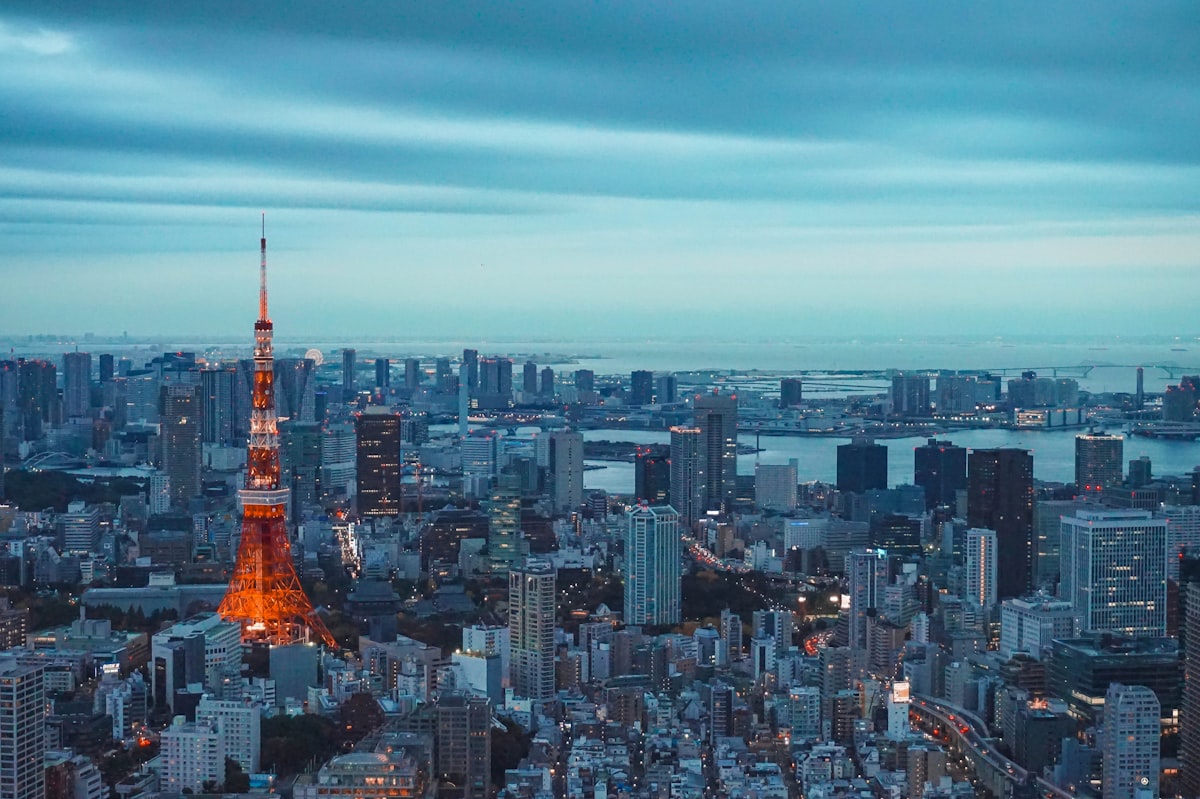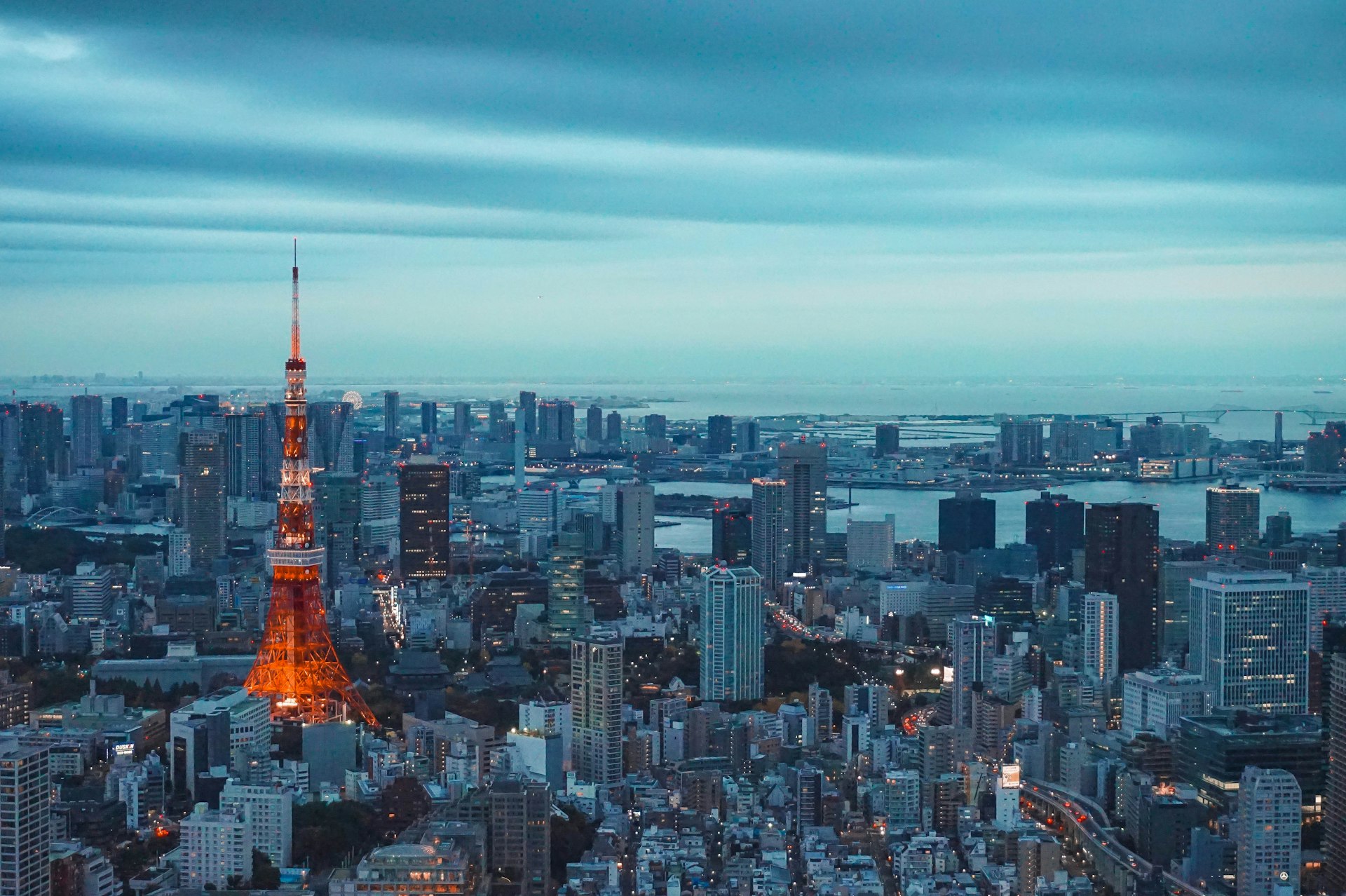
Shinjuku night skyline with neon Kabukicho signage and elevated traffic toward Tokyo Tower under Mt. Fuji silhouette

Seattle to Tokyo Flights 2026: Delta, ANA, JAL, Hawaiian SEA-HND vs SEA-NRT Compared

  • 4 carriers · Delta + ANA daily SEA-HND, JAL + Hawaiian daily SEA-NRT — all nonstop
  • From $540 round-trip in May-June · April annual peak $880 (cherry blossoms) · cheapest economy on Hawaiian
  • Closest US-mainland gateway to Tokyo at 4,790 great-circle miles · 700 mi shorter than LAX
Compare 800+ airlinesBook direct — full support

Four carriers fly nonstop SEA to Tokyo daily in 2026 — Delta and ANA serve Haneda, JAL and Hawaiian serve Narita.

Block time is ~10h westbound, ~9h eastbound across 4,790 great-circle miles — Seattle is the closest US-mainland airport to Tokyo.

No visa needed for US passports — 90-day visa-free entry. EC 261 does NOT apply (Japan is not EU).

Some links on this page are affiliate links, at no extra cost to you.

SeattleTokyo at a Glance

💰 Off-peak — great deals this month
✈️
Best price: from $538
⏱️
Flight time: ~10h westbound, ~9h eastbound on 4,790-mile trans-Pacific block — shortest US-mainland gateway to Tokyo
🏢
Airlines: 4 airlines — Delta (daily SEA-HND A330-900neo), ANA (daily SEA-HND 787-9 / 777-300ER), JAL (daily SEA-NRT 787-9 Sky Suite), Hawaiian (daily SEA-NRT A330-200)
🛂
Visa: No visa required for US passports — Japan grants 90 days visa-free for tourism; no ETIAS, no eVisa, no fee
🕐
Time zone: Tokyo JST UTC+9 year-round (no daylight savings) — 16 hours ahead of Seattle in winter, 17 hours in summer
🛫
Airport: Tokyo-Haneda HND is 15 km from central Tokyo (Delta + ANA); Tokyo-Narita NRT is 60 km out (JAL + Hawaiian) — choose HND for Tokyo-focused trips

💰 When is the cheapest time to fly from Seattle to Tokyo?

This month: June holds the floor — $560 round-trip, post-sakura summer ramp. 83°F daytime at 5.27 inches; tsuyu rainy season peaks mid-month.

SEA-Tokyo pricing tracks the Japanese tourism calendar plus US summer demand — April hits the annual peak driven by cherry blossom inbound at $880 round-trip economy.

May-June then drops to the post-sakura shoulder floor at $540-560 round-trip — the cleanest value window. August climbs again with Obon (mid-August Japanese family travel) and US summer holiday compression to $820. September drops back to the $560 shoulder.

December clears $780 from Shogatsu (Japanese New Year) plus US year-end travel demand. Hawaiian Airlines economy consistently runs $100-200 below Delta, ANA, JAL on the same dates — the route's value play at SEA-NRT.

Tuesday and Wednesday departures save $80-150 vs Friday/Sunday on the same fare class. Book 8-12 weeks ahead for cherry blossom April, 6-8 weeks for shoulder months.

Cheapest month: Jul ($538 avg, live)
Most expensive: Apr ($880)
Sweet spot: Feb, May, Jun, Sep
Book summer by: March
Average round-trip price by month
▼ NOW
JanFebMarAprMayJunJulAugSepOctNovDec

Next 30 days — daily low fares

07-07
$549
07-08
$546
07-09
$546
07-10
$546
07-11
$546
07-12
$544
07-13
$541
07-14
$541
07-15
$541
07-16
$541
07-17
$541
07-18
$541
07-19
$541
07-20
$541
07-21
$538

Tooltip shows stops + source. Cached fares from Aviasales.

Cheap Average ExpensivePrices are approximate averages
See exact dates and prices →

✈️ Which airlines fly from Seattle to Tokyo?

Four carriers fly daily nonstop Seattle to Tokyo in 2026 — Delta and ANA serve Haneda, JAL and Hawaiian serve Narita.

The carrier choice hinges on three axes: destination airport (HND saves 45-60 min on Tokyo-focused trips), loyalty currency (SkyMiles vs Star Alliance vs Alaska Mileage Plan vs Mileage Plan Hawaiian), and hard product — ANA's The Room on 777-300ER days is industry-leading.

Delta Air Lines logo
Delta Air LinesDirect
Full-service carrier (SkyTeam founding member)
Round-trip Economy $720-1,480; Premium Select +$500-1,000; Delta One Suite $5,200-8,400
Direct (SEA → HND Tokyo-Haneda)·Westbound ~10h 0m; eastbound ~9h 5m·1 carry-on + 1 personal item free; first checked $35 (Basic Economy excludes); Delta One 2x32 kg priority; SkyTeam Elite Plus 2 bags free

Delta owns the SEA-HND flagship — daily nonstop on the A330-900neo Delta One Suite, some rotations on the A350-900.

After Delta dismantled its Tokyo-Narita hub a decade ago, the airline rebuilt its Asia gateway around Seattle-Haneda — an industry response to United's SFO Pacific hub.

The Delta One Suite delivers a sliding privacy door, direct-aisle access, 1-2-1 lie-flat — competing with the Japanese carriers' top business cabins.

Delta's SEA SkyClub network is among its strongest in the West. Anti-rec: economy bag is 1x23kg vs Japanese carriers' 2x23kg — pack accordingly.

Best for: SkyMiles loyalists, Pacific Northwest tech business travelers (Microsoft, Amazon, Boeing), Delta One Suite hard-product preference, SEA SkyClub access, Tokyo-focused HND trips

ANA (All Nippon Airways) logo
ANA (All Nippon Airways)Direct
Full-service carrier (Star Alliance member)
Round-trip Economy $780-1,580; Premium Economy +$600-1,200; Business $5,400-8,600 (The Room when 777-300ER assigned)
Direct (SEA → HND Tokyo-Haneda)·Westbound ~10h 5m; eastbound ~8h 55m·2 x 23 kg checked free in economy; Star Alliance Gold one extra bag; Business 2x32 kg priority

ANA brings trans-Pacific service polish — Japanese meal program, Boeing 787-9 cabin built locally at Everett 30 miles north of SEA.

Most 787-9 and 777 deliveries to ANA happen at Boeing's Everett plant — flying ANA out of SEA back to Tokyo means a plane that lived in the Pacific Northwest is taking you home.

The Room on 777-300ER days is industry-leading: 1-2-1 fully enclosed suite with sliding door. 787-9 days run staggered herringbone 1-2-1.

Virgin Atlantic Flying Club is the under-known award sweet spot — 31,500 points one-way SEA-Tokyo Business was documented in November 2025.

Best for: Star Alliance Gold, Pacific Northwest aviation enthusiasts, Japanese-meal program, Virgin Atlantic Flying Club redemption, The Room business on 777-300ER days

Japan Airlines (JAL) logo
Japan Airlines (JAL)Direct
Full-service carrier (oneworld member)
Round-trip Economy $820-1,640; Sky Premium Economy +$650-1,300; Sky Suite Business $5,800-9,000
Direct (SEA → NRT Tokyo-Narita)·Westbound ~10h 15m; eastbound ~9h 20m·2 x 23 kg checked free in economy; oneworld Sapphire/Emerald one extra bag; Sky Suite 2x32 kg priority

JAL is the oneworld answer for SEA-Tokyo — daily SEA-NRT on the 787-9 Sky Suite.

Historically charged — JAL was the first Asian carrier ever at Sea-Tac when it launched Tokyo service on June 28, 1959, making this the longest continuously-operated Asia-Pacific route at the airport.

The Sky Premium Economy cabin (38-inch pitch, full meal service) is the route's most under-priced cabin.

Alaska joined oneworld in 2021 — Mileage Plan members earn full oneworld benefits on JAL metal. A 60,000-mile Tokyo-SFO Business award was documented via JAL HND (December 2026 booking).

Best for: oneworld earners, Alaska Mileage Plan elites post-2021 alliance entry, Sky Premium Economy seekers, JR Pass holders connecting via Narita Express to Shinkansen

Hawaiian Airlines logo
Hawaiian AirlinesDirectBest price
Full-service carrier (oneworld via Alaska acquisition 2024)
Round-trip Economy $640-1,360 (route's value play); Extra-comfort economy +$200-400; Business $4,200-7,200
Direct (SEA → NRT Tokyo-Narita)·Westbound ~10h 35m; eastbound ~9h 35m·2 x 23 kg checked free in economy; Mileage Plan one extra bag post-Alaska merger; Business 2x32 kg priority

Hawaiian's SEA-NRT is the route's value play — economy frequently lists $100-200 below ANA / Delta / JAL on the same dates.

The aircraft is a 2-cabin A330-200 widebody (not Hawaiian's flashier A321neo) — seat comfort holds up over the 10-hour flight.

Post-Alaska-acquisition (closed September 2024), Mileage Plan integration is progressing — earn and redeem now works between the carriers.

For Hawaii-Japan combo itineraries, SEA-NRT-HNL via Hawaiian metal is a unique buildable option no other carrier offers from SEA.

Best for: budget-conscious trans-Pacific economy, Alaska Mileage Plan post-merger, Hawaiian loyalists, SEA-NRT-HNL Honolulu-hub builders, value leisure trips

Mubboo verdict: Delta owns SEA flagship with daily A330neo HND. ANA wins Japanese service polish. JAL is the oneworld + Alaska pick. Hawaiian is the economy value play.

Prices shown are approximate averages based on recent searches (April 2026). Actual fares vary by date, class, and availability.

🎯 Ready to compare flights?

We compare prices from airlines and travel platforms so you can find the best deal.

Compare all flights →

📅 When should you book Seattle to Tokyo flights?

Book Seattle to Tokyo 8 to 12 weeks ahead for cherry blossom April, 6 to 8 weeks for shoulder months, 4 to 6 weeks for the off-peak January-February.

Cherry blossom April compresses fast — book by mid-February for late-March departures aligned with the typical March 25 - April 8 Tokyo bloom window per Japan Meteorological Agency forecasts. April hits the annual peak at $880 round-trip economy.

Golden Week (April 29 - May 5) sees Japanese outbound demand lift hotel rates rather than inbound flight pricing. Obon (mid-August) lifts pricing 10-15% on the eastbound return as Japanese families travel.

The May-June post-sakura shoulder at $540-560 round-trip is the cleanest value window — book within 6-8 weeks. September drops back to the same shoulder floor before the October fall foliage bump.

Tuesday and Wednesday departures save $80-150 vs Friday or Sunday on the same fare class. Avoid December 20 - January 5 — Shogatsu plus US holiday compression drives economy past $1,000 even on Hawaiian's value lane.

M says: hot wet early summer. 83°F daytime, 5.27-inch precipitation, tsuyu rainy season midpoint.

🎯 Sweet spot: Book 6–10 weeks ahead
💰 Savings: $80–$150 vs last-minute
📅 Best booking day: Tuesday or Wednesday
☀️ Summer deadline: Book by March
💳 Fare alert tip: Set price alerts for your exact dates

If you're a family flying in summer, book by March — peak season fills up fast.

Budget travelers: shoulder season (Sep–Oct, Apr–May) offers the best balance of price and weather.

💡 This Jun: Last clean off-peak window before US summer ramp. July bookings now firming.

🏙️ Why visit Tokyo?

Shinjuku night skyline with neon Kabukicho signage and elevated traffic toward Tokyo Tower under Mt. Fuji silhouette

Tokyo is Japan's contradiction city — ultramodern skyscrapers in Shinjuku and Roppongi, historic temples in Asakusa and Yanaka, neon-saturated entertainment in Shibuya and Akihabara, and serene Edo-era gardens like Shinjuku Gyoen all walking-distance apart by Yamanote Line.

The city blends cutting-edge technology and fashion with centuries-old cultural sites — Senso-ji temple (the oldest in Tokyo, founded 645 AD) sits two subway stops from the Skytree, the world's second-tallest tower.

As one of the world's most populous urban areas, Tokyo provides an overwhelming yet fascinating array of experiences — but the surprise for first-time visitors is how organized and calm the city feels.

Reddit r/travel community sentiment from spring 2026 reinforces this: 'Neon streets felt organized and calm despite the crowds' — Tokyo at night offers a uniquely calm yet vibrant atmosphere that photos cannot fully capture.

One caveat per r/Tokyo community: 'Empty tables are often reserved, not evidence of bias' — some foreigners misinterpret fully booked restaurants as discrimination when the venues are simply at capacity. Reservations matter; top spots book weeks ahead.

What makes Tokyo worth the flight:

A useful first Tokyo trip from Seattle runs on three vectors.

Neighborhoods: Shibuya (Scramble Crossing + youth fashion + Shibuya Sky observation), Shinjuku (skyscrapers + Golden Gai + Shinjuku Gyoen), Asakusa (Senso-ji + Nakamise shopping street + ryokan), Akihabara (electronics + anime + Yodobashi + Mandarake).

Day trips: Nikko (2h shinkansen, Toshogu + waterfalls), Hakone (1.5h Romancecar, hot springs + Mt. Fuji), Kamakura (1h JR, Great Buddha + beach). Reddit r/JapanTravel: 'Day trips from Kyoto and Osaka added depth to the journey' — multi-city Tokyo-anchored itineraries rate highest.

Food: Tsukiji outer market (inner wholesale moved to Toyosu), Tokyo Disneyland and DisneySea (community tip: 'Arrive at nine and you'll be inside within twenty minutes'), Michelin-star sushi (Sukiyabashi Jiro, Sushi Saito — months-ahead reservations).

Cherry blossom (late March - early April): Meguro River (paper-lantern night canopy), Yoyogi Park (Harajuku-adjacent), Shinjuku Gyoen (gated park admission).

Best neighborhoods to explore:

ShinjukuFirst-time visitors, business travelers needing JR Yamanote connectivity, nightlife-oriented trips, sakura at Shinjuku Gyoen

Tokyo's commercial center — skyscrapers, Tokyo Metropolitan Government Building observation deck (free), Golden Gai labyrinth bars, Shinjuku Gyoen gardens. Busiest train station in the world.

ShibuyaYoung travelers, fashion-curious visitors, photographers, families wanting the iconic Tokyo image

Iconic Scramble Crossing plus youth fashion district (Harajuku adjacent). Shibuya Sky on Shibuya Stream is the city's best sunset photo spot. Hachiko statue at the station.

AsakusaFirst-time tourists, cultural-curious visitors, ryokan stays, photographers wanting old-Tokyo atmosphere

Old Tokyo (Shitamachi) — Senso-ji temple (645 AD, Tokyo's oldest), Nakamise shopping street, traditional ryokan. Quieter at night. Wikivoyage flags Shitamachi as one of three Tokyo best-areas.

RoppongiBusiness travelers, fine-dining itineraries, nightlife visitors, expat-favored hotel base (Grand Hyatt, Ritz-Carlton, Andaz)

Tokyo's nightlife and embassy district — Roppongi Hills + Tokyo Midtown shopping, Mori Art Museum, expat-favored restaurant scene. Walking distance to Tokyo Tower.

AkihabaraHardware engineers, anime + manga fans, gamers, electronics buyers, secondhand hunters

Electronics + anime + manga capital — Electric Town main strip, Yodobashi Camera flagship, Mandarake secondhand chain. Hardware engineers from Microsoft, Amazon, Nintendo make pilgrimages.

Marunouchi / Tokyo Station areaBusiness travelers, Shinkansen onward (Kyoto + Osaka), Imperial Palace walkers, train-spotters at JR's central hub

Central business district next to Tokyo Station — restored 1914 red-brick station building, Imperial Palace East Gardens walking radius. Wikivoyage flags Central Tokyo as one of three best areas.

Don't miss:

⛩️

Senso-ji + Asakusa

Tokyo's oldest temple (645 AD) with Kaminarimon thunder gate and Nakamise shopping street. Free entry. Visit early-morning before day-tourist crowds.

Browse Senso-ji + Asakusa tours →
🚦

Shibuya Scramble Crossing + Shibuya Sky

The iconic Tokyo image — pedestrian crossing visible from Starbucks Tsutaya. Shibuya Sky on Shibuya Stream is the city's best sunset photo spot.

Browse Shibuya Scramble Crossing + Shibuya Sky tours →
🗼

Tokyo Skytree + Tokyo Tower

Two observation towers — Skytree (634m, world's second-tallest) and the older Tokyo Tower (333m, Eiffel-inspired 1958). Skytree wins for height; Tokyo Tower for retro.

Browse Tokyo Skytree + Tokyo Tower tours →
🌸

Meguro River + Shinjuku Gyoen sakura

Cherry blossom prime spots — Meguro River paper-lantern canopy at night; Shinjuku Gyoen gated garden with multiple varieties. Late-March through early-April.

Browse Meguro River + Shinjuku Gyoen sakura tours →
🍣

Tsukiji Outer Market

Sushi breakfast institution — the inner wholesale moved to Toyosu, but the outer street market thrives with sashimi bowls, dashimaki tamago. Walking distance to Hama Rikyu.

Browse Tsukiji Outer Market tours →
🎮

Akihabara Electric Town + Yodobashi Camera

Electronics + anime + manga capital — Yodobashi multi-floor flagship, Mandarake secondhand chain, gachapon machine arcades, themed maid cafés.

Browse Akihabara Electric Town + Yodobashi Camera tours →

M's take:

Base Shinjuku for first-time visitors or business travelers needing JR connectivity. Roppongi for upscale dining and embassy-district expat scene. Asakusa for old-Tokyo cultural feel and ryokan stays.

Akihabara or Shibuya for theme-specific trips. Marunouchi for Shinkansen-out itineraries to Kyoto/Osaka.

🎟️ Top activities in Tokyo

Ranked by traveler ratings and recent booking volume.

Harajuku Meiji Shrine Walking Tour in Tokyo

$25.00
5.0 (101)· 2 hours· Tours & Activities
Book now →

Cozy Tokyo Class: Ramen, Sushi, Sake Pairing & Cultural Exchange

$128
5.0 (95)· 3 hours· Tours & Activities
Book now →

Asakusa Classic Ramen & Crispy Gyoza Cooking Class

$127
5.0 (85)· 3 hours· Tours & Activities
Book now →

Private Curated Tour | Get Tokyo’s Must Sees & Unique Insights

$160
5.0 (253)· Tours & Activities
Book now →

Tokyo: Make Your Own Chopsticks Shibuya

$11.56
5.0 (236)· 1 hours· Tours & Activities
Book now →

Source: Viator · Prices in USD · Affiliate links.

🧳 What do you need to know before flying to Tokyo?

🛂 Do Americans need a visa for Tokyo?

US citizens do NOT need a visa for tourism stays up to 90 days in Japan.

Japan grants visa-free entry for US passport holders — no ETIAS, no eVisa, no fee, no advance application.

At immigration, officers may request proof of onward travel (return or onward ticket) and accommodation address (hotel confirmation or Airbnb reservation). Carry printed copies — Japanese immigration is process-driven and reasonable when expectations are met.

Visit Japan Web is the official pre-arrival immigration and customs system — register before flying to receive a QR code for accelerated processing at HND or NRT.

Children and adult travelers each need their own passport; no Japan-specific visa exemptions or requirements for minors on the US visa-waiver.

🕐 What's the time difference?

Tokyo runs Japan Standard Time UTC+9 year-round — Japan does NOT observe daylight savings.

Seattle runs Pacific Time UTC-8 winter, UTC-7 PDT summer.

The practical offset: Tokyo is 16 hours ahead in winter, 17 hours in summer. A 9am Seattle call is 1am Tokyo the next day; a 9am Tokyo meeting is 4pm Seattle the previous day in winter.

Westbound SEA-Tokyo crosses the International Date Line — depart Seattle Tuesday afternoon, arrive Tokyo Wednesday afternoon after a 10-hour flight. The flight 'loses' a day going out.

Eastbound gains a day — depart Tokyo Friday morning, arrive Seattle Friday morning the same calendar day. Most travelers find 3-5 days of jet lag adjustment.

🚇 How do you get from the airport to the city?

Tokyo has two airports served by SEA carriers — the difference in transit time matters.

Airport / OptionTimeCostBest for
Tokyo Monorail to Hamamatsucho (HND)15-25 min500 JPYDefault from Haneda — every 4-10 min, JR Yamanote connection at Hamamatsucho
Keikyu Line to Shinagawa or Shimbashi (HND)15 min300 JPYFastest from Haneda — direct to JR Yamanote / Tokaido Shinkansen at Shinagawa
Narita Express (N'EX) to Tokyo Station (NRT)60 min3,070 JPYDefault from Narita — JR Pass-eligible, every 30 min, reserved seats
Keisei Skyliner to Ueno (NRT)45 min2,580 JPYFastest from Narita — every 20-40 min, Ueno is JR Yamanote interchange
Airport Limousine Bus (HND or NRT)30-90 min1,400-3,200 JPYMajor Tokyo hotels direct — luggage-friendly, traffic-dependent
Taxi from HND30-40 min8,000-12,000 JPYLate arrivals, heavy luggage; flat-rate to central Tokyo zones

Editor's pick: Keikyu Line from HND for fastest central-Tokyo arrival; Narita Express from NRT for JR Pass holders.

For JR Pass holders, Narita Express is the cleanest connection — activate the pass at the airport JR counter, ride N'EX direct to Tokyo Station, transfer to Shinkansen onward to Kyoto, Osaka, or Hokkaido without leaving the JR network.

💷 What about money and tipping?

Japan uses the Japanese yen (JPY / ¥) at roughly 159 JPY per US dollar in May 2026 (exchangerate-api enrichment) — equivalent to 0.0063 USD per yen.

Practical math: $100 ≈ ¥15,900, $1,000 ≈ ¥159,000.

Tokyo is more cash-friendly than most major world capitals — smaller shops, izakayas, ramen counters, traditional bathhouses (sento), and farmers markets are often cash-only. Carry ¥20,000-30,000 even if you live cardless at home.

Visa and Mastercard work at hotels, convenience stores, chain restaurants, and department stores. American Express works at maybe 50% of cardable venues.

ATM strategy: Use 7-Eleven ATMs (in every 7-11 convenience store) or Japan Post Bank ATMs for reliable foreign-card acceptance. Avoid bank-branded Japanese ATMs.

No tipping culture — attempting to tip can cause genuine confusion or refusal at restaurants and hotels.

Tokyo currency snapshot

1 USD = 159 JPY

1 JPY = $0.0063 USD

Japanese Yen

Cash

ATMs offer the best rate. Avoid airport currency desks.

Tipping

Carry cash — many smaller shops are cash-only. ATMs at 7-Eleven and post offices accept foreign cards. No ti…

Cards

Visa and Mastercard widely accepted. Tell your bank before you go.

Source: open.er-api.com · Updated Jun 1, 2026 · Rates fluctuate — check before booking.

📱 Will your phone work?

Japan has strong 5G and 4G LTE on NTT Docomo, SoftBank, and au by KDDI.

1. US carrier. Verizon TravelPass at $12/day, T-Mobile Magenta and Magenta Max include Japan data, AT&T International Day Pass at $12/day.

2. eSIM. Airalo, Saily, Nomad, Holafly sell Japan plans $10-30 for 5-20 GB lasting 7-30 days. Activate the QR code from hotel WiFi after landing.

3. Pocket WiFi rental. NinjaWifi, Japan Wireless, Sakura Mobile at ¥800-1,200/day. Pick up at HND or NRT arrivals, return at departure. Best for 3-5 device groups or families.

eSIM is the sweet spot for 1-2 person 7-14 day trips; pocket WiFi wins for families. Free WiFi is universal at hotels, common in cafés and convenience stores, spotty on JR trains.

☁️ Tokyo climate overview

Best: NovAvoid: May

Historical highs, lows, and rainfall by month. Plan packing and outdoor time around the extremes.

Jan

50°/35°F

1.3″ rain

Feb

51°/35°F

0.4″ rain

Mar

58°/42°F

6.1″ rain

Apr

67°/52°F

5.8″ rain

May

73°/59°F

10.0″ rain

Jun

83°/70°F

5.3″ rain

Jul

91°/77°F

3.4″ rain

Aug

94°/79°F

1.9″ rain

Sep

87°/73°F

9.0″ rain

Oct

71°/60°F

6.3″ rain

Nov

61°/47°F

0.9″ rain

Dec

54°/38°F

1.7″ rain

Source: Open-Meteo Archive API · 2025 historical data · Updated June 2026

✈️ Ready to book? Compare Seattle to Tokyo flights

Search flights →

🛫 Flying from Seattle — airport tips

SEA Concourse A — Delta international departures (Delta Air Lines)

  • Delta Sky Club Concourse A flagship + satellite club — among Delta's strongest lounge networks in the West.
  • Delta One Suite priority check-in at Concourse A — separate security lane, dedicated arrivals path.
  • A330-900neo at gate A6-A12 typically — gates vary by day; check boarding pass.
  • SEA international gate area is large — allow 90 min from check-in to gate even with PreCheck.

SEA South Satellite — ANA, JAL, Hawaiian international departures (ANA / JAL / Hawaiian)

  • South Satellite requires underground tram from main terminal — allow 20-30 min for transfer.
  • ANA Lounges at SEA South Satellite — Star Alliance Gold access; not as strong as ANA's home HND lounges but solid.
  • JAL uses Admirals Club via oneworld at SEA — American Airlines flagship lounge serves oneworld Sapphire / Emerald.
  • Priority Pass: The Club at SEA — accessible to Priority Pass cards, decent food + showers.

HND Terminal 3 — Delta + ANA international arrivals (Haneda) (Delta / ANA)

  • HND Terminal 3 is the international complex — opened 2010, large modern facility serving foreign carriers including Delta.
  • Tokyo Monorail station inside Terminal 3 — Hamamatsucho in 15-25 min for 500 JPY.
  • Keikyu Line station also inside Terminal 3 — Shinagawa in 15 min for 300 JPY (fastest central Tokyo arrival).
  • Visit Japan Web QR code at immigration — scan at automated gates for faster processing than manual line.

NRT Terminal 1 + Terminal 2 — JAL + Hawaiian international arrivals (Narita) (JAL / Hawaiian)

  • JAL arrives Terminal 1 North (oneworld) — terminal hosts JAL, AA, BA, Cathay, Qatar.
  • Hawaiian arrives Terminal 2 (other carriers) — connected to Terminal 1 by free inter-terminal shuttle every 5 min.
  • Narita Express station is in the basement of both terminals — JR Pass-eligible, every 30 min to Tokyo Station in 60 min.
  • Keisei Skyliner from a separate station at NRT — every 20-40 min to Ueno in 45 min, 2,580 JPY (faster than N'EX, no JR Pass).

HND + NRT transit windows for onward Japan domestic (All carriers)

  • HND for onward Japan domestic — JAL and ANA domestic use HND Terminal 1 (JAL) and Terminal 2 (ANA), 5-min monorail from international Terminal 3.
  • NRT for onward Japan domestic — significantly less convenient than HND; if heading to Hokkaido or Osaka, HND saves substantial time.
  • Minimum connection time HND international-to-domestic 90 min; NRT same-terminal 90 min, inter-terminal 2h.
  • Visit Japan Web pre-arrival registration speeds immigration on initial entry — register before flight.

🚐 Skip the hassle? Book a private airport transfer

Fixed price, meet & greet at arrivals, door-to-door service

Compare transfers →

💡 Insider tips: Seattle to Tokyo

Choose HND over NRT carriers for any Tokyo-focused trip — saves 45-60 min of arrival transitMubboo original data

Delta and ANA fly to Haneda (HND); JAL and Hawaiian fly to Narita (NRT). The transit-time difference is meaningful.

HND sits 15 km from central Tokyo via Tokyo Monorail or Keikyu Line in 30 min. NRT is 60 km out — Narita Express runs 60 min to Tokyo Station, Keisei Skyliner 45 min to Ueno. With immigration and luggage, HND saves 45-60 minutes.

For Tokyo-focused 3-5 day trips, that means an entire usable evening on arrival day. Anti-rec: do not pick Hawaiian or JAL for a short Tokyo trip just for the cheaper economy fare.

Book ANA on 777-300ER days for The Room — industry-leading business cabin most flyers don't requestMubboo original data

ANA's 777-300ER The Room is the industry-leading business class — 1-2-1 fully enclosed suite with sliding door, the same hard product available on Tokyo-New York and Tokyo-London flagships.

ANA assigns SEA-HND aircraft on a rotation between 787-9 and 777-300ER — different days see different equipment. Check the equipment code at booking; request changes if the type matters to you.

The 787-9 staggered herringbone 1-2-1 is also excellent — not The Room, but better than most US carriers' business products. Anti-rec: do not pay The Room premium without confirming aircraft type — rotation can flip at short notice.

Hawaiian Airlines economy frequently lists $100-200 below the other three carriers — the route's value play

Hawaiian Airlines SEA-NRT economy consistently runs $100-200 below Delta, ANA, JAL on the same dates per researcher comparison.

The aircraft is a 2-cabin A330-200 widebody (not Hawaiian's flashier A321neo). Seat comfort holds up over a 10-hour flight. Soft service polish is solid for a US-flag carrier — Hawaiian's trans-Pacific specialization shows in meal quality and cabin staffing.

Post-Alaska-acquisition (closed September 2024), Mileage Plan integration is progressing. For Hawaii-Japan combo itineraries, the SEA-NRT-HNL routing is unique buildable from SEA.

Use Virgin Atlantic Flying Club to book ANA at 31,500 points one-way SEA-Tokyo BusinessMubboo original data

Virgin Atlantic Flying Club is the under-known award sweet spot for ANA redemption — a 31,500-point one-way SEA-Tokyo Business booking was documented by @roametravel on X in November 2025.

ANA is a Star Alliance member, but Virgin Atlantic publishes a separate partner award chart that prices Tokyo-North America Business at substantially fewer points than Mileage Plus or even ANA's own Mileage Club on many dates. Transfer Amex Membership Rewards, Citi ThankYou, or Chase Ultimate Rewards at 1:1.

Alaska Mileage Plan + JAL is the parallel sweet spot for oneworld — 60,000 miles documented Tokyo-SFO Business via JAL HND (December 2026). Anti-rec: do not transfer points without confirming partner award availability — inventory is search-only.

Westbound SEA-Tokyo afternoon departure = sleep math works; eastbound morning = push throughMubboo original data

Delta DL 167 SEA-HND departs late afternoon, arriving Tokyo mid-afternoon next day — gives you 6-8 hours of usable sleep in the air before a daylight arrival.

Eastbound Tokyo-SEA flights depart morning, land Seattle morning-same-day after crossing the date line — push through, eat dinner at Seattle dinner time, sleep at 10pm local.

The 16-17 hour westbound shift is the harder direction — most travelers find 3-5 days of adjustment necessary. Eastbound back to Seattle is gentler — the date-line crossing 'gives back' a day.

May-June post-sakura shoulder is the year's value window at $540-560 round-trip

May and June are the year's cheapest months at $540-560 round-trip economy — post-cherry-blossom shoulder, before US summer demand, before Obon mid-August lift.

Weather is warm and wet per Open-Meteo enrichment — May highs around 73°F with 254mm precipitation, June 83°F with 134mm. The May rainy season (tsuyu) is real but does not preclude outdoor visiting; carry a folding umbrella.

Tuesday and Wednesday departures save $80-150 vs Friday/Sunday on the same fare class. Book 6-8 weeks ahead for the shoulder floor. September drops back to the same $560 level after the August Obon peak.

ANA, JAL, Hawaiian allow 2 x 23kg checked free in economy — Delta only 1 x 23kg

ANA, JAL, and Hawaiian all allow 2 x 23 kg checked bags free in economy on trans-Pacific routes. Delta allows only 1 x 23 kg — first checked free, second checked $100.

For Tokyo trips that involve shopping (Yodobashi electronics, kimono fabric, ceramics, kitchen knives), the bag math favors the Japanese carriers and Hawaiian. Star Alliance Gold gets one extra bag on ANA.

Anti-rec: do not book Delta economy for a shopping-heavy trip without budgeting the $100 second-bag fee. Basic Economy excludes the first checked bag entirely on US carriers — verify before booking the cheapest visible fare.

👥 Who flies this route — and what they should know

Pacific Northwest tech business traveler (Microsoft / Amazon / Boeing engineer visiting Tokyo office)

Recommended: Delta One Suite on the A330-900neo SEA-HND on a late-afternoon SEA departure.

Arrive Tokyo-Haneda mid-afternoon, Keikyu Line 15 minutes to Shinagawa, taxi to a Marunouchi or Roppongi hotel (Imperial Hotel, Grand Hyatt, Andaz Tokyo Toranomon Hills), sleep through to next morning, pivot into client meetings at Microsoft Japan, Amazon Japan, or Boeing Japan offices.

Stay Marunouchi for Tokyo Station business district or Roppongi for embassy-district expat scene. The 16-17 hour westbound shift hits hard — expect 3 days before sleep stabilizes. Delta corporate contracts are typically strongest for Pacific Northwest tech HQs.

Anti-rec: do NOT book a morning meeting from an afternoon SEA departure skipping the acclimatization night — jet lag plus 17-hour shift compounds against high-stakes meetings.

Aviation enthusiast / Boeing supplier / aerospace business traveler

Recommended: ANA on 777-300ER The Room business when assigned — request the equipment via booking.

ANA's 787-9 and 777-300ER deliveries happen at Boeing's Everett plant 30 miles north of SEA. The plane you board out of Seattle to Tokyo lived for months in the Pacific Northwest before delivery — aviation-cultural symmetry unique to this route.

Book ANA SEA-HND, request 777-300ER days for The Room. Use Virgin Atlantic Flying Club 31,500 points one-way Business as the cheapest award (@roametravel documented November 2025). The Mileage Plus alternative runs 75,000-95,000 miles.

Anti-rec: do not pay The Room business premium without confirming aircraft type at booking — the 787-9/777-300ER rotation can flip at short notice.

Alaska Mileage Plan elite chasing oneworld JAL award redemption

Recommended: JAL Sky Suite SEA-NRT with Alaska Mileage Plan award redemption.

Alaska Airlines joined oneworld in 2021, and Mileage Plan members now earn full oneworld benefits on JAL metal. Redemption rates often outperform AAdvantage — a 60,000-mile Tokyo-SFO Business award via JAL HND was documented December 2026.

JAL has operated Sea-Tac continuously since June 28, 1959 — the longest continuously-operated Asia-Pacific route at the airport. The Sky Premium Economy (38-inch pitch, full meal service) is the route's under-priced cabin.

Arrive Narita, Narita Express direct to Tokyo Station 60 minutes (JR Pass-eligible), Shinkansen onward to Kyoto / Osaka / Hokkaido without leaving the JR network. Anti-rec: do not book Mileage Plan saver award without checking JAL Mileage Bank (JMB) rates.

Cherry-blossom photographer (sakura-chasing trip)

Recommended: ANA or Delta SEA-HND Premium Economy for late-March / early-April departure with photographer-checked tripod and camera gear.

Track Japan Meteorological Agency sakura bloom forecasts issued from late January — typical Tokyo full-bloom window is late March through early April (roughly March 25 - April 8). April is the annual price peak at $880 round-trip; book 8-10 weeks ahead.

Three prime Tokyo sakura spots: Meguro River (paper-lantern canopy at night — most photographed), Yoyogi Park (Harajuku-adjacent), Shinjuku Gyoen (gated multi-variety garden). Reddit r/JapanTravel: 'Sakura parks offered peaceful walks and lively hanami gatherings'.

Anti-rec: do not book a Narita arrival as a photographer-with-tripod — Narita Express luggage limits matter for oversized gear; HND ride-shares scale better.

PNW skier doing SEA-HND-Sapporo onward (Hokkaido winter trip)

Recommended: Hawaiian Airlines SEA-NRT economy for value, onward JAL or ANA domestic to Sapporo (CTS) for Niseko / Furano.

Or book Delta or ANA SEA-HND with onward JAL domestic to CTS — HND-onward-domestic is meaningfully smoother than NRT-onward-domestic. January-February economy floor at $540-640 round-trip with Hawaiian's $100-200 discount on the SEA-NRT lane.

Hokkaido powder is the draw: Niseko (international resort, Japanese-Australian hybrid scene), Furano (quieter, family-friendly), Rusutsu (off-piste tree skiing). Most carriers allow ski bag as a standard checked bag — ANA and JAL definitively, Hawaiian as standard, Delta with weight-overage fee on bags over 50 lbs.

Anti-rec: do not book Hawaiian economy without confirming ski bag allowance — some Hawaiian Basic fares charge overweight on skis over 50 lbs.

Akihabara hardware engineer pilgrimage (Microsoft / Amazon / Nintendo employee)

Recommended: Delta or ANA SEA-HND Economy Plus or Premium Select for short-trip comfort.

Akihabara Electric Town is the global capital of consumer electronics, anime, manga, and gaming — Yodobashi Camera flagship, Mandarake secondhand chain, gachapon arcades, themed maid cafés. Hardware engineers from Microsoft, Amazon, and Nintendo make pilgrimages — many corporate teams build engineering off-sites around Akihabara visits.

Haneda arrival saves substantial time: HND to Akihabara is 30 minutes via Keikyu to Shinagawa, then JR Yamanote to Akihabara. Narita is 90 minutes each way via Narita Express plus transfer. On a 3-day trip, NRT eats half a usable trip day.

Anti-rec: do NOT book a Narita arrival for a 3-day Akihabara trip — 90-minute transits each way eat the cheaper economy fare value.

Multi-stop Tokyo-Kyoto-Osaka Shinkansen circuit traveler

Recommended: JAL SEA-NRT with JR Pass or ANA SEA-HND with onward Tokyo Station Shinkansen.

The Golden Route (Tokyo + Kyoto + Osaka) is consistently the highest-rated multi-city Japan itinerary. Reddit r/JapanTravel spring 2026: 'Multi-city route was gorgeous for shopping and site seeing' — Tokyo, Kyoto, Osaka, and nearby areas deliver excellent sightseeing variety with the Shinkansen as connective tissue.

JAL via Narita has the cleanest JR Pass connection — activate the pass at the airport JR counter, Narita Express direct to Tokyo Station, Shinkansen onward to Kyoto (2h 15m) or Osaka (2h 30m). Spring (April) or fall (October) are the prime windows.

Minimum trip length is 10-12 days for meaningful stops at all three cities. Anti-rec: do not book a 7-day trip for the circuit — pace becomes punishing, jet lag eats the first 2-3 days.

⚖️ Flight delayed or canceled?

EC 261/2004 does NOT apply on SEA-Tokyo — Japan is not in the EU. The Compensair / AirHelp claim path that works on US-Europe routes is not available for this corridor.

Disruption coverage instead falls under:

1. US Department of Transportation (DOT) on the US-departure side — covers tarmac delays over 3 hours and involuntary denied boarding compensation up to $1,550 on long-haul.

2. Airline Conditions of Carriage for each carrier — Delta, ANA, JAL, Hawaiian publish their own delay-and-cancellation policies (rebooking, meal vouchers at 3+ hours, hotel for overnight delays). ANA and JAL tend toward proactive rebooking onto the next available flight.

3. Montreal Convention 1999 covers checked-baggage liability on international flights — up to 1,288 SDR (~$1,750) for lost or damaged bags. File within 7 days for damage, 21 days for delivery delay.

4. Trip-delay coverage on a Chase Sapphire Preferred or Capital One Venture X is the most useful safety net — typically $500 per traveler for delays over 6 hours, including hotel and meals.

Japan does not have a comparable consumer-compensation regulation — typhoon-season cancellations (August-October) are particularly disruption-heavy, and most recovery falls on the carrier's discretion plus travel insurance.

📱 Stay Connected — Travel eSIM for Japan

Free option: T-Mobile Magenta and Magenta MAX and Verizon TravelPass at $12/day include Japan data — verify your plan first.

Japan runs strong 5G and 4G LTE on NTT Docomo, SoftBank, and au by KDDI — eSIM is the cleanest setup for US travelers without unlimited-Japan carrier plans.

Airalo, Saily, Nomad, and Holafly sell Japan-specific 7-30 day plans in the $10-30 range. Activate the QR code from your hotel WiFi after landing; the eSIM goes live the moment your phone catches NTT Docomo at HND or NRT.

🛡️ Travel Insurance — Higher Relevance for Multi-Region Japan Itineraries

Free option: Chase Sapphire Preferred and Capital One Venture X include trip-cancellation, baggage delay, and emergency medical evacuation when you pay the flight with the card — check existing coverage first.

Tokyo itself is routine for US travelers — Shinjuku, Shibuya, Asakusa, Roppongi are extremely safe walking radius with low crime rates per Wikivoyage destination overview.

Travel insurance becomes meaningfully more valuable on multi-region Japan itineraries — onward Shinkansen and JR Pass-eligible routes carry typhoon-season disruption risk (August-October), and rental-car Hokkaido or Okinawa loops involve liability beyond standard credit-card travel protection.

For trip-cancellation and emergency medical, EKTA covers cancel-for-any-reason, medical evacuation, and rental-vehicle damage. Worth it on multi-region itineraries; optional on pure-Tokyo 3-5 night stops.

🚖 Airport Transfers & Ground Transit — Tokyo HND and NRT

Free option: Keikyu Line at 300 JPY from HND is the route's best free-first option — 15 min to Shinagawa, every 4-10 min, runs from 5am to midnight. Pre-booked transfer is the upgrade for families.

HND-to-central-Tokyo: Tokyo Monorail at 500 JPY, Keikyu Line at 300 JPY (fastest), Airport Limousine Bus at 1,400 JPY direct to hotels, or taxi at 8,000-12,000 JPY.

NRT-to-central-Tokyo: Narita Express at 3,070 JPY (JR Pass-eligible), Keisei Skyliner at 2,580 JPY (fastest to Ueno), or Airport Limousine Bus at 3,200 JPY.

For solo or couple arrivals with light luggage, Keikyu (HND) or Skyliner (NRT) is the default. For families or 3+ checked bags, a pre-booked Welcome Pickups or Kiwitaxi transfer beats taxi-stand queues. For onward Japan domestic flights, HND-internal-monorail saves significant time.

Emergency contacts in Tokyo

Local emergency110 (police) / 119 (ambulance and fire) — both staffed 24/7 in English at major Tokyo dispatch
Police (non-emergency)03-3501-0110 (Tokyo Metropolitan Police English-language line) or Japan Tourism hotline 050-3816-2787 (24/7 multilingual visitor support)

What Travelers Are Saying About Tokyo

Based on recent discussions from r/travel, r/flights, and tokyo community subreddits • Updated June 2026

👍 What Travelers Love

  • Japan's autumn leaves are breathtaking and a trip highlight.

    — “fall colors exceeded our high expectations

    r/travel · 3 posts
  • Small family-run eateries offer warm hospitality and delicious home cooking.

    — “grandma and grandpa cooking your meal made it special

    r/travel · 2 posts
  • Tokyo and Kyoto harmoniously blend futuristic modernity with deep tradition.

    — “amazing mix of modern and traditional Japan

    r/travel · 2 posts
  • Iconic temples and shrines like Kinkakuji and Meiji-Jingu are must-visits.

    — “gold plated walls and serene surroundings awe-inspiring

    r/travel · 2 posts
  • Japan's efficient rail network makes day trips effortless and enjoyable.

    — “took easy train day trips to Nara and Mt Fuji

    r/travel · 3 posts

💡 Trending Tips

  • Skip tourist crowds by exploring smaller, lesser-known towns.

    — “highly recommend finding a little town with classic eateries

    r/travel · 3 posts
  • Time your trip for autumn to catch spectacular seasonal colors.

    — “autumn foliage was the true star of our trip

    r/travel · 3 posts
  • Make a day trip to Nara from Kyoto or Osaka for deer park and temples.

    — “a day trip to Nara is an absolute must

    r/travel · 2 posts

Themes synthesized from public Reddit discussions. Quotes are paraphrased — never copied verbatim.

Frequently asked questions about Seattle to Tokyo flights

Mubboo compares flights across 800+ airlines and travel platforms. Clicking Compare flights sends you to the booking site — you pay them directly.

🎟️ Things to do in Tokyo

3,891 activities · Live data from Viator

Researched by Mubboo Editorial Team · Reviewed by Richard Lee, Founder

Prices from Aviasales. Seasonal advice updated: June 2026 · Last editorial review: 2026-05-20 · Government info: travel.state.gov

Prices last updated 6h ago · cached fares aggregating 800+ airlines and agencies · Check real-time prices →

M verdicts are based on editorial research — not pulled from a database.