
💰 When is the cheapest time to fly from Chicago to Tokyo?
This month: July jumps as summer break and festival travel push fares well above the spring shoulder.
Chicago to Tokyo economy averages about $1,210 round trip, ranging $849 to $1,576 across the year.
The cycle has three floors: February (post-holiday demand collapse), September (after summer Obon), and November (between foliage and the December surge). Each runs roughly 20% below average.
The peaks are cherry-blossom season (late March through April) and summer (July-August), when fares climb 40% above the floor. Golden Week (late April to early May) and Obon (mid-August) spike both airfare and Tokyo hotels.
Three nonstop carriers keep ORD fares competitive, so set a fare alert and pounce on a sub-$1,000 economy round trip in the floor months.
Here's a month-by-month look at prices on this route:
✈️ Which airlines fly from Chicago to Tokyo?
Three carriers fly Chicago to Tokyo nonstop daily, an unusual depth for a Midwest gateway.
ANA and United depart Terminal 1 as Star Alliance partners; Japan Airlines departs Terminal 3 in the oneworld camp with American. All three serve Haneda; United joins ANA and JAL at Narita from October 2026.

The default for first-timers and families.
ANA flies the 777-300ER to Haneda with 34-inch economy pitch, a full Japanese hot meal, and two free 23 kg bags. The business cabin is "The Room", among the best suites flying to the US.
It departs Terminal 1 alongside United, so Star Alliance connections stay simple. The trade-off is price: ANA usually sits above United in economy.
Best for: first-time visitors, families needing two free bags, Star Alliance loyalists, business travelers wanting The Room
The pick for oneworld and AAdvantage travelers.
JAL departs Terminal 3 in the oneworld camp, jointly marketed with American. Flyers consistently rate JAL's catering above ANA on soft product, and the Sky Suite business cabin offers direct aisle access.
Like ANA, JAL includes two free 23 kg bags. Choose JAL when your miles live with American AAdvantage rather than United MileagePlus.
Best for: AAdvantage and oneworld earners, food-focused flyers, travelers connecting via American

The points pick and often the cheapest nonstop.
United flies the 787-10 to Haneda with 44 Polaris lie-flat seats, 21 Premium Plus, and 253 economy. The Polaris Lounge sits in Terminal 1 near gate C18.
United is frequently the cheapest nonstop in economy, but it includes only one free bag versus the Japanese carriers' two. It also becomes the only US carrier to Narita from October 2026.
Best for: MileagePlus members, points redemptions, budget nonstop economy, travelers connecting onward in Asia
Mubboo verdict: ANA and JAL to Haneda are the ORD picks for closer city access. United's 787-10 Polaris wins on points. Take Narita only to connect deeper into Asia.
Prices shown are approximate averages based on recent searches (April 2026). Actual fares vary by date, class, and availability.
🎯 Ready to compare flights?
We compare prices from airlines and travel platforms so you can find the best deal.
Compare all flights →📅 When should you book Chicago to Tokyo flights?
Book 8 to 12 weeks ahead for normal travel and 16 to 20 weeks for cherry-blossom dates.
We tracked fares across major booking platforms: the non-peak sweet spot lands two to three months out, and Tuesday or Wednesday departures usually beat weekends.
Cherry-blossom economy sells out roughly four months ahead because demand is global. Award space on ANA and United opens around 331 days out, so points travelers should set alerts when the schedule loads.
With three nonstop carriers competing, ORD fares stay flexible — a sub-$1,000 economy round trip in the floor months is realistic.
Sumida River fireworks late month, hot 31°C nights. Festival season is loud, vivid, and pricier than spring.
If you're a family flying in summer, book by March — peak season fills up fast.
Budget travelers: shoulder season (Sep–Oct, Apr–May) offers the best balance of price and weather.
💡 This Jul: Book early July before school-holiday demand peaks; weekdays beat weekends.
🏙️ Why visit Tokyo?
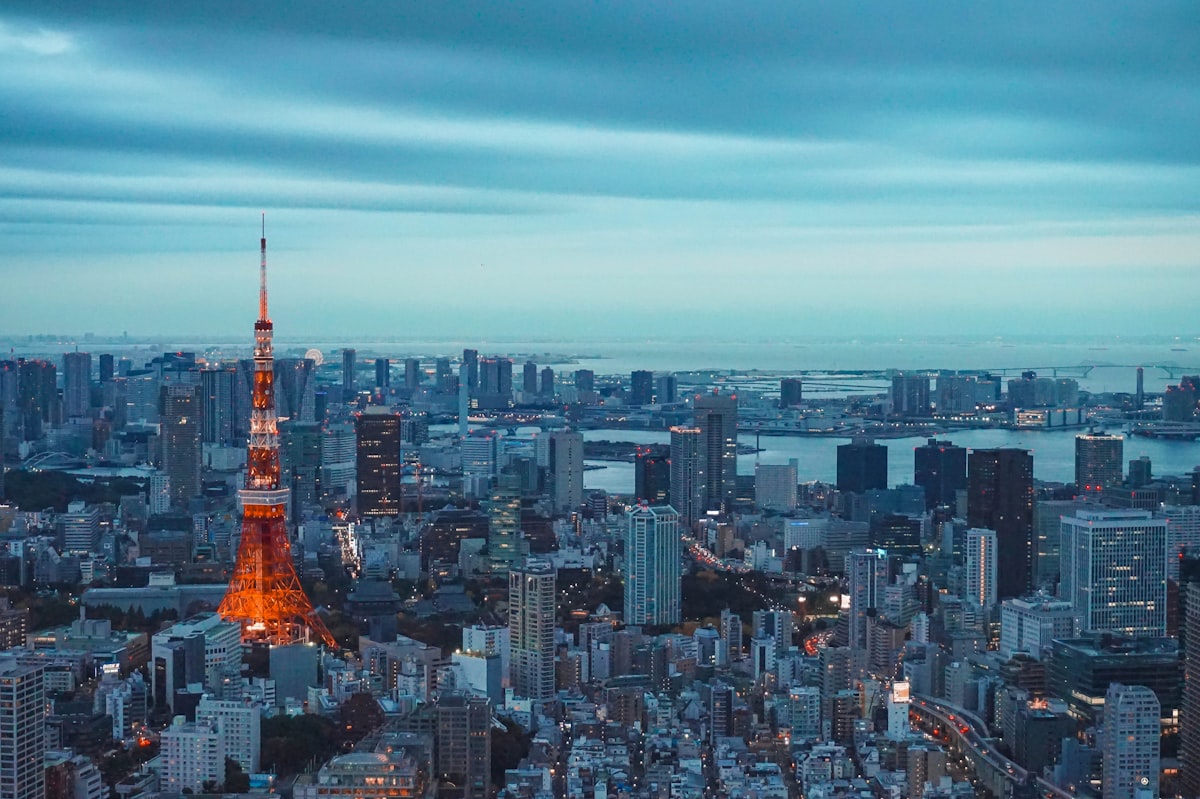
Tokyo rewards the long Pacific crossing more than almost any city on Earth.
From a landlocked Midwest hub, Chicago flyers earn a payoff of staggering density: 14 million people layered across the Yamanote loop, from Marunouchi's glass towers to Shinjuku's neon canyons.
Walk ten minutes off the main arteries and the shitamachi — the old town in Asakusa and Yanaka — reappears: wooden storefronts, family sushi counters, century-old tea houses.
The transit network is the busiest on Earth, turning map-distant neighborhoods into 12-minute train hops. Base in the modern city for access, then spend a full day in the shitamachi for Tokyo's quieter second personality.
What makes Tokyo worth the flight:
Plan 5 to 7 nights for a first trip; the city scales with your energy.
In 8 hours, hit Senso-ji at dawn, walk Asakusa, then cross to Shibuya for the scramble and Shibuya Sky at sunset.
In 48 hours, add teamLab Planets, the Tsukiji Outer Market for breakfast, and an evening in Shinjuku's Omoide Yokocho alleys.
In a week, day-trip to Nikko or Kamakura, slow down in Yanaka's backstreets, and base a long lunch around Ginza before catching a sumo practice or a baseball game. Tokyo never runs out before you do.
Best neighborhoods to explore:
The business core: glass towers, the restored red-brick Tokyo Station, and the Imperial Palace gardens. Best base for Haneda access and bullet-train day trips.
Tokyo at full volume — skyscrapers, the Omoide Yokocho alley bars, Golden Gai, and Shinjuku Gyoen's calm gardens. The Yamanote loop's busiest hub.
Old Tokyo: Senso-ji Temple, Nakamise-dori craft stalls, and low wooden streets. Quieter, cheaper hotels, with the Skytree across the river.
Youth-culture and fashion ground zero — the Shibuya scramble, Tower Records, Yoyogi Park, and Harajuku's Takeshita-dori. Walk Cat Street on a quiet morning.
Tokyo's polished retail and dining district — department-store food halls, sushi counters, and quiet galleries. Pedestrianized on weekend afternoons.
Low-rise vintage shops, indie coffee, tiny live-music venues, and theaters. A village feel a few stops from Shibuya, beloved by repeat visitors.
Don't miss:
Senso-ji Temple (Asakusa)
Tokyo's oldest Buddhist temple, founded in AD 645. Arrive by 7-8am to walk Nakamise-dori before the tour buses, and catch golden light on the five-story pagoda.
Browse Senso-ji Temple (Asakusa) tours →teamLab Planets (Toyosu)
An immersive digital-art museum where you wade barefoot through water rooms and mirrored gardens. Book timed tickets well ahead; it sells out in peak season.
Browse teamLab Planets (Toyosu) tours →Tsukiji Outer Market (Tsukiji)
The old fish market's outer streets still buzz with breakfast sushi, tamagoyaki skewers, and knife shops. Go hungry before 9am for the best stalls.
Browse Tsukiji Outer Market (Tsukiji) tours →Meiji Jingu (Harajuku)
A forested Shinto shrine in the heart of the city, dedicated to Emperor Meiji. The wooded approach is a cool, quiet contrast to Harajuku next door.
Browse Meiji Jingu (Harajuku) tours →Shibuya Sky (Shibuya)
An open-air rooftop deck 230 meters above the Shibuya scramble. Sunset and blue hour are the photographer's windows; book a timed slot.
Browse Shibuya Sky (Shibuya) tours →Tokyo Skytree (Sumida)
At 634 meters, the tallest tower in Japan, with observation decks over the shitamachi and, on clear days, Mount Fuji on the horizon.
Browse Tokyo Skytree (Sumida) tours →Shinjuku Gyoen (Shinjuku)
A spacious garden blending Japanese, English, and French landscaping — and one of Tokyo's prime cherry-blossom spots in late March and early April.
Browse Shinjuku Gyoen (Shinjuku) tours →Mubboo Verdict:
Base in Marunouchi or Shinjuku for transit, and give the shitamachi a full day.
First-timers should anchor near the Yamanote loop for fast access to everything, then spend one slow day in Asakusa and Yanaka for old-town Tokyo.
Skip Akihabara as a base unless anime is your main purpose — it rewards a focused afternoon, not a hotel stay. Don't over-schedule your jet-lagged arrival day.
🎟️ Top activities in Tokyo
Ranked by traveler ratings and recent booking volume.
Asakusa Classic Ramen & Crispy Gyoza Cooking Class
$125Experience all of Japanese culture and Japanese food experience classes "origami, udon, Japanese food, green tea, calligraphy" in 4 hours
$88.16Source: Viator · Prices in USD · Affiliate links.
🧳 What do you need to know before flying to Tokyo?
🛂 Do Americans need a visa for Tokyo?
No visa for stays up to 90 days · US passport · onward ticket required.
US passport holders enter Japan visa-free for up to 90 days of tourism, business meetings, or visiting relatives, per the US State Department and Japan's Ministry of Foreign Affairs. You cannot work or change visa status in-country.
Your passport must stay valid for the length of your visit, and you should carry proof of a return or onward ticket. All arrivals are fingerprinted and photographed.
Complete Visit Japan Web before you fly — about 15 minutes — to generate immigration and customs QR codes that speed you through Haneda or Narita. Always confirm current rules at travel.state.gov before travel.
🕐 What's the time difference?
Tokyo is 14 hours ahead of Chicago in summer, 15 hours in winter.
Tokyo runs on JST (UTC+9) with no daylight saving. Chicago shifts between CDT (UTC-5) and CST (UTC-6), so the gap swings by an hour seasonally.
A late-morning O'Hare departure lands you in Tokyo mid-afternoon the next calendar day — ideal for adjusting before sleep. Westbound jet lag is the gentler direction.
The eastbound return is harder: you arrive in Chicago the same morning you left Tokyo with a full day ahead. Plan a buffer day before any return-day commitments.
🚇 How do you get from the airport to the city?
Tokyo Haneda (HND) sits about 30 minutes from the city; Narita (NRT) is 60 km out. Fares are as of 2026:
| From | Option | Drop-off | Cost | Time |
|---|---|---|---|---|
| HND | Keikyu Line ✅ | Shinagawa → Yamanote loop | from ¥330 (~$2) | about 15 min |
| HND | Tokyo Monorail | Hamamatsucho → Yamanote | from ¥520 (~$3.50) | about 18 min |
| NRT | Keisei Skyliner | Nippori / Ueno | about ¥2,570 (~$17) | 41 min |
| NRT | Narita Express N'EX | Tokyo / Shinjuku / Shibuya | about ¥3,070 (~$20) | 53–80 min |
Editor's pick: Fly into Haneda and ride the Keikyu Line — fastest and cheapest into central Tokyo.
💷 What about money and tipping?
Japan uses the yen (JPY) and stays more cash-friendly than the US.
Carry a no-foreign-transaction-fee card — the Chase Sapphire Preferred, Capital One Venture, or Amex Platinum all waive the 3% fee standard cards charge.
Small restaurants, temples, and older shops are often cash only. Withdraw yen from 7-Eleven or Japan Post ATMs, which reliably accept foreign cards.
Load a Suica or Pasmo IC card, or add Suica to Apple Wallet, for trains, buses, and convenience stores. Tipping is not customary in Japan. Exchange rates move weekly, so check current rates rather than budgeting on a fixed figure.
Tokyo currency snapshot
1 USD = 163 JPY
1 JPY = $0.0062 USD
Japanese Yen
Cash
ATMs offer the best rate. Avoid airport currency desks.
Tipping
Carry cash — many smaller shops are cash-only. ATMs at 7-Eleven and post offices accept foreign cards. No ti…
Cards
Visa and Mastercard widely accepted. Tell your bank before you go.
Source: open.er-api.com · Updated Jul 1, 2026 · Rates fluctuate — check before booking.
📱 Will your phone work?
T-Mobile roams free in Japan; an eSIM is faster for data.
T-Mobile Magenta includes free Japan roaming throttled to 256 kbps — fine for maps and chat, unusable for video or hotspots. AT&T and Verizon charge roughly $10 to $12 per day.
A travel eSIM is the better value: Saily, Airalo, and Ubigi sell Japan data from about $5 for a week, activated before you land.
Free public Wi-Fi is common at Haneda, Narita, train stations, and convenience stores, but coverage is patchy on the move — keep an eSIM as your primary connection.
☁️ Tokyo climate overview
Best: NovHistorical highs, lows, and rainfall by month. Plan packing and outdoor time around the extremes.
Jan
50°/35°F
1.3″ rain
Feb
51°/34°F
0.0″ rain
Mar
57°/41°F
5.8″ rain
Apr
66°/51°F
4.9″ rain
May
73°/59°F
8.4″ rain
Jun
83°/70°F
5.2″ rain
Jul
89°/77°F
1.2″ rain
Aug
94°/80°F
2.1″ rain
Sep
86°/73°F
7.9″ rain
Oct
71°/60°F
6.1″ rain
Nov
60°/46°F
0.6″ rain
Dec
53°/37°F
1.6″ rain
Source: Open-Meteo Archive API · 2025 historical data · Updated July 2026
Ready to lock in your fare? Search live prices below:
✈️ Ready to book? Compare Chicago to Tokyo flights
Search flights →🛫 Flying from Chicago — airport tips
ORD Terminal 1, Concourse C — United gates (United)
- The United Polaris Lounge near gate C18 offers hot dining, showers, and a full bar for eligible business and Star Alliance Gold passengers
- United flies the 787-10 to Haneda (UA881) with a midday departure; from October 24, 2026 it adds daily ORD-Narita on the 787-8
- Economy includes only one free 23 kg checked bag — pack accordingly versus the Japanese carriers' two
ORD Terminal 1, Concourse B/C — ANA gates (ANA)
- ANA shares Terminal 1 with United as a Star Alliance partner, so connections between the two stay landside-simple
- ANA flies the 777-300ER with 'The Room' business suites; economy includes two free 23 kg bags and a full hot meal
- Check-in opens about 3 hours before departure; Star Alliance Gold passengers use the priority lanes at the Terminal 1 checkpoint
ORD Terminal 3 — Japan Airlines gates (Japan Airlines)
- JAL departs Terminal 3 in the oneworld camp alongside American Airlines, not Terminal 1 with the Star Alliance carriers
- JAL flies both Haneda (JL9) and Narita with two free 23 kg bags and catering flyers rate above ANA
- AAdvantage and oneworld elites should book JAL here for the most useful earn and lounge access
🚐 Skip the hassle? Book a private airport transfer
Fixed price, meet & greet at arrivals, door-to-door service
💡 Insider tips: Chicago to Tokyo
Fly into Haneda from ORD unless you're connecting deeper into AsiaMubboo original data
Pick Haneda over Narita whenever Tokyo is your destination.
All three ORD carriers serve Haneda, which sits about 30 minutes closer to central Tokyo. The Keikyu Line reaches Shinagawa from ¥330, versus the ¥2,570 Keisei Skyliner from distant Narita.
Narita earns its place only when you connect onward — United banks its Asia network and Sapporo ski flights through Narita from late 2026. For a Tokyo-only trip, Haneda saves you an hour and roughly $15 each way.
Know your ORD terminal before you leave home — ANA and United are T1, JAL is T3Mubboo original data
The three Tokyo carriers don't share a terminal at O'Hare.
ANA and United depart Terminal 1 (Concourse B/C); Japan Airlines departs Terminal 3. We tracked the terminal assignments across the alliance splits: Star Alliance lives in T1, oneworld in T3.
If your rideshare drops you at the wrong terminal, the inter-terminal walk or ATS train adds 15 to 20 minutes. International arrivals all process customs at Terminal 5, so factor that in for tight onward connections in Chicago.
ANA and JAL include two free bags; United includes one
The free-bag gap is worth $60 to $80 per trip.
ANA and Japan Airlines include two 23 kg checked bags in standard economy on this route. United includes one (in standard economy, not Basic).
For a family hauling gifts or a longer stay, that second free bag tilts the math toward the Japanese carriers even when United's base fare looks $40 to $60 cheaper. Run the comparison with bags added before you book, not on the headline fare alone.
United's Polaris Lounge at C18 beats most US business lounges
If you're in Polaris or Star Alliance business, use the Terminal 1 lounge near gate C18.
United's Polaris Lounge at O'Hare runs hot sit-down dining, shower suites, and a quiet atmosphere a notch above standard Star Alliance lounges. It's a genuine reason to arrive early rather than cut it close.
ANA passengers in business access Star Alliance lounge space in the same terminal. JAL business and oneworld elites get separate lounge access over in Terminal 3 — plan your pre-flight meal around which carrier you booked.
February, September, and November are the sub-$1,000 windowsMubboo original data
Three months sit roughly 20% below the annual average.
We tracked fares across major booking platforms: February, September, and November consistently produce the year's floors on ORD-Tokyo, often under $1,000 round trip in economy.
February follows the holiday demand collapse; September trails summer Obon; November sits in the gap before December. Avoid Golden Week (late April to early May) and Obon (mid-August), when fares and Tokyo hotels both spike well above the floor.
👥 Who flies this route — and what they should know
Midwest family visiting relatives in Japan
Featured this monthRecommended: ANA or JAL economy for the two free bags.
Families hauling gifts and supplies should take a Japanese carrier — two 23 kg bags each beats United's single bag and the $60 to $80 in fees adds up across four travelers.
Fly into Haneda and use the Monorail or Keikyu Line, both easier with kids and luggage than the long Narita haul. Pick a daytime ORD departure to protect children's sleep schedules.
Pre-fill Visit Japan Web for the whole family to cut the immigration line on arrival.
First-time Tokyo visitor from the Midwest
Recommended: ANA economy or Premium Economy into Haneda.
ANA's 777-300ER soft service eases a first-timer into Tokyo's pace, and the long westbound block rewards the extra Premium Economy legroom. Two free bags help on a first big trip.
Land Haneda, ride the Keikyu Line to Shinagawa, and transfer to the Yamanote loop — under 45 minutes to most central hotels. Base in Marunouchi or Shinjuku for transit access.
Don't schedule Akihabara on a jet-lagged arrival day; save the dense neighborhoods for day two.
Chicago tech and finance business traveler
Recommended: United Polaris on the 787-10 into Haneda.
The 44 lie-flat Polaris seats get you horizontal across the long westbound leg, and Haneda puts you 30 minutes from Otemachi for a next-morning meeting.
Use the Polaris Lounge near C18 before departure, and earn MileagePlus on the fare. The midday ORD departure lands you in Tokyo by mid-afternoon to adjust before sleep.
Skip a tight same-day return commitment in Chicago — eastbound arrival mornings are brutal on the body clock.
Star Alliance versus oneworld points traveler
Recommended: JAL if your miles are AAdvantage, ANA or United if MileagePlus.
Chicago's three-carrier depth is a points advantage. AAdvantage and oneworld earners should book JAL out of Terminal 3; Star Alliance and MileagePlus earners take ANA or United from Terminal 1.
Award space on ANA and United opens nearly a year ahead — set alerts the moment the schedule loads. Business redemptions on The Room or Polaris are the highest-value use of the route.
Don't split alliances mid-trip if you want lounge continuity at O'Hare.
Cherry-blossom photographer
Recommended: ANA or JAL economy, booked four months ahead.
Late March through early April is peak sakura and peak fare — economy can run 40% above the floor and sells out roughly four months in advance. Book early or miss it.
An evening ORD departure lands you in Tokyo mid-afternoon with daylight to scout Meguro River or Chidorigafuchi for the next morning's golden hour.
Don't gamble on a late booking for blossom dates; the global demand is unforgiving on this window.
Winter skier connecting to Sapporo
Recommended: United into Narita once ORD-NRT launches October 24, 2026.
Narita is United's Asia connection bank, and the carrier is adding Sapporo ski-season service. For Hokkaido powder, NRT beats Haneda because the onward connections live there.
Time your ORD departure to the Sapporo connection and consider an overnight near Narita if the schedule is tight. Economy or Polaris both work depending on the deal.
Choose Haneda instead only if Tokyo itself is the trip and skiing is a side quest.
Budget backpacker flying economy
Recommended: United economy (not Basic) in a floor month.
United is frequently the cheapest nonstop in economy, sometimes $40 to $60 under the Japanese carriers. Avoid Basic Economy if you check a bag, since the fee erases the savings.
Target February, September, or November for sub-$1,000 round trips, and pick Haneda or Narita by whichever is cheaper that week. Base in a hostel in Asakusa or Shinjuku.
Don't over-pack — a single carry-on dodges United's checked-bag gap entirely.
⚖️ Flight delayed or canceled?
On the ORD outbound, US Department of Transportation rules apply.
Under the October 2024 final rule, a canceled flight must be refunded in cash, not vouchers, when you choose not to travel. There is no EU-style EC 261 cash compensation on this route.
For the Tokyo return leg, ANA and JAL follow their own conditions of carriage, with the Montreal Convention governing international baggage and delay liability.
Winter weather at O'Hare is the most common disruption cause, so build a buffer day around tight onward plans. Travel insurance is worth considering on a long-haul trip where a missed connection can strand you overnight.
📱 Stay Connected — Travel eSIM for Japan
Free option: T-Mobile Magenta includes free Japan roaming (256 kbps — fine for maps, not video)
T-Mobile Magenta roams free in Japan but throttles to 256 kbps — fine for maps, useless for video. AT&T and Verizon charge $10 to $12 a day. A Japan eSIM gives you real LTE data from about $5 a week, activated before you land at Haneda.
🚗 Skip the Line — Private Tokyo Airport Transfer
Free option: Free alternative: the Keikyu Line from Haneda reaches central Tokyo for about $2
Arriving jet-lagged after a long Pacific flight with luggage and family? A pre-booked private transfer meets you at Haneda or Narita arrivals and drives straight to your hotel. Worth it for late-night landings, big groups, or first-timers who'd rather not parse the rail map at hour 30 of travel.
🗺️ Day Trips Beyond Tokyo — Car Rental
Free option: Free alternative: the Tobu Limited Express reaches Nikko from Asakusa without a car
Tokyo itself runs on rail, but a rental car unlocks Nikko, the Fuji Five Lakes, or rural Hakone ryokan that trains reach awkwardly.
You'll need an International Driving Permit from AAA before you leave the US. Skip a car for the city; consider one for a multi-day side trip into the mountains.
Emergency contacts in Tokyo
Frequently asked questions about Chicago to Tokyo flights
Three carriers fly ORD to Tokyo nonstop daily: ANA, Japan Airlines, and United. All three serve Haneda (HND).
ANA flies a 777-300ER with The Room business suites from Terminal 1. Japan Airlines flies from Terminal 3 (oneworld, joint with American). United flies a 787-10 with 44 Polaris seats from Terminal 1.
For Narita (NRT), ANA and JAL fly it today; United adds daily ORD-NRT on October 24, 2026. That three-carrier depth is unusual for a Midwest gateway and gives Chicago flyers more award space and fare competition than most US cities.
🎟️ Things to do in Tokyo
4,073 activities · Live data from Viator

Tokyo Private Discovery Tour | Unique Insights & Must Sees

Private Tailor-made Akihabara Anime Tour with a Local Otaku Guide

Pixel Lab Tokyo: Gameboy Mod Workshop (Classic/Advance/SP)

Samurai Experience - Learn Bushido through Kendo, in Tokyo

Experience all of Japanese culture and Japanese food experience classes "origami, udon, Japanese food, green tea, calligraphy" in 4 hours

Cozy Tokyo Class: Ramen, Sushi, Sake Pairing & Cultural Exchange
Researched by Mubboo Editorial Team · Reviewed by Richard Lee, Founder
Prices from Aviasales. Seasonal advice updated: July 2026 · Last editorial review: 2026-05-24 · Government info: travel.state.gov
Prices last updated just now · cached fares aggregating 800+ airlines and agencies · Check current prices →
M verdicts are based on editorial research — not pulled from a database.