💰 When is the cheapest time to fly from Las Vegas to Tokyo?
This month: Spikes near $820 around Obon and the summer peak.
Connecting fares track Japan's travel seasons, not Vegas demand — every itinerary connects through a West Coast hub or Seoul.
The annual floor sits near $640 in February, the clearest month for Mt. Fuji views. Prices climb to a sakura peak near $850 in April.
Fares ease in the post-Golden-Week May dip, then spike for Obon in August. June's rainy season and the September shoulder are the quieter windows.
The takeaway: chase the May, June, and September troughs; avoid late March, April, and mid-August.
Here's a month-by-month look at prices on this route:
✈️ What are the best ways to get from Las Vegas to Tokyo?
Las Vegas has no nonstop to Tokyo, so this table ranks the best connecting itineraries, not nonstops.
Four carriers route you through a West Coast hub — ANA, JAL, and United via LAX or SFO, plus budget ZIPAIR on a self-connect through LAX. Korean Air takes the long way through Seoul-Incheon, the only Asian widebody that actually departs LAS.
Durations are total travel time including the connection, and each verdict names the hub.

ANA is the comfort pick for the long leg.
United feeds it out of Las Vegas, so you book the whole LAS-LAX/SFO-Haneda trip on one ticket with bags checked through.
Reviewers praise ANA economy for legroom and crew attention, and off-peak loads can leave the middle seat open.
Choose ANA for Haneda's central arrival; pick United if a single operating carrier matters more.
Best for: comfort-focused leisure travelers who want a single through-ticket and a Haneda landing

United is the most seamless single-carrier path.
It flies LAS-SFO and LAS-LAX many times a day, then runs its own widebody to Tokyo — one airline, one app, one bag tag.
Cabin and catering trail ANA and JAL, but the simplicity plus Chase and MileagePlus integration win for points travelers.
Pick United for the smoothest connection; pick ANA when comfort on the long leg outranks convenience.
Best for: travelers who want one US carrier end to end and MileagePlus or Chase points integration
JAL is the Oneworld answer for AAdvantage flyers.
American flies LAS-LAX and LAS-DFW, so AA-loyal travelers connect onto JAL metal at LAX for the Haneda leg on one record.
JAL economy is a close peer to ANA on legroom and meal quality, and Haneda lands you near central Tokyo.
Book JAL when your status sits with American; skip it if you have no Oneworld tie and ANA is cheaper.
Best for: American and Oneworld loyalists who want a Haneda arrival over Narita

Korean Air flies you off the ground at LAS without a US-hub change first.
It runs the only nonstop widebody from Las Vegas to Asia — LAS to Seoul-Incheon, out of Terminal 3 — then connects onward to Tokyo.
The catch: it routes you the long way round through Korea, so total time runs longer than a West Coast connection.
Worth it for SkyTeam flyers or a Seoul stopover; skip it if pure speed to Tokyo is the goal.
Best for: SkyTeam and Delta flyers, or anyone wanting to depart international directly from LAS

ZIPAIR is the budget play, with a catch.
The JAL-owned low-cost carrier flies LAX-Narita below the full-service crowd, but it does not fly from Las Vegas.
You self-connect: buy a separate LAS-LAX hop, then re-check in at LAX. There is no through-baggage if the feeder slips.
Choose ZIPAIR when the total still undercuts a through-fare and you travel light; avoid it for tight connections or heavy luggage.
Best for: budget-first, light-packing travelers comfortable self-connecting at LAX
Mubboo verdict: No LAS-Tokyo nonstop exists. Book United end-to-end or ANA via its United feed on one ticket; self-connect ZIPAIR only if you pack light and buffer LAX.
Prices shown are approximate averages based on recent searches (April 2026). Actual fares vary by date, class, and availability.
🎯 Ready to compare flights?
We compare prices from airlines and travel platforms so you can find the best deal.
Compare all flights →📅 When should you book Las Vegas to Tokyo flights?
Book the trans-Pacific leg two to five months out, and treat fares as Japan-seasonal, not Vegas-seasonal.
Because every itinerary connects, you price two segments: a cheap, plentiful LAS feeder, and the trans-Pacific widebody that drives the cost.
The widebody is cheapest in February, the May window, and the September shoulder. Midweek departures usually beat weekend redeyes.
Set a fare alert and pounce on the May and September troughs. If you self-connect onto ZIPAIR, book the LAS-LAX hop separately and early.
Obon is a domestic travel surge, and LAS summer heat adds outbound pressure. Hot and humid in Tokyo; book early or shift to September.
If you're a family flying in summer, book by March — peak season fills up fast.
Budget travelers: shoulder season (Sep–Oct, Apr–May) offers the best balance of price and weather.
💡 This Aug: Avoid the mid-August Obon week if you can; flanking dates are notably cheaper.
🏙️ Why visit Tokyo?
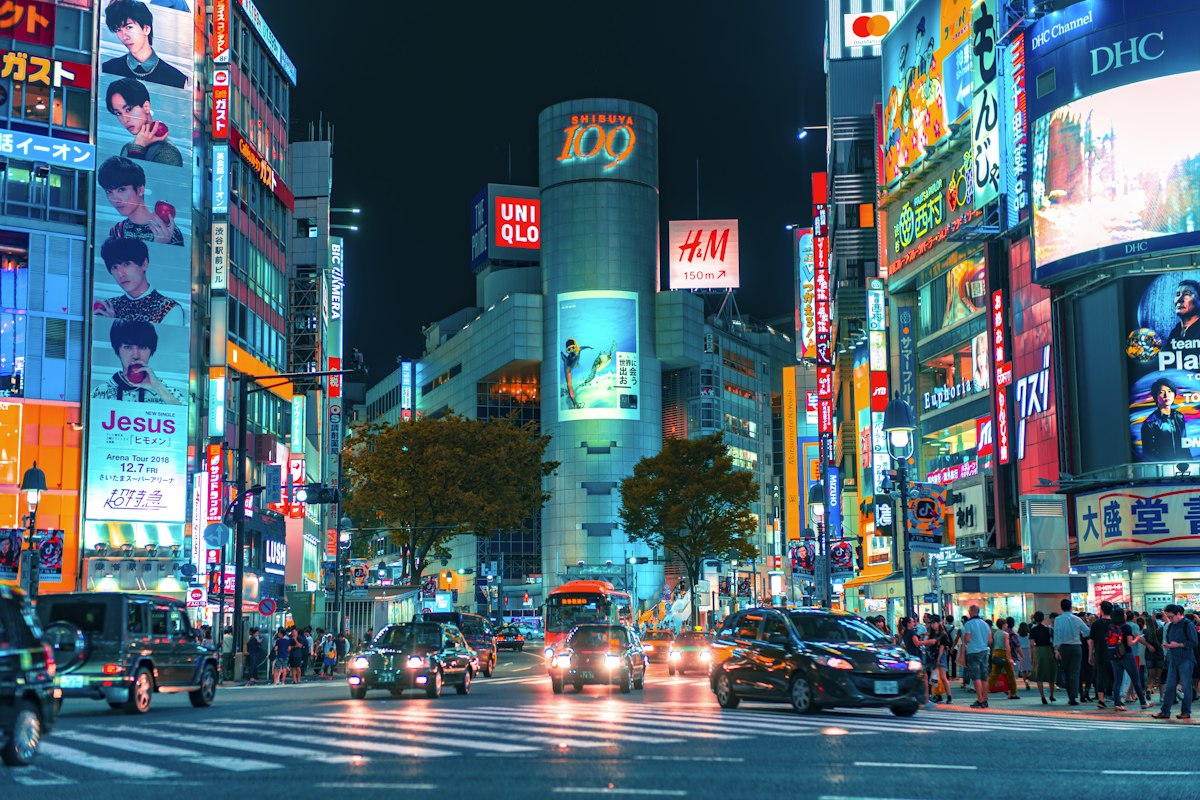
Most Vegas travelers arrive in Tokyo chasing the same buzz they fly toward at home — and Tokyo answers on its own terms.
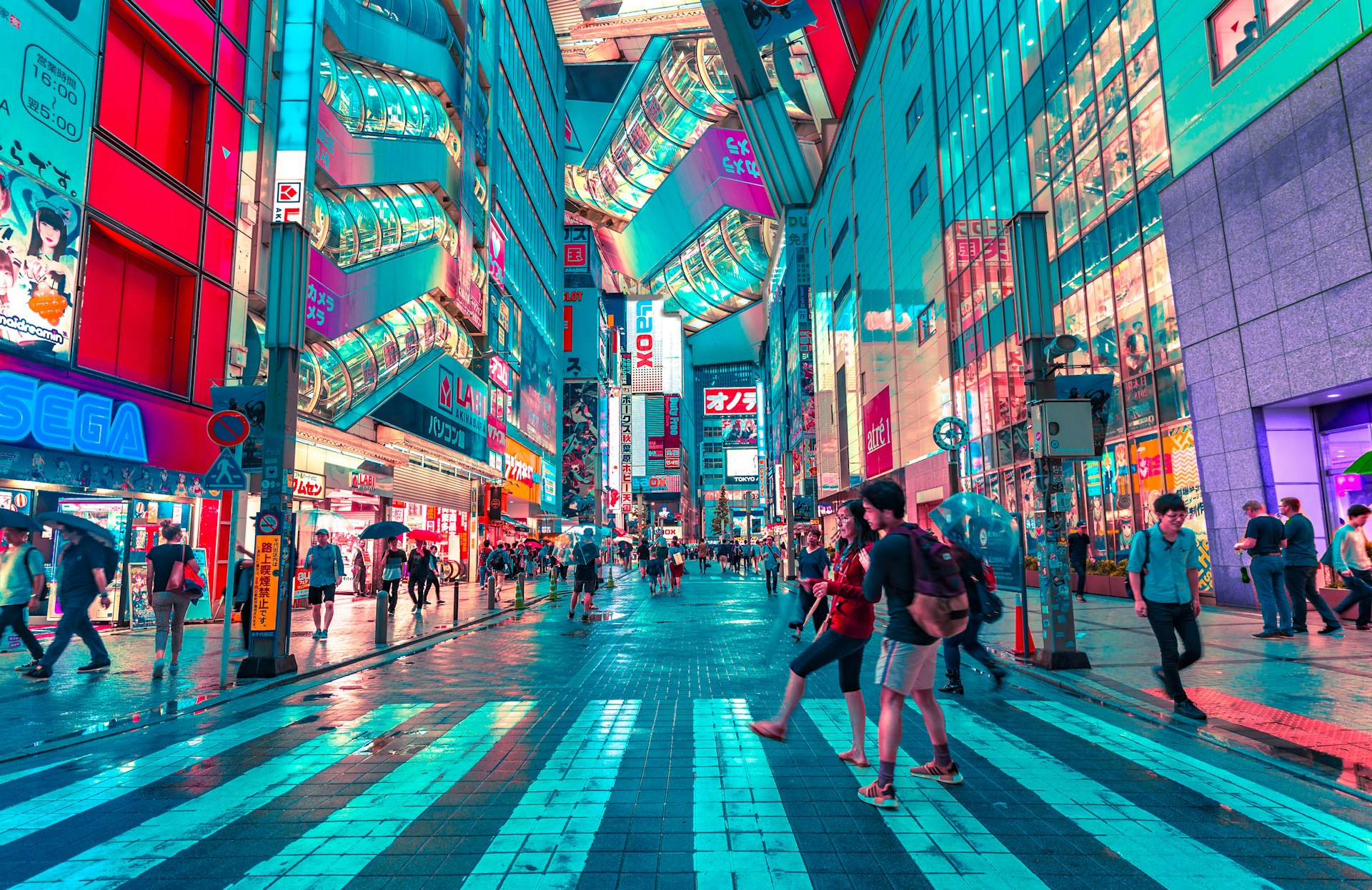
Shinjuku and Shibuya throw up neon walls that out-dazzle the Strip, and the arcades of Akihabara run on the same all-night adrenaline as a casino floor.
Then the city pivots. Step off the arterial avenues into shitamachi, the old-town grid where Asakusa, Yanaka, and Kagurazaka keep wooden shopfronts and family-run counters.
That swing — spectacle to stillness in a ten-minute walk — is the trip's real reward. Vegas stops at the spectacle; Tokyo hands you both.
What makes Tokyo worth the flight:
A 48-hour first pass favors contrast over checklist. Open at Shibuya Crossing at dusk, then ride up to Shibuya Sky for the city in light.
Set an alarm for a 6am run at Tsukiji Outer Market and a 7am walk through Senso-ji before the buses. Close the night in Shinjuku Golden Gai.
A full week earns the day trips. Kamakura is 60 minutes out for its bronze Buddha; Nikko has waterfalls and shrines; Hakone makes an onsen overnight with Mt. Fuji.
Resist bolting Kyoto onto a first trip — the bullet-train day each way shortchanges both.
Best neighborhoods to explore:
The neon heart most Vegas travelers picture — the scramble crossing, Shibuya Sky's deck, and Harajuku's Takeshita Street fashion crowds. Walkable, photogenic, and packed with the youth-culture energy that makes the first night feel like the trip has truly started.
Tokyo's nightlife and transit engine: the world's busiest station, the Golden Gai's tiny bars, Kabukicho's neon, and the city's densest hotel cluster. Base here for late nights and easy Yamanote-loop access, the closest match to a Strip-style around-the-clock pulse.
The other Tokyo — Senso-ji's temple grounds, wooden shopfronts, and Yanaka's quiet cemetery lanes and craft shops. The counterweight to the neon, where the city slows to a village pace and the food turns family-run and unpretentious.
Arcade towers, retro game shops, anime megastores, and multi-floor crane-game halls — the closest thing Tokyo has to a non-stop game floor. A natural pull for the Vegas entertainment instinct, best visited rested rather than jet-lagged off the plane.
Polished Tokyo around Tokyo Station: towers, department-store basements, Michelin-starred counters, and the luxury-hotel set. The place to splurge on a meal or a room and to feel the city's buttoned-up, business-class side after the neon.
Don't miss:
Senso-ji (Asakusa)
Tokyo's oldest temple, founded in AD 645, fronted by the Kaminarimon gate and the Nakamise shopping street. Arrive 7-8am to walk the grounds before tour buses fill the approach, and you get the incense and lanterns nearly to yourself.
Browse Senso-ji (Asakusa) tours →Shibuya Crossing & Shibuya Sky
The world's busiest scramble crossing, best watched at dusk, then seen from above on the Shibuya Sky open-air deck (around ¥2,500). The Hachiko statue at the station is the classic meeting point — and a quick Vegas-Strip-energy parallel.
Browse Shibuya Crossing & Shibuya Sky tours →teamLab Planets / Borderless
Immersive digital-art rooms where light, water, and projection wrap around you — barefoot through mirrored pools and infinite LED forests. Around ¥3,800; book a timed slot ahead, because walk-up tickets sell out on busy days.
Browse teamLab Planets / Borderless tours →Tokyo Skytree
At 634 meters, Japan's tallest tower, with the Tembo Deck around ¥2,100. Arrive 30 minutes before sunset for daylight, dusk, and night from one visit.
Browse Tokyo Skytree tours →Tsukiji Outer Market
The surviving market streets after the auction moved to Toyosu — tuna sushi and grilled seafood from 6 to 10am. Go early and hungry; the best stalls sell out by mid-morning.
Browse Tsukiji Outer Market tours →Meiji Jingu & Yoyogi Park
A forested Shinto shrine reached through towering torii gates, minutes from the Harajuku crush yet hushed and green. Pair it with a stroll in adjacent Yoyogi Park for the city's easiest reset between neon districts.
Browse Meiji Jingu & Yoyogi Park tours →Mubboo Verdict:
Don't try to "see Tokyo" on a first trip — it is 23 wards across 2,194 square kilometers, and even locals don't know all of it.
Pick three neighborhoods along three vectors — food, neon, and old town — and go deep rather than wide.
Base in modern Tokyo (Shinjuku or Shibuya) for transit and nightlife, then spend your mornings walking the shitamachi grid. After a long connecting day from Vegas, that rhythm beats sprinting a checklist.
🎟️ Top activities in Tokyo
Ranked by traveler ratings and recent booking volume.
Samurai Experience - Learn Bushido through Kendo, in Tokyo
$126Cozy Tokyo Class: Ramen, Sushi, Sake Pairing & Cultural Exchange
$126Chill Out in Tokyo: Personalized Private Tours with Local Friends
$101Pixel Lab Tokyo: Gameboy Mod Workshop (Classic/Advance/SP)
$340Source: Viator · Prices in USD · Affiliate links.
🧳 What do you need to know before flying to Tokyo?
🛂 Do Americans need a visa for Tokyo?
US passport holders enter Japan visa-free for tourism up to 90 days — no fee, no advance e-visa. Your passport must stay valid through the visit.
Japan recommends pre-registering on Visit Japan Web (visitjapanweb.digital.go.jp); it generates immigration and customs QR codes that cut your wait at the arrival gates. [GOV]
There is no entry vaccination requirement from the United States. Anything beyond tourism — paid work, long study — needs a different visa secured in advance.
Because your trip connects, you clear US security at LAS and Japanese immigration only on arrival in Tokyo. Confirm current rules on the US State Department Japan page. [GOV]
🕐 What's the time difference?
Tokyo runs on Japan Standard Time (UTC+9) with no daylight saving. Against Las Vegas, that is 16 hours ahead in summer and 17 ahead in winter — a calendar day in front.
Flying east to Asia plus a connection makes for one long travel day, and the jet lag hits harder eastbound.
The practical move: land in the afternoon or evening, push through to a local bedtime, and resist the urge to nap. Returning to Vegas, you gain the day back.
🚇 How do you get from the airport to the city?
From Haneda (HND), the preferred arrival airport on most West Coast connections, central Tokyo is a quick rail ride; from Narita (NRT), used by ZIPAIR and some routings, it is farther. Fares are 2026 references:
| Option | From | Time | Approx fare | Best for |
|---|---|---|---|---|
| Tokyo Monorail + JR | Haneda (HND) | ~30-40 min to central | from ¥500-650 (~$3-4) | HND arrivals heading to the Yamanote loop ✅ |
| Keikyu Line | Haneda (HND) | ~30-45 min | from ¥330 (~$2) | Budget HND transfer to Shinagawa or Asakusa |
| Keisei Skyliner | Narita (NRT) | ~41 min to Ueno | from ¥2,580 (~$17) | Fast NRT ride to northeast Tokyo |
| Narita Express N'EX | Narita (NRT) | ~60 min to Tokyo/Shinjuku | from ¥3,070 (~$20) | NRT arrivals going direct to major stations with luggage |
Tap a Suica or PASMO IC card (now in Apple Wallet) across every train and metro line. After a long connecting day from Vegas, Haneda's shorter transfer is the comfort win — one more reason to favor HND-routed carriers.
💷 What about money and tipping?
Japan uses the Japanese yen (JPY, ¥). Tokyo is increasingly card- and IC-friendly, but small counters and old-town shops still want cash.
Skip dynamic-currency-conversion and pay in yen. A no-foreign-transaction-fee card saves real money — the Chase Sapphire Preferred, Capital One Venture, or Amex Platinum all waive the FX fee.
Pull yen from 7-Bank ATMs (inside every 7-Eleven) or Japan Post ATMs, which accept US cards. Tipping is not customary — the listed price is the price.
Do not anchor on a static rate; check the live rate before you withdraw cash.
Tokyo currency snapshot
1 USD = 159 JPY
1 JPY = $0.0063 USD
Japanese Yen
Cash
ATMs offer the best rate. Avoid airport currency desks.
Tipping
Carry cash — many smaller shops are cash-only. ATMs at 7-Eleven and post offices accept foreign cards. No ti…
Cards
Visa and Mastercard widely accepted. Tell your bank before you go.
Source: open.er-api.com · Updated Aug 1, 2026 · Rates fluctuate — check before booking.
📱 Will your phone work?
Japan runs fast 4G and 5G across Tokyo and the airports. The easiest setup is an eSIM activated before you leave Las Vegas — Saily, Airalo, and Ubigi sell Japan plans in clear USD tiers.
Pocket-WiFi rental at HND or NRT suits groups sharing one connection. A US carrier day-pass (T-Mobile, AT&T, Verizon) works but usually costs more per day than an eSIM.
Whatever you choose, download the offline metro map and your Google Maps area before the long flight.
☁️ Tokyo climate overview
Best: NovAvoid: MayHistorical highs, lows, and rainfall by month. Plan packing and outdoor time around the extremes.
Jan
50°/35°F
1.3″ rain
Feb
51°/35°F
0.4″ rain
Mar
58°/42°F
6.1″ rain
Apr
67°/52°F
5.8″ rain
May
73°/59°F
10.0″ rain
Jun
83°/70°F
5.3″ rain
Jul
91°/77°F
3.4″ rain
Aug
94°/80°F
1.9″ rain
Sep
87°/73°F
9.0″ rain
Oct
71°/60°F
6.3″ rain
Nov
61°/47°F
0.9″ rain
Dec
54°/38°F
1.7″ rain
Source: Open-Meteo Archive API · 2025 historical data · Updated August 2026
Ready to lock in your fare? Search live prices below:
✈️ Ready to book? Compare Las Vegas to Tokyo flights
Search flights →🛫 Flying from Las Vegas — airport tips
LAS Terminal 1 — domestic feeders to the West Coast hub (Southwest / Spirit / Frontier)
- Most LAS-LAX, LAS-SFO, and LAS-SEA feeders on Southwest and Frontier leave from here — the start of nearly every connecting Tokyo trip.
- No CBP in Terminal 1; for international you clear customs at your Tokyo arrival airport, not at LAS.
- Allow tram and walking time between the main hall and the C/D concourses, especially with checked bags.
LAS Terminal 3 — international departures and Delta/Alaska/JetBlue (Korean Air / Delta / Alaska / JetBlue)
- The only place to depart international from LAS — Korean Air to Seoul-Incheon boards here; check in three hours early.
- Delta and Alaska feeders to SEA, SLC, and LAX also use Terminal 3, handy if you self-connect within the same terminal.
- Slot machines sit past security if you want a final Vegas spin before the long day east.
Tokyo Haneda (HND) — preferred arrival on West Coast connections (ANA / JAL / United)
- Pre-load Visit Japan Web QR codes before landing to clear immigration faster after a long connecting day.
- Tokyo Monorail and the Keikyu Line both reach central Tokyo in 30-45 minutes — tap in with a Suica or PASMO.
- If your itinerary offers HND over NRT for the same fare, take it; the shorter transfer is the comfort win.
🚐 Skip the hassle? Book a private airport transfer
Fixed price, meet & greet at arrivals, door-to-door service
💡 Insider tips: Las Vegas to Tokyo
Book LAS-Tokyo as one through-ticket, not two separate tickets
The most useful move on this route is to book the entire LAS-to-Tokyo journey as one itinerary rather than stitching two cheap fares together.
ANA via its United feed, or United end to end, keeps your bag checked through and protects the connection if the LAS feeder slips — the airline owes you a rebooking.
Self-connecting onto a separately ticketed ZIPAIR saves cash up front, but you re-check bags, re-clear security, and own the risk if your feeder runs late.
Compare the all-in cost — including ZIPAIR's a-la-carte bag fees — before you choose the cheaper-looking split fare.
Budget the LAX terminal change — ANA departs the West Gates / TBIT satelliteMubboo original data
On the trans-Pacific leg, ANA at LAX departs from the West Gates / Tom Bradley (TBIT) satellite, reached by a long internal walk.
A SANspotter review of the exact LAX-Haneda ANA flight flagged this as "a bit counterproductive" — and noted the outbound still pushed back late despite the inbound arriving more than seven hours early.
If your LAS feeder lands at a different LAX terminal, you may face that walk plus a security re-clear. Leave three hours, four if you self-connect with checked bags.
The same logic applies at SFO, where international widebodies cluster in the G gates, a walk from the domestic concourses.
Off-peak shoulder months stack a roomier cabin onto the cheaper fareMubboo original data
The February, May, June, and September fare troughs do double duty: they are the cheapest windows and also the lightest-loaded.
A SANspotter review of ANA's 787-8 on the LAX-Haneda leg found "a lot of empty seats" and an open middle seat in shoulder season — turning an eleven-hour economy leg into something far more bearable.
The lesson: book the shoulder months for the cabin room as much as the price.
A late-night departure also means a lighter snack box, so eat at the hub before you board. Skip the peak sakura and Obon weeks if a roomier cabin matters.
Korean Air is your only "leave LAS international" option — and a free Seoul stopover
If you would rather not change planes at a US hub, Korean Air flies you off the ground at Las Vegas on an international widebody — LAS to Seoul-Incheon, departing Terminal 3 — before connecting onward to Tokyo.
It routes you the long way round through Korea, so total time runs 17 to 21 hours versus 15 to 19 through a West Coast hub, but it suits Delta and SkyTeam flyers.
Many travelers add a Seoul stopover at little or no extra airfare, turning the longer routing into a feature.
Choose it for the SkyTeam connection or the stopover; skip it when raw speed to Tokyo is the goal.
Add up ZIPAIR's a-la-carte fees before you call it the cheap option
ZIPAIR's headline LAX-Narita fare looks unbeatable, but the JAL-owned low-cost carrier prices everything separately: no free checked bag, seats cost extra, meals onboard.
On a self-connect from Las Vegas you also buy a separate LAS-LAX hop with its own bag fee, and re-check everything at LAX with no through-baggage.
Tally the bare fare plus checked bags, a seat, and the LAS feeder, then compare that all-in number against a through-ticketed United or ANA fare.
For a light packer with carry-on only, ZIPAIR can genuinely win. For two checked bags and a tight schedule, the "budget" routing often costs more.
👥 Who flies this route — and what they should know
Family leisure trip from Las Vegas
Featured this monthYou are traveling with kids and checked bags, and the last thing you want is a self-connect gone wrong.
Book a single through-ticket on United or ANA so the airline owns the connection, your bags check through, and a slipped LAS feeder triggers a rebooking, not a missed flight.
Choose a Haneda arrival for the shorter ride after a long day. Pre-load Visit Japan Web for every passport, and base in a Shinjuku or Shibuya apartment hotel.
Anti-recommendation: never self-connect onto a separately ticketed ZIPAIR with kids and bags — the savings vanish the moment one feeder runs late.
First-time Tokyo tourist from Vegas
You have never been to Japan and want the trip to feel easy. Book United end to end — a LAS-SFO or LAS-LAX hop onto its own widebody to Haneda — so the journey is one airline, one bag tag.
If comfort outranks price, swap to ANA via the United feed for the roomier cabin. Base in Shibuya or Shinjuku, and pre-load Visit Japan Web before you fly.
Anti-recommendation: do not stitch two cheap fares together for a first trip — the savings aren't worth re-checking bags jet-lagged at LAX.
Budget self-connector
Cost is the whole game and you pack light. The cheapest path is a separately ticketed LAS-LAX hop plus ZIPAIR to Narita, which can undercut a through-fare if you tally the extras.
Buy the feeder early, leave a three-to-four-hour LAX buffer, and carry on to dodge ZIPAIR's bag fee. Remember there is no through-baggage if the feeder slips.
Base where the cheap beds are — Asakusa and Ikebukuro run lower than Shibuya. Anti-recommendation: skip this with two checked bags, a tight timeline, or low tolerance for connection risk.
Comfort-seeker who hates long economy legs
The long trans-Pacific leg is the part you dread, so optimize for the cabin. Book ANA economy via the United feed, landing at Haneda, and target the February, June, or September shoulder for lighter loads.
Reviewers single out ANA's legroom and crew attention as the reason the long leg feels bearable. Eat a real meal at the LAX or SFO hub, since a late departure means a lighter snack service.
Anti-recommendation: avoid the packed sakura and Obon peaks — a full cabin erases ANA's roominess advantage.
Points and status optimizer
You earn and burn miles, and a single record matters for elite benefits. United is the cleanest play — one MileagePlus itinerary, Chase transfer partners, and the LAS feeder credited alongside the widebody.
If your status sits with American, route AAdvantage onto JAL metal at LAX; if you fly Delta or SkyTeam, Korean Air via Seoul keeps the credit in family.
Anti-recommendation: do not mix a non-alliance budget feeder with a premium long-haul ticket — you lose through-protection and earn nothing on the cheap segment.
Seoul-stopover two-country traveler
You want two Asian cities in one trip, and the routing can hand you that for free.
Korean Air flies the only international widebody off the ground at LAS — to Seoul-Incheon out of Terminal 3 — then connects to Tokyo. Many fares allow a Seoul stopover at no extra airfare.
Total time runs longer, 17 to 21 hours, but you trade speed for a bonus city. Base in Seoul's Myeongdong or Hongdae, then Shibuya.
Anti-recommendation: skip this if your trip is short and Tokyo-only — the Seoul detour adds hours you won't get back.
Vegas-to-Tokyo entertainment pilgrim
You chase the neon and the all-night energy, and Tokyo out-Vegases Vegas. Book ANA or United to Haneda for the shortest ride, then base in Shibuya near the scramble crossing and Shibuya Sky.
Stack Akihabara's arcade towers, a teamLab slot booked ahead, and the tiny bars of Shinjuku Golden Gai. Arrive rested before hitting Akihabara — the megastores reward energy you won't have off the long leg.
Anti-recommendation: do not blow your first jet-lagged evening on a packed arcade floor; save the high-stimulation districts for day two.
⚖️ Flight delayed or canceled?
This connecting route carries weaker statutory protection than an EU departure — there is no EC 261 payout in either direction.
On the US outbound, US DOT rules apply: under the October 2024 Final Rule, airlines must refund canceled flights in cash, not vouchers. A single through-ticket means the operating carrier owns a missed connection.
The risk this route adds is the self-connect. When you stitch a separate LAS feeder to a separately ticketed ZIPAIR, a late feeder is your problem alone — no rebooking across two tickets.
Japan has no EC 261 equivalent; ANA and JAL offer voluntary goodwill — meal vouchers, hotels, rebooking.
There is no statutory payout, so travel insurance is the real backstop. Price one before the long redeye.
📱 Stay Connected — Travel eSIM for Japan
Free option: Free first: download the offline Tokyo metro map and your Google Maps area before the flight, so you can navigate even before your eSIM activates.
The moment you clear immigration at Haneda or Narita after a long connecting day, you will want maps, train times, and your hotel address online without hunting for airport WiFi.
A Japan eSIM activates before you leave Las Vegas — scan a QR code, land, and you are connected. Far cheaper than most US carrier day-passes over a week, and you skip the pocket-WiFi counter entirely.
🛡️ Cover the Connection — Travel Insurance for a Self-Connect Route
Free option: Free first: many travel credit cards (Chase Sapphire Preferred, Capital One Venture) include trip-delay coverage when you pay with the card — check yours before buying a standalone policy.
Because every Las Vegas to Tokyo itinerary connects — and many travelers self-connect onto ZIPAIR with no through-protection — a missed feeder can cascade into a forfeited long-haul fare.
Travel insurance with trip-delay and missed-connection coverage is the real backstop on a route with no EC 261 payout. Price a policy before you book the redeye, especially if any segment sits on a separate ticket.
🚕 Airport Transfer — Haneda or Narita to Your Tokyo Hotel
Free option: Free first: if you land before the last train (around midnight) and travel light, the Tokyo Monorail or Keikyu Line from Haneda costs a few dollars and beats the car on time to the Yamanote loop.
Trains reach central Tokyo from Haneda in 30-45 minutes, but after a connecting day from Vegas with luggage and kids, a pre-booked private transfer can be the simpler arrival.
A fixed-price car waits at the gate, handles the bags, and drops you at the hotel door — no fumbling with IC cards or stairs at 11pm. Worth it for late landings, groups, or heavy bags.
Emergency contacts in Tokyo
Frequently asked questions about Las Vegas to Tokyo flights
No — there is no nonstop Las Vegas to Tokyo flight. JAL and ANA do not serve Las Vegas, and the only Asian widebody leaving LAS is Korean Air to Seoul-Incheon.
Every Tokyo itinerary connects exactly once: through a West Coast hub (LAX, SFO, or SEA) on ANA, JAL, United, or ZIPAIR, or via Seoul on Korean Air.
Northwest flew a LAS-Narita nonstop around 1998-2000, but no carrier has restored it. Plan on a one-stop trip and pick the routing in our airline table.
🎟️ Things to do in Tokyo
4,168 activities · Live data from Viator

Tokyo Private Discovery Tour | Unique Insights & Must Sees

Private Tailor-made Akihabara Anime Tour with a Local Otaku Guide

Pixel Lab Tokyo: Gameboy Mod Workshop (Classic/Advance/SP)

Samurai Experience - Learn Bushido through Kendo, in Tokyo

Experience all of Japanese culture and Japanese food experience classes "origami, udon, Japanese food, green tea, calligraphy" in 4 hours

Cozy Tokyo Class: Ramen, Sushi, Sake Pairing & Cultural Exchange
Researched by Mubboo Editorial Team · Reviewed by Richard Lee, Founder
Prices from Aviasales. Seasonal advice updated: August 2026 · Last editorial review: 2026-06-25 · Government info: travel.state.gov
Prices last updated just now · cached fares aggregating 800+ airlines and agencies · Check current prices →
M verdicts are based on editorial research — not pulled from a database.